Look! We're Learning!

Early Learning. Happy Teaching.

  • Shop
  • Printables
  • Homeschool
  • Crafts
  • Parenting
  • Blog

12 Months of Sensory Dough: Kool Aid Scented Play Dough

April 12, 2014 by Selena Robinson 6 Comments


Hey everyone! It’s time for our 12 Months of Sensory Dough linkup! Every month, I’m honored to co-host this linky with 11 other bloggers, including Dayna at Lemon Lime Adventures, Val & Alex at Glittering Muffins, Devany at Still Playing School, Sarah at Little Bins for Little Hands, Kimberly at Natural Beach Living, Melissa Ann at The Eyes of a Boy, Nicolette at Powerful Mothering, Amy at Wildflower Ramblings, Rachel at I Heart Crafty Things, Michelle at Delightful Learning, and Jennifer at The Life of Jennifer Dawn!
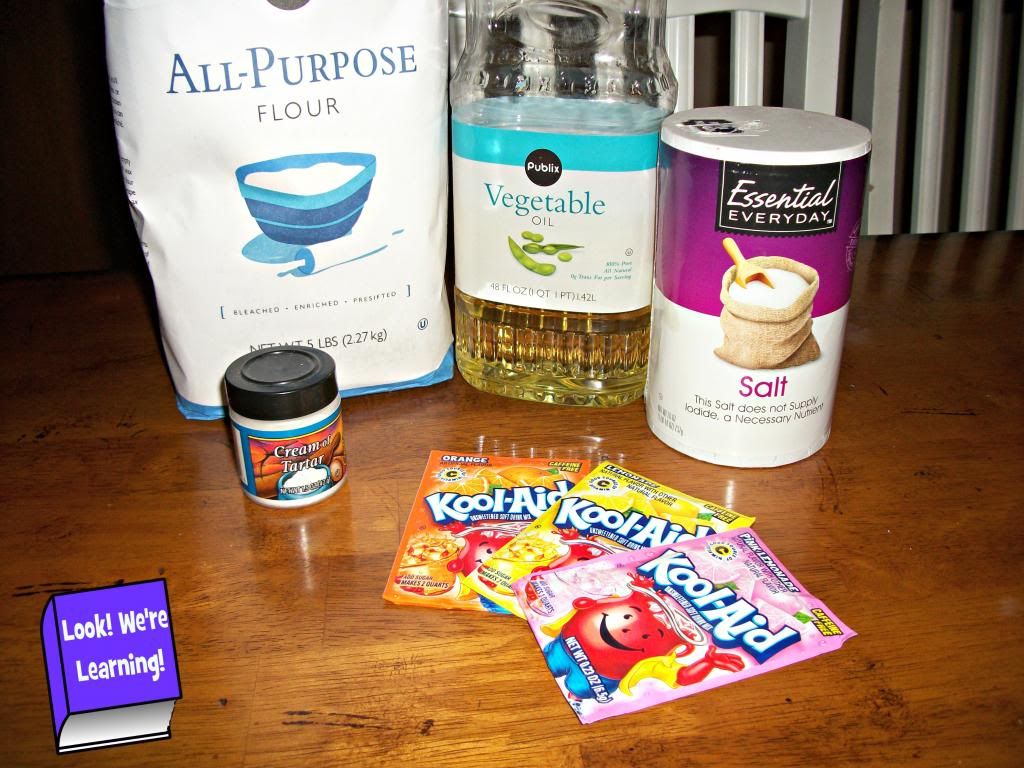
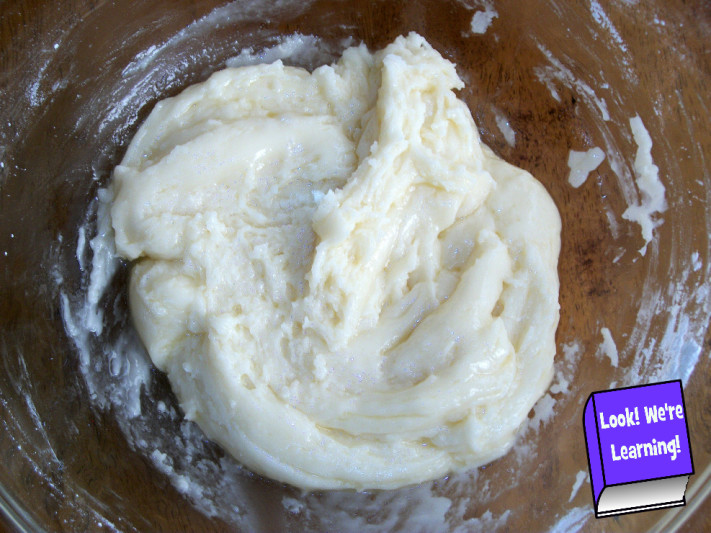
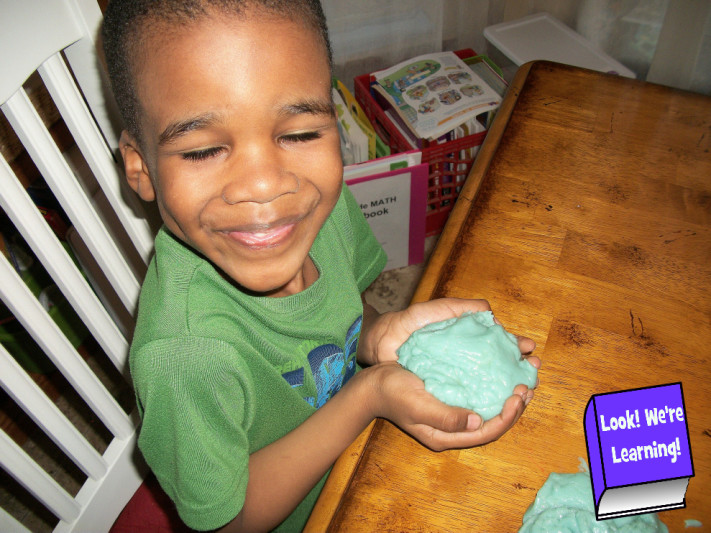
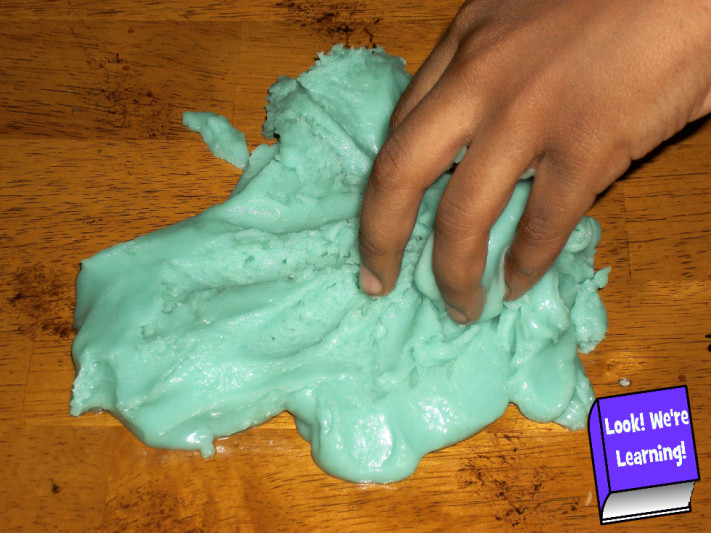
For our scented dough, we decided to make Kool-Aid scented play dough using a recipe from Kraft. I was interested to see how this would turn out using just the Kool-Aid powder for the scent and color. We went with pink lemonade, lemonade, and orange for our flavors.
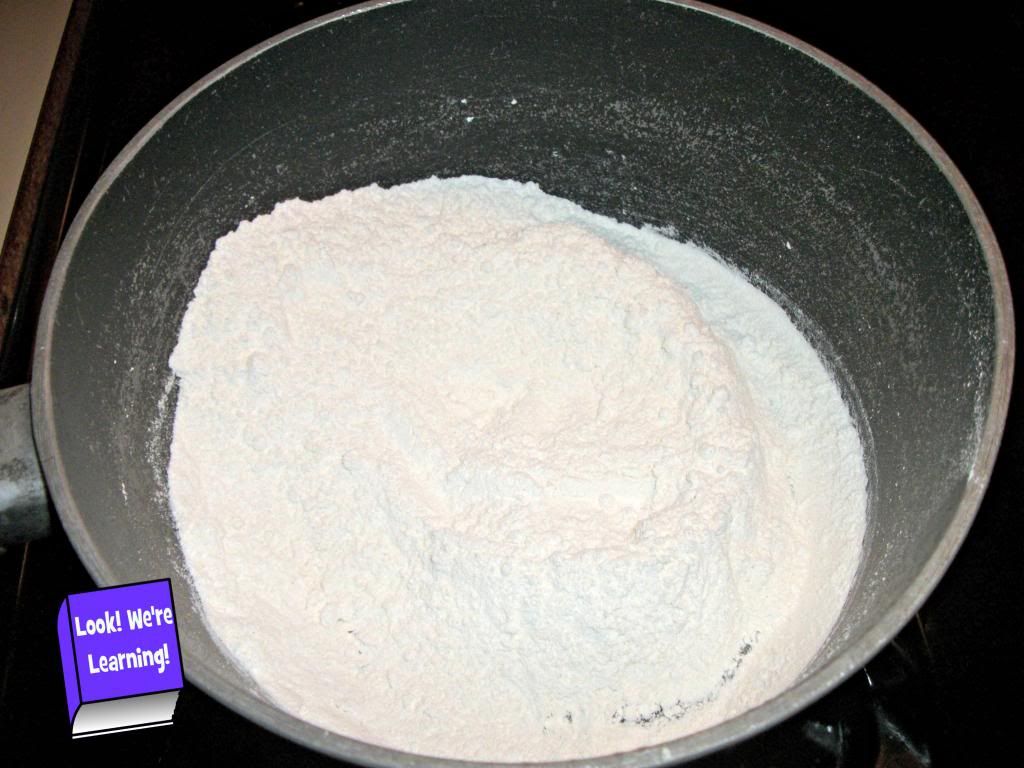
I started with the pink lemonade flavor. When I mixed up the dry ingredients, I started to wonder whether the color would show or not.
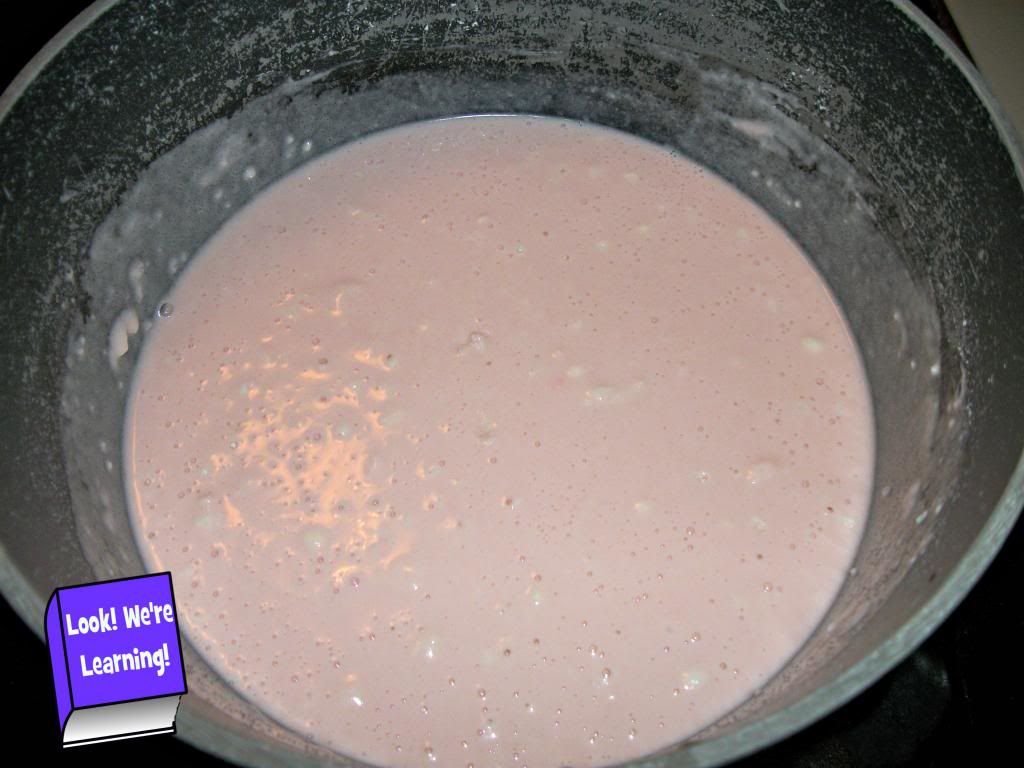
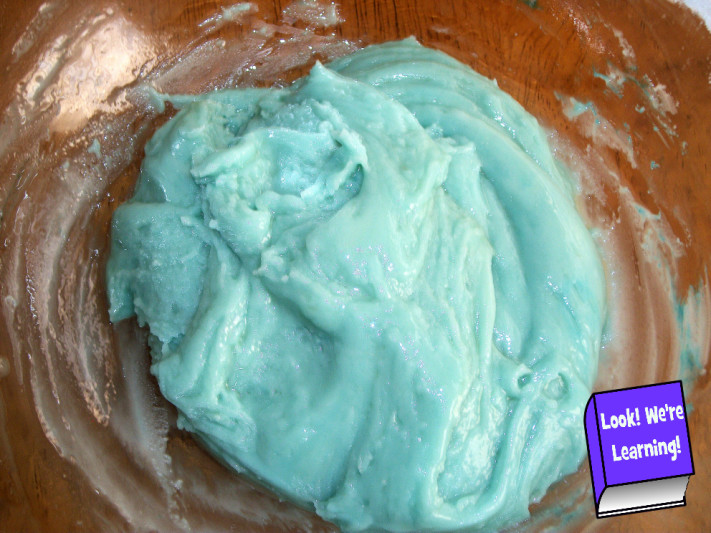
But once I added the water and oil, the color showed and I felt a little less worried…lol.
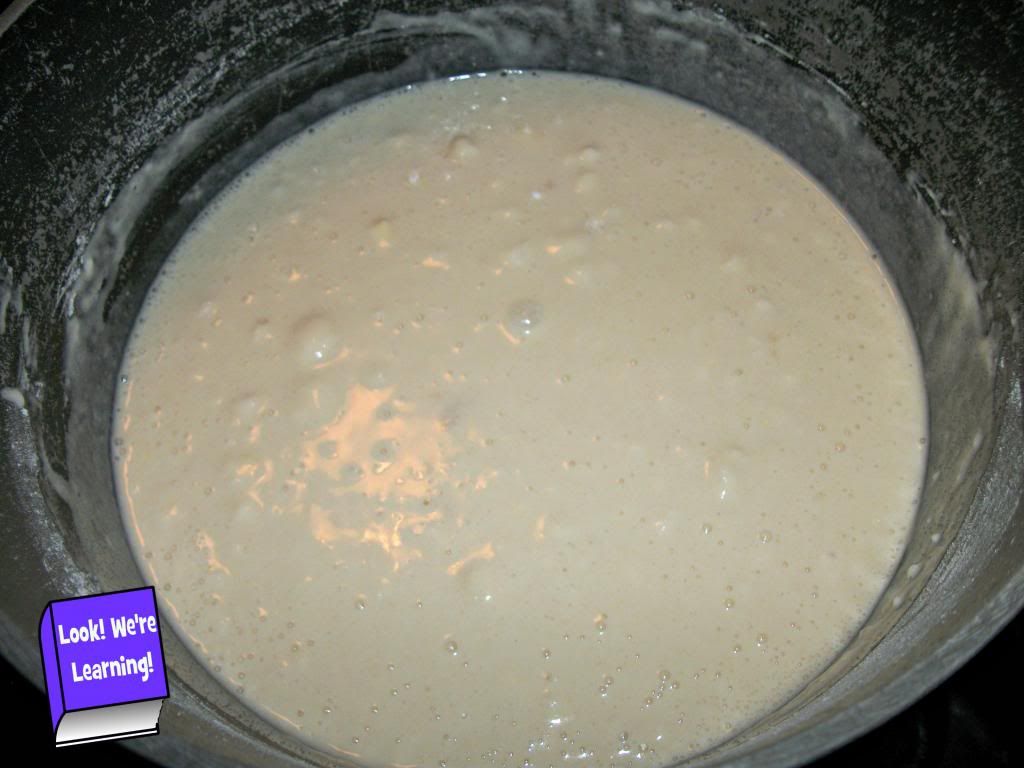
Here’s the lemonade-flavored batch.
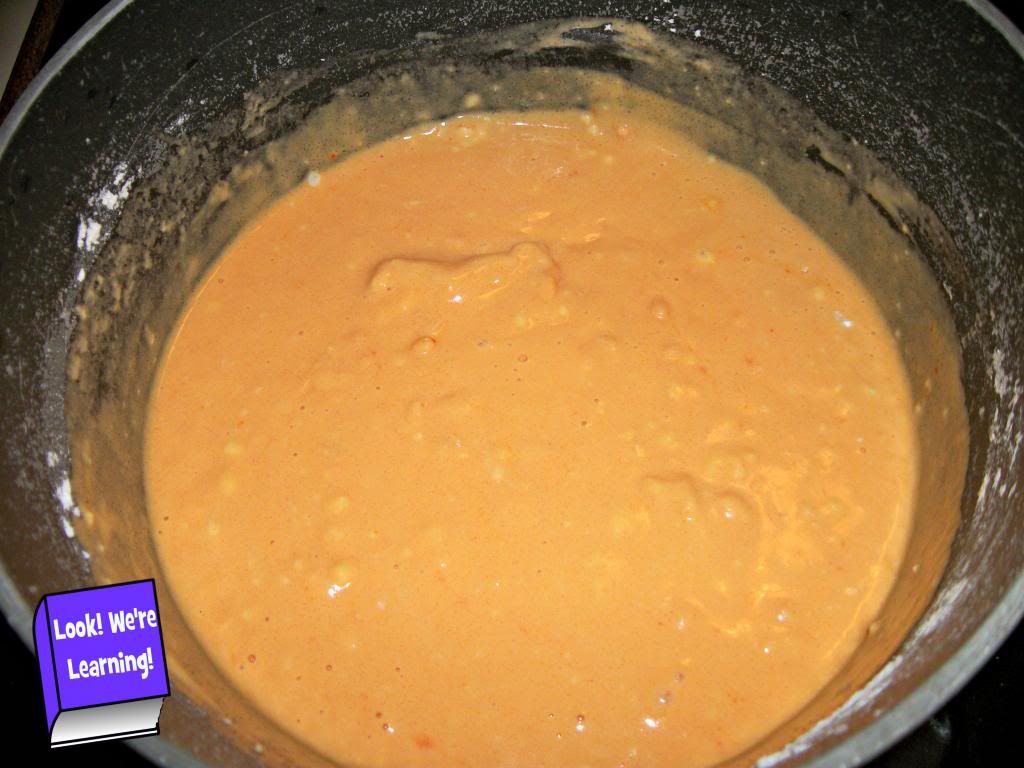
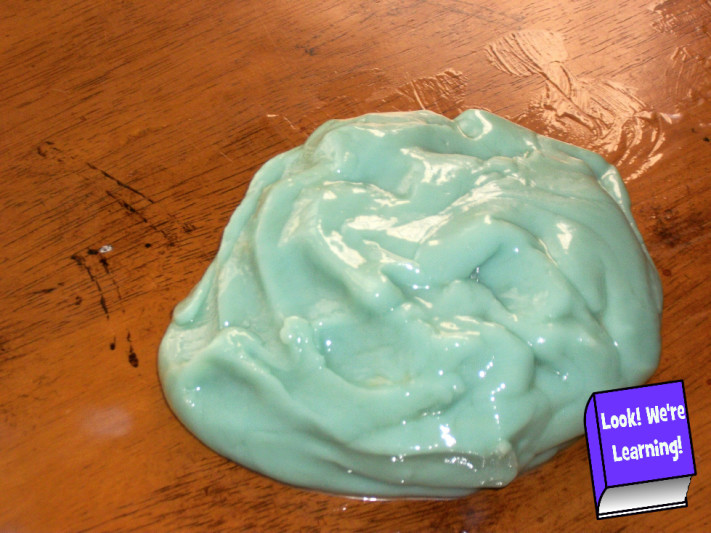
And the orange-flavored batch. You just combine the ingredients and stir over medium heat for a few minutes until you get a ball of play dough.

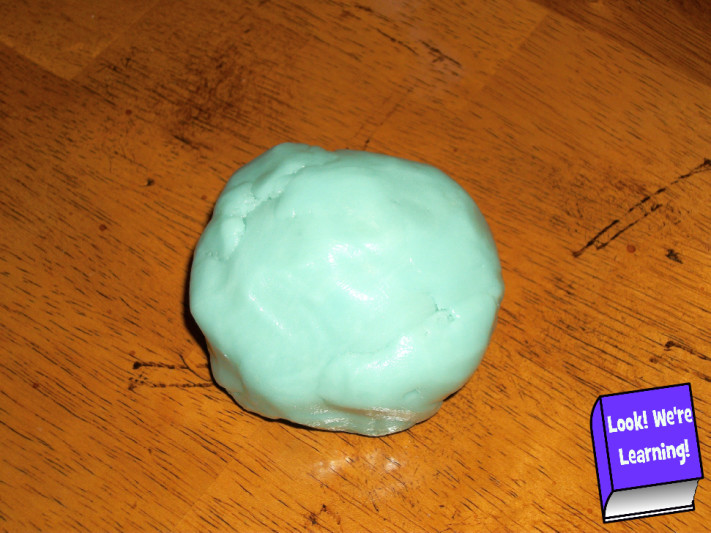
Let them all cool for a little bit and you’re ready to go! A word of caution: This dough dries out very quickly, so you’ll want to cover it up if you don’t intend to use it right away.
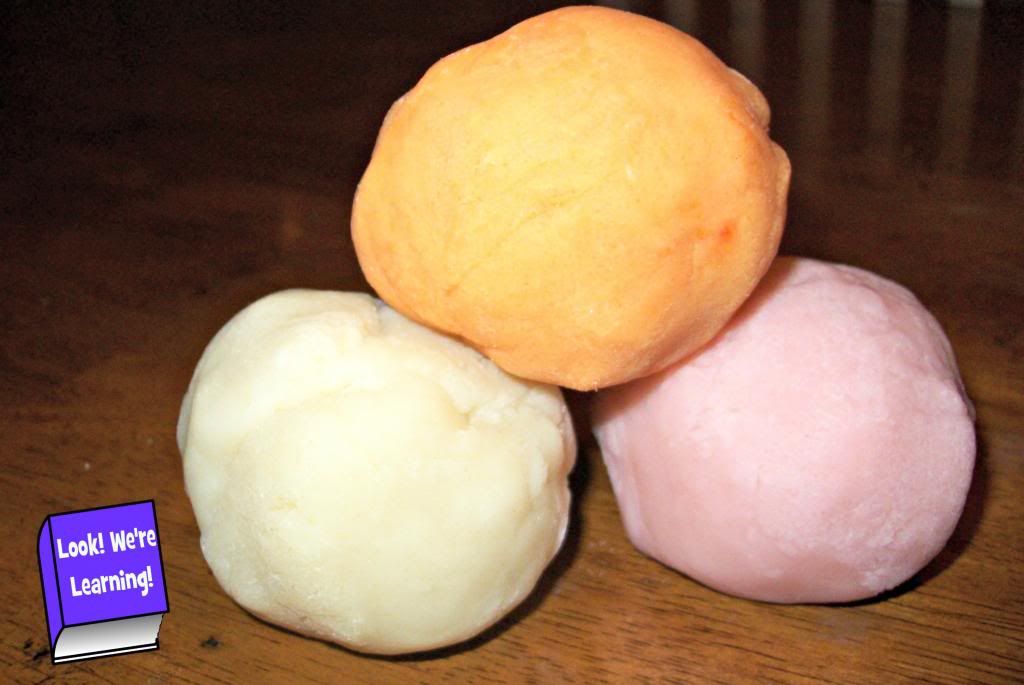
Now for the verdict: Of these three flavors, the orange was definitely the best. It produced the best color and it smelled wonderful! The pink lemonade had a slight scent, and the lemonade didn’t smell like much of anything…lol. Using a stronger flavor like fruit punch would probably be even better. 🙂

We’d love to see your sensory dough experiments! Feel to link up your sensory dough fun below!

Please read the following guidelines before linking up.

Share family-friendly posts related to the month’s theme. Feel free to link old or new posts that highlight your favorite recipes for sensory dough. Failures and unsuccessful attempts are welcome.
We ask that no posts are linked with copy/paste recipes from other sources. If you use a recipe from another source, please link back to the original recipe.

By linking up, you give permission to share your post and one photograph in future posts and through social media channels.

Visit 2-3 other posts that others have shared. Discover new ideas and meet new friends!

The linky will remain open for two weeks. On the 12th of each month, all co-hosts will post a new dough with their spin, highlighting at least one post from the month before and pin each post to the 12 Months of Sensory Dough Board.

If you would like to, please grab the 12 Months of Sensory Dough button for your blog. And be sure to stop by and visit our co-hosts to get their take on the featured dough for the month!
Lemon Lime Adventures

An InLinkz Link-up


Follow Lemon Lime Adventures’s board Best of the Best Sensory Dough on Pinterest.
Filed Under: 12 Months of Sensory Dough, Blog Hops, PreK Homeschooling, Sensory Activities

The Real Sacrifice of Motherhood

April 10, 2014 by Selena Robinson 15 Comments

I haven’t shared a personal post on here in quite a while, so I thought I’d let you all know about something that’s been on my heart lately.

When I hear people speak about motherhood and/or homeschooling, one of the words I hear the most is “sacrifice”. Quite often, I’ve heard people mention some of these sacrifices, which could include giving up a career (for some mothers), accepting the physical changes in your body (for most mothers), and sharing your time everyday (for every single mother on earth).

If you’re homeschooling, you’ll have even more sacrifices, which might involve living on a smaller income, learning to teach subjects in which you did not excel as a student, and adapting to the learning needs of your children.

But there’s another sacrifice that I’m having to make as a mother: I have to give up my feelings. Now I don’t mean my feelings about my kids, of course. But I’m having to let go of how I feel about a lot of other things so that I have room for my feelings toward my kids to grow.

Here’s what I’ve discovered about the real sacrifice of motherhood.

The Real Sacrifice of Motherhood

The Real Sacrifice of Motherhood

Before I had kids, I used to have an opinion about nearly everything under the sun.

Did that celebrity have plastic surgery?

Should the U.S. Individual Income Tax code be changed?

Is it impolite when someone holds the door open and no one says “Thank you?” (Yes, it is, by the way.)

I voiced these opinions to almost everyone I could find and I’d muster up some pretty strong emotions about all of these topics and others.

The Real Sacrifice of Motherhood

It wasn’t just small things like these, either. I had some pretty strong opinions about things that have happened in my life. I was angry about the injustices I’d experienced. I was frustrated, because so many issues had gone unresolved. And I was sad that I missed out on developing long-lasting friendships during my youth.

As I get closer to my kids, though, I’m finding that there is just no room for these feelings to continue taking up space in my heart. I’m at a point where I can either love my kids or hold onto to all those other feelings. And it’s no contest. My kids win.

The Real Sacrifice of Motherhood

Psalm 62:8 says “Trust in him at all times, O people. Pour out your hearts before him. God is a refuge for us.” (New World Translation of the Holy Scriptures) I’ve decided to take that counsel seriously and deposit all of my unresolved feelings with Jehovah God in prayer. I know that He wants me to be the best mother I can be, and I know that He will support me if I’m willing to make this sacrifice for my children.

So, that’s where I am today. But I’d love to know what sacrifices you’ve made to become mothers and/or homeschooling mothers. Feel free share your experiences below.

2014 Blogger Planner, Calendar, and Menu Planner from Mama Miss

Filed Under: Family Life, Homeschooling Encouragement, Parenting

Ultimate Guide to Foreign Language Lessons for Kids

April 7, 2014 by Selena Robinson 7 Comments

We’ll be making some HUGE changes to our educational focus this fall. (I’ll be sharing some of those with you in a few weeks.) But one of our major focuses will be foreign language. There’s no doubt that the world is getting “smaller” in a way, and we feel that our kids need to be aware of other cultures, comfortable with all kinds of people, and able to communicate freely in as many languages as they like.

The Ultimate Guide to Foreign Language Lessons for Kids - Look! We're Learning!

So…today I’m sharing my ultimate guide to foreign language lessons for kids! We already use ASL as a family and I’m currently learning Spanish, but both Jay and I are interested in several other languages. We plan on using these links to learn right along with our little ones next year! 🙂

Ultimate Guide to Foreign Language Lessons for Kids - Look! We're Learning!

Foreign Language Lessons for Kids

Chillola – Chillola offers basic words in several foreign languages, including German, Spanish, French, and Italian. To read the phrases in each language, just choose which one you’d like to learn, then scroll down to see them grouped by category.

Mango Languages – If your local library system participates in Mango Languages, then you have access to this resource absolutely free! Mango Languages offers structured online foreign language lessons for kids and adults in over 60 tongues! Sixty!

DuoLingo – DuoLingo, which is available both online and as an app, is an excellent foreign language resource for kids, because the lessons are very short. Since users have to listen and respond regularly, it’s almost impossible to get bored using it – a huge plus for learners with ADHD.

BBC Languages – There are 40 languages featured on the BBC Languages website, and the courses are very, very thorough with quizzes, videos, and pronunciation. It’s geared more toward older teens and adults, but you can still use it to introduce foreign language vocabulary to kids.

LiveMocha – LiveMocha offers free online foreign language lessons, resources, and conversation with native speakers. 35 languages are available.

Open Culture Free Language Lessons – This is an enormous list of free online foreign language resources with links for lots of languages, including Arabic, Lithuanian, Swahili, and Turkish. Links include free courses, printable foreign language lessons, and iTunes lectures. Most of these are geared toward middle grades, teens, and young adults.

Our fellow iHN blogger Angie Kauffman of Many Little Blessings and The Homeschool Classroom has written extensively about how to teach foreign language to kids. Here are a few of her resources about general foreign language lessons:

Fun Activities for Teaching a Foreign Language – There are plenty of great suggestions here for how to make foreign language learning fun for kids. Rather than sitting at a desk, you might want to try some of these suggestions, including read-alouds and dramatic play to teach foreign language.

Methods for Teaching a Foreign Language to Your Child – At Many Little Blessings, Angie shares tips about using movies, songs, and places to introduce kids to foreign language.

Ultimate Guide to Foreign Language Lessons for Kids - Look! We're Learning!

American Sign Language Lessons for Kids

Lifeprint – Created by Dr. Bill Vicars, Lifeprint is the premier online ASL resource. It’s completely free and it’s comprehensive. A good place to start is with the 100 Basic ASL signs section, because it covers several of the common ASL words and terms kids need to learn.

KidCourses ASL – This site has several free ASL printable worksheets, including cut and paste activities, coloring pages, and fingerspelling handouts.

Signing Time – Our kids used to enjoy watching Signing Time on television, and this is the show’s official website. Most of their products are available for a fee, but there are ASL songs and printables that you can view for free.

Signing Savvy – Signing Savvy is a massive online ASL dictionary. There are over 7,000 signs listed, and the website offers multiple signs for just about every term. That’s very helpful, because you’ll find that all deaf people do not use the same signs.

Sign Language for Dummies – Despite the name, this is a very smartly-designed website, and there are great resources for ASL kids lessons. There are even pictures of kids demonstrating signs. I use those as coloring sheets sometimes with young kids who are learning ASL.

ASL Video Lesson Series – Of course, we’re doing an ASL video lesson series of our own! You can view past tutorials on the blog or subscribe to our YouTube channel for more ASL vocabulary.

A few more great ASL resources from Angie Kauffman’s The Homeschool Classroom, courtesy of guest blogger Megan Spires:

Teaching American Sign Language to Children – A good place to start using ASL with kids is by teaching them the alphabet. There are excellent suggestions in this post for using the ASL alphabet in activities around the house.

5 Fun Activities for Teaching American Sign Language – ASL is a picture language, so learning it should be lots of fun for kids! This post offers some great tips to keep ASL fun, such as scavenger hunts, games, and field trips!

7 Creative Ways to Teach American Sign Language – While ASL was designed as a method of communication for deaf and hard-of-hearing individuals, it’s a great language for anyone to learn! In this ost, Megan explains how to include ASL in your everyday life with the kids.

Ultimate Guide to Foreign Language Lessons for Kids - Look! We're Learning!

Latin Lessons for Kids

Several of my fellow iHN bloggers have written great tips about teaching Latin for homeschoolers!

Visual Latin – Tricia Hodges, who blogs at Hodgepodge and The Curriculum Choice, shares her review of Visual Latin – a program that includes both free Latin lessons for kids and a deluxe program available for purchase.

Race to the Colosseum Latin Game – Pam Barnhill has created a board game for learning Latin called “Race to the Colosseum” that looks like so much fun! It would be perfect for young students or active learners, who need a little encouragement getting excited about Latin. You can learn more about the game and how to buy it on Pam’s blog Everyday Snapshots.

Song School Latin – Amy Maze features one of her favorite resources for teaching Latin to kids: Song School. Latin is a major component of the classical homeschooling method, so if you’re considering pursuing that style of teaching, you may want to visit Amy’s blog Living and Learning at Home to learn more about classical education and the Trivium.

Studying Latin in Elementary School – Angie Kauffman shares a post from Jen at Forever, For Always, No Matter What about how you can overcome early obstacles to teaching Latin in elementary grades.

Latin for the Average Mom – What if you don’t know Latin yourself? (Like me…lol) This is a great post about how you can implement a Latin education in your homeschool and learn it yourself in the process.

Ultimate Guide to Foreign Language Lessons for Kids - Look! We're Learning!

French Lessons for Kids

Little Explorers French Dictionary – Part of the Enchanted Learning website, the Little Explorers dictionary offers English-French words for all 26 letters of the alphabet. You can also print the entire PDF French dictionary if you want to use a paper version.

French Games – Instead of learning French from flashcards, the French Games website allows kids to learn through playing online French games! There are more than 100 different topics from which you can choose, including family, school, and food.

Alpha Buddies French – Alpha Buddies is the French alphabet section of DLTK, which has a ton of printable worksheets for early grades. This is a good resource for young kids who are new to French. You can print French alphabet coloring pages and let the kids color them.

Bonjour – Rocket Language operates this site, so you’ll see ads for its paid programs at the bottom of the page. But, the free introductory course is pretty good. There are sections with audio guides for French greetings, weather, and how to ask for help.

BBC French for Kids – On this site, kids can learn how to introduce themselves in French, spell in French, and use French numbers. Songs and free printable worksheets are also available for use with the program.

Resources for Studying French in Your Homeschool – 10 resources you can use to teach French in homeschool are listed in this post. As Angie Kauffman mentions, there really aren’t a lot of French resources available, so this is a great list!

Ultimate Guide to Foreign Language Lessons for Kids - Look! We're Learning!

Spanish Lessons for Kids

Spanish Town – The Spanish Town website features free online Spanish lessons for kids on topics such as food, time, animals, and grammar. You’ll also find free printable Spanish worksheets and videos that correspond to each lesson plan.

Language Guide: Spanish – Language Guide is a basic Spanish vocabulary resource that offers audio pronunciation guides for selected Spanish words such as greetings, articles of clothing, and food.

Word Dynamo Spanish – Part of the Word Dynamo section at Dictionary.com, the Word Dynamo Spanish area is a fun way to test Spanish vocabulary through flashcards, definitions, and crosswords. They’re grouped by topic, which is helpful, but they’re also very short activities, so they’re perfect for young learners! (I use these a lot to study for class.)

Los Opuestos Flashcards – Naturally, I can’t leave out our free Los Opuestos flashcards, which you can print and use to introduce Spanish opposite words to your kids!

Some of the iHN bloggers have written quite a bit about learning Spanish in homeschool. Here are some of the great resources they’ve shared:

Excelerate Spanish – Michelle Cannon of The Holistic Homeschooler shares a review of the Excelerate Spanish program – a multi-sensory Spanish curriculum that includes workbooks, lessons, and DVDs.

Learning Spanish at Home – Writing at The Homeschool Classroom, LaToya Edwards shares some of her favorite resources for teaching Spanish at home.

Homeschool Spanish Resources for Kids – Karyn Tripp of Teach Beside Me provides a super list of Spanish resources that are available online. She’s even included Mi Vida Loca, which is one of my personal favorites. It’s geared toward older teens and adults, and it sends you on a mission that allows you to learn Spanish along the way.

Speekee Spanish – In this post, Karyn reviews Speekee Spanish, an online Spanish video tutorial series for kids. The program carries a fee, but you can receive a free trial that includes access to all the videos and lessons.

Ultimate Guide to Foreign Language Lessons for Kids - Look! We're Learning!

Korean Lessons for Kids

Wikibooks: Basic Korean – These five Korean lessons are part of the WikiBooks project, so they’re subject to revisions. However, they are excellent (and free) introductions to the Korean alphabet, along with proper Korean pronunciation.

L-CEPS Korean – Once you’ve mastered the Korean alphabet, you may be ready to learn basic conversation in Korean. This website explains how to say greetings, common phrases, and numbers in Korean. It also contains a link to a free trial web app for learning Korean.

Linguanaut – Linguanaut is another basic Korean online tutorial resource. It features instructions in Korean greetings, Korean phrases, and “survival” phrases that you’ll need if you face a medical emergency in Korea.

Fellow iHN blogger Aadel Bussinger, who is currently living in South Korea, has experience in teaching Korean to kids and she’s shared some of her wisdom on her blog These Temporary Tents.

10 Great Apps for Learning Hangul – Aadel shares several great, inexpensive apps for learning Korean. These would be great for kinesthetic learners like Tigger!

Italki – In this post, Aadel reviews Italki, an online foreign language tutoring resource for kids that allows students to talk virtually with native speakers and work with a tutor.

Ultimate Guide to Foreign Language Lessons for Kids - Look! We're Learning!

Chinese Lessons for Kids

Miss Panda Chinese – Miss Panda Chinese is a Chinese program for children that features songs, videos, and a phonetic guide. If you don’t want to buy the program, you can view several of the videos and an explanation of Chinese tones and phonetics right on the website.

BBC Primary Mandarin – There are several videos and games for learning Mandarin on the BBC Primary Languages Mandarin site. Kids can learn how to talk about themselves, school, and food in Mandarin. There’s also a section about Chinese culture.

Chinese iLab – This site offers both paid Chinese lessons for kids, as well as 10 free introductory lessons about how to use Chinese tones and how to talk about basic subjects in Chinese. Each free lesson has both an mp3 file and a video slide presentation.

Semanda – If you want a simple way to introduce Chinese vocabulary to kids, you might like the free printable Chinese flashcards available from Semanda. You can choose from Chinese or Pinyin, and all of the terms include pictures and the English words to make learning easier.

Eva Varga, an iHN blogger, is teaching Mandarin to her children, even though she doesn’t speak it! She’s shared some great tips on her blog EvaVarga.net and on the webite Better Chinese.

How to Teach Mandarin – In this post, Eva explains how she teaches Mandarin in her homeschool, despite the fact that she doesn’t know the language. There are great suggestions here for Mandarin immersion through cultural experiences and conversation.

Chinese Pro – Eva reviews the iPad app Chinese Pro and how she uses to reinforce Chinese vocabulary with her kids.

Using Dubbed Movies to Learn Mandarin – Writing at Better Chinese, Eva discusses how watching dubbed movies is helping her kids to get a better grasp on Mandarin.

Whew! Those are the resources I’ve found so far, but I know there are a lot of other foreign language resources out there for kids. If you have any good ones, we’d love to hear about them in the comments!

This post is part of the Ultimate Guides linkup at iHomeschool Network! Stop by to read great in-depth learning guides from our fellow bloggers!

Ultimate Guide to Foreign Language Lessons for Kids - Look! We're Learning!

Filed Under: American Sign Language Lessons, Educational Websites, Foreign Language, Homeschool Curriculum, iHomeschool Network Linkups

ASL Lesson 5: ASL Food Signs

March 26, 2014 by Selena Robinson 2 Comments

We’re back today with another edition of our ASL Lesson series! Today, we review 15 ASL signs for food. In this clip, we go over the signs for:
Keep Reading…

Filed Under: 2013-14 Curriculum, American Sign Language Lessons, Foreign Language, Homeschool Curriculum

Edible Play Dough Dairy Free Recipe

March 12, 2014 by Selena Robinson 11 Comments

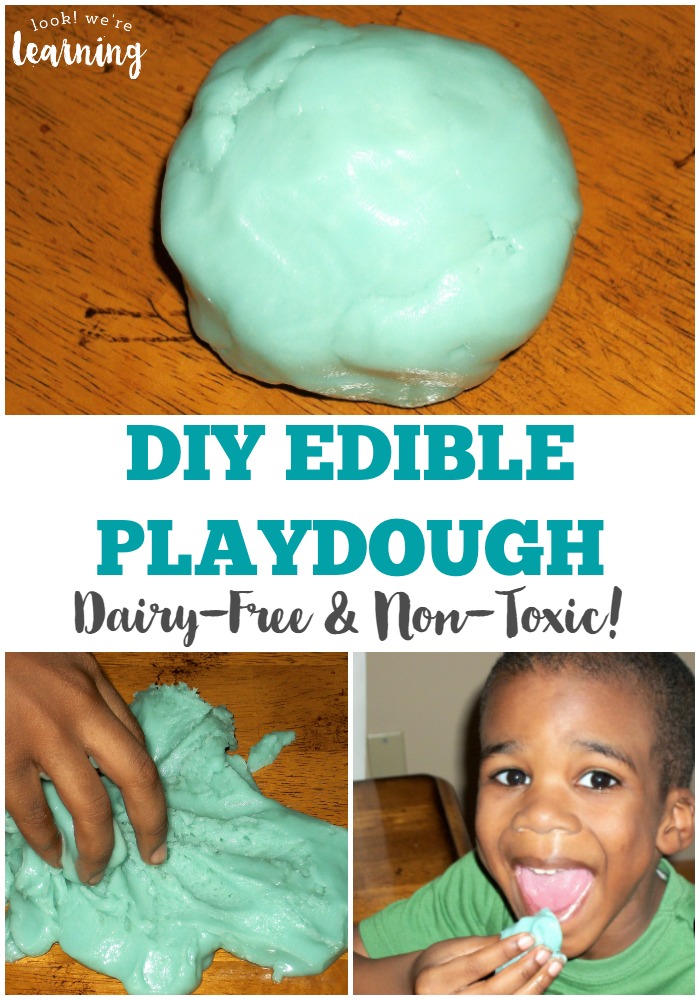
My kids absolutely love sensory play and one of the best ways to have sensory fun is to make your own playdough! But if you want to take it to the absolute max, you make edible play dough. Just because you can. 🙂

Several people in our family are lactose-intolerant, so we generally follow a dairy free lifestyle. But when we started looking around for edible play dough recipes, a lot of them used butter. So we decided to make an edible play dough dairy free recipe!

The great thing is that the recipe is simple and delicious (even without dairy products), which means that even if you’re not following a dairy free lifestyle, your kids will still love it.

If you enjoy this activity, be sure to grab our free Beach Number Playdough Mats to use them with!

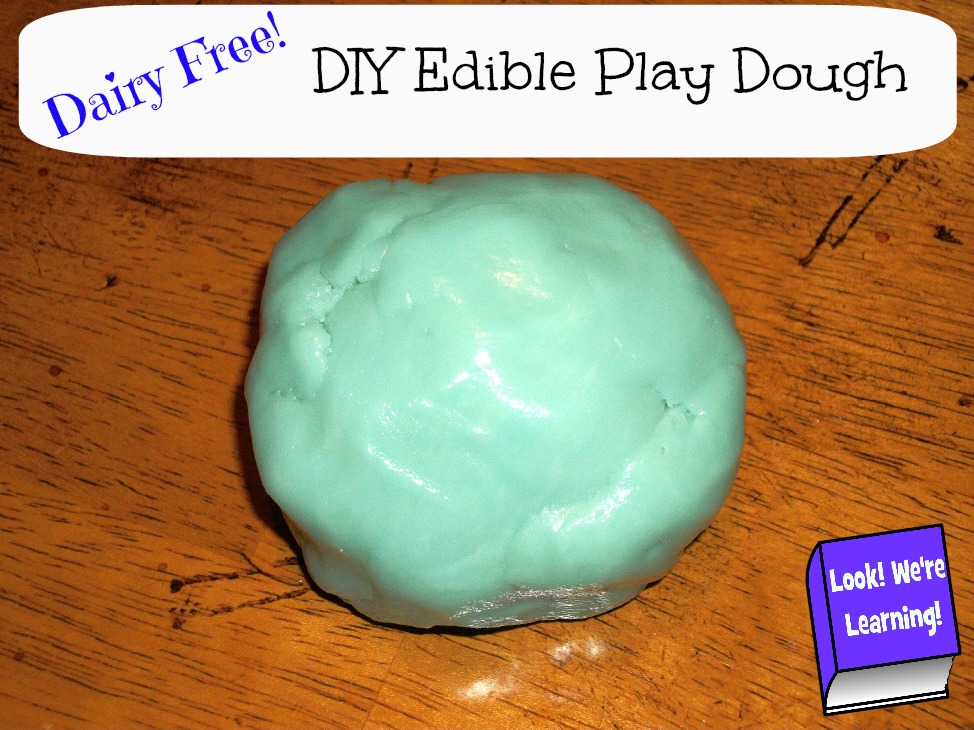
This edible play dough dairy free recipe is perfect for kids who love sensory play but avoid eating dairy! It's super sweet and soft for play!

Dairy Free Edible Play Dough Recipe

We found a great allergy-free edible play dough recipe from the American Academy of Allergy, Asthma, and Immunology. The basic recipe uses several household food staples, including powdered sugar, but you can swap out any of them for allergen-free versions.

Edible Play Dough Dairy Free Recipe

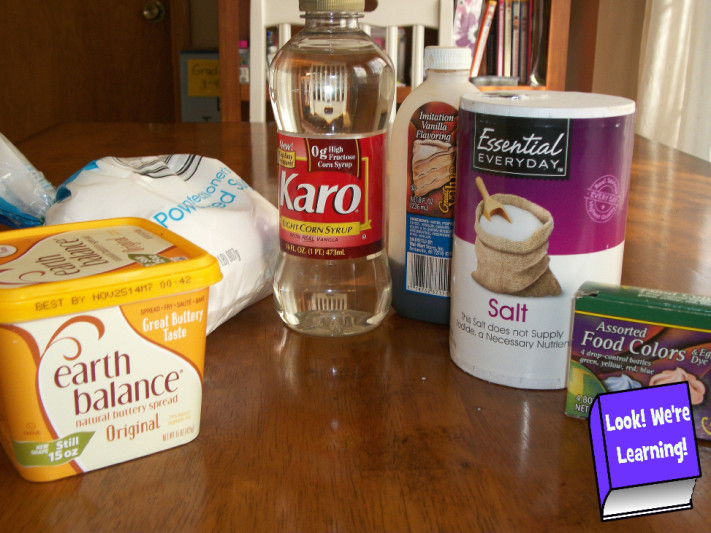
With 6 ingredients, this edible play dough dairy free recipe is a bit more involved than some of the others. This isn’t exactly a no-cook recipe, since you have to melt the vegan butter, but it still comes together quickly!

Edible Play Dough Dairy Free Recipe

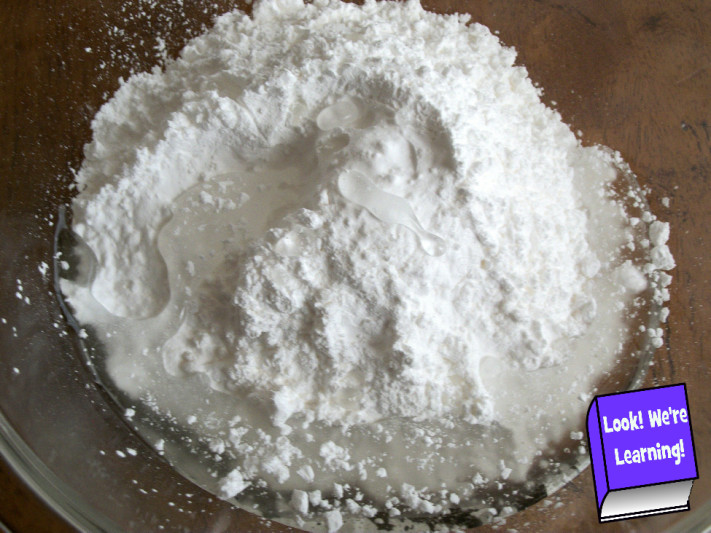
Powdered sugar and corn syrup go in the bowl first…

Edible Play Dough Dairy Free Recipe

Followed by vegan butter, vanilla, and salt….

Edible Play Dough Dairy Free Recipe

…and finally, food coloring!

Sensory Fix™ for Everyday Sensory Needs

Edible Play Dough Dairy Free Recipe

The initial consistency of this dough was really greasy, kind of the like the cloud dough that went horribly wrong last month.

Edible Play Dough Dairy Free Recipe

After a night in the refrigerator, though, it was much more pliable and easier to work with.

Edible Play Dough Dairy Free Recipe

As you can see, Roo didn’t care either way. That boy is obsessed with play dough.

Edible Play Dough Dairy Free Recipe

He played around with the texture a bit.

Edible Play Dough Dairy Free Recipe

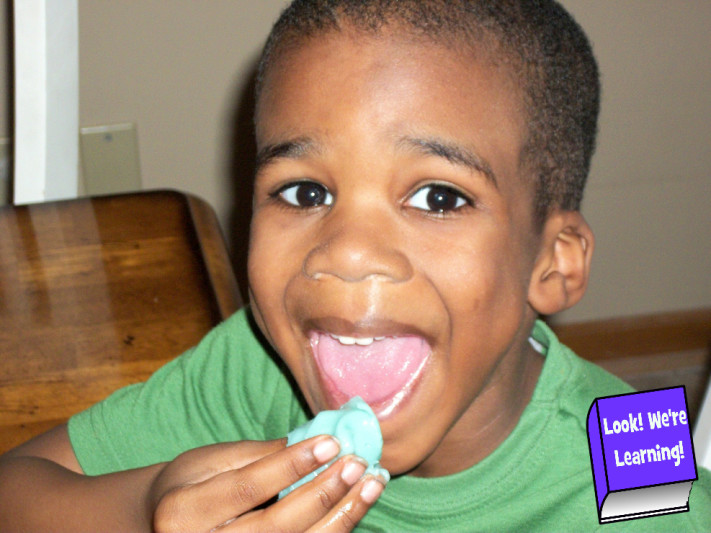
But when he found out that he could eat it, there was no stopping him! (A note: This stuff is basically frosting, so don’t let your kids go crazy with it or they’ll never go to sleep!)

Edible Play Dough Dairy Free Recipe

See what I mean? 🙂 We had a “ball” working with this edible play dough!

Edible Play Dough Dairy Free Recipe

Grab the full recipe below!

Edible Play Dough Dairy Free Recipe for Kids
Print

Edible Play Dough Dairy Free Recipe

Prep Time 10 minutes
Total Time 8 hours 10 minutes
Servings 1 batch of dough

Ingredients

  • Adapted from AAAAI
  • 3 cups powdered sugar
  • 1/4 cup corn syrup
  • 1/2 cup vegan butter melted
  • Splash of vanilla
  • Sprinkle of salt
  • 5 drops food coloring any color desired

Instructions

  1. Combine the powdered sugar and corn syrup in a large mixing bowl. Stir well.
  2. Pour in the vegan butter and mix. Add the vanilla, salt, and drops of food coloring and stir until color is even throughout the dough.
  3. Refrigerate overnight before using.

If you enjoyed this post, see more of our homemade play dough fun below!

These preschool playdough mats are a fun way to help early learners practice fine motor skills!

Whip up this simple taste safe slime recipe to give the kids some tasty sensory fun!

Plus, get more tips for sensory fun at home on my Sensory Play Pinterest board!

Filed Under: PreK Homeschooling, Sensory Activities Tagged With: diy play dough, edible play dough, edible play dough dairy free, edible play dough dairy free recipe, edible play dough recipe, edible sensory dough, homemade play dough, how to make edible play dough, how to make edible sensory dough, play dough

Using Pinterest for Unit Studies

March 10, 2014 by Selena Robinson Leave a Comment

Today we’re linking up with iHomeschool Network to share our five favorite Pinterest boards! As you can tell here, here, and here, I love unit studies! They’re so flexible that they’re adaptable for just about any age, grade level, and subject, which makes them a perfect choice for eclectic homeschoolers.

Pinterest is a HUGE help when it comes to unit study planning. I can find a topic I like and then pin several resources to use when we cover our units. I have a lot of Pinterest boards, but five of them play a major role in our unit study planning.

Pinterest Board #1: Seasonal Learning

Follow Selena @ Look! We’re Learning!’s board Seasonal Learning on Pinterest.
Our Seasonal Learning board is home to loads of great resources for unit studies! If you’re basing a unit around a particular season, it’s simple to take a few lessons, experiments, and crafts and combine them into one ongoing study. I got the inspiration for our All About Snowflakes unit study from several of our Pinterest finds. Since we’re coming up on spring, here are a few of our pins that would be great for a spring unit study:

Spring Tulip Painting with Forks

18 Cloud and Rain Crafts

Spring Butterfly Craft with Toilet Paper Rolls

30 Indoor Activities for Spring

Pinterest Board #2: Learning for Little Ones

Follow Selena @ Look! We’re Learning!’s board Learning for Little Ones on Pinterest.
We have three learners aged five and under, so even with unit studies, it can be tricky to find activities for them all. Often, I can find an activity on Pinterest that’s geared toward young kids, and then adapt it for my oldest student (or vice versa). In fact, we’ll be breaking out the busy bags and such for Piglet soon! Some of the fine motor activities I’ve found are even good for older kids, especially those who have ADHD like Tigger and like to fidget during class. 🙂

Here are a few of our favorite pins for little learners that lend themselves to unit studies:

Sight Word Treasure Hunt (Pirate unit)

DIY Play Beach Sand (Beach unit)

Ice Cream Cone Letter Activity (Ice Cream unit)

Woven Paper Plate Rainbow (Weather unit)

Pinterest Board #3: Living History

Follow Selena @ Look! We’re Learning!’s board Living History on Pinterest.
I’m a huge history buff, so history makes up a large part of our homeschooling curriculum. A lot of the unit studies we do are based around historical figures or events, and we’ve found great history resources on Pinterest. Since we have so many active learners, weaving in activities and crafts with history helps our kids get more involved in our lessons. This is where the crafts in the other boards really come in handy.   Here are a few of the ideas for teaching history that we like on Pinterest:
Lewis and Clark Expedition Study

African History for Kids

Dinosaur Activities for Kids

Smithsonian Natural History Museum Virtual Tour

Pinterest Board #4: Seeing the World

Follow Selena @ Look! We’re Learning!’s board Seeing the World on Pinterest.
Geography is a natural tie-in for history, so it’s fairly simple to add it into a unit study. When we did our series on ancient Africa, we naturally talked about the geography and people of the continent as we covered the historical events. But sometimes I find separate geography resources that are too good NOT to include in a unit study…lol. As much as I love history, I find geography kind of boring, so the geography lessons and units I’ve found on Pinterest have been a big help.  

Here are a few of our favorite geography pins for unit studies:  

30 Ideas for Studying the World

Free Printable State Notebooking Pages

Landforms Paper Flipbook

50 Books for 50 U.S. States

Pinterest Board #5: Unit Studies

Follow Selena @ Look! We’re Learning!’s board Unit Studies on Pinterest.

Naturally, here’s where I keep pins that are for completed unit studies. I like to make up our own, but I’ve also found lots of great unit studies written by other homeschoolers on Pinterest. Here are a few of our favorites, including one of our own:

Early Elementary Canada Unit Study

The Aristocats Unit Study

Ant Unit Study Resources

 Inuit & Arctic Circle Unit Study

And that’s how we use Pinterest to help us plan unit studies! How do you use Pinterest in your homeschool? Do you have any particular topic you search for on the site? What are your favorite pins for homeschooling? Let us know in the comments!

This post is part of the Our Pintastic Pinboards linkup from iHomeschoolNetwork! Click on over to visit our fellow bloggers and see their favorite Pinterest boards!

Using Pinterest for Unit Studies: Look! We're Learning!

Filed Under: Homeschool Curriculum, Homeschool Planning, Unit Studies

The Living History Series: Duke Ellington

March 7, 2014 by Selena Robinson Leave a Comment

This post contains affiliate links. See our Disclosure Policy for details.

If you’ve been following along with our blog for a while, you’ve probably caught on to a recurring theme in our Living History series for the past few months. We’ve learned about Nat King Cole, Dizzy Gillespie, Ella Fitzgerald, and Miles Davis so far. Naturally, we’re focusing on giants of jazz! Of course, we can’t do a jazz series without talking about Duke Ellington, so he’s our focus for March. 🙂

I’m a little more familiar with Duke’s work than I have been with the previous artists in the series. I’ve heard his music pretty often. In fact, “In a Sentimental Mood”, which is one of my favorite jazz songs ever, was on an episode of The Cosby Show. I’ve loved that song ever since.

 We’ll be learning more about Duke Ellington’s life, career, and legacy this month, and we’ll be using some of the books below to help the kids get to know his music.

Books about Duke Ellington

Duke Ellington: The Piano Prince and His Orchestra

Duke Ellington: His Life in Jazz with 21 Activities (For Kids series)

Duke Ellington (Getting to Know the World’s Greatest Composers)

Stay tuned to find out how you can grab our Duke Ellington Biography Unit!

Filed Under: 2013-14 Curriculum, Homeschool Curriculum, Living History Series, Music Education

ASL Lesson 4: ASL Family Signs

March 5, 2014 by Selena Robinson 1 Comment

We’re back this week with another installment of our American Sign Language lessons on YouTube! We’ve already covered letters and numbers in ASL, basic ASL greetings, and days of the week in ASL, so it’s time to learn family signs in ASL!

In this video, we cover the signs for:

Keep Reading…

Filed Under: 2013-14 Curriculum, American Sign Language Lessons, Foreign Language, Homeschool Curriculum

Simple Science Experiments: Coffee Can Condensation Science Experiment

March 3, 2014 by Selena Robinson 8 Comments

Winter is coming to an end, but we wanted to sneak in one last winter-themed activity this school year. Tigger is a science fanatic, and she’s always up for an experiment, so it was a great time to learn about condensation and frost. 🙂

I was reading through one of our science workbooks and found this super easy Coffee Can Condensation Science Experiment, so we got to work!

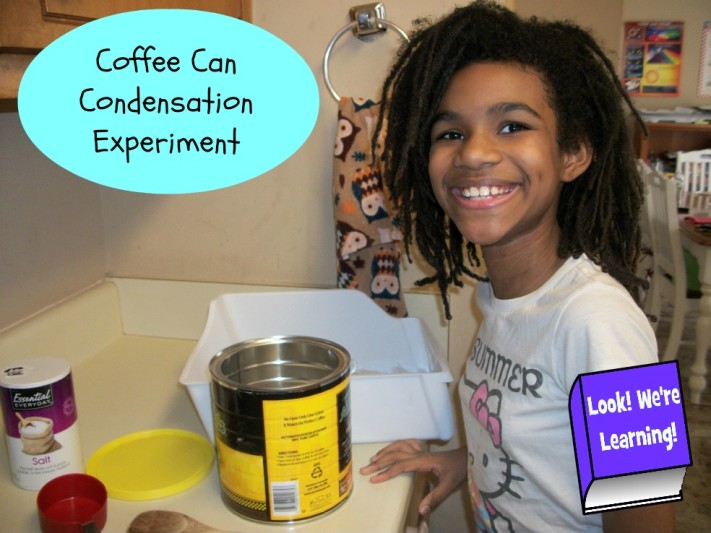
Coffee Can Condensation Experiment

Coffee Can Condensation Science Experiment

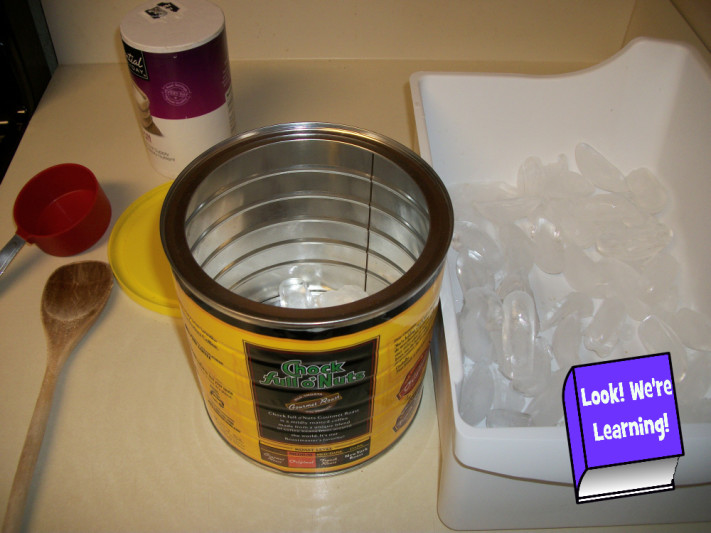
We picked up the workbook Science Projects & Experiments: Grade 2-3 at Target a while back, but I’d totally forgotten about it. (It was recently unearthed during a School Supply Scavenger Hunt.) One of the experiments in the book uses a coffee can, salt, and ice to create frost.
Coffee Can Condensation Experiment

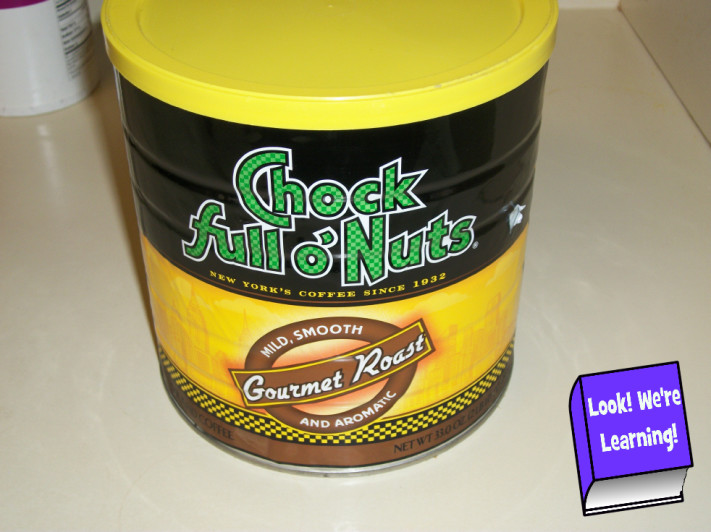
What often puts me off from science experiments is that they often seem to consist of things I don’t have on hand. I just happened to have an empty coffee can, though, so this was perfect!

Coffee Can Condensation Experiment

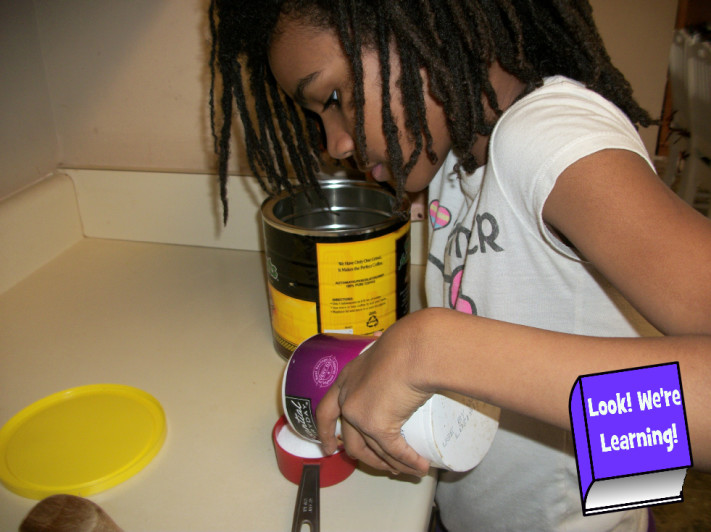
We put several ice cubes in the can, then added 1/2 cup of salt.

Coffee Can Condensation Experiment

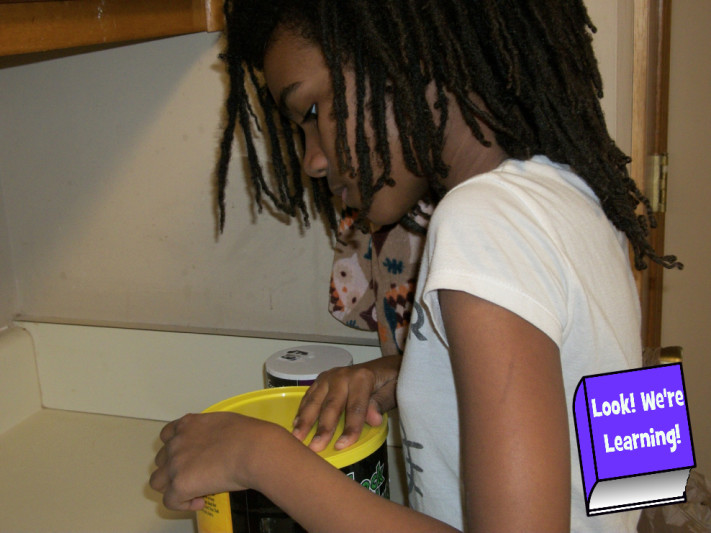
Tigger stirred the ice and salt together, then closed the lid.

Coffee Can Condensation Experiment

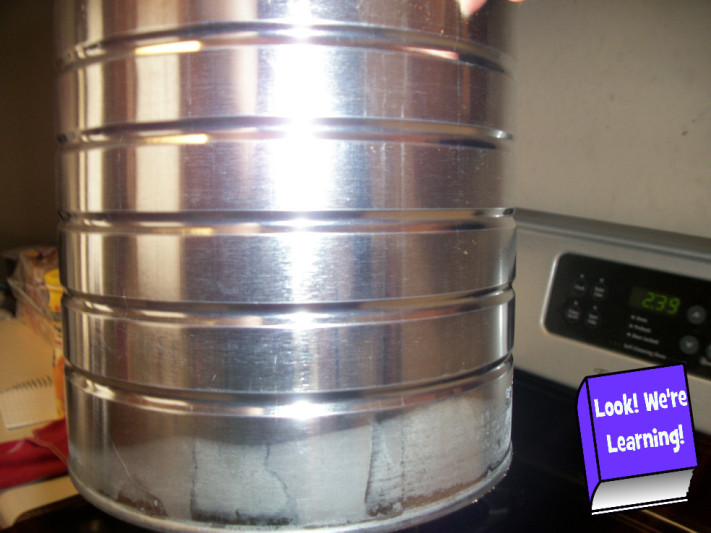
The experiment instructions said to observe the can at 10 minutes, 20 minutes, and 30 minutes to observe what would happen. After 10 minutes, I looked at the can and wondered why nothing was happening.

Coffee Can Condensation Experiment

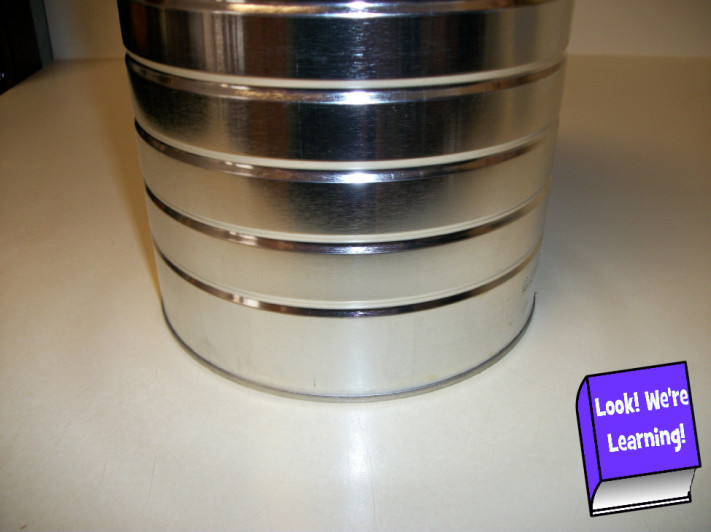
Then I realized that we’d never see anything with the wrapper still on it. Duh, Selena.

Coffee Can Condensation Experiment

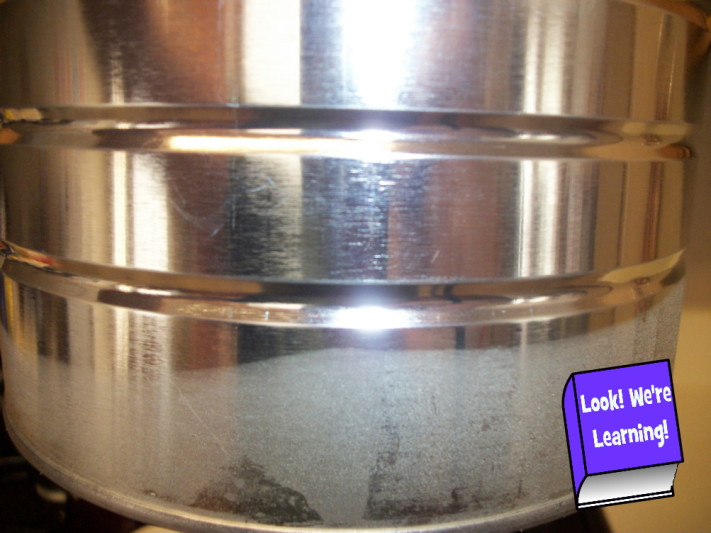
This was 20 minutes in. Frost was clearly developing on the outside of the can.

Coffee Can Condensation Experiment

Not only was frost developing, but there were a few drops of water at the base.

Coffee Can Condensation Experiment

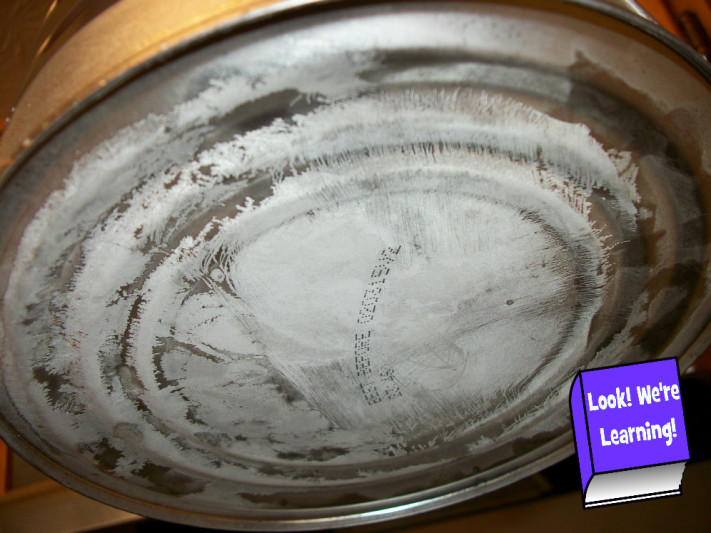
After 30 minutes, the entire bottom of the can was frosted over. As the book explained, the ice inside the can made the outside of the can extremely cold. As water vapor in the air touched the can, it immediately condensed and froze, becoming frost. Pretty neat!

Coffee Can Condensation Experiment

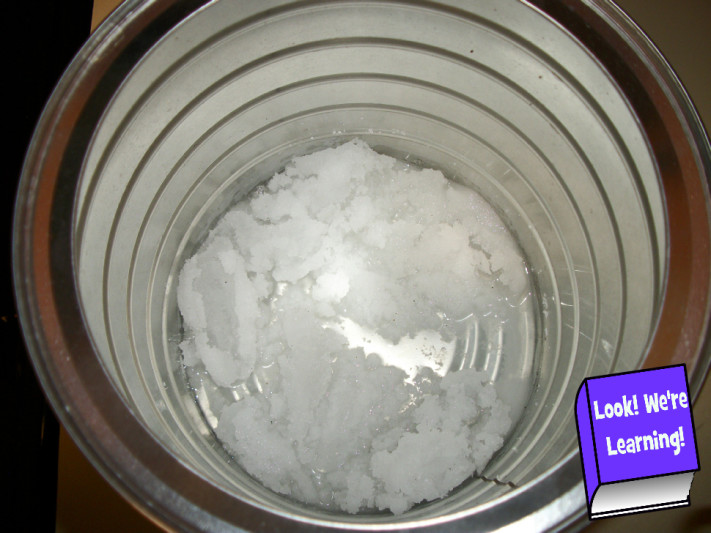
Tigger wanted to see what happened to the ice inside the can. We observed that the ice was melting, because of being mixed with the salt – which explains why road crews are always using salt to de-ice roadways!

This was a super quick and simple experiment, but Tigger loved it. So I’ll count that as a homeschooling win. 🙂

Tinker Crate >>

Filed Under: 2013-14 Curriculum, Homeschool Curriculum, Science

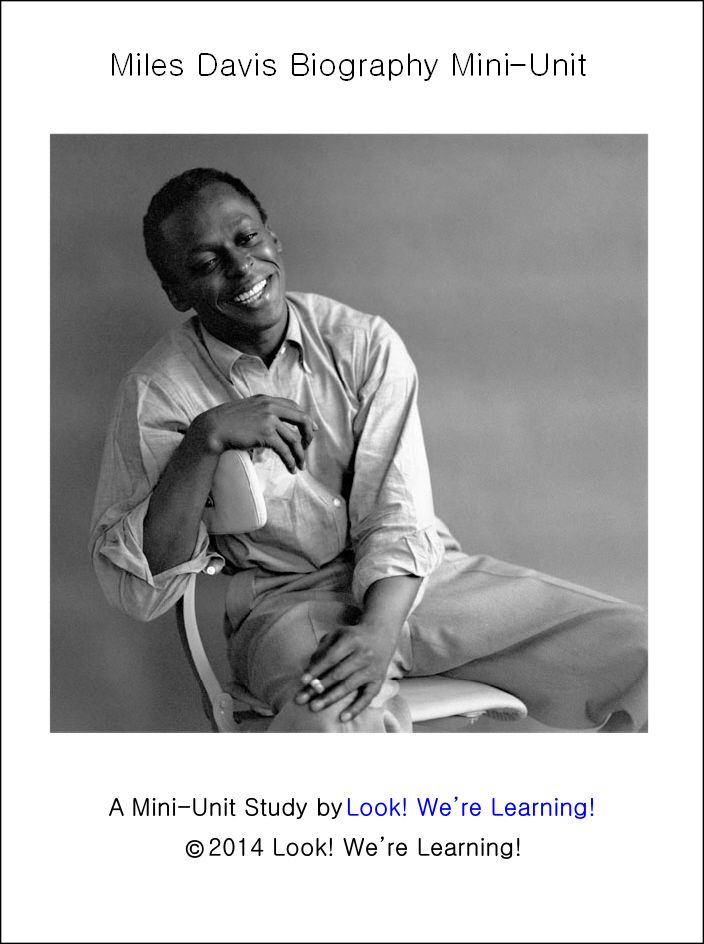
Miles Davis Biography Mini-Unit

February 28, 2014 by Selena Robinson 1 Comment

Good morning y’all! We made it through yet another week! 🙂 It’s the end of the month, so it’s time for another entry in the Living History series! This month we’ve been learning about Miles Davis.

Miles Davis had a comfortable upbringing, but a very troubled life. Ironically, his experiences seemed to help him grow and change as a musician, which is what led to his extremely long jazz career. He also made some terrible choices, eventually managing to rebuild his life with the help of his family and his love for music. He is most certainly not a role model, but his perseverance in the face of serious problems offers a great lesson for kids.

We’ve put together a free Miles Davis Biography Mini-Unit that you’re welcome to use with your family! In this pack, you’ll find:

  • A kid-friendly biography of Miles Davis
  • Review questions to help kids remember what they learned
  • A Miles Davis crossword puzzle
  • And copywork based on an interview with the jazz great!

To download your copy of the Miles Davis Biography Mini-Unit, click the image or link below!

Miles Davis Biography Mini-Unit: Look! We're Learning!Miles Davis Biography Mini Unit

Filed Under: 2013-14 Curriculum, Free Printables, Homeschool Curriculum, Homeschool Freebies, Living History Series, Music Education

  • « Previous Page
  • 1
  • …
  • 84
  • 85
  • 86
  • 87
  • 88
  • …
  • 98
  • Next Page »
Hi! I'm Selena, a veteran teacher and homeschool mom to four. I'm so glad you're here!
About Me Contact Terms of Use Privacy Policy Places I Share
Facebook Pinterest Instagram
Homeschool Printables Unit Studies Shop the Store
Copyright ©2026, Look! We're Learning!. All Rights Reserved. Design by Pixel Me Designs