Look! We're Learning!

Early Learning. Happy Teaching.

  • Shop
  • Printables
  • Homeschool
  • Crafts
  • Parenting
  • Blog

Getting Started With the Homeschool Workbox System

November 10, 2014 by Selena Robinson 1 Comment

The homeschool workbox system, which was invented by Sue Patrick, can be a great way to schedule lesson plans and organize your materials. In fact, if you have more than one child, the workbox system can literally save your sanity.

I shared a post earlier this year about how we use homeschool workbox organization to keep our materials in one place, but the system can also help you teach your children to be responsible for their own work. And that will certainly come in handy in the later school years, right?
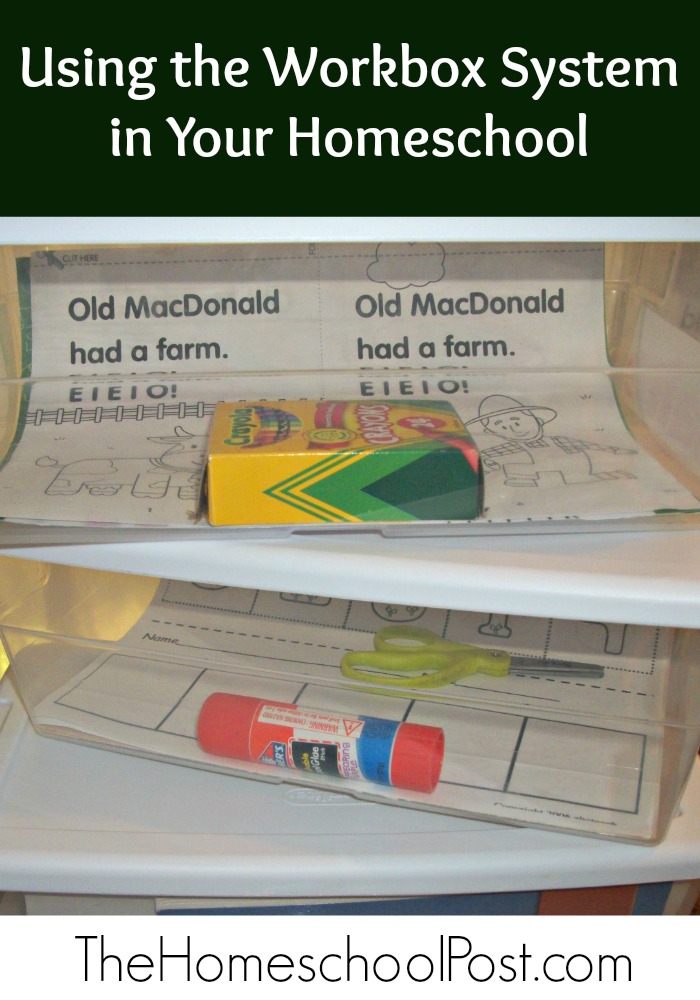
Using the Workbox System in Your Homeschool

I have had the privilege of writing over at The Homeschool Post for a while now and I recently got to share a post about how you can begin using the homeschool workbox system. If you are new to this technique or if you just want to know more about it, this post can give you an overview of what it includes and how you can simplify it for your family.

To get a look at how you can begin using the workbox system in your homeschool (without spending a fortune), stop by The Homeschool Post to read a few tips to help you get started!
Using the Workbox System in Your Homeschool – The Homeschool Post

Filed Under: Homeschool Organization, Homeschool Planning

Bodily-Kinesthetic Learning Style:  5 Tips for Helping Boys

November 7, 2014 by Selena Robinson 3 Comments

I blog about boys’ learning and learning styles, both of which are fascinating. Finding out more about a boy’s learning style can be truly helpful and can make a bit difference in his learning life. If you have a bodily-kinesthetic learner use these tips to help him learn.

Teaching boys who have a bodily-kinesthetic learning style requires patience and may take a few adjustments to your homeschool routine.

The main thing to remember about bodily-kinesthetic learners is that they love to learn by doing and they need to be in motion. Boys with this learning style also like physical play such as wrestling and horse-play, they are always tapping, twitching about or swinging their foot, they may be athletic, they need to touch someone when they are talking to them, and almost every one of them has difficulty sitting still!

The great thing about this is that tailoring some of your boys’ learning toward his strengths will result in a better overall learning experience—for both of you.

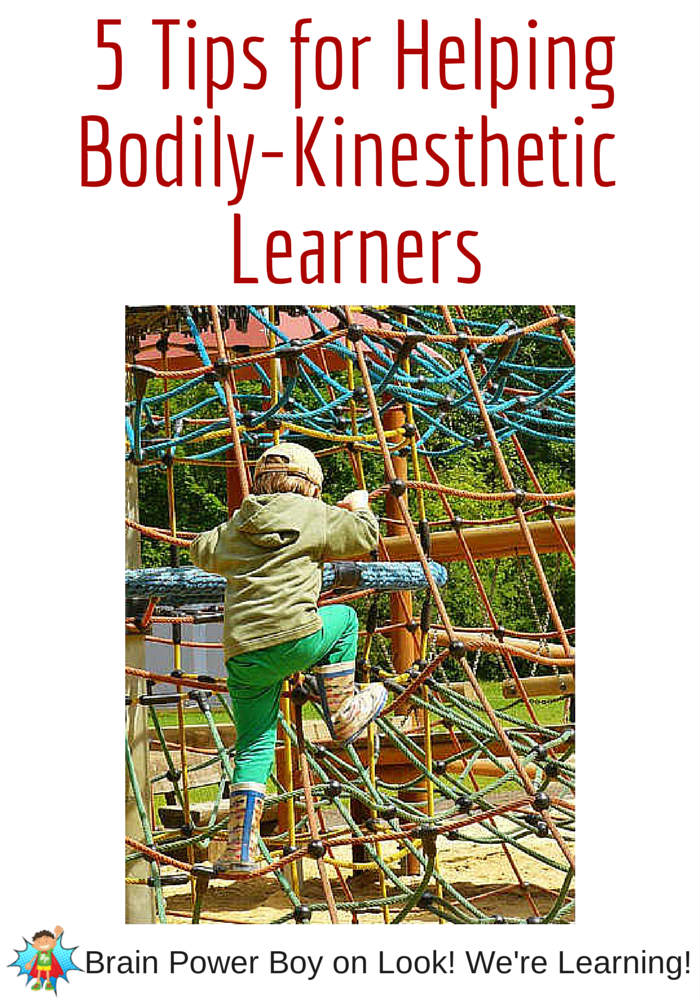
Bodily Kinesthetic Learning Style: 5 Tips for Helping Your Boy

Bodily-Kinesthetic Learning Style Tips:

Go Hands-On

Manipulatives are your friend. Use things like Cuisenaire Rods or LEGO Math Games and he will be more apt to dive in. Make your lessons hands-on if at all possible. Include things that he can use and manipulate. For example, if you are learning about the Eiffel Tower, make sure to provide materials so he can build a model of it.

Get Touchy Feely

If you want him to remember something put it in his hand. Let him touch it, feel it, take it apart, hold it, or re-build it. By doing this it becomes much easier for him to remember something about it.

Act It Out

Drama is big with many boys who have a bodily-kinesthetic learning style and using it is a great way for them to learn. If you need him to remember something, act it out together. Do an oral book report with a lot of action. Have him act out his answers in pantomime.

Get Loud

Yes, I really mean it. LOL I know some boys are pretty loud already but sitting quietly at a table trying to do work isn’t their style. Allow yelling out answers. Bang things around. Make it fun. If you are working on a project, choose one in which they can move, talk and get loud and you will have better luck.

Move About

Go out and about by using field trips, getting outside, seeing new places, or walking to the park. Get them out of the house and moving around.  Getting out works great but sometimes you need to stay home. For those times have boys walk in place, jump, clap, smack, squish, slap, or tap while working. Any movement is going to benefit your boy.

It is true that doing things this way can take a bit longer but planning ahead can help and it is really worth the effort. Use hands-on activities, touching and feeling, acting, noise, and movement to help your boy who has a bodily-kinesthetic learning style. Give him what he needs and see his learning abilities grow.

What do you do to accommodate your bodily-kinesthetic learner? Share your tips in the comment section.

FREE Shippin on any order of $75 or more any time!

Filed Under: ADHD Learning, Sensory Activities, Special Needs Homeschooling Tagged With: bodily-kinesthetic learning style, boys learning

Reading and Writing Activities for Kids with Family Fun Friday!

November 6, 2014 by Selena Robinson 5 Comments

Hi everyone! Welcome to another installment of Family Fun Friday! Last week, we featured our favorite homeschooling printables. This week, we’re onto Reading and Writing fun with six fabulous features!

Be sure to check out our favorites and link up your own posts below!

Reading and Writing Activities for Kids - Look! We're Learning!

Keep Reading…

Filed Under: Blog Hops, Family Fun Friday, Homeschooling

How Homeschooling Improved Our Family Life

November 4, 2014 by Selena Robinson Leave a Comment

We’ve been homeschooling for six years now…and we’re about to make a huge transition in our family. (I’ll be talking about that in an upcoming post.) But there’s no doubt that homeschooling has changed our family life….for the better.

How Homeschooling Improved Our Family Life - Look! We're Learning!Since most of us have ADHD, homeschooling has been a challenge but it’s also been a true blessing to our family. We’ve had fun, we’ve had fights, and we’ve had freedom to learn from and with each other.

Recently, I got the chance to share a bit about how homeschooling has improved our family life over at TOTS Family. Be sure to stop by and check out the post: How Homeschooling Has Improved Our Family Life to read more!


How Homeschooling Improved Our Family Life – TOTS Family


Filed Under: Homeschooling, Parenting

How to Write a Unit Study for ADHD Kids

October 31, 2014 by Selena Robinson 3 Comments

We’ve been using unit studies in our homeschool for years. Personally, I love them. They’re flexible and adaptable, which is perfect for keeping our kids interested in the lessons. We can write them ourselves, buy them from others, or make them up as we go.

If you’re unfamiliar with the unit study approach to homeschooling, check out our previous post about what unit studies are for more details. But, generally, they’re multi-subject lessons based around a central theme. You might have a medieval history unit or a harvest unit or a bear unit, and so on.

Since we’re homeschooling kids with ADHD, we make a few changes to help our kids stay interested and excited about what we’re learning. Here are a few tips that you can use to learn how to write a unit study for kids with ADHD!

Writing Unit Studies for ADHD Kids - Look! We're Learning!

How to Write a Unit Study for ADHD Kids

Follow their interests.

With unit studies, you have the flexibility to choose any topic you (or the kids) want. If one of your children is a huge fan of construction, like Roo is now, make that your topic. You won’t have to worry about them paying attention then. 🙂

When you’ve selected your topic, find ways to include all of the important subjects within it. For example, in a construction unit, I might include math worksheets featuring a construction theme, books about construction machines, and scientific concepts that are used in construction such as simple machines. It’s a great way to help kids develop an interest in subjects they may not have liked in the past.

Include movement at every opportunity.

Physical activity is excellent for helping kids with ADHD refocus their attention for learning. Use brain breaks or short bursts of physical movement every hour to give their brains a much-needed shot of adrenalin.

If you can find a way to make movement a part of the unit study, that’s even better! Using our construction example, kids can build a tower out of blocks, paper towel tubes, or sponges. You could even have them act out the functions of each construction machine they learn about. In fact, one of Roo’s favorite things to do right now is to use his arms like a front loader, complete with sound effects. It certainly makes our P.E. lessons interesting. 🙂

Don’t stress about time.

One of the goals of homeschooling is to help our kids love learning. If they’re doing that, don’t feel like you have to drop the topic to cover a different unit within a certain amount of time. If your children are enjoying the topic, it’s perfectly fine to stick with it for days, weeks, or even months on end.

Do you use unit studies with your kids who have ADHD? Tell us about how you adjust your units for them in the comments!

This post is part of the 31 Days of ADHD Homeschooling series! Thanks for following along with us this month! See all of the posts in the series by clicking the image below!

31 Days of ADHD Homeschooling - Look! We're Learning!

Little Passports

Filed Under: 31 Days of ADHD Homeschooling, ADHD Learning, Homeschooling, Special Needs Homeschooling

Free Homeschooling Printables with Family Fun Friday!

October 30, 2014 by Selena Robinson 3 Comments

Since we’re homeschooling on a budget (like many of you are), we love free homeschooling printables in our family! In last week’s Family Fun Friday, there were plenty of great homeschooling activities, including several great printable activities. Today we’re featuring our favorites!

If you’re a blogger, be sure to link up your posts to this week’s linky. Your posts could be featured next week!

Free Homeschooling Printables - Look! We're Learning!

Keep Reading…

Filed Under: Blog Hops, Family Fun Friday, Homeschooling, Homeschooling Printables

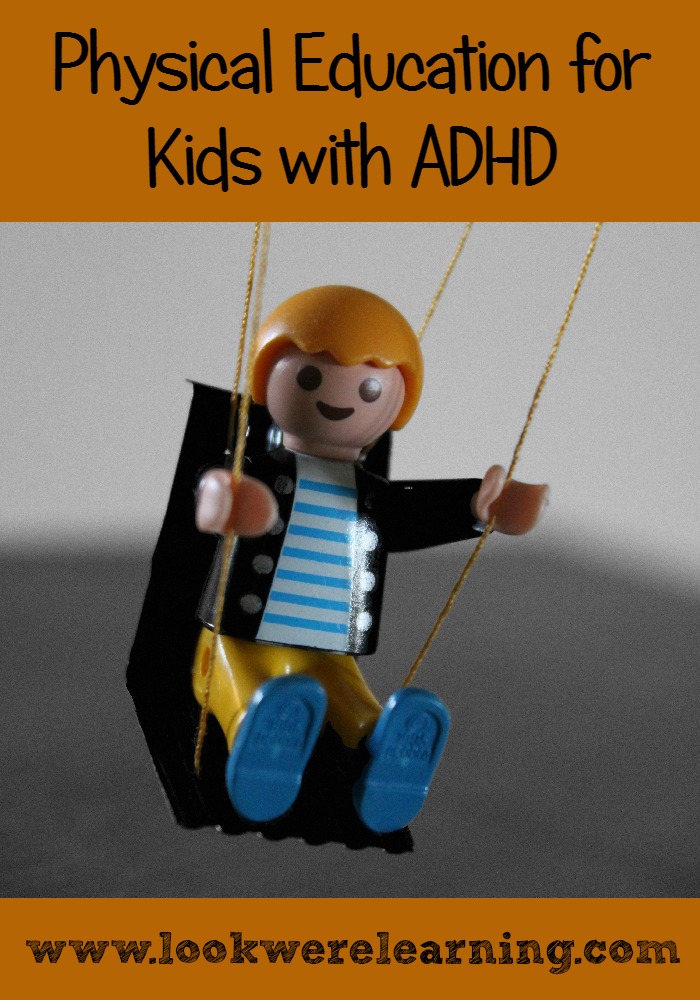
Creating an ADHD PE Curriculum for Homeschoolers

October 30, 2014 by Selena Robinson 1 Comment

Since kids with ADHD tend to be more active than other kids, it’s easy to think that physical education isn’t that important for them. Wrong! Depending on the child, PE can be even more important for a child with ADHD.

Because the ADHD brain has trouble organizing thoughts and carrying out instructions, kids with ADHD may be clumsier, less coordinated, and more likely to get injured than other kids. We saw this with Tigger quite a lot, especially since she also deals with sensory processing disorder. She fell, tripped, and got hurt much more often than her peers.

Since she was always active, I had assumed that she didn’t really need P.E. But in P.E., you learn so many critical concepts that are essential to being active later in life! So we decided to institute an actual P.E. program., but we made it into an ADHD PE curriculum with a few adjustments.

Homeschool PE for ADHD Kids - Look! We're Learning!

How to Make an ADHD PE Curriculum for Homeschool

Emphasize the basic skills first.

I went to public school until I was in seventh grade, so I had P.E. everyday as a young child. Even though it wasn’t that long ago *ahem*, I still forgot that I learned most of my basic movement skills there, not on the playground. When we took the kids to the playground last year, I couldn’t understand why they were afraid to climb the play structures. Duh! I’d never taught them how to jump down!

We started focusing on mastering the basic PE skills – jumping, skipping, standing, balancing, and running. I just took the kids to the playground last week and I almost couldn’t get them off the ladders. Even Piglet was climbing and sliding down with the rest of them. 🙂

Keep the lessons short.

Because kids with ADHD often have short attention spans, you might have to keep the structured P.E. lessons short, especially when you’re first beginning. They can get so excited about trying something that they fail to pay attention to the instructions and then they’re far more likely to get injured.

So, keep the instructions short and let them get involved as soon as you can. Watch them for signs that they’re losing focus – shifting eyes, fidgeting, etc. –  and cut the lesson when you see that. They’ll also want to play and explore on their own. You may even want to let them do that first, so that they’ll be more likely to pay attention when you teach the skills.

Try teaching P.E. first.

Earlier in the series, we talked about having P.E. early in the school day to help them organize their thoughts for later lessons. Having P.E. class immediately after breakfast may actually help your kids pay closer attention to their other subjects.

One note of warning, though: If you decide to have P.E. first, don’t make it too strenuous. Otherwise, both you and the kids will be too pooped to finish the school day! (I’ve done this, by the way.)

How do you create an ADHD PE curriculum in your homeschool? Tell us about the way you teach physical education in the comments!

This post is part of the 31 Days of ADHD Homeschooling series! Stop by tomorrow for Day 31: Writing a Unit Study for Kids with ADHD!

31 Days of ADHD Homeschooling - Look! We're Learning!

Family Time Fitness

Filed Under: 31 Days of ADHD Homeschooling, ADHD Learning, Homeschooling, Special Needs Homeschooling

Parenting Kids with ADHD and SPD

October 28, 2014 by Selena Robinson 2 Comments

In our family, we have kids who have both ADHD and SPD. In truth, the two conditions can have some of the same symptoms: inattentiveness, hyperactivity, etc. But SPD comes with its own unique set of challenges and usually affects one or more senses more than others.

*Note: I am not a medical expert in any way. These are just my observations from my experience with my kids. If you think your child has sensory concerns, please consult a medical professional.*

For example, Tigger and Roo are excessively touchy. They touch every single thing they see (unfortunately). Roo displays vestibular symptoms such as intentionally crashing into the floor and problems crossing the midline. While they both display classic symptoms of ADHD, these particular symptoms were red flags that they had sensory issues as well.

If you’re raising kids who have both ADHD and SPD, you may wonder about how to parent while considering both conditions. Here are a few suggestions that we’ve found to be helpful.

Raising Kids with ADHD and SPD - Look! We're Learning!

Image: Jaimie Duplass / Dollar Photo Club

Parenting Kids with ADHD and SPD

This post contains affiliate links. For details, see our Disclosure Policy.

Don’t obsess over labels.

I think that there is some value in labeling a behavior as ADHD-related or SPD-related, but if we get too focused on defining each individual characteristic, it’s easy to get confused. Honestly, some of the symptoms of SPD can look like ADHD and vice versa.

Here’s why I don’t stress about defining each individual behavior: SPD is not treated with medication. It’s treated with occupational therapy and sensory integration. Since many of the sensory activities suggested by experts are easily done at home, I just use the ones that seem to help my kids calm down. By the way, the book “The Out-of-Sync Child Has Fun” has excellent suggestions for sensory activities that can be done at home.

The Ultimate Guide to Brain Breaks eBook

Accommodate their sensory needs.

Since kids with SPD often can’t describe what they’re feeling, we have to be attentive to their sensory needs. Now that Tigger is older, she can explain when she gets the “jumpy” feeling in her mouth and we let her use her chewable necklace for oral input. But Roo is five and he can’t explain why he sometimes wants to dive onto the floor.

So, when I see that kind of behavior, I adapt to it by offering him heavy work, deep pressure, or vigorous physical activity. We also try to help the kids learn how to express their feelings, so that they can tell us when they need sensory input. Doing that has helped us cut down greatly on the number of tantrums that occur during our homeschool day.

Include sensory integration in your lessons.

We talked about the value of making our homeschooling lessons as multi-sensory as possible yesterday. If your kids are dealing with SPD, involving their senses in your lessons and activities actually boosts their ability to understand the material.

There are plenty of ways to include sensory play in your daily routine. For loads of sensory play ideas, check out our Sensory Play board on Pinterest!

Follow Selena – Look! We’re Learning!’s board Sensory Play on Pinterest.

Do any of your kids have both ADHD and SPD? How do you accommodate both conditions in your family? Let us know in the comments!

This post is part of the 31 Days of ADHD Homeschooling series! Stop by tomorrow for Day 29: Handwriting for Kids with ADHD!

31 Days of ADHD Homeschooling - Look! We're Learning!

Sensory Fix™ for Everyday Sensory Needs

Filed Under: 31 Days of ADHD Homeschooling, ADHD Learning, Homeschooling, SPD Homeschooling, Special Needs Homeschooling Tagged With: adhd, sensory processing disorder, spd

How to Increase Attention Span in ADHD Kids

October 27, 2014 by Selena Robinson 1 Comment

ADHD and poor attention span go hand in hand. In fact, inattentiveness is one of the consistent symptoms of ADHD that is evident in all people who have it. So, our kids with ADHD naturally have trouble maintaining attention, especially if they don’t like the subject at hand.

The good news is that we can help them to extend their attention spans, but – it won’t happen overnight and it won’t happen without lots of input from us. Of course, if you are a parent with ADHD (as I am), you’ll have to fight your own attention battles, and you might want to try these activities yourself so you can be consistent with them. 🙂

If you’d like to help your children learn to focus for longer periods, try these suggestions about how to increase attention span in your kids with ADHD!

How to Increase Attention Span in ADHD Kids - Look! We're Learning!

How to Increase Attention Span for Kids with ADHD

Encourage them to take notes.

One of the things we’ve done with our kids is to encourage them to take notes whenever they have to listen for an extended period of time. We attend meetings at an American Sign Language congregation, which is completely silent. As you can imagine, getting them to sit down and pay attention was a challenge. 🙂

Letting them take notes helped a ton. We don’t require that they write the entire time, either. Sometimes they draw pictures of what they see, which is actually a big help in understanding ASL.

Personally, I’m a visual learner, so when I take notes I use bullet points, multi-colored pens, and arrows to draw my attention to specific items. Mixing things up like that can also make it easier to pay attention.

Stimulate their senses.

We can also help our kids to pay attention longer by involving as many of their senses as possible. If you’re teaching a lesson in your homeschool, use bright pictures, upbeat music, and movement whenever you can. These additions can make your lessons more interesting, which will help your kids maintain focus.

If you have children with sensory integration issues, these kinds of activities are even more important. We’ll talk more about sensory issues in tomorrow’s post.

Use timed focus sessions.

You can also make paying attention into a mini-challenge. Establish special “focus periods” – short, intense periods when the kids will pay attention to a topic as closely as they can. Start with a few minutes, 2 to 5, and then gradually increase them based on age level.

You might even want to add an incentive for each milestone they reach. For example, if they can pay attention to a lesson for 10 minutes and show it by remembering three key points, they get an extra 10 minutes of screen time.

Have you been able to help your kids with ADHD increase attention span? Share your secrets in the comments!

This post is part of the 31 Days of ADHD Homeschooling series! Stop by tomorrow for Day 28: When ADHD and SPD Collide!

31 Days of ADHD Homeschooling - Look! We're Learning!

Move > Focus > Learn with the Ultimate Guide to Brain Breaks

Filed Under: 31 Days of ADHD Homeschooling, ADHD Learning, Homeschooling, Special Needs Homeschooling

Setting Screen Time Limits for Kids with ADHD

October 26, 2014 by Selena Robinson 5 Comments

Raise your hand if your child loves using a tablet. *everyone’s hand in the world goes up*

Digital devices are everywhere these days. And it’s pretty common for kids to use screen devices, such as tablets, computers, and TVs, all the time – even for educational purposes.

For kids with ADHD, though, excessive screen time can pose some serious problems. While it’s unlikely that watching TV will cause ADHD, it can certainly worsen the symptoms. Many television programs and movies are designed to cater to short attention spans, which is something that people with ADHD do not need help developing. Not to mention that an excessive amount of screen time can actually contribute to behavioral problems in some kids, including aggression, irritability, and hyperactivity.

Personally, I don’t know if screen time is actually worsening my kids’ ADHD, but I do know that when they watch it for too long, they have an extremely difficult time settling down, listening, and paying attention afterward. So in our family, we use very clear screen time limits for kids and they seem to be working for us. Here are a few of the suggestions we’ve tried.

Managing Screen Time and ADHD - Look! We're Learning!

Setting Screen Time Limits for Kids with ADHD

Set a daily allotment of screen time.

On school days, we have a limit of no more than one hour of screen time per day. When we’re doing a relaxed day, I might let them watch more, depending on the content. If they want to watch a documentary, I don’t mind if it’s three hours long. If they want to watch Phineas and Ferb, I set the limit to no more than two episodes. They get so worked up after Phineas and Ferb that I can just forget about getting anything else productive done that day. 🙂

Time it right.

If I want my kids to take a nap in the afternoon, I’ve found that I simply cannot let them watch television or play a video game that morning. They won’t settle down enough to rest. So, if I intend for them to take a nap, I save screen time until after they get up from resting.

We also don’t watch television with them in the evenings. TV after dinner means an extremely lengthy wind-down period before bed. If we watch anything with them, we try to do so before 5 p.m. That way, we have about three hours before bedtime to help them begin calming down.

Tie screen time to schoolwork.

In our family, the kids have to earn screen time based on their schoolwork for that day. I make a list of assignments or topics we have to cover that day. If we get through them all and their work is up to par, they earn screen time at the end of the day.

We do complete some school assignments on the computer. But I try to use low-intensity programs and websites such as Khan Academy and Essential Skills Advantage. They don’t have the loud noises and frenetic action of some other educational sites, and I notice that my kids do a better job of focusing when we use them.

Have you struggled with setting screen time limits for kids with ADHD in your family? How do you avoid excessive screen time with your kids? Let us know in the comments!

This post is part of the 31 Days of ADHD Homeschooling series! Stop by tomorrow for Day 27: How to Increase Attention Span in ADHD Kids!

31 Days of ADHD Homeschooling - Look! We're Learning!

Pley - Rent LEGO Sets!

Filed Under: 31 Days of ADHD Homeschooling, ADHD Learning, Homeschooling, Special Needs Homeschooling

  • « Previous Page
  • 1
  • …
  • 74
  • 75
  • 76
  • 77
  • 78
  • …
  • 98
  • Next Page »
Hi! I'm Selena, a veteran teacher and homeschool mom to four. I'm so glad you're here!
About Me Contact Terms of Use Privacy Policy Places I Share
Facebook Pinterest Instagram
Homeschool Printables Unit Studies Shop the Store
Copyright ©2026, Look! We're Learning!. All Rights Reserved. Design by Pixel Me Designs