Look! We're Learning!

Early Learning. Happy Teaching.

  • Shop
  • Printables
  • Homeschool
  • Crafts
  • Parenting
  • Blog

Free Online Chess Lessons for Kids

October 10, 2013 by Selena Robinson 4 Comments

Did you know that October 9 is National Chess Day? I had no idea until this past Monday. But better late than never, right?

We’ve been talking about teaching the kids how to play chess for some time, but we’ve just never gotten around to it. A big part of the problem is that we don’t know how to play chess either! (That’s pretty important if you’re going to teach it to someone else.)

The Internet is just great, though. Rather than having to hunt down someone we know who can play chess, we can learn just by using several great websites that feature online chess lessons. Here is a roundup of some of the free online chess lessons for kids we’ve found on the Internet!

Free Online Chess Lessons for Kids - Look! We're Learning!

Free Online Chess Lessons for Kids

  • ChessKid – This site is perfect for young chess learners. The graphics are kid-friendly and the site has a basic chess lesson page that is full of helpful illustrations and directions. Kids and parents can work together by reading articles, completing chess puzzles, and watching chess video tutorials.
  • Activity Village – Don’t have a chessboard? We don’t either! But this site has a free printable chess board with printable “pieces” to help kids get used to navigating the board right away! We’ll be printing these out to get started until we get around to buying a set of our own.
  • The Chess Website – This site is more geared to older kids and adults, but it’s full of resources for chess newbies and those who are already familiar with the game. A few sections require membership, but most, including online chess practice, chess strategy lessons, and chess opening tutorials are available to the public.
  • Chess Magnet School – If you’d like a visual walkthrough of basic chess rules as you play, this site is perfect. When you enter this site, which is available through the U.S. Chess Federation, you can run a Java-powered tutorial that explains the rules and allows you to make moves yourself.
  • U.S. Chess Federation – Once you understand the game, you’ll have to play by the rules if you want to become a serious chess player. The U.S. Chess Federation website offers a great explanation of basic chess rules and decorum, which are required at most matches.

Chess Books and Games for Kids:

Want even more ideas for teaching chess to kids? Try these kid-friendly chess games and books!

1. No Stress Chess Game – Winning Moves

2. Chess for Children: How to Play the World’s Most Popular Board Game – Murray Chandler

3. Chess Teacher Game – Cardinal Industries

4. The Kids’ Book of Chess and Chess Set – Harvey Kidder

5. Chess for Kids – Michael Basman

We’ll be trying these resources out with the kids in the coming weeks! If you decide to try these or any other chess lesson websites, let us know how it goes in the comments!
Filed Under: 2013-14 Curriculum, Educational Websites, Family Life, Homeschool Curriculum

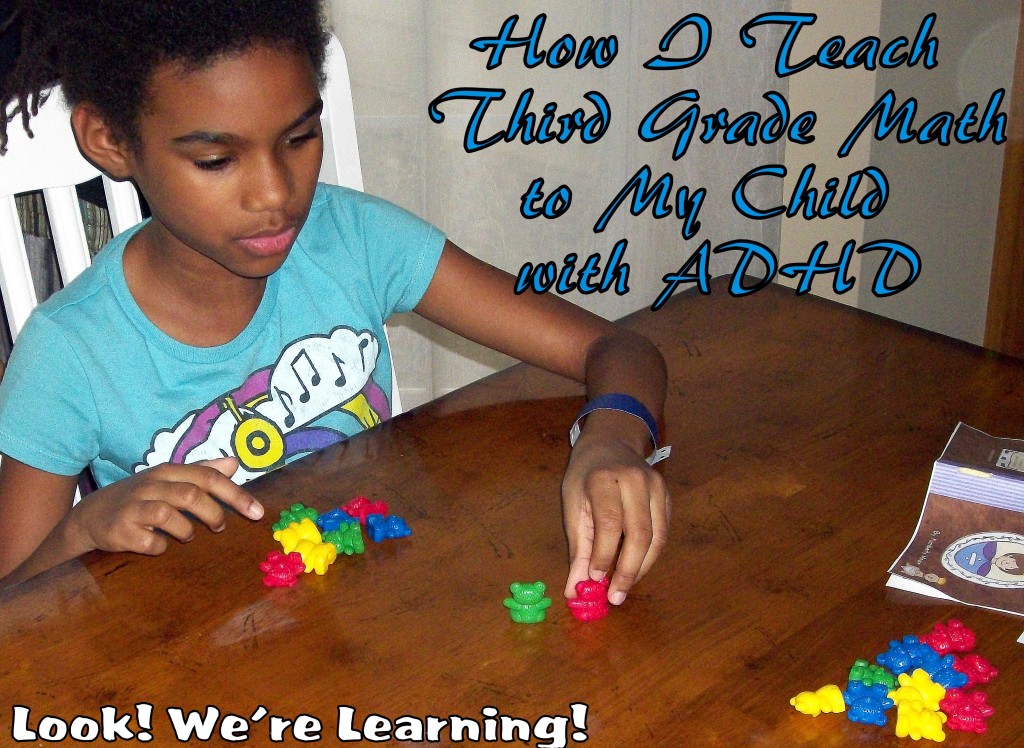
How I Teach Third Grade Math to My Child with ADHD

October 9, 2013 by Selena Robinson 5 Comments

This post contains affiliate links. See our Disclosure Policy here.

How I Teach Third Grade Math to My Child with ADHD: Look! We're Learning!

Hi everyone! This morning we’re sharing our method for teaching math to our third grader with ADHD.

It’s no secret that getting active kids to settle down for school is a challenge. The wonderful thing about homeschooling is that we have the flexibility to adapt our lessons to our kids, rather than having to change our kids to fit the lessons.Keep Reading…

Filed Under: 2013-14 Curriculum, Homeschool Curriculum, Homeschooling with ADHD, Math

Tips for Organizing Your Homeschool

October 8, 2013 by Selena Robinson Leave a Comment

Tips for Homeschool Organization: Look! We're Learning!

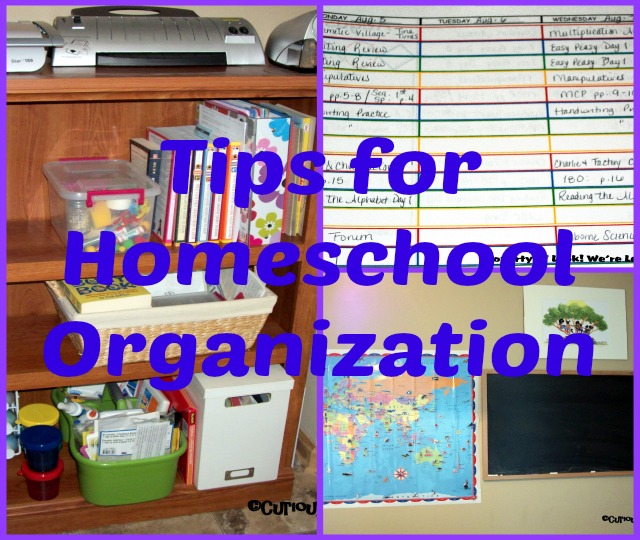
Good morning everyone! This week, the ladies of iHN will be holding a live G+ iHN Weekly Homeschool Hangout on the topic Organizing Your Homeschool. As I’m sure you all know, homeschool organization is always a hot topic.Keep Reading…

Filed Under: Homeschool Planning

The Living History Series: Dizzy Gillespie

October 7, 2013 by Selena Robinson 2 Comments

This post contains affiliate links. See our Disclosure Policy here.
Image c/o: Wikimedia Commons

It’s time for another Living History figure! We enjoyed our study of Otis Redding so much last month that we’re going with another American music icon for October: Dizzy Gillespie.

The only things I personally know about Dizzy Gillespie are that he was a great trumpet player, that he recorded “A Night in Tunisia” with Charlie Parker, and that he blew his cheeks out to enormous proportions when he played.Keep Reading…

Filed Under: 2013-14 Curriculum, Homeschool Curriculum, Living History Series

Bee Crafty Kids #25 – Pipe Cleaner Neurons

October 4, 2013 by Selena Robinson 2 Comments

Pipe Cleaner Neuron Craft: Look! We're Learning!

Bee Crafty Kids Button

Happy Friday everyone! It’s time for another Bee Crafty Kids Link Up! Every Friday, I get to co-host this roundup with Dusty from To The Moon and Back, Jolene from Monsters Ed Academy, and Melanie from Our Crafts N Things! You can find out more about all four of us here.

During a recent science lesson on the brain, Jay took the time to make pipe cleaner neurons with the kids.Keep Reading…

Filed Under: 2013-14 Curriculum, Bee Crafty Kids, Blog Hops, Homeschool Curriculum

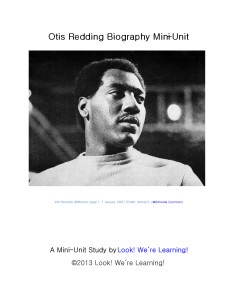
The Living History Series: Otis Redding Biography Mini-Unit

October 1, 2013 by Selena Robinson Leave a Comment


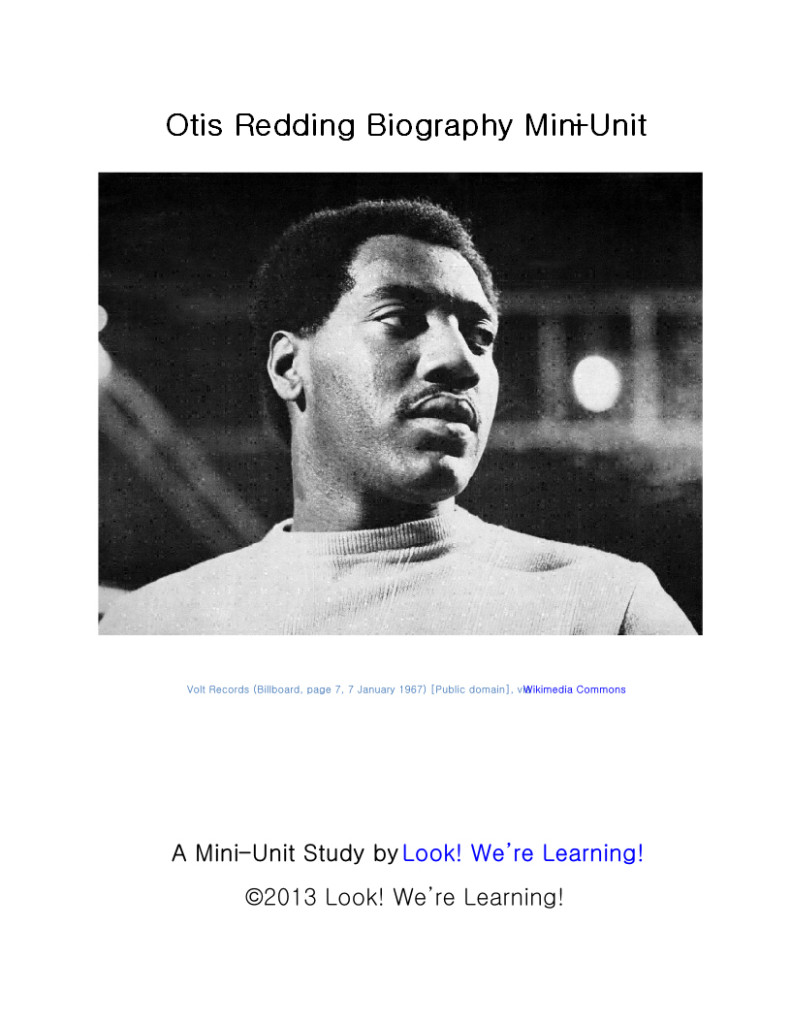
Otis Redding Biography Mini-Unit: Look! We're Learning!

Good morning everyone! As you can see, we’re back to posting every weekday! Yay!

Last month, we chose Otis Redding as our historical figure for the Living History Series. We were surprised to find that there were very few books available about his life, especially for children. So we put together a biography mini-unit of our own.

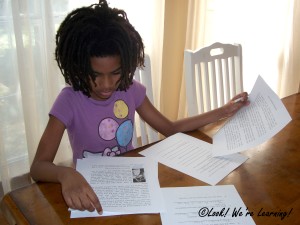
Tigger enjoyed learning about Otis’s life and career. She was surprised to learn that he and his family picked cotton to earn money and that he grew up in Georgia in a town about an hour away from us. We also learned that Otis drew his inspiration from several other Georgia musicians, such as Little Richard. In fact, one of the first songs Otis would sing as a teenager was “Tooti Frutti”.

The Living History Series: Otis Redding Biography Mini-Unit - Look! We're Learning!

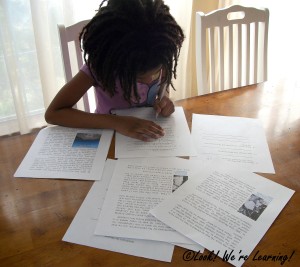
After we read the biography, Tigger got to work answering the review questions. She especially liked completing the crossword puzzle and the copywork with lyrics from “Sittin’ On the Dock of the Bay”.

The Living History Series: Otis Redding Biography Mini-Unit - Look! We're Learning!

Naturally, we had to listen to “Sittin’ On the Dock of the Bay”.

If you’d like to learn more about Otis Redding’s life, career, and accomplishments, feel free to download the free Otis Redding Biography Mini-Unit by clicking the image or link below! It’s appropriate for grades 2-4.

Otis Redding Biography Mini-Unit: Look! We're Learning!

 Otis Redding Biography Mini-Unit

Filed Under: 2013-14 Curriculum, Homeschool Curriculum, Living History Series

Must Have Supplies for Homeschooling Several Kids

September 26, 2013 by Selena Robinson 7 Comments

Hi everyone! Thanks for stopping by to see us again! Today we’re sharing some of our must-have homeschooling items for teaching several children.

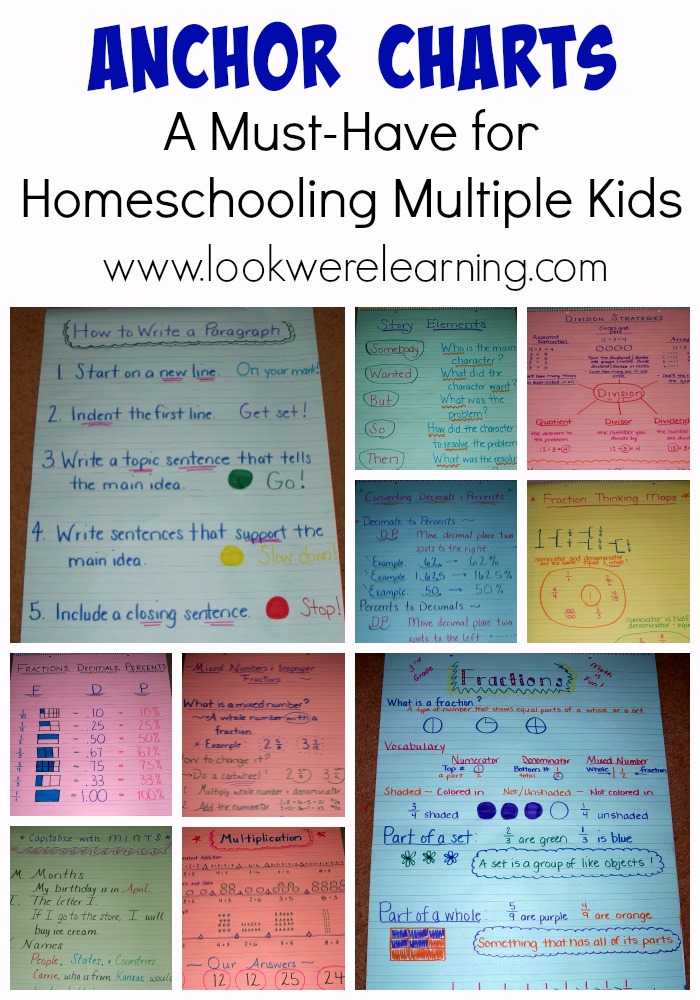
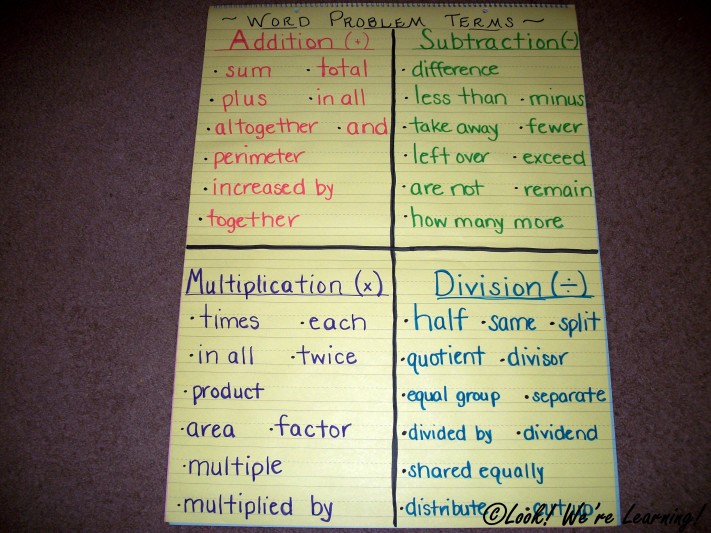
As you well know, we have four kids – three of whom are homeschooling now. To make lesson planning and teaching easier, we make charts for key concepts in a specific grade level and then we use those as the basis for our lessons.

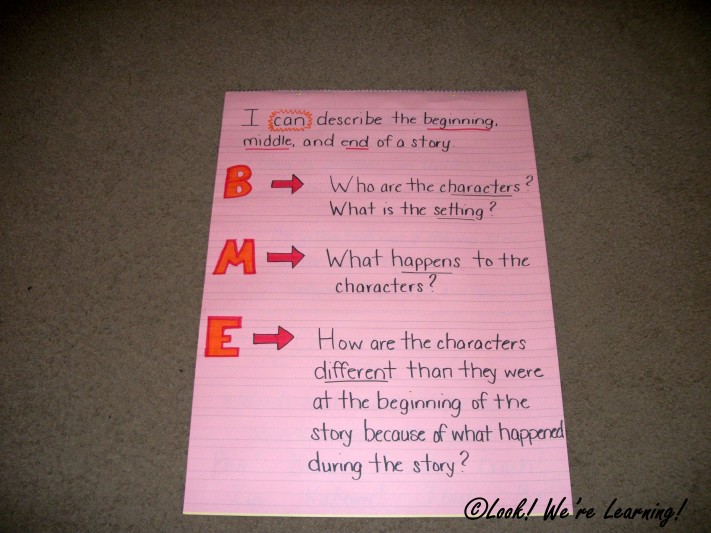
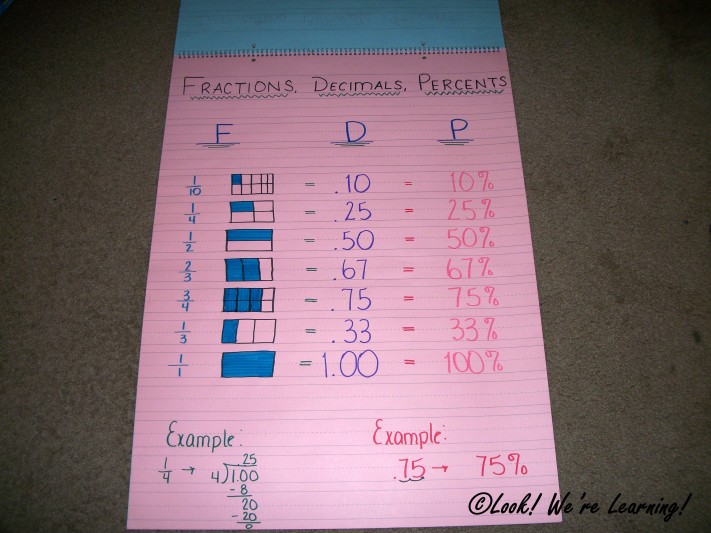
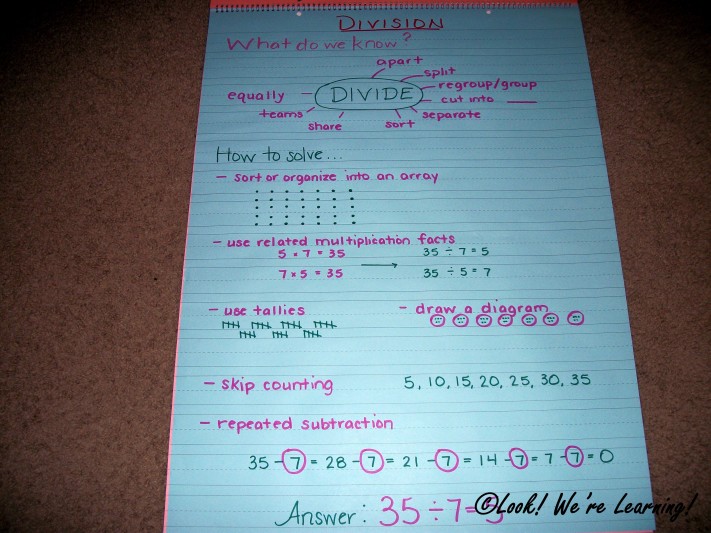
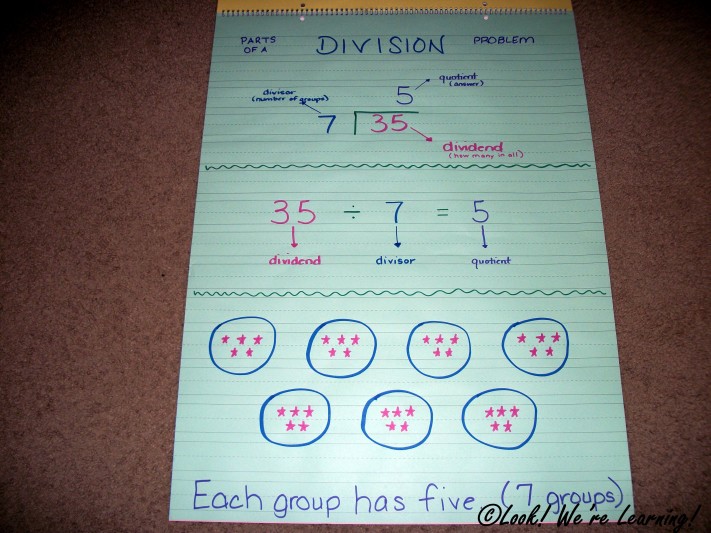
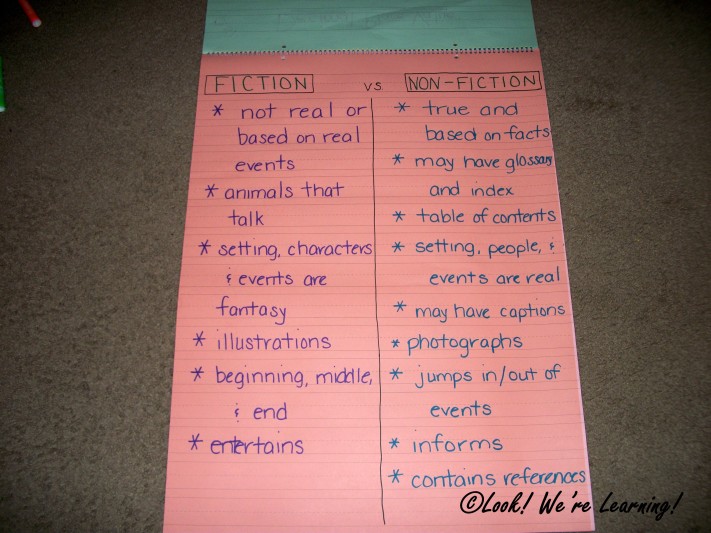
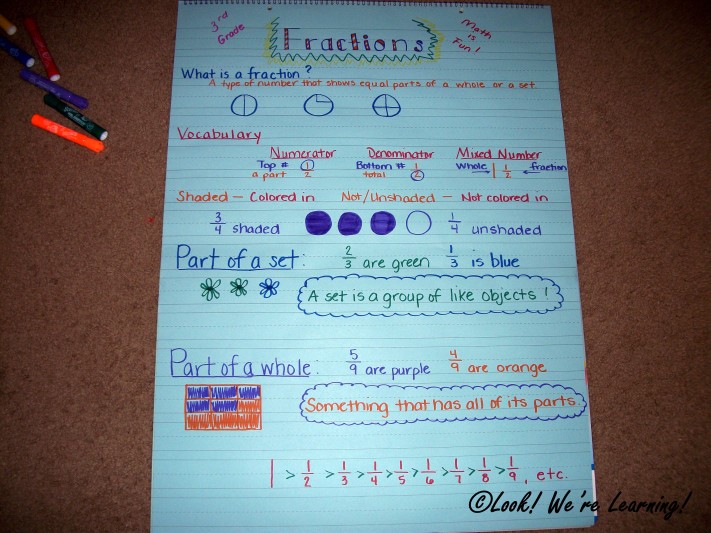
Since Tigger is dealing with ADHD, we’ve found that using anchor charts helps her to pay attention, grasp key concepts, and remember them.

Must Have Homeschooling Items for Teaching Several Children: Look! We're Learning!

Homeschool Must Haves: Anchor Charts

One of the best advantages of using anchor charts is that they are very economical for teaching several children. We can make a series of anchor charts for Tigger’s grade level and then save them for our younger kids as they get older. That way, we can just reuse the same charts again and save lots of time on lesson planning!

(We’ve shared our experiences in using anchor charts for multiplication and rounding previously.)

Here are a few of the anchor charts we’ve used or plan to use with our kids:

Must Have Homeschooling Items for Teaching Several Children: Look! We're Learning!

Must Have Homeschooling Items for Teaching Several Children: Look! We're Learning!

Must Have Homeschooling Items for Teaching Several Children: Look! We're Learning!

Must Have Homeschooling Items for Teaching Several Children: Look! We're Learning!

Must Have Homeschooling Items for Teaching Several Children: Look! We're Learning!

Must Have Homeschooling Items for Teaching Several Children: Look! We're Learning!

Must Have Homeschooling Items for Teaching Several Children: Look! We're Learning!

Before you heap praise on me for these, I have to tell you that I got all of these ideas from anchor charts I saw on Pinterest. If you’d like to see some of the charts we’ve especially liked, follow our Anchor Chart Ideas board!

To learn more about why we like anchor charts and how we use them in our homeschool, check out our YouTube video below!

You can grab the same chart tablet and markers we use from Amazon.com:

Pacon 74733 Colored Chart Tablets, Ruled, Spiralbound, 24″ x 32″, Assorted Colors

Sanford Mr. Sketch Assorted Scent Markers 12 Pack

This post is part of the Must Have Homeschooling Items linkup from iHomeschoolNetwork! Click on over to read about the must have homeschooling items of our fellow bloggers!

Homeschooling Must Haves: iHN

Filed Under: Homeschool Curriculum, Homeschool Planning, Homeschooling with ADHD

Waldorf Chicken Salad

September 24, 2013 by Selena Robinson 2 Comments

Waldorf Chicken Salad Recipe: Look! We're Learning!

Good morning! Hope your week of learning is going well!

Today I thought I’d share a first-time cooking experiment that actually turned out alright! Every few months, our congregation receives a visit from a traveling overseer who arrives to share encouraging Bible truths with us. In fact, this time we got to watch a truly inspiring video about the efforts to offer Bible lessons in regional and tribal languages, even those that have never been translated into writing before!

Our family had the opportunity to assist with providing food for the overseer and his wife on Saturday and I was asked to prepare chicken salad. Here’s the problem: I’d never made chicken salad before. I knew it probably wasn’t that difficult, but I don’t like using other people as human guinea pigs on a recipe I haven’t made previously. I pictured all kinds of horrible results: someone getting food poisoning because I hadn’t poached the chicken long enough; an unexpected allergic reaction to some of the ingredients; even the dish just not tasting good in the first place.

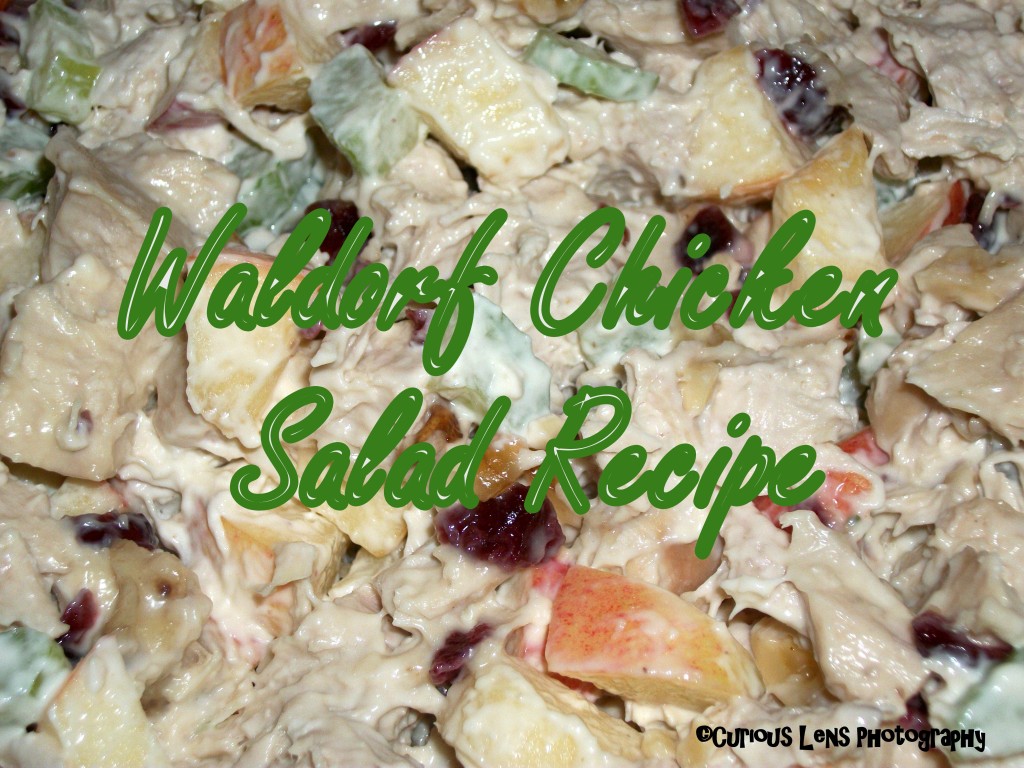
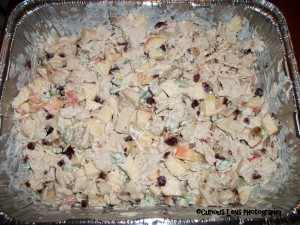
But it was Pinterest that came to the rescue! I found a great waldorf chicken salad recipe on Mom-2-3 and off I went! The recipe as written is designed to feed six, so I quadrupled it to make sure there was enough for all in attendance. I ended up with two of the standard size foil serving trays’ worth of salad.

The basic ingredients of the recipe are boneless chicken breast, apples, dried cranberries, walnuts, celery, and mayo. I did adapt it a bit by using about 1 1/2 cups of mayo per batch. (The original recipe called for at least two.) I also used Gala apples instead of the recommended Pink Lady apples, because that was what we had in the fridge. 🙂

Waldorf Chicken Salad Recipe: Look! We're Learning!

It turned out wonderfully! Everyone liked it and I got a lesson in faith. Do you have a chicken salad recipe that you love? Let us know in the comments!
Filed Under: Family Life, Our Dinner Table

Studying Volcanoes!

September 17, 2013 by Selena Robinson 3 Comments

This post contains affiliate links, which help to support this site. Thank you!

Good morning everyone! Hope your week is going well! We’re having a blast over here! (Because we just studied volcanoes – get it?)

Last month we decided to set aside a day to learn about Mount Vesuvius, which erupted in August of 79 C.E. We figured that was a great time to talk about volcanoes in general, which Roo has been wanted to learn about for the longest.

First, we did some research about volcanoes themselves – what they are, how they work. There is a great basic post about volcanoes (complete with facts at animations) at Weather Wiz Kids. We read through that together and talked about the types of volcanoes and the basic idea behind plate tectonics. The kids thought it was cool that enormous pieces of land are constantly moving around the earth.

We picked up the Knowledge Box Central Volcano Lapbook from Currclick and reviewed basic volcano vocabulary and the types of volcanic eruptions, including Strombolian and Plinian. Which brings us back to Mount Vesuvius, because we learned that Vesuvius was a Plinian eruption (the most explosive) and that it got its name from the eyewitness account recorded by Pliny the Younger. Very neat.

To show the children just how large the Vesuvius eruption was, we looked at some images taken of the area.

Image c/o: Italy Cruise Shore Tours

What’s really fascinating about this image is that the top of the volcano is missing because it was COMPLETELY BLOWN OFF during the eruption. Wow. Geology.com has a great in-depth article about the Vesuvius eruption, with maps, pictures, and a history of both the 79 C.E. eruption that destroyed Pompeii and the smaller one in 1944.

After that, we wanted to get a better look at these types of eruptions, so we used the HLN Volcanoes Unit Study (also from Currclick) to look at images of eruptions. In this Unit Study, we learned about a couple of other types of eruptions, including fissure eruptions and hydrovolcanic eruptions. The kids thought that the hydrovolcanic eruptions were especially cool, since they the explosion creates steam from the release of lava mixing with water vapor in the air near the water.

(By the way, if you want to see some truly stunning, unforgettable images of volcanic eruptions, you have to check out this photoessay at the Daily Mail. Yes, it’s the Daily Mail, so be careful of the sidebars. But the images are worth a look.)

To get a real-time look at volcanoes, we watched a short video from National Geographic called “Volcano 101”.

Prior to watching this, I had no idea that volcanoes had any beneficial effects outside of forming land. Huh.

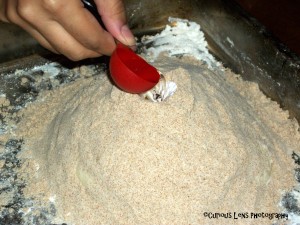
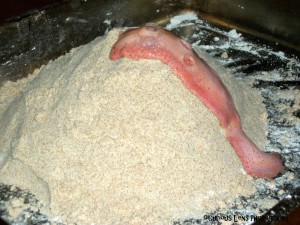
Of course, we couldn’t let this unit go by without making our own volcano. (I never got to make one of these in science class, so there was a little of living vicariously through the kids here. I can admit that.) We used the volcano recipe from Science Bob and a play dough recipe originally developed by Mister Rogers to form our volcano.

Studying Volcanoes: Look! We're Learning!

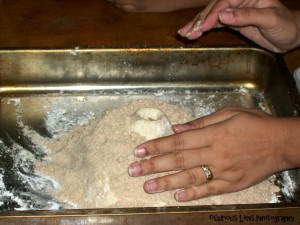
We mixed the flour and water together for the play dough and then made a hole in the center. We placed an empty prescription medicine bottle in the middle to hold our ingredients. To give it a slightly more authentic look, we added some of our play beach sand around the outside of the play dough.

Studying Volcanoes: Look! We're Learning!

Time for the ingredients! It’s just baking soda, liquid dish detergent, food coloring, and vinegar. Save the vinegar for last, because as soon as you pour it in….

Studying Volcanoes: Look! We're Learning!

You get an explosion!  

We had so much fun learning about volcanoes together! Have you gotten to discuss volcanoes yet with your kids? How did you go about covering this topic? Let us know in the comments!

Filed Under: 2013-14 Curriculum, Crafts, Homeschool Curriculum, Science, Unit Studies

Solving the Socialization Dilemma

September 12, 2013 by Selena Robinson 9 Comments

Solving the Socialization Dilemma: Look! We're Learning!

If you’ve ever mentioned the word homeschooling in public, you’ve probably heard at least one person express concern about “socialization”. True, these well-meaning individuals may not use the actual word, but they probably say things like this:

“Don’t they need to be around some other children their own age?”

“They need to get away from Mommy and Daddy and see what it’s really like out there.”

“If you don’t let them to get used to other kids, they’re not going to know how to talk to people.”

“You’re sheltering them from the real world by keeping them at home with you.”

It can be tempting to respond to these concerns with a snarky answer. Maybe something like “You spent time around other children and you clearly don’t know how to talk to people yet.” (Okay, that might be just MY personal fantasy response.) But there’s a hint of truth behind those statements.

All children need socialization, including homeschoolers. Interestingly, the definition of the word “socialize” is “to make social; especially, to fit or train for a social environment”. The difference for homeschooling families is in how we choose to provide training that for them.

Yes, Homeschoolers Need Socialization

Solving the Socialization Dilemma: Look! We're Learning!

I’ve heard some homeschooling parents argue that children don’t need socialization with other children at all. They might say that kids get plenty of socialization by talking to their neighbors and acquaintances through the course of the day. Speaking as a homeschooling graduate, I have to respectfully disagree with that sentiment.

I was taught at home from the age of 11 until graduation and I spent quite a bit of time talking with adults on a regular basis. In fact, I eventually became more comfortable with adults than I was with my peers. That’s fine in itself. The problem came, though, when I attended the first day of college. I took one step into the Student Lounge and nearly had a panic attack. I hadn’t been around a large group of people my own age in years and it was a terrifying experience. So I do believe that homeschooled children need socialization with all kinds of people: adults, older kids, younger kids, and their peers. Talking to the cashier at the grocery store just isn’t going to cut it.

Creating Socialization Opportunities Outside the Home

Solving the Socialization Dilemma: Look! We're Learning!

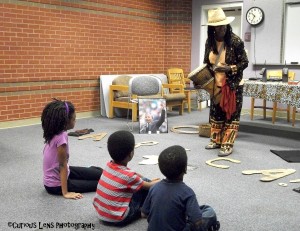
How do we find ways to get our children out and around during the course of homeschooling? Simple. Make it part of the school day. Check out the activity calendar for any local attractions in your area and make it a point to visit on days that are set aside for children or homeschoolers. We’ve gotten to attend museum days and public storytelling events around our area and our kids have enjoyed being out and around others. We also belong to an active homeschooling group that arranges park days, support meet-ups, and field trips.

During these activities, the kids have learned some valuable things they can’t at home – how to stand in line, how to sit quietly in a group (even when others are talking), how to speak up to ask for assistance when needed, and how to listen despite distractions. These are important skills that they’ll need throughout life.

Encouraging Socialization Inside the Family

Solving the Socialization Dilemma: Look! We're Learning!

Of course, all this time training our children to interact with other people won’t be worth a thing if they can’t interact well with each other. Good socialization habits begin in the home and, as parents, it’s our job to help our kids learn how to treat one another with respect, settle disputes, and show concern. Our two oldest children, Tigger and Pooh, have gotten into several spats over the years. He looks up to her, but doesn’t really want her to know it. She wants his approval, but tries to keep that a secret. It’s a never-ending saga.

Jay caught on to the pattern between the two of them early on and he’s worked with them constantly, trying to help them speak to each other honestly and with kindness. As a result, the daily squabbles have dwindled down to a couple times a week. We’re confident that, with time and training based on Bible principles, their relationship will become stronger. (We fully expect a similar dynamic between Roo and Piglet in the future, though.)

Solving the socialization dilemma doesn’t mean separating our kids from society and it doesn’t mean dropping them off into a group of their peers without preparation. We can do it by making opportunities to train them for social activities. And all that takes is being an involved homeschooling parent.

This post is part of the “Homeschooling and the S-Word (Socialization)” linkup at iHomeschool Network! Click over to read great posts about homeschooling and socialization from our fellow bloggers!

Homeschooling and Socialization: iHN

Filed Under: Family Life, Homeschool Planning, Parenting

  • « Previous Page
  • 1
  • …
  • 89
  • 90
  • 91
  • 92
  • 93
  • …
  • 98
  • Next Page »
Hi! I'm Selena, a veteran teacher and homeschool mom to four. I'm so glad you're here!
About Me Contact Terms of Use Privacy Policy Places I Share
Facebook Pinterest Instagram
Homeschool Printables Unit Studies Shop the Store
Copyright ©2026, Look! We're Learning!. All Rights Reserved. Design by Pixel Me Designs