Look! We're Learning!

Early Learning. Happy Teaching.

  • Shop
  • Printables
  • Homeschool
  • Crafts
  • Parenting
  • Blog
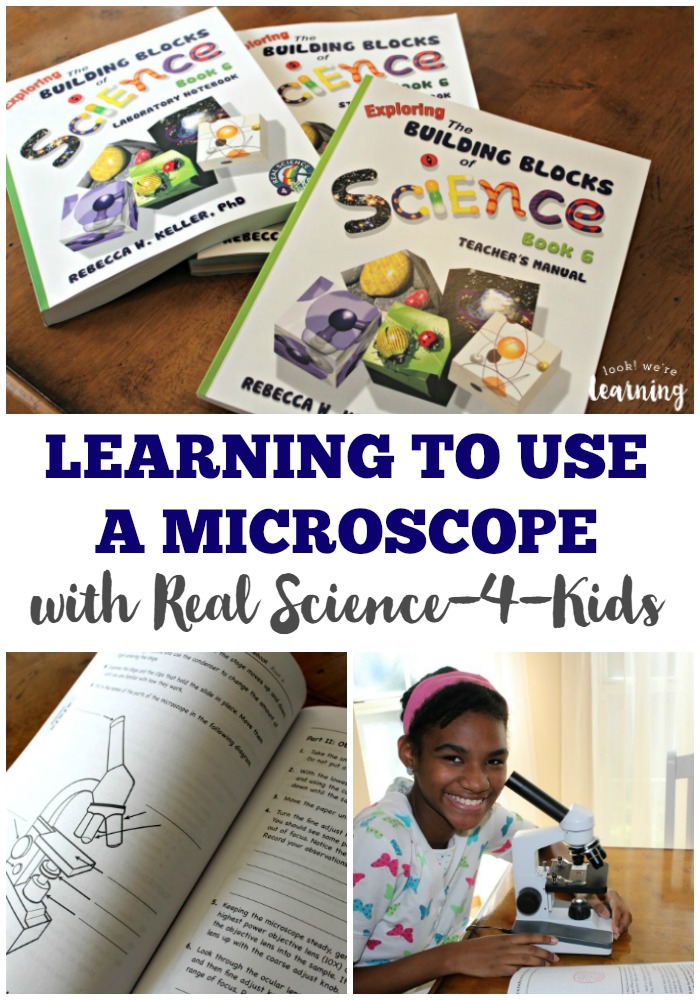
Learning to Use a Microscope with Real Science-4-Kids

Learning How to Use a Microscope in Middle School with Real Science-4-Kids

August 30, 2016 by Selena Robinson Leave a Comment

My new middle schooler has always been interested in science. She loves examining nature and conducting basic experiments. One thing we had yet to introduce her to, though, was the microscope.

When I took college biology last year, I had my very first experience with a light microscope and it was awesome. So I was excited to show her how to use it as well.

But I wasn’t quite sure how to teach her microscope basics. After all, my college textbook was a little too advanced. I still wanted her to have a chance to learn it without me hovering somewhere nearby.

Enter Real Science-4-Kids! This homeschool science program for grade 6 offers plenty of hands-on biology lessons and experiments!

Read on to see how we used Real Science-4-Kids to teach our child how to use a microscope in middle school!

Disclosure: I received this product in exchange for this post and I was compensated for my time. All opinions are my own and I was not required to post a positive review.
Learning to Use a Microscope with Real Science-4-Kids

What’s Included in the Real Science-4-Kids Grade 6 Curriculum?

Real Science-4-Kids offers its science program, Exploring the Building Blocks of Science, in several grades, including grade 6.

The Grade 6 program includes the following materials:

  • Exploring the Building Blocks of Science: Book 6 Teacher’s Manual
  • Exploring the Building Blocks of Science: Book 6 Student Textbook
  • Exploring the Building Blocks of Science: Book 6 Laboratory Notebook

Need a higher grade level? Exploring the Building Blocks of Science Book 7 will be released just in time for the new school year!
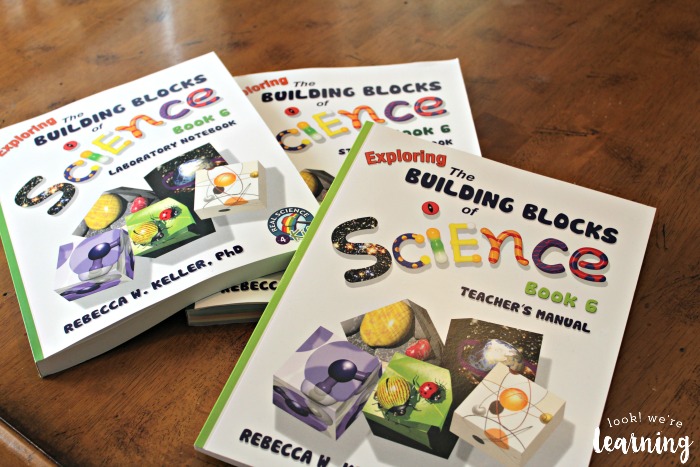
Exploring the Building Blocks of Science Grade 6 Curriculum

Initially, I didn’t think that I would need all three books. But as I examined them, I was extremely impressed at how clearly everything is written and how thorough (but not overwhelming) the program is.

The teacher’s manual is a sort of guideline for which lessons and resources to use and when. The student textbook is written directly to the student, so I was able to give the book to my daughter and let her read the lessons, define the terms, and follow the instructions herself. It’s a really great way to reinforce independent learning at this level.

The laboratory notebook is for students to write down and draw their observations as they conduct the experiments in the book. After all, the goal here is to raise scientists. 🙂

Want to learn more about Real Science-4-Kids? Listen to the program author, Dr. Keller, explain more about how the program works!

Learning How to Use a Light Microscope

Okay. Microscope time!
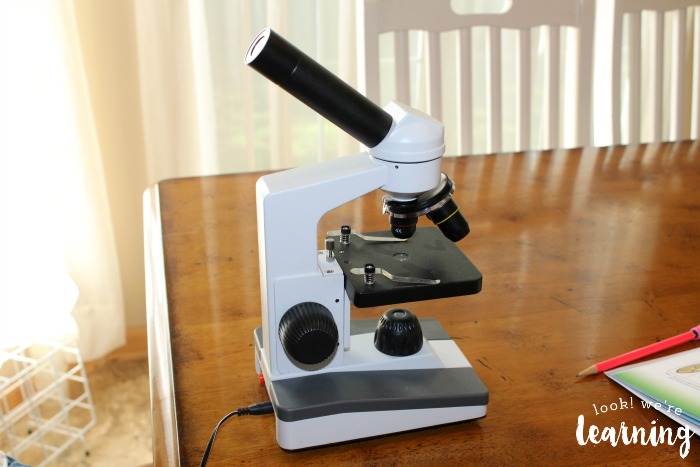
Choosing a Microscope for Middle Schoolers

Ours is the My First Lab Ultimate Digital Microscope, which is monocular. But if you’d like a binocular model, the OMAX Binocular Compound Microscope looks pretty good as well. The student textbook contains a nice summary of the features to look for when choosing a good light microscope.
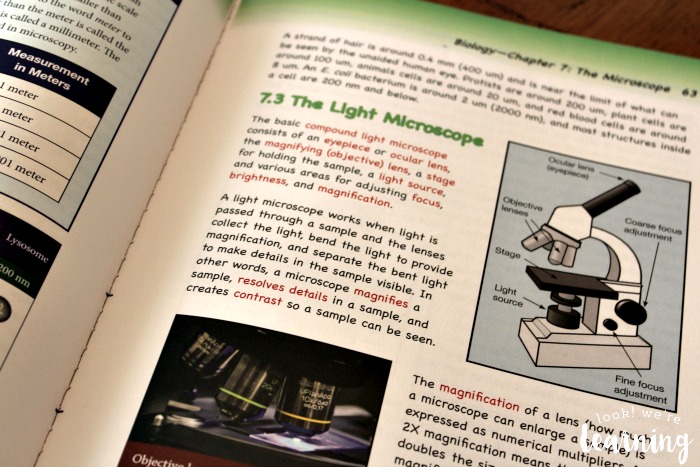
Parts of the Light Microscope

Unit 7 in the program deals with microscope basics. I assigned section 7.1 through 7.3 as reading. Then we started working with our microscope.
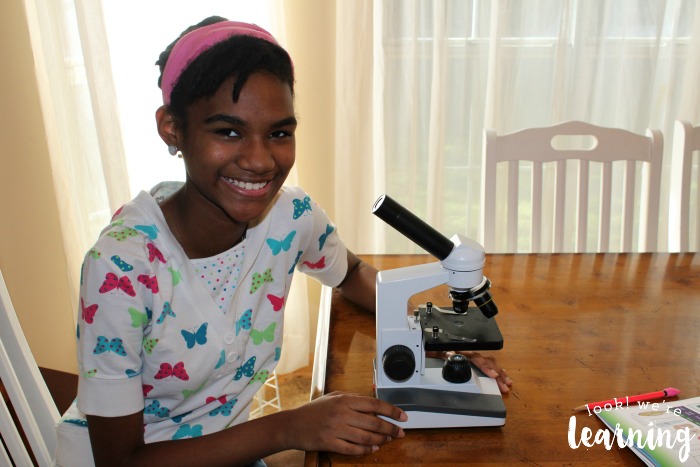
Introducing Middle Schoolers to the Light Microscope

As you can see, my child was basically waiting for me to shut up so she could get her hands on the microscope.
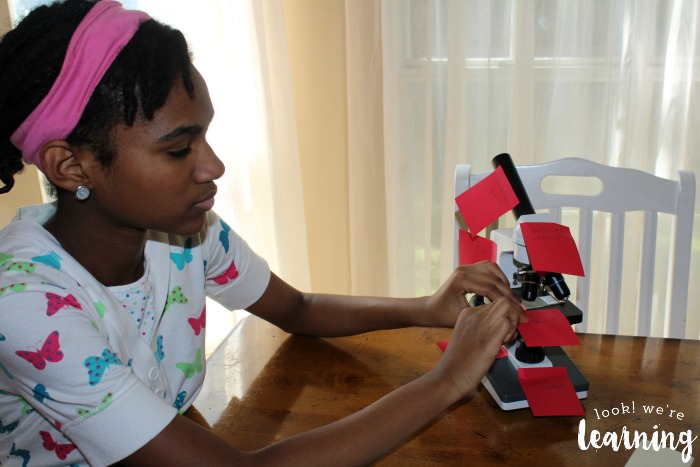
Labeling Parts of a Light Microscope

To help her identify the parts of the device, we grabbed a few Post-Its and wrote the name of each part (corresponding to the diagram in the textbook) and then labeled them.
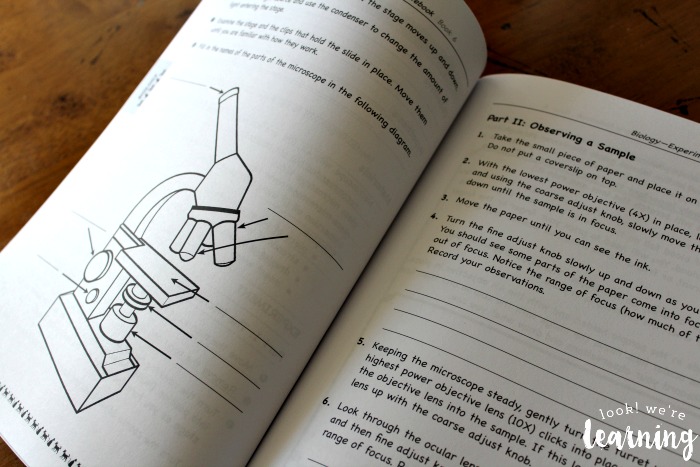
Learning the Parts of a Microscope

After that, it was easy peasy to fill in the diagram in the textbook!
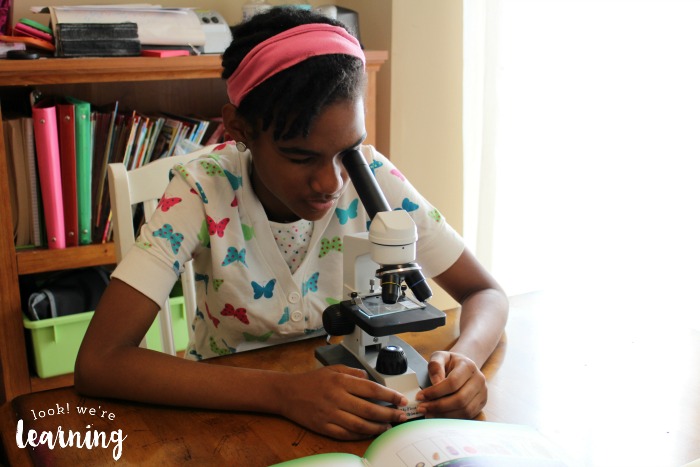
Testing Out a Microscope in Middle School

As part of the science lesson, we looked at various biological samples under the microscope, including pencil markings and blood. Since we already had prepared microscope slides with a sample of frog blood, we didn’t have to prepare them, which saved time. But if you want to make your own slides, you’ll need to pick up some blank slides to get started.
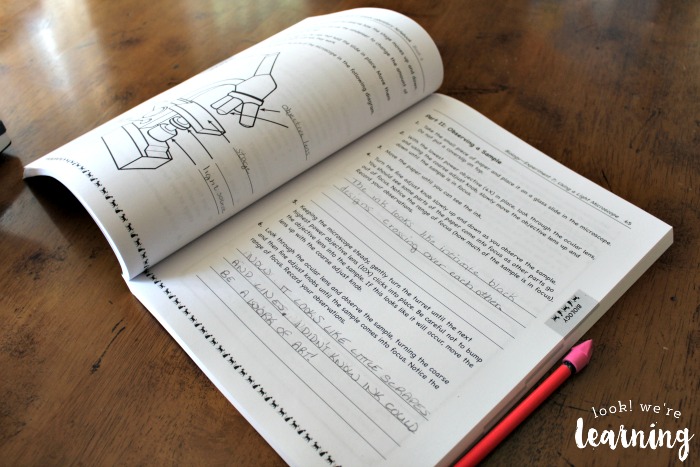
Making Observations from Microscope Experiments

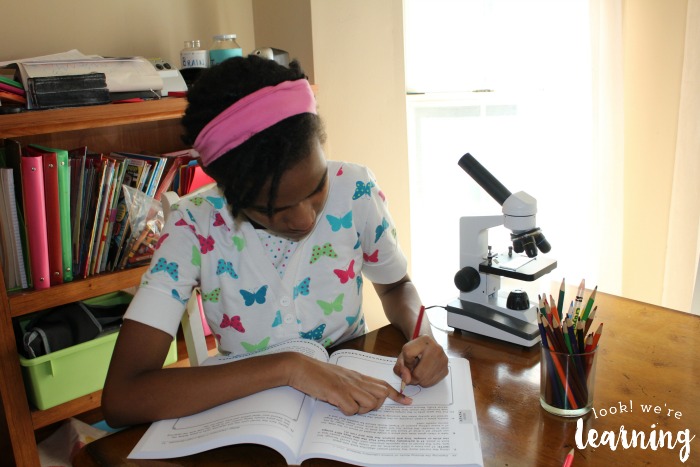
First, we wrote down letters in pencil and examined them at 4x magnification and 10x magnification. Tigger wrote down her observations afterward and surprised to see how different the markings appeared at a higher magnification.
Drawing Observations in a Science Notebook

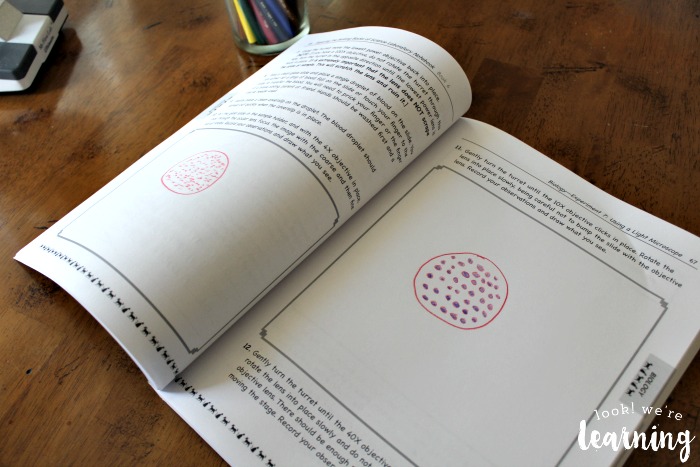
Next, it was time to examine a drop of blood under the microscope. This was really, really neat. At 4x magnification, we could see a pink mass with circles inside (the individual blood cells).
Exploring Magnification with a Microscope

As we increased the magnification to 100x, though, we could see even more detail, including colors inside the individual blood cells. Following the experiment instructions, Tigger drew pictures of how the sample changed as the magnification increased.
Teaching Middle Schoolers to Use a Microscope

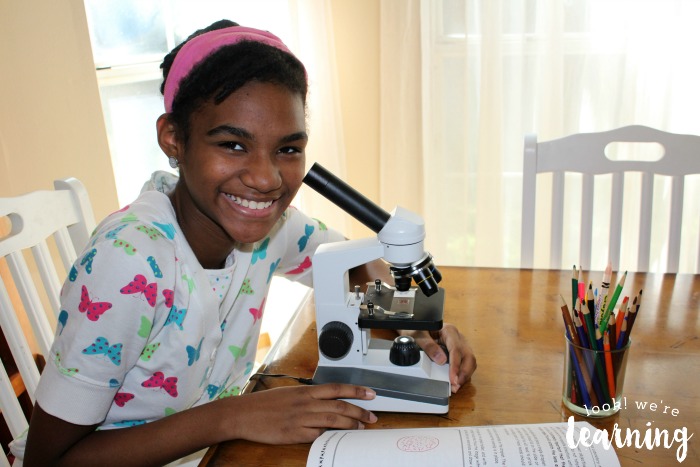
I basically had to tear her away from the microscope afterward.

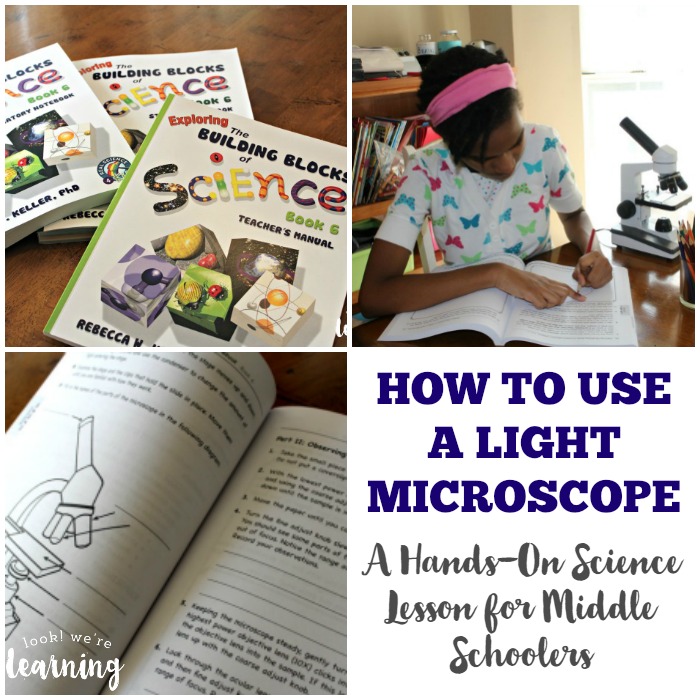
If you’re looking for a comprehensive (and affordable) grade 6 science curriculum, stop by and visit Real Science-4-Kids to pick up the Grade 6 Science bundle today! And science isn’t the only subject offered by Gravitas Publications! Visit the homepage to browse all of the company’s homeschooling helps!
Teaching Middle Schoolers to Use a Light Microscope

Want to score this program for 30 percent off? Click the image below to get a discount on your science purchase through September 30! Or visit my referral link to get your savings! (Once you buy, you can also sign up to get your own referral link and get rewarded when your friends buy the program!)

RS4K-30percent-off

Learn more about Real Science-4-Kids and Gravitas Publications by following the company on social media!

  • Twitter
  • Facebook
  • Pinterest
  • Instagram
  • Blog

Get more ideas for teaching homeschool science from my It’s Science board on Pinterest!
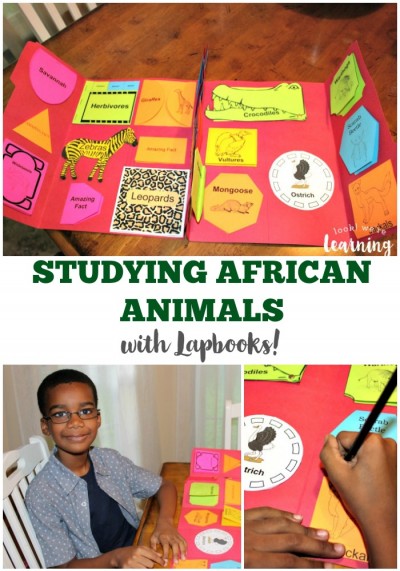

Creatures of the African Savannah Lapbook Review

Animals of the African Savannah Lapbook

August 18, 2016 by Selena Robinson 1 Comment

My soon-to-be third grader is an absolute fanatic about animals. He loves learning about them, talking about them, reading about them, and watching videos about them.

A lot of his interest in the animal kingdom has come from his diligent watching of Wild Kratts, but there are very few animals I can mention that he doesn’t know at least something about. (Educational TV, FTW!)

So, this year when I had a chance to renew my relationship with the lapbook company, Knowledge Box Central, I jumped at the chance to try the Creatures of the African Savannah lapbook with him. I just knew he’d love it. And he did!

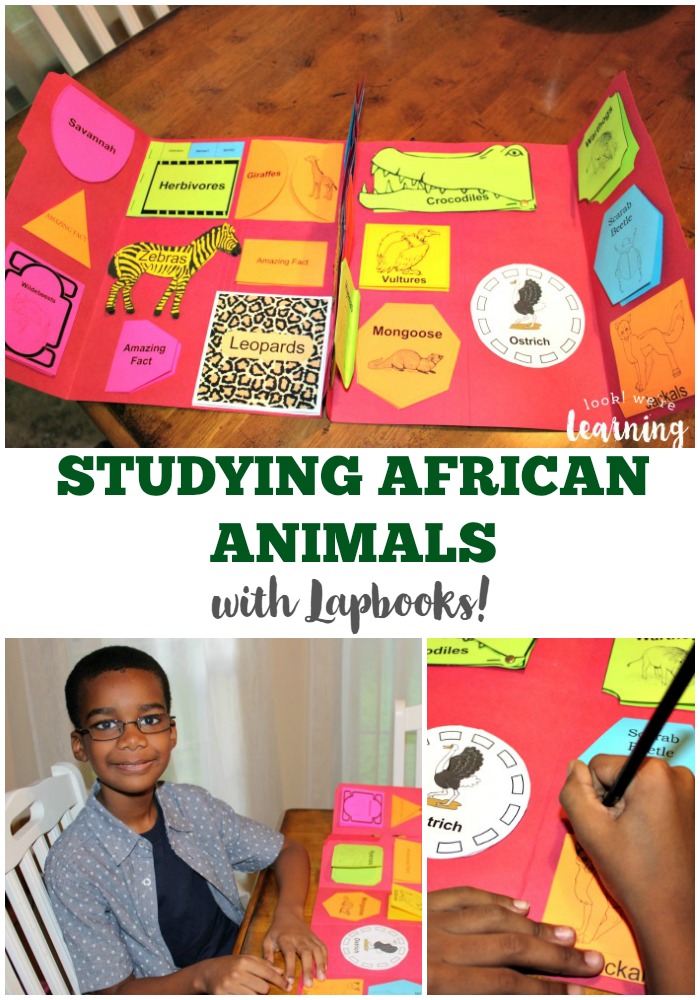
See how we’re learning about the animals of the African Savannah with a lapbook!

Disclosure: I received this product in exchange for this post. All opinions are my own and I was not required to post a positive review.

Studying Animals of the African Savannah with Lapbooks

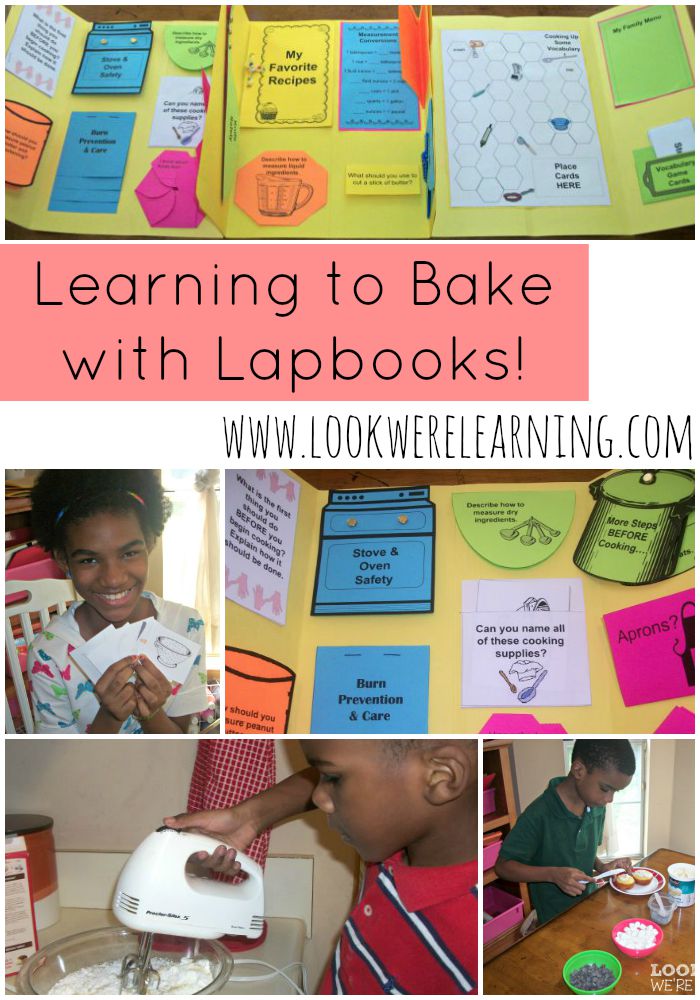
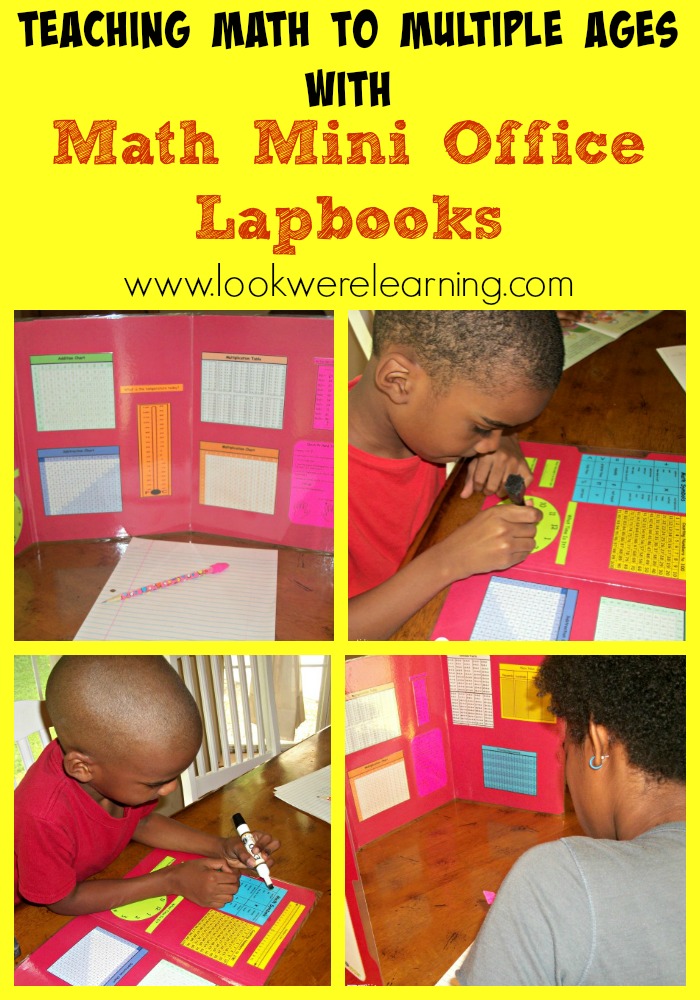
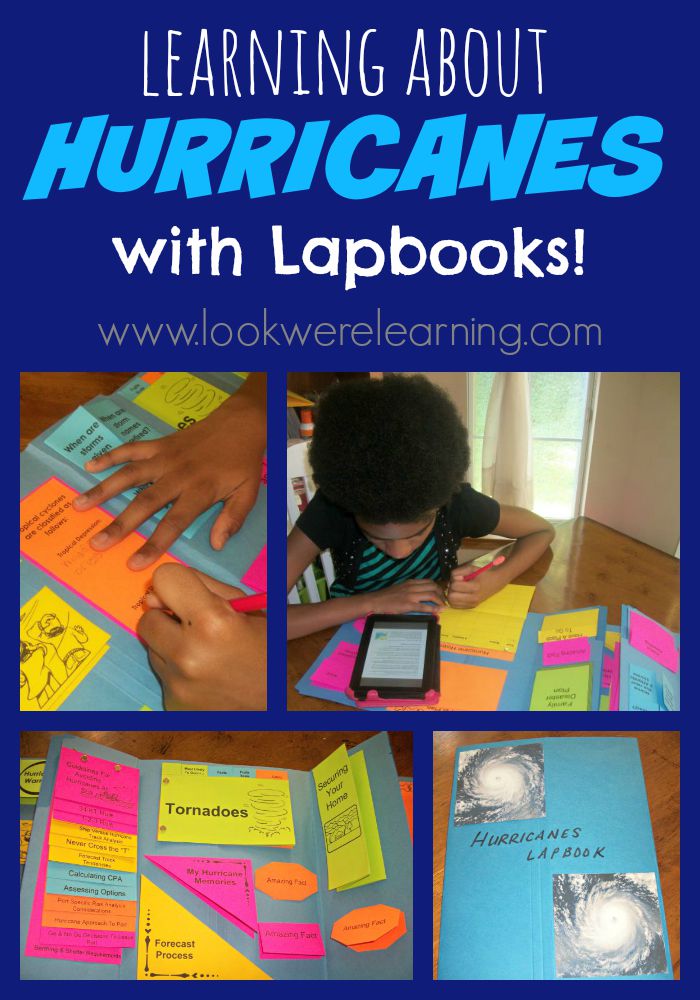
We’ve gotten to try other lapbooks from Knowledge Box Central in the past, including the Cooking Lapbook, the Hurricane Lapbook, and the Math Mini Office Lapbook. Visit our previous posts to take a look at them all in action!

Creatures of the African Savannah Lapbook Review

Creatures of the African Savannah Lapbook

I love to lapbook with our kids, but when I was first starting out, the directions seemed a bit…overwhelming. I didn’t know how to get started, where to find good resources to supplement my unit, or how to get my kids interested in completing the minibooks.

So I love Knowledge Box Central! Their lapbooks come with clear instructions and diagrams that show how to assemble each minibook and where to place it in the completed lapbook. Plus, there is a printable lesson plan at the back that walks you through the information kids can learn and place in each minibook.

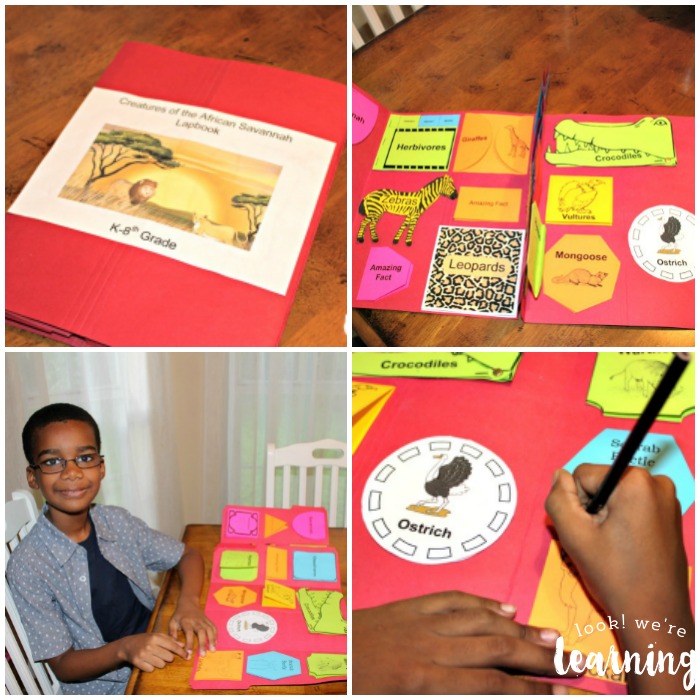
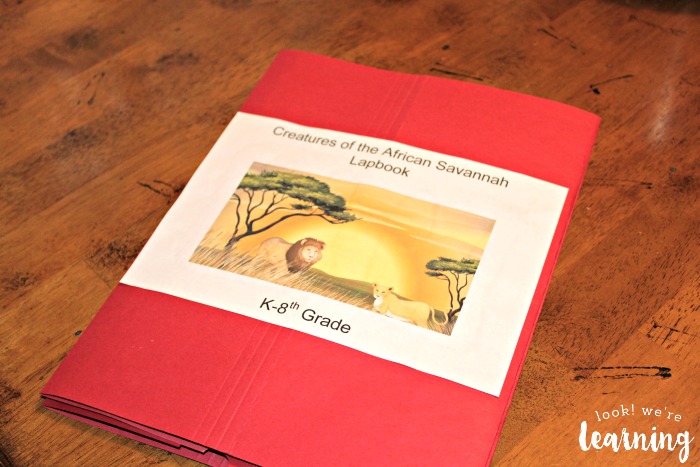
African Savannah Lapbook Cover

The lapbook instructions offer a supply list that describes the kinds of materials you’ll need to complete the project. Here are the supplies I used:

  • Colored file folders
  • Hot glue gun with glue sticks (for gluing the folders together)
  • Colored paper
  • Stapler with staples
  • Metal brad fasteners
  • Tacky glue (for gluing the minibooks into the folders)

African Savannah Lapbook at a Glance

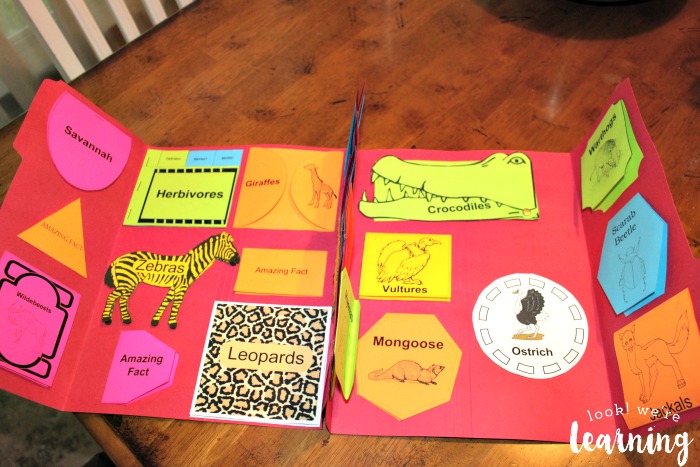
Voila! Look at that beauty!

Whenever I open a lapbook, I get excited. It just looks like there’s so much to do! And since Knowledge Box Central makes it easy to know where to place each minibook, the finished product is always gorgeous.

African Savannah Lapbook Layout

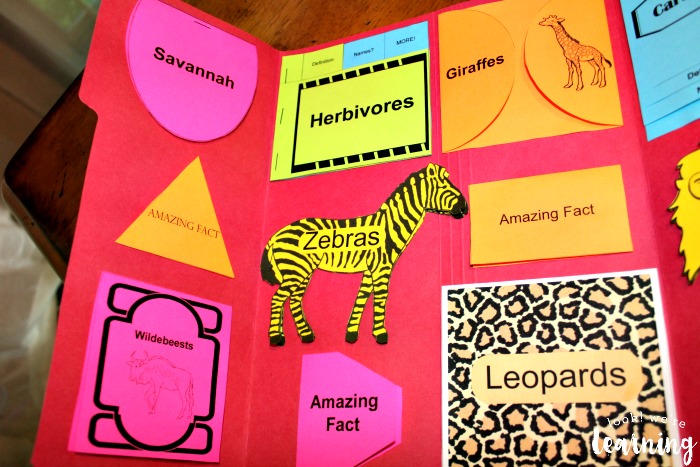
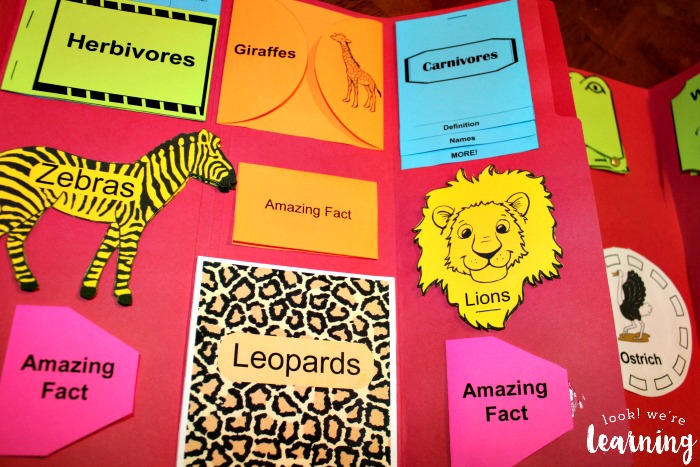
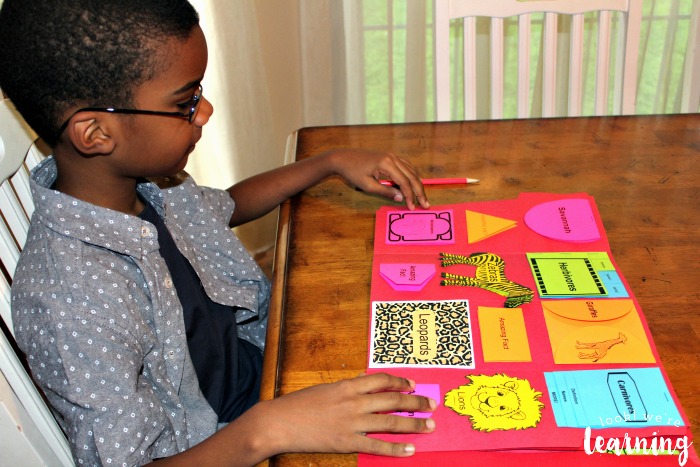
Inside the first lapbook are minibooks about lots of African animals, including leopards, zebras, and wildebeests.

Animals of the African Savannah Lapbook Layout

Plus, kids can learn about the differences between herbivores, carnivores, and omnivores – all of which live on the savannah.

African Savannah Lapbook Layout Ideas

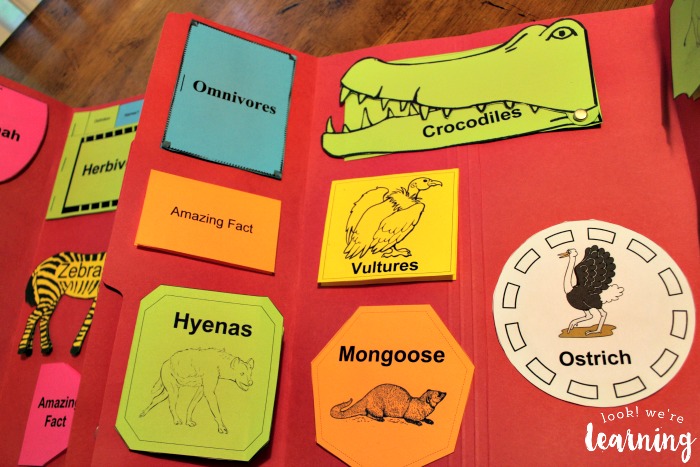
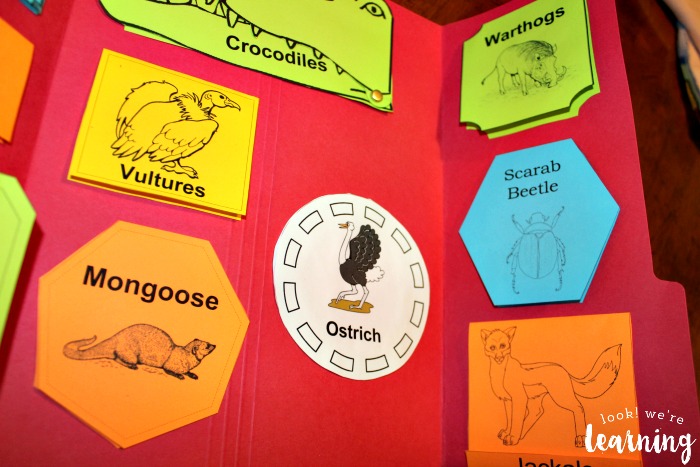
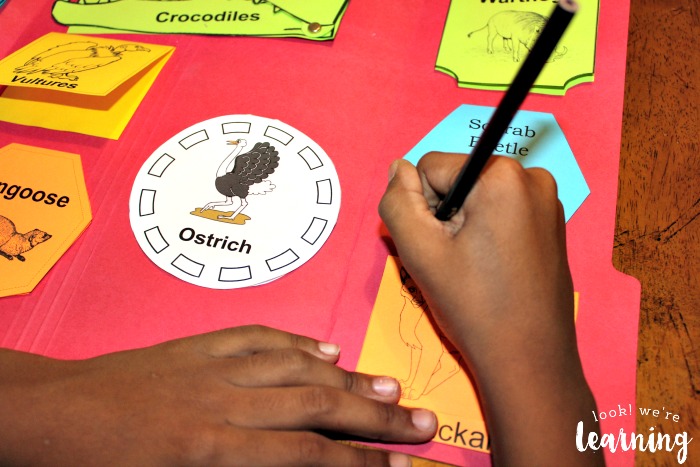
More animal minibooks are located in the second folder!

Animals of the African Savannah Lapbook Layout Ideas

My third grader wanted to learn more about the animals he wasn’t too familiar with, so we focused on jackals.

Exploring African Animals with Lapbooks

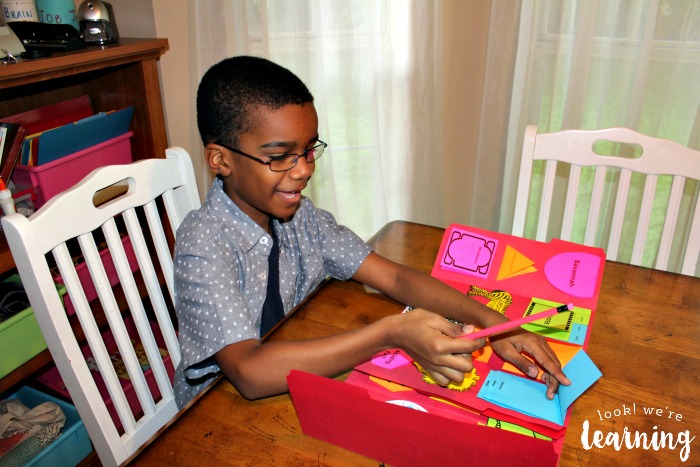
When he opened it, he just started to smile. He went through the lapbook, opening each minibook to see how it worked.

To start, we reviewed the differences between herbivores, carnivores, and omnivores.  Since he’s an avid Wild Kratts watcher, he already knew this and proceeded to teach me about it. 🙂 But the information is also located inside the lapbook lesson plan in case you need it.

Studying Carnivores with Lapbooks

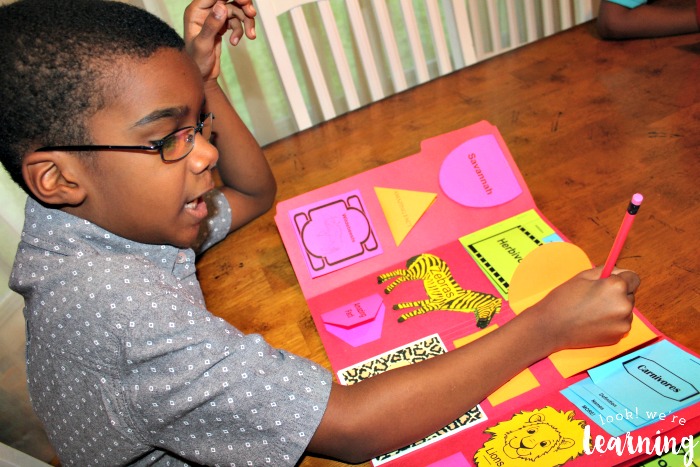
As he explained the differences for each one, he filled in his lapbook. Here he’s working on the Carnivores minibook.

Studying Giraffes with a Lapbook

After we read about jackals, he wanted to talk about giraffes. We’ve seen them at the zoo, but he didn’t know that they have an 18-inch long tongue! When we read that from the lapbook lesson plan, he just had to write it down in the Giraffe minibook.

Studying Jackals with a Lapbook

“Can I color the jackal on the cover please, Mom?”

Sure. Why not? 🙂

Using Lapbooks to Study African Animals

We had a blast with this lapbook from Knowledge Box Central! And we still have a lot left to learn with it! You could easily make this a three-week unit.

Animals of the African Savannah Resources

Once you grab your lapbook from Knowledge Box Central, round out your study of the Animals of the African Savannah with these resources!

  • Wild Kratts Season 3 – This season has the episode “Cheetah Racer”, which is based on the African savannah.
  • African Animal Alphabet (National Geographic Little Kids) – A hardcover book for small children, featuring pictures of African animals for each letter of the alphabet.
  • Ravensburg African Animals 3000-Piece Puzzle – This fun puzzle is a way to get the whole family involved in the unit!
  • Here is the African Savanna (Web of Life) – A beautiful picture book that highlights how the various African savannah animal species are connected.

Knowledge Box Central

See other gorgeous lapbooks from Knowledge Box Central on display in these posts!

Learning to Bake with a Cooking Lapbook

Teaching Math with Math Mini Office Lapbooks

Making a Hurricane Lapbook

For more tips on how to create your own unit studies, including lapbooking, follow my Unit Studies board on Pinterest!
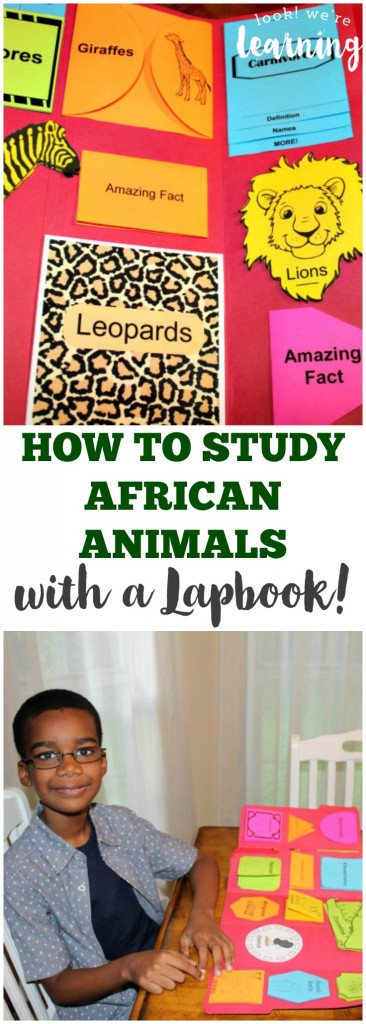
How to Study African Animals with a Lapbook


Art Study Coloring Books for Middle Schoolers

Art Study Coloring Books for Middle Schoolers

August 15, 2016 by Selena Robinson 2 Comments

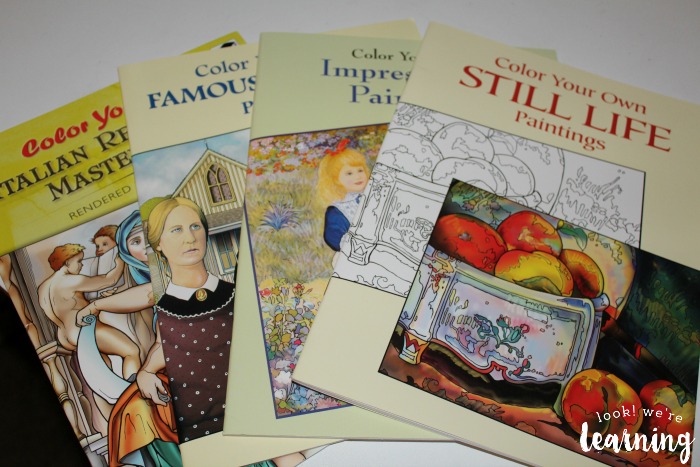
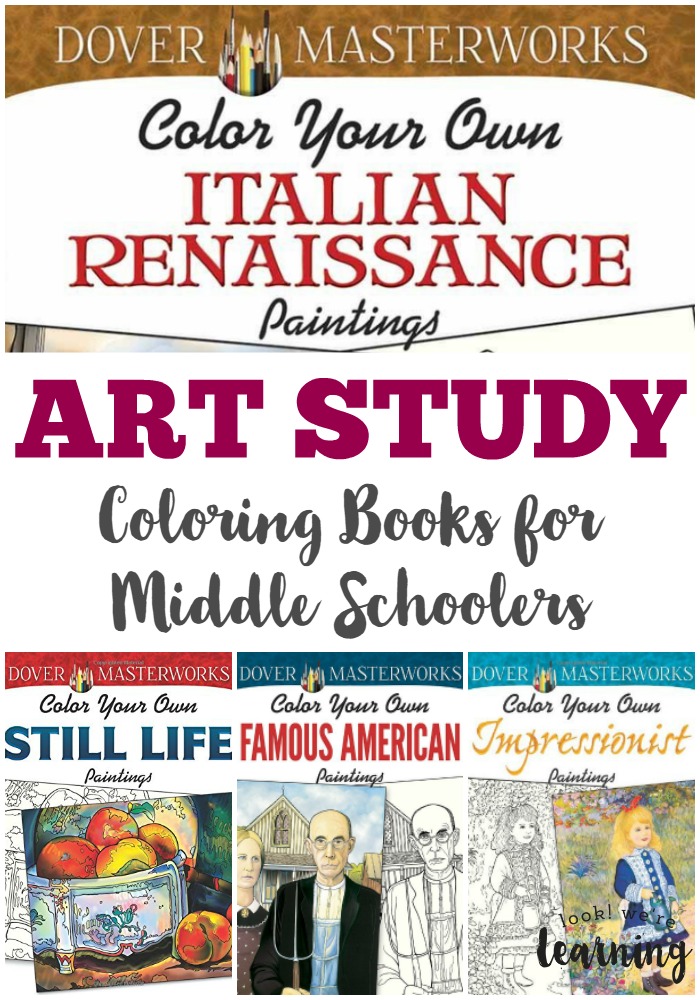
Scrambling to find art study resources for your middle schooler this year? These art study coloring books for middle schoolers are absolutely awesome ways to study classic paintings!

We’ve loved these books and today – I’m giving four of them away to one of my readers! Woohoo!

Read on for more about these books and for your chance to win them!

Art Study Coloring Books for Middle Schoolers

Art Study Coloring Books for Middle Schoolers

Let’s face it: Studying classic art can be a bit of a challenge, especially if your tween is not into art. Getting to “recreate” classic masterpieces, though, can bring these artistic styles to life!

Take a look at these!

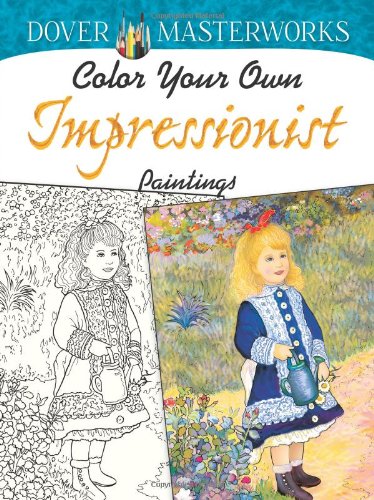
Color Your Own Impressionist Paintings

Color Your Own Impressionist Paintings

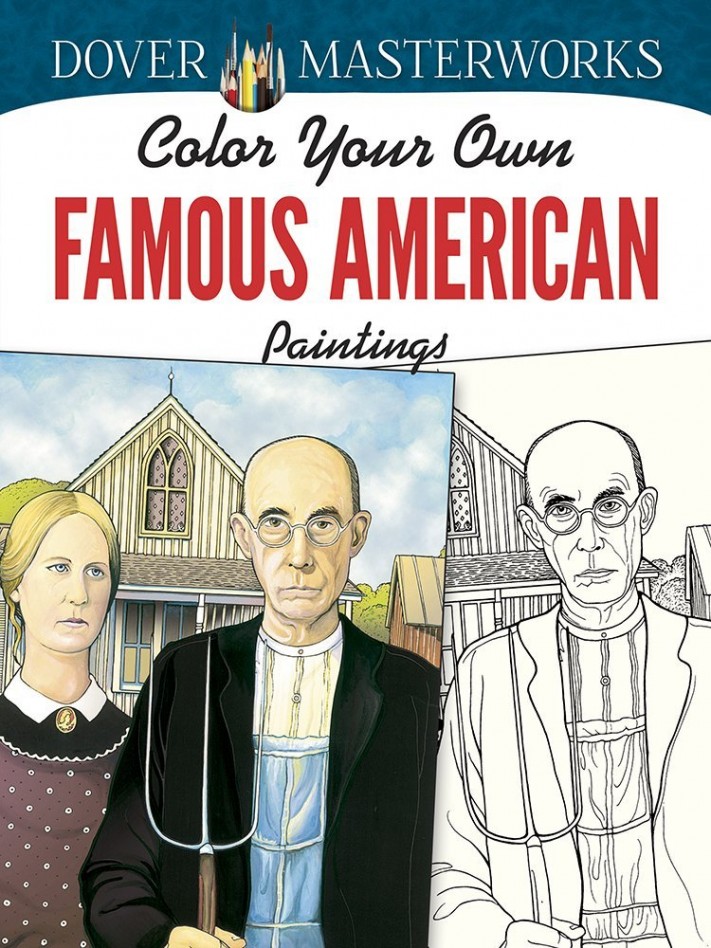
Color Your Own Famous American Paintings

Color Your Own Famous American Paintings

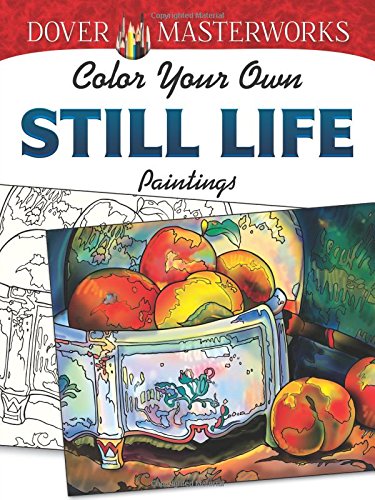
Color Your Own Still Life Paintings

Color Your Own Still Life Paintings

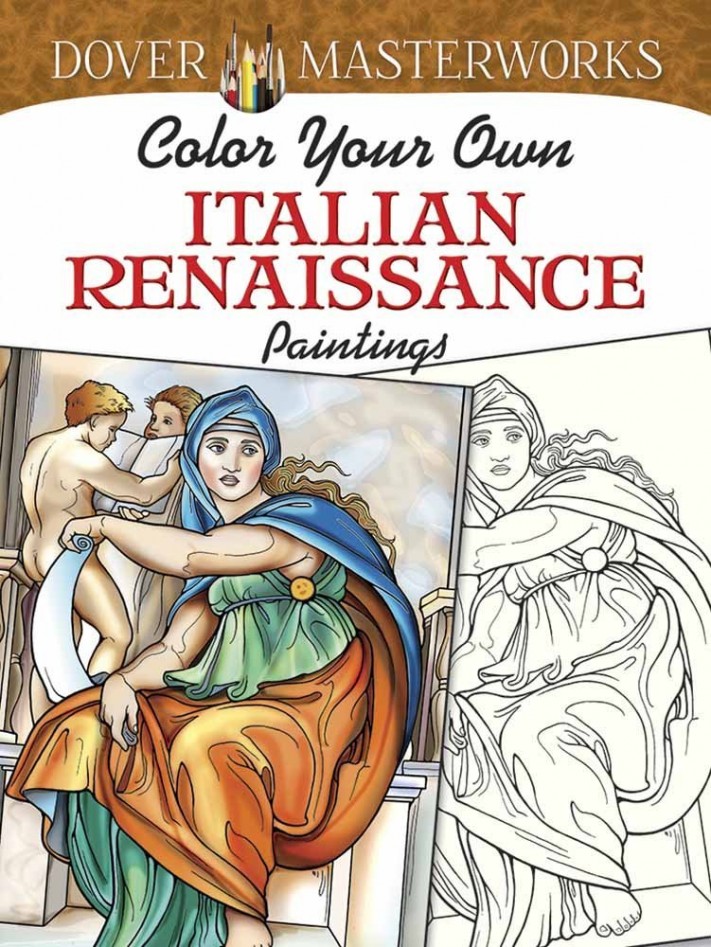
Color Your Own Italian Renaissance Paintings

Color Your Own Italian Renaissance Paintings

Get more ideas for teaching art in your homeschool with my Art Appreciation board on Pinterest!
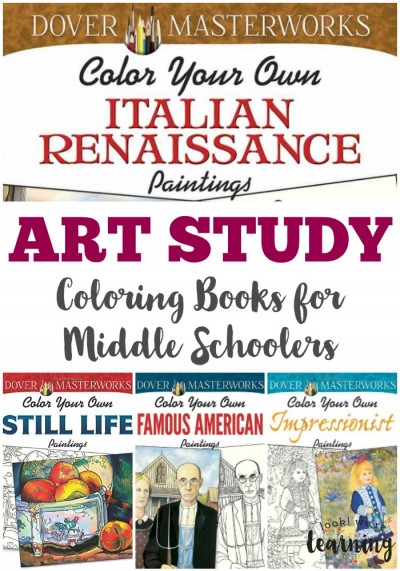
Color Your Own Masterpieces Giveaway

Now – for the fun part! You can enter to win all four of these coloring books, plus a set of colored pencils! Use the Giveaway Tools widget below to enter!

Entry-Form

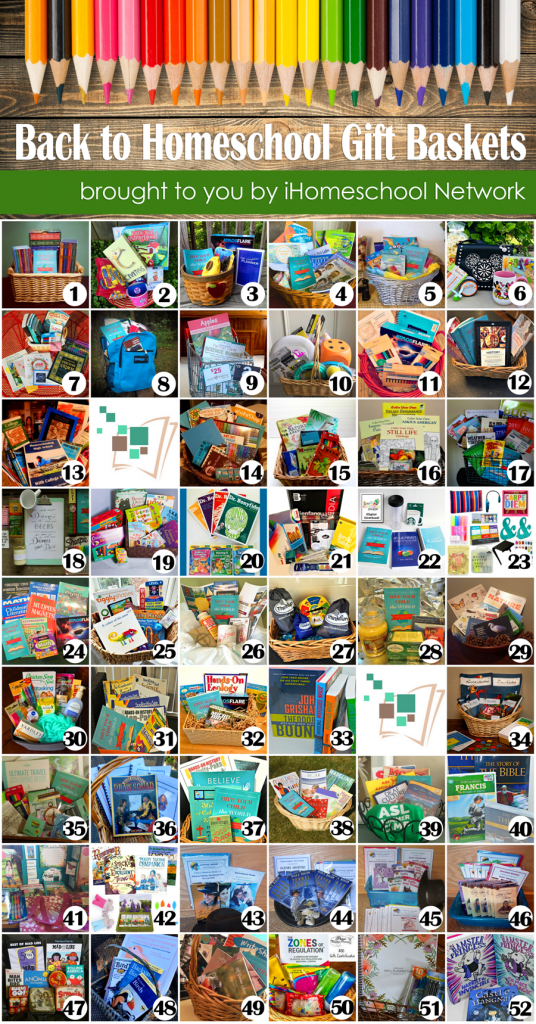
Want to enter to win even more awesome resources for your homeschool year? Stop by the iHomeschool Network Gift Basket Giveaway to see all of the other amazing gift baskets you can enter to win!

Gift Baskets 2016 Collage 2


How to Homeschool Without a Planner @ Look! We're Learning!

Why I’m Not Using a Homeschool Planner This Year

August 5, 2016 by Selena Robinson 1 Comment

Okay. If you’re shaking your head at the title of this post, stay with me! 🙂

When I first started homeschooling eight years ago, the number one thing I would have said homeschooling moms needed was: a complete homeschool planner. I had the most fun choosing a planner, organizing it, and filling it out each fall.

Here’s my problem: I was great at filling out the planner. I was not so great at following what was in it. I can make lesson plans like no other, but when it comes to following same plans, well…I pretty much stink.

After year after year of tossing out old (and unused) homeschool planners, I decided to do something drastic this year – figure out how to homeschool without a planner. And, surprisingly, it’s not as hard as I thought! Here’s why I’m not using a homeschool planner this year – and what I’m doing instead!

How to Homeschool Without a Planner @ Look! We're Learning!

Image c/o: grekoff via DepositPhotos

How to Homeschool Without a Planner

So…how do I plan to homeschool without a planner?

I’ll be using our state’s list of grade objectives as the framework. As for actual resources, they’ll include lots of different books, websites, and videos. (Similar to the way I do our unit studies.) I’ll be sharing more about our homeschool resources for this year in an upcoming set of posts.

As for the actual lesson planning…I’m outsourcing it to my kids!

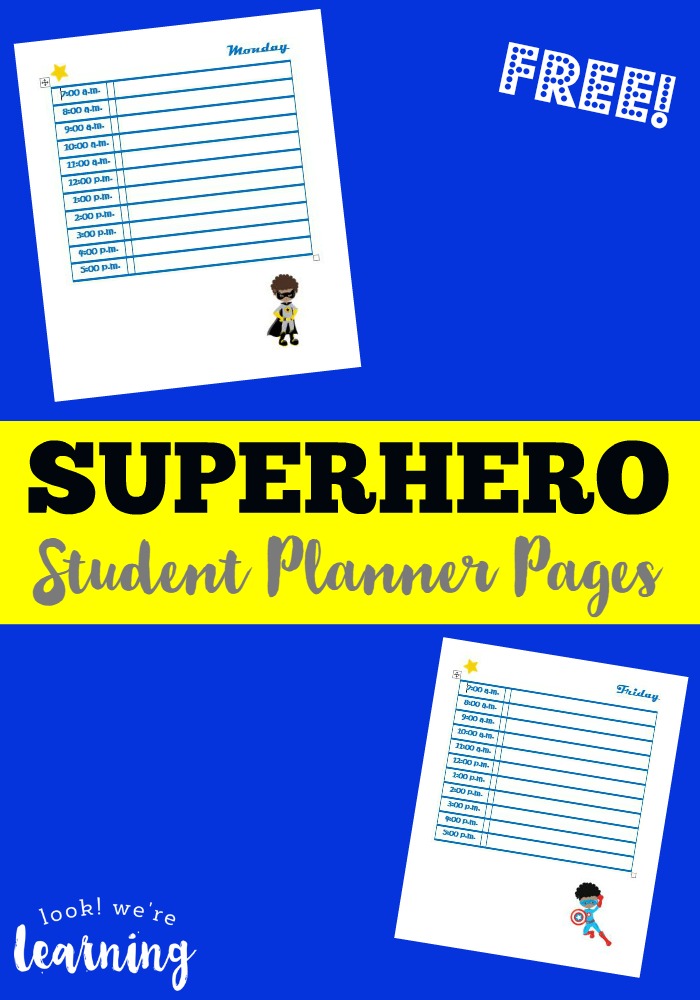
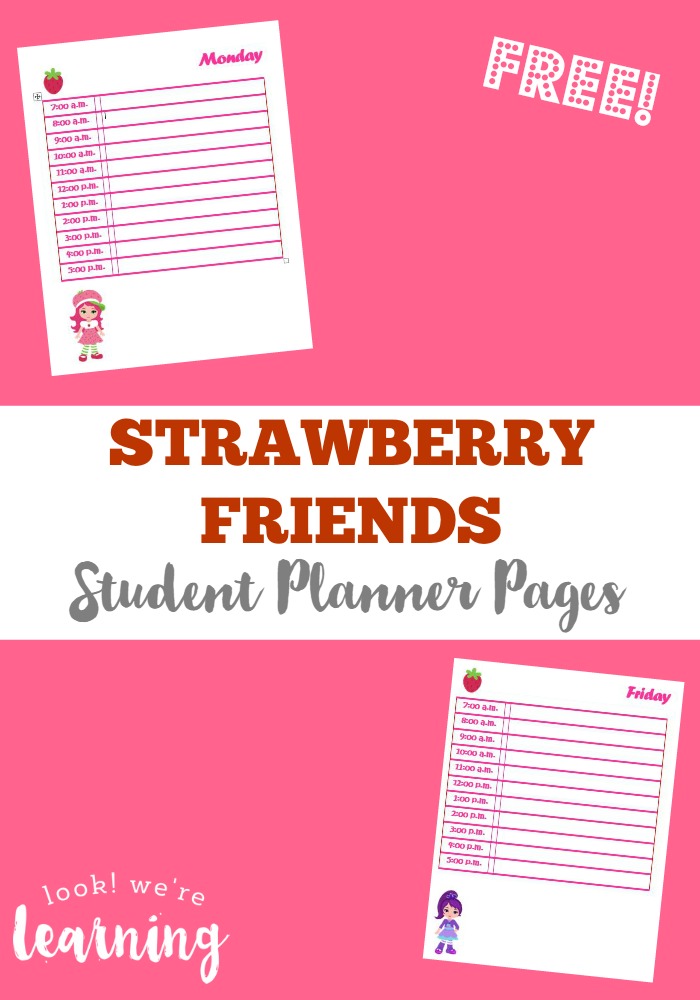
I’ll give them a timeframe within which to complete each objective, using the materials I collect, and they’ll have to decide how much to do each week to finish it. They’ll be using their own printable student planners each week to write down what lessons to complete on each day.

For example, one of my third grader’s ELA objectives is to compare and contrast themes, settings, and plots of stories written by the same author about the same or similar characters. We’ll be heading to the library so he can choose a few books in a series to compare. I’ll give him about four weeks to do it and he’ll have to decide how much to read each day in order to complete his assignment on time.

Every few weeks, I’ll sit down with them to check their progress toward their yearly objectives and talk with them about any lesson plan changes they’ll need to make. (Basically, I’ll be serving as their college adviser this year…lol.)

Have you ever considered trying to learn how to homeschool without a planner? Were you successful? Share your tips!

Homeschooling Without a Homeschool Planner @ Look! We're Learning!

If you’d like to help your kids plan their lessons, grab these free printable student planners!

Superhero Free Student Planner Pages @ Look! We're Learning!

Strawberry Friends Printable Student Planner Free Pages

And for more about minimalist homeschooling, check out our series!

How to Homeschool as a Minimalist

Ready to plan your homeschooling year? Check out the tips and suggestions from my Homeschool Planning board on Pinterest!


Why I'm Not Using a Homeschool Planner This Year @ Look! We're Learning!

Minimalist Homeschooling - Stop the Stress

Minimalist Homeschooling: Stop the Stress!

July 20, 2016 by Selena Robinson 3 Comments

Having a house full of children to homeschool can be exciting, fun, and…well, a little bit stressful.

After all, we’re accepting the responsibility for educating our kids (even if they’re living with special needs) ourselves. It can be lonely and challenging, and I know this from experience.

But a huge incentive of adopting minimalism is reducing our things to reduce the level of stress in our lives. And that applies to minimalist homeschooling as well.

How can we stop stressing ourselves out over our homeschooling year? Try these tips!

Minimalist Homeschooling - Stop the Stress

Minimalist Homeschooling: Stop the Stress

Mothers excel at many, many things. Unfortunately, one of the things we’re best at is feeling guilty. When we read about homeschooling, we can start to translate tips and suggestions into a lot of “should do’s” and “wish I had’s”. Which leads to stress and unhappiness about our choices.

If you decide to use some of the tips from this series to declutter books, reduce your paper trail, cut down your crafting supplies, plan your lessons the simple way, and streamline your schedule, that’s great! I hope the suggestions help you!

But please, please remember: This is YOUR homeschool. If there is anything you or your kids dislike, you can change it any time you want to. You don’t need to wait for a new school year and you certainly don’t have to “get your money’s worth out of it”. Just drop it and refuse to make yourself feel guilty.

And if there’s anything you or your kids love and don’t want to change, by all means don’t! If it ain’t broke and all. 🙂

Whatever you decide to do, take your time and enjoy the journey, no matter how much or how little you homeschool with.

Need more minimalist homeschooling inspiration?

Simple Homeschool Lesson Planning

Minimalist Homeschooling How to Declutter Books

Get more ideas for planning your homeschool on my Homeschool Planning board on Pinterest!
How to Homeschool as a Minimalist

This post is part of the How to Homeschool as a Minimalist series! Visit the series page to read all of the posts!


If you feel overwhelmed by planning your homeschool year, take a look at these easy tips to streamline your homeschool schedule!

Minimalist Homeschooling: How to Streamline Your Homeschool Schedule

July 19, 2016 by Selena Robinson 1 Comment

One of the major reasons we decided not to stick with public schooling was the super-packed daily schedule our family had to endure.

Between getting  up early for classes, staying in school most of the day, completing hours of homework, and getting to bed early – we were frazzled.

Surprisingly, though, it’s easy to fall into a similar pattern as homeschoolers, especially if we’re active in extra-curricular activities,  lots of field trips, or just a busy schedule.

Personally, I work a job in addition to running my website, in addition to homeschooling, so my weeks are pretty full.

A few months back, my children actually said to me “Can we just stay home today?”, which is when I realized that there wasn’t much “home” about our homeschooling.

So I set to work simplifying our routine and things have vastly improved.

If you also need to learn how to streamline your homeschool schedule, here are a few tips that worked for us.

How to Streamline Your Homeschool Schedule

If you’re a new homeschooler, these suggestions may help you avoid falling into the trap of overscheduling your days. (Unfortunately, it’s so easy to do this.)

If you’ve been homeschooling for years, these tips may help you scale back and simplify your approach.

Need more ways to prepare for your homeschool year? Don’t miss our list of tried and true homeschooling tips from veteran moms!

If you feel overwhelmed by planning your homeschool year, take a look at these easy tips to streamline your homeschool schedule!

How to Streamline Your Homeschool Schedule

Reduce the number of daily/weekly activities.

Try to set a certain number of days per week you will stay home, if you can. If you have the leave the house every single day, work to reduce the number of different activities the kids have to do.

Try to get them on a workable routine they can expect to follow most days. It’s easier for them and for you!

Use a block schedule. 

Block schedules are blocks of time designated for certain subjects. Rather than trying to schedule each school activity down to the minute, use hour or 90-minute blocks.

That way, the kids can continue with an activity they’re enjoying without worrying about time running out.

And you’ll have some downtime before starting another lesson!

Avoid long-term commitments, if possible.

Some extra-curricular activities require long-term contracts and agreements, which can make you feel “stuck”, even if the schedule isn’t working for your family.

When you’re first embarking on a new hobby or activity for the kids, try to choose one that only lasts for a few weeks. You’ll get a chance to “try it out” to see how it works for you before committing to it for an extended period.

Don’t hesitate to stop something.

Years ago, kids were taught that it’s important to stick with something and never give up. I know. I was one of those kids.

Here’s the thing: If homeschooling is not working for Mom (or Dad if he is the primary educator parent), then it’s not working for anyone else.

When you feel overwhelmed, it’s okay to stop a routine, a homeschooling method, or a class that is adding to the chaos. Don’t feel guilty about “quitting”. Feel good about choosing what is best for your family.

Minimalist Homeschooling - How to Streamline Your Homeschool Schedule

Want more ideas to help you homeschool the simple way? Don’t miss these posts!

Minimalist Homeschooling - Stick to the Basics

Simple Homeschool Lesson Planning


How to Homeschool as a Minimalist


Minimalist Homeschooling - Tips for Teaching Multiple Children

Minimalist Homeschooling: Teaching Several as One

July 18, 2016 by Selena Robinson 2 Comments

We’ve been talking about minimalist homeschooling a lot lately and I’ve shared lots of tips for scaling down your homeschooling supplies, books, paper, and more.

But what can you do if you’re homeschooling several children? I mean, you can’t really minimize them, right? 🙂

You can, however, minimize the way you teach them and that can make your entire homeschooling journey much, much simpler.

Here are some tips for teaching multiple children in your minimalist homeschool!

Minimalist Homeschooling - Tips for Teaching Multiple Children

Tips for Teaching Multiple Children

Combine grades, if possible. I got this idea from a good friend who is homeschooling three sons. Since she has twins and one child that is one year younger, she’s teaching them all at the same level. When she told me that, a lightbulb went off in my head. After all, I have two boys who are one year apart.

When I asked my soon-to-be second grader if he wanted to learn along with his soon-to-be third grade brother, he said “I don’t want to skip second grade.” Which is fine. But we’re going to do a 2/3 year for the two of them. His brother will get a much needed review and he’ll get a chance to move on a little early. And, best of all, Mom will only have to plan one lesson for the two of them. Win!

Use technology to your advantage. When you teach multiple kids, it’s generally easier to teach some subjects with the kids all together. History, science, and geography come to mind. This is especially true when you want to watch a video, do an experiment, or complete a craft project.

This year, I’m going to use a LOT more videos in our homeschool. Then the video can do the teaching and the kids can write reports about what they learn. Since it’s tough for the kids to crowd around a computer screen, we’ll be using the YouTube channel on our Roku. If I find other things on my mobile device, I’m going to use a smartphone projector so that everyone can see. Simple, right?

Those are a few ways I’ll be teaching multiple children in our minimalist homeschool this year. For more on simplifying your homeschool, check out these posts!

Simple Homeschool Lesson Planning

Minimalist Homeschooling - Stick to the Basics

Learn more about planning this homeschool year with my Homeschool Planning board on Pinterest!
How to Homeschool as a Minimalist

This post is part of the How to Homeschool as a Minimalist series! Stop by tomorrow for Day 9: Skip the Overscheduling!


Simple Homeschool Lesson Planning

Minimalist Homeschooling: Simple Homeschool Lesson Planning

July 16, 2016 by Selena Robinson 3 Comments

We’ve been talking about minimalist homeschooling for the past few days and, so far, we’ve covered making changes in the way we store books, use paper, make crafts, and manage digital resources.

Today, though, we’re on to the granddaddy of them all: LESSON PLANNING.

Lesson planning is both my favorite and my most-hated part of homeschooling. I love the idea of doing it and I generally love doing it…for the first few weeks of the school year. Then I start to do it a little less and less. By week eight or so, I’m hiding the lesson planning book somewhere in the room so I don’t have to look at it…lol.

So I know it’s time to make a change in the way I plan our homeschool. And that’s why I’m giving simple homeschool lesson planning a shot this year!

Simple Homeschool Lesson Planning

How to Simplify Homeschool Lesson Planning

As I’ve mentioned many, many times before, I’m living with ADD. Which means that I tend to hoard and overcommit myself frequently. Nowhere does this tendency show up more in homeschooling for me than in how I plan our lessons.

I tend to overschedule our days, include too many activities, and then do almost none of them. So that’s pretty obviously not the ideal way to homeschool.

This year, I’m keeping it simple with the following format:

  • Our basic school subjects
  • One craft per week
  • One video per week
  • A field trip every month

As for choosing our craft each week, I’m going to use up the craft resources I already have (see: Cutting Down on Craft Supplies) and once those are gone, I’m sticking with resources from the library from here on.

When it comes to choosing a video, I’m going to use the videos I already have listed in some of our homeschool unit studies. I think there are enough there to keep us going for some time. 🙂

I’m also going to make use of a digital planning program, such as Evernote. I just don’t have the time to write things down by hand anymore. If I can’t see it on my phone during the day, it’s probably not going to get done. (I still love the paper planners! In fact, I use one for my overall day, but I’ve got to let them go for homeschooling. Sad, but true.)

How will we tackle our basic school subjects this year? We’ll be talking about that tomorrow!

How to Homeschool as a Minimalist

This post is part of the How to Homeschool as a Minimalist series! Stop by tomorrow for Day 7: Stick to the Basics!

Get more ideas for planning your homeschooling year on my Homeschool Planning Pinterest board!


The Secret to Homeschooling and Working Full Time

The Secret to Homeschooling and Working Full Time

March 14, 2016 by Selena Robinson 1 Comment

I’ve been a homeschooling parent – except for a brief flirtation with public school – for the past several years. For six of those years, I’ve also been a work-at-home mom.

Recently, though, something has changed – I’ve become a homeschooling mom who works full-time.

If you’d told me years ago when I left the workforce that I’d end up returning along WITH my four children, I’d have thought you were insane. But eleven years later, here we are.

I’m not going to sugarcoat it: It’s been challenging to adjust to this new lifestyle. But I really think I’ve found the secret to homeschooling and working full time and I’m sharing it today!

The Secret to Homeschooling and Working Full Time

Image: c/o Tinatin1 / depositphotos

Why Homeschooling and Working Full Time is So Hard

This is a no-brainer, right? It’s hard because there’s only one you and there are kids, lesson plans, work deadlines, clients, assignments, grades, exams, and state reports to deal with – and that’s not all!

In the past when I’ve worked from home, I’ve had to pull full-time shifts for a short amount of time. But in those situations, I had the freedom to move my schedule around and get my work done when the kids were sleeping.

Now, though, I’m working both inside and outside the home. So I have less flexibility than I did before. Plus, my children accompany me to work. (I have a very understanding supervisor.) But that means keeping them still and quiet while I try to do my job. And that’s not easy.

The Secret to Homeschooling and Working Full Time

It’s really taken a few months to get the hang of this and I still can’t say that I’ve totally “got it”. But I have uncovered a huge secret that makes homeschooling and working full time easier. Are you ready to learn what it is?

It’s…outsourcing.

I outsource every single task I can to my children. And that includes choosing school assignments, doing housework, making meals, and completing lessons. As I mentioned a few weeks ago, I only spend about five hours a week actually “teaching”. And that has greatly freed up my time to get my other responsibilities done.

After I started working outside the home, I explained to the kids that I would be contributing to the household in a new way: by earning additional money we could use to take a vacation, go to the aquarium, buy clothes, and so on. And that it was time for them to contribute to the household a bit more as well. 😉

For example, when it comes to housework, there are three chores that have to be done every single day and were taking up way too much of my time: laundry, cooking, and dishes. I rotate these tasks among my three oldest kids each week.

So one week, Tigger will prepare breakfast and lunch during the day, Roo will do the laundry, and Pooh will wash the dishes. Then the next week, they rotate.

Of course, they’re not skilled enough to be left to do all of these things without supervision, so I’m always nearby to keep an eye on them. But their daily chores are part of their school day, which is a win-win for everyone!

For more tips on planning and scheduling your homeschool, check out some of our other posts!

How to Keep Homeschooling Costs Down - Look! We're Learning!

How I Homeschool Four Kids for $250 a Year!

Our Year Round Homeschool Schedule

Our Year-Round Homeschool Schedule

Get even more encouragement for planning your homeschool year from my Homeschool Planning board on Pinterest!
Homeschooling and Working Full Time

Are you homeschooling and working full time? Let us know how you do it!

This linkup is part of the Balancing Your Life & Homeschooling linkup from iHomeschool Network! Click over to read how my fellow bloggers keep everything together!

Balancing Homeschooling and Working Full Time

Homeschooling: what to do when you want to quit

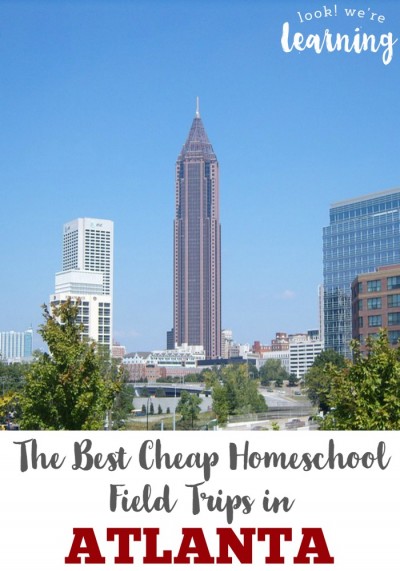
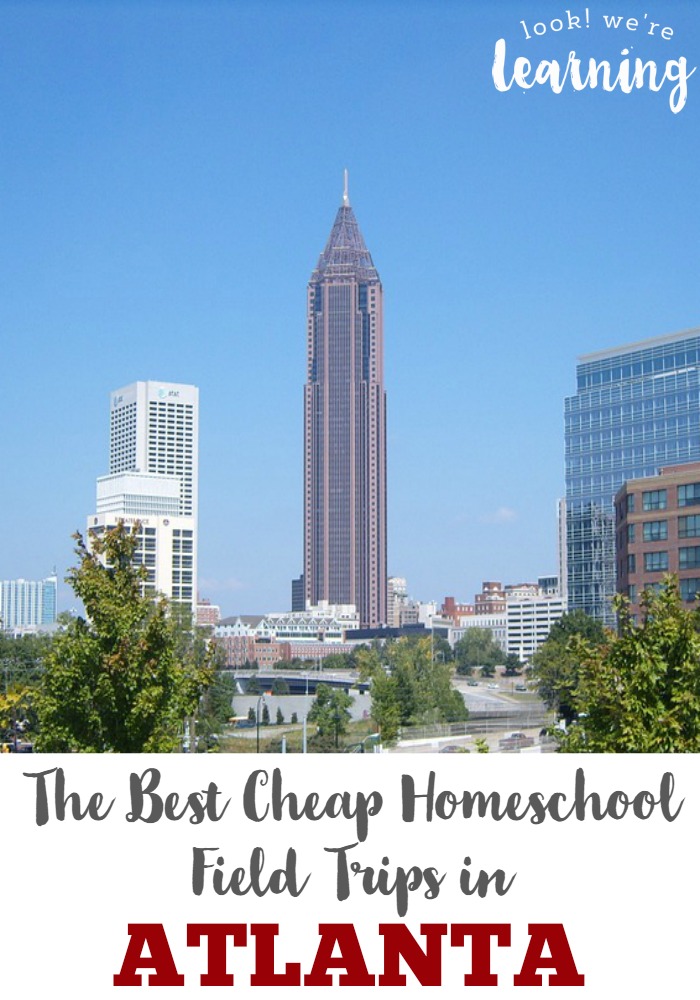
The Best Cheap Atlanta Homeschool Field Trips

The Best Cheap Atlanta Homeschool Field Trips

March 7, 2016 by Selena Robinson 4 Comments

One of the things I love best about living in the Atlanta, Georgia area is that there are a lot of family-friendly, educational places to visit with our kids. The Georgia Aquarium, the High Museum of Art, the World of Coca-Cola, Six Flags, and the Atlanta Botanical Garden are all here – and that’s just to name a few!

Here’s the problem, though: We have four children and we are living on a pretty tight budget. All of the attractions I listed above are at least $18 per ticket and, with six people in our family, that adds up quickly. We’ve been to most of the attractions here, but we usually have to wait until a special occasion before we can afford it.

But – it turns out that there are plenty of great cheap Atlanta homeschool field trips here too! And we’ve collected the best ones to share with you!

The Best Cheap Atlanta Homeschool Field Trips

The Best Cheap Atlanta Homeschool Field Trips

Michael C. Carlos Museum: The Michael C. Carlos Museum at Emory University features a collection of ancient historical artifacts that is awesome for kids. There are works on display from ancient Africa, Greece, Rome, and the Americas. Tickets are only $8 for adults and $6 for kids. Plus, kids under age 6 are free!

Cochran Mill Nature Center

Cochran Mills Nature Center: Cochran Mills Nature Center is a museum and nature trail featuring local wildlife. Kids can get a close look at native Georgia animals, including alligators, lizards, snakes (shudder), owls, and bats. My kids had a blast walking the nature trail, exploring a nearby waterfall, and having a picnic at the park down the road. Tickets are $3 for adults and $2 for kids.

Visiting Cochran Mil Nature Center

Fernbank Science Center: The Fernbank Science Center (not to be confused with the Fernbank Museum of History) is a planetarium with monthly astronomy shows and programs for kids and adults. The thing that’s tricky is that the shows are only available on Thursday and Friday evenings, as well as Saturday afternoons, so you’ll have to deal with crowds. But it’s definitely budget-friendly! Tickets are $7 for adults and $5 for kids.

Hammonds House Museum: Home to modern African-American art, the Hammonds House Museum is a wonderful field trip for art lovers. The museum rotates exhibitions a few times each year, but since it’s a small facility, you can wander around and look at the exhibits as long as you like. It’s almost never crowded, except for during special events. Admission is $5 for adults and $3 for kids.

Cheap Field Trips for Homeschoolers in Atlanta

Zoo Atlanta: This one isn’t as cheap as the others. In fact, a one-day ticket can run you about $20 per person. But, here’s why Zoo Atlanta makes the list: The family memberships are about $100, which means you can buy one and visit the zoo as many times as you want in a year! Plus, the parking is free and *here’s the kicker* – you can bring your own food inside. Yay for not spending $30 on a large pizza!

Cheap Atlanta Homeschool Field Trips

Get more of our homeschooling tips from my Pinterest board Homeschooling with Look! We’re Learning!

This post is part of The Best Homeschool Field Trips linkup from iHomeschool Network! Click over to read our fellow bloggers’ favorite field trip picks!

Cheap Atlanta Homeschool Field Trips

Learn some of the other ways we save money and manage to keep homeschooling in the ebook “How to Afford Homeschooling”!

How to Homeschool in Five Hours a Week

How to Homeschool in Five Hours a Week

February 15, 2016 by Selena Robinson 4 Comments

Have you ever heard someone say…

“I wish I could homeschool, but I just don’t have the time!”

“You homeschool? How do you get everything done?”

“I’d like to homeschool, but it seems like it takes so long!”

I have. And I’ve tried repeatedly to get people to understand that it’s totally possible to homeschool in five hours a week. But it’s hard to get that message out in a way that makes it easy to understand, at least when I’m talking. So…

I’m writing it all down today! Check out how we get it done!

How to Homeschool in Five Hours a Week

Image c/o: yuriyzhuravov via depositphotos

How to Homeschool in Five Hours a Week

Before I get started, let me clarify: I do not mean that your total homeschooling time per week will be just five hours. Ours isn’t. Altogether, we probably spend 15 to 20 a weeks “doing school”.

But I have managed to get my hands-on teaching time down to five hours a week, which has been a HUGE help to my schedule.

The first hour of our school day (9 – 10 am) looks like this:

  • 30 min – teach a new concept and oversee practice
  • 10 min – assign independent reading and projects for the day
  • 20 min – answer immediate questions

The rest of the school day is spent on independent assignments, reading, an educational video, and generally a craft or a project. And, of course, I’m available for help as they need it throughout the day. But the real “Mom is teaching” time is done in that hour.

Here are three tips to help you do the same!

Plan ahead.

I cannot overstate the importance of planning here. I set aside time over the weekend to choose which objectives I’ll focus on that week and find the resources I have to teach them.

My goal is to introduce a new topic, observe the kids as they practice, and provide limited guidance. So I only teach one new concept per day and that keeps the amount of actual “teaching” time I have to do to a minimum.

Use the Internet.

I love to use the Internet when I teach. Love it. There are so many great YouTube videos and educational websites that can do a lot of teaching for us these days!

My kids use and love Khan Academy. And that’s one of my favorite websites because Sal does so much instructing that I don’t have to do much at all. I usually sit with the kids as they work through the videos and let them work the exercises on their own. Generally, I have my Kindle nearby. 🙂

Teach your kids to work independently.

This is probably the biggest step of all. When your kids start completing work on their own, you will get so much of your time back! And I will admit that this takes effort and LOTS of practice, but it’s worth it.

Start with little tasks: completing half of a worksheet, watching a short video, reading a page of a book and answering a question or two. And as your kids grow, they will start to enjoy the feeling of completing independent work.

As they work on their assignments, I get time to get my own work done, catch up on a household chore, or simply do nothing at all. It’s glorious.

Homeschool in Five Hours a Week

Need even more tips for managing your homeschool? Check out the amazing suggestions in the book The Big Book of Homeschooling Ideas!

The Big Book of Homeschool Ideas by iHomeschool Network

How do you keep a handle on your homeschooling time each week? Share your tips in the comments!

Need more help planning your homeschool? Follow my Homeschool Planning board on Pinterest!
This post is part of the “How Much Time Does Homeschooling Take” linkup from iHomeschool Network! Click on over to read the awesome posts by our fellow bloggers!

iHomeschool Network How Much Time Does Homeschooling Really Take Linkup

Deciding to Send Your Homeschooled Kids to Public School - Look! We're Learning!

Deciding to Send Your Homeschooled Kids to Public School

November 24, 2015 by Selena Robinson Leave a Comment

If you’ve been following our blog for the past few months, you probably know that we took a homeschooling break last year and then returned to homeschooling this year.

While I discovered that public schooling was not for us, it might be the better option for others. If you’re considering sending your kids to public school, I’ve shared a few things that might help you make your decision.

Today is also another edition of the Laugh and Learn linky! Tina, Haley, Lindsey, Sarah, and I have chosen our features from the last party, so check them out below!

Deciding to Send Your Homeschooled Kids to Public School - Look! We're Learning!

Deciding to Send Your Homeschooled Kids to Public School

Deciding to send your homeschooled kids to public school is a gut-wrenching process. At least it was for me. I remember waffling back and forth about it for months.

Throughout the process, I learned a lot about the public school system, my children, and myself. I don’t regret doing it, but I do wish that I’d had someone to tell me about what I could expect in advance.

So I decided to share a post about this very topic over at Learning 2 Walk! If you’re considering putting your kids in public school, stop by and see what you should take into account before you do.

Deciding to Send Your Homeschooled Kids to Public School – Learning 2 Walk

For more about what it’s like to send your homeschooled kids to public school, check out our series “The Great Homeschool Public School Experiment”!

The Great Homeschool Public School Experiment - What's it like for homeschoolers to go to public school for the first time? - Look! We're Learning!

The Great Homeschool Public School Experiment – Look! We’re Learning!


On to this week’s linky!

Come join us every Tuesday for the #LaughLearnLinkUp and share your #Parenting or #Homeschool #Tips!
Welcome to our 60th week of Laugh and Learn – Homeschool and Parenting Linkup!
Laugh and Learn – Homeschool and Parenting Linkup will be open by 6 am every Tuesday morning.

Each and every week, all of the hosts will pick one favorite post to be featured on the next week’s linkup. All of your links will be shared on five blogs.

We are also sharing the top five posts on Pinterest: #LaughLearnLinkup {Featured Favorites}. It’s added exposure for your awesome content!
Reminder: Please share this linkup! You can help us build a great homeschool and parenting group.
[bctt tweet=”Share your favorite #parenting or #homeschooling post with #LaughLearnLinkup. #ihsnet #ibabloggers”]

Your Fabulous Hosts 😉

Tina
Me and SawyerLos Gringos Locos
Tina lives abroad in Latin America with her husband and four children. Currently in Mexico, Tina is active in homeschool, travel, and her Bible ministry. She blogs about all of their adventures, and more at Los Gringos Locos.
Find Tina at her blog link above, and on the following social media networks:
Facebook
Twitter
Pinterest
Google +
Linkedin


Selena
Selena - head shot Look We're Learning

Selena is a writer and a homeschooling mom to four kids, including three with ADHD/SPD. Selena and her husband, Jay, are committed to teaching their children at home and loving every minute of it! You can read about the family’s homeschooling experiences at Look! We’re Learning, written by Selena!
Find Selena at her blog link above, and on the following social media networks:
Facebook
Pinterest
Twitter
Google +
Instagram
Sarah
sarah-dedicated-homeschooler Dedicated Homeschooler
Sarah lives in Kentucky, USA, where she and her husband homeschool three children. Sarah writes for and about, families with special needs. She hopes to provide support and encouragement to all special needs parents in the homeschool community. Visit Sarah at Dedicated Homeschooler.
Find Sarah at her blog link above, and on the following social media networks:
Facebook
Instagram
Pinterest
Twitter
Haley
Haleys Vintage Finds & DealsHaley's Vintage Finds & Deals
Haley hopes to encourage stay at home moms. She wants to help them learn how to make an extra income, to stretch a budget, to make crafts, and other useful information. Haley always has updates on the kids, and their funny antics. Visit Haley at Haley’s Vintage Finds & Deals.
Find Haley at her blog link above, and on the following social media networks:
Facebook
Pinterest
Instagram
Twitter
Google+
YouTube
Stumble Upon
Lindsey
Lindsey Marie
The Nitty Gritty Mom
Lindsey Marie is a passionate writer eager to touch the hearts and minds of her readers. As a devoted mother to two, happy homeschooler, and scatterbrained housewife, she’s on a mission to find love and joy in “the simple life” and invites you to join her! She shares this journey with you at The Nitty Gritty Mom .
Find Lindsey Marie at her blog link above, and on the following social media networks:
Facebook
Pinterest
Periscope
Twitter
YouTube


Grab a Button / Badge:

If you were featured this week, we would love for you to use this badge below. We really appreciate all your hard work, and sharing with us each and every week!

Laugh Learn Linkup

We would also love if you could use this badge on any post you shared with us. Or a text link would also be greatly appreciated. More shares and links helps us build a better and bigger linkup for all us to benefit from.

Laugh Learn Linkup


Tina’s pick for this week…

A Week in the Life of Unschoolers
Note from Tina:
I love Erin’s pics of her kids learning through everyday kid life. It’s great!
[bctt tweet=” See how #Fun a week in Life of Unschoolers can be with @Erin_Vincent35 #LaughLearnLinkup”]


Selena’s pick for this week…

Games to Help Kids Learn Math Facts
Note from Selena:
Some of the games on this list are our favorites too!
[bctt tweet=”Take the groans out of #Math with great games recommended by @kidsmonlessons #LaughLearnLinkup”]


Sarah’s pick for this week…

3 Amazing Recipes for One-Minute Lava Mug Cakes
Note from Sarah:
My family loves lava cakes. These recipes look delicious!
[bctt tweet=”3 Amazing #Recipes for One-Minute Lava Mug Cakes @StudyAtHomeMama #LaughLearnLinkup “]


Haley’s pick for this week…

DIY Watercolors from Old Markers
Note from Haley:
I love this idea! A great way to save and get every last drop out of those markers.
[bctt tweet=”Get every last drop out of your old markers! DIY Watercolors by @TotsAdventures #LaughLearnLinkup”]


Lindsey’s pick for this week…

All About My Community Social Studies K-3 Printable Pack - Would be great little kids!
Note from Lindsey:
This unit is packed with pages and would be fun to use with the littles.
[bctt tweet=”Help your little one learn all about social studies @HHomeschooling! #LaughLearnLinkup”]


Thanks to everyone who submitted a post. Please check out the post above by clicking on the image. If you enjoyed these picks as much as we did, please share them also!
 

Have you joined our Pinterest Board yet?

Follow Tina Ernspiker’s board #LaughLearnLinkup {Featured Favorites} on Pinterest.


Come join us every Tuesday for the #LaughLearnLinkUp and share your #Parenting or #Homeschool #Tips!

Now give us your best posts!

An InLinkz Link-up


5 Spanish Resources for Kids

November 10, 2015 by Selena Robinson 1 Comment

We love learning Spanish in our homeschool and we’ve featured many printables and programs for learning it on the blog over the years. But there are also online resources for learning Spanish that are super helpful for teaching it to children. See some of my picks in today’s post!

Today is Tuesday, so it’s also time for another party with the Laugh and Learn linkup! See our features from last week below and then read the newest posts on parenting and homeschooling!

5 Spanish Resources for Kids - Look! We're Learning!

5 Spanish Resources for Kids

Spanish is so frequently spoken in the U.S. now that, in some areas, it’s almost a native language instead of a foreign one. To me, that makes learning Spanish a necessity for our kids, not a hobby. So I’ve looked around for some good online Spanish resources that make teaching español to kids easier!

Stop by Year Round Homeschooling to check out five of the resources I’ve found for teaching kids how to speak Spanish!

5 Resources for Teaching Kids Spanish – Year Round Homeschooling

For even more Spanish learning fun, check out some of our other Spanish language posts!

10 Spanish Books for Kids     Spanish Parts of the Body Flashcards    Free Spanish Family Flashcards - Look! We're Learning!

Linky time!

Come join us every Tuesday for the #LaughLearnLinkUp and share your #Parenting or #Homeschool #Tips!Welcome to our 58th week of Laugh and Learn – Homeschool and Parenting Linkup!

Laugh and Learn – Homeschool and Parenting Linkup will be open by 6 am every Tuesday morning.

Each and every week, all of the hosts pick one favorite post to be featured on the next week’s linkup. All of your links will be shared on five blogs.

We are also sharing the top posts on Pinterest: #LaughLearnLinkup {Featured Favorites}. It’s added exposure for your awesome content!
Reminder: Please share this linkup! You can help us build a great homeschool and parenting group.
[bctt tweet=”Share your favorite #parenting or #homeschooling post with #LaughLearnLinkup. #ihsnet #ibabloggers”]

Your Fabulous Hosts 😉

Tina
Me and SawyerLos Gringos Locos
Tina lives abroad in Latin America with her husband and four children. Currently in Mexico, Tina is active in homeschool, travel, and her Bible ministry. She blogs about all of their adventures, and more at Los Gringos Locos.
Find Tina at her blog link above, and on the following social media networks:
Facebook
Twitter
Pinterest
Google +
Linkedin


Selena
Selena - head shot Look We're Learning

Selena is a writer and a homeschooling mom to four kids, including three with ADHD/SPD. Selena and her husband, Jay, are committed to teaching their children at home and loving every minute of it! You can read about the family’s homeschooling experiences at Look! We’re Learning, written by Selena!
Find Selena at her blog link above, and on the following social media networks:
Facebook
Pinterest
Twitter
Google +
Instagram
Sarah
sarah-dedicated-homeschooler Dedicated Homeschooler
Sarah lives in Kentucky, USA, where she and her husband homeschool three children. Sarah writes for and about, families with special needs. She hopes to provide support and encouragement to all special needs parents in the homeschool community. Visit Sarah at Dedicated Homeschooler.
Find Sarah at her blog link above, and on the following social media networks:
Facebook
Instagram
Pinterest
Twitter
Haley
Haleys Vintage Finds & DealsHaley's Vintage Finds & Deals
Haley hopes to encourage stay at home moms. She wants to help them learn how to make an extra income, to stretch a budget, to make crafts, and other useful information. Haley always has updates on the kids, and their funny antics. Visit Haley at Haley’s Vintage Finds & Deals.
Find Haley at her blog link above, and on the following social media networks:
Facebook
Pinterest
Instagram
Twitter
Google+
YouTube
Stumble Upon
Lindsey
Lindsey Marie
The Nitty Gritty Mom
Lindsey Marie is a passionate writer eager to touch the hearts and minds of her readers. As a devoted mother to two, happy homeschooler, and scatterbrained housewife, she’s on a mission to find love and joy in “the simple life” and invites you to join her! She shares this journey with you at The Nitty Gritty Mom .
Find Lindsey Marie at her blog link above, and on the following social media networks:
Facebook
Pinterest
Periscope
Twitter
YouTube


Grab a Button / Badge:

If you were featured this week, we would love for you to use this badge below. We really appreciate all your hard work, and sharing with us each and every week!

Laugh Learn Linkup

We would also love if you could use this badge on any post you shared with us. Or a text link would also be greatly appreciated. More shares and links helps us build a better and bigger linkup for all us to benefit from.

Laugh Learn Linkup


The Winners for the Week of October 27th:

Featured on #LaughLearnLinkup


Tina’s pick for this week…

Lavender Essential Oil Moon Dough
Note from Tina:
My kids love Play-Doh (I think they will like moon dough too!) I love lavender essential oils. What a great idea to mix the them together!
[bctt tweet=”Crazy day with kids? Make Lavender Scented Moon Dough @stephanierknows #LaughLearnLinkup”]


Selena’s pick for this week…

Physics for Kids: Exploring Friction great for homeschoolers!
Note from Selena:
Science is probably the only school subject I fear teaching, especially as my kids get older. Learning to investigate these topics at an early age will help my kids become more scientifically-inclined for the later grades.
[bctt tweet=”Learning Physics for #homeschooing will fun with this lesson on Friction. #LaughLearnLinkup”]


Sarah’s pick for this week…

Simple ways to teach your children self-control.
Note from Sarah:
I really appreciated these tips for teaching self control to children. We’ve struggled with this on and off for years. It has taken consistency, and a great deal of self control on our parts to teach it well.
[bctt tweet=”Help you child learn self-control with simple tips by @sarahecenteno #LaughLearnLinkup”]


Haley’s pick for this week…

Allowance: How to Get Started with the Three Jar System by Kids Money Lessons
Note from Haley:
I love these tips! We were just talking about starting an allowance for our kids and her tips for the 3 jar system will be handy.
[bctt tweet=”Help your kids learn to save with #Allowance tips by @kidsmonlessons”]


Lindsey’s pick for this week…

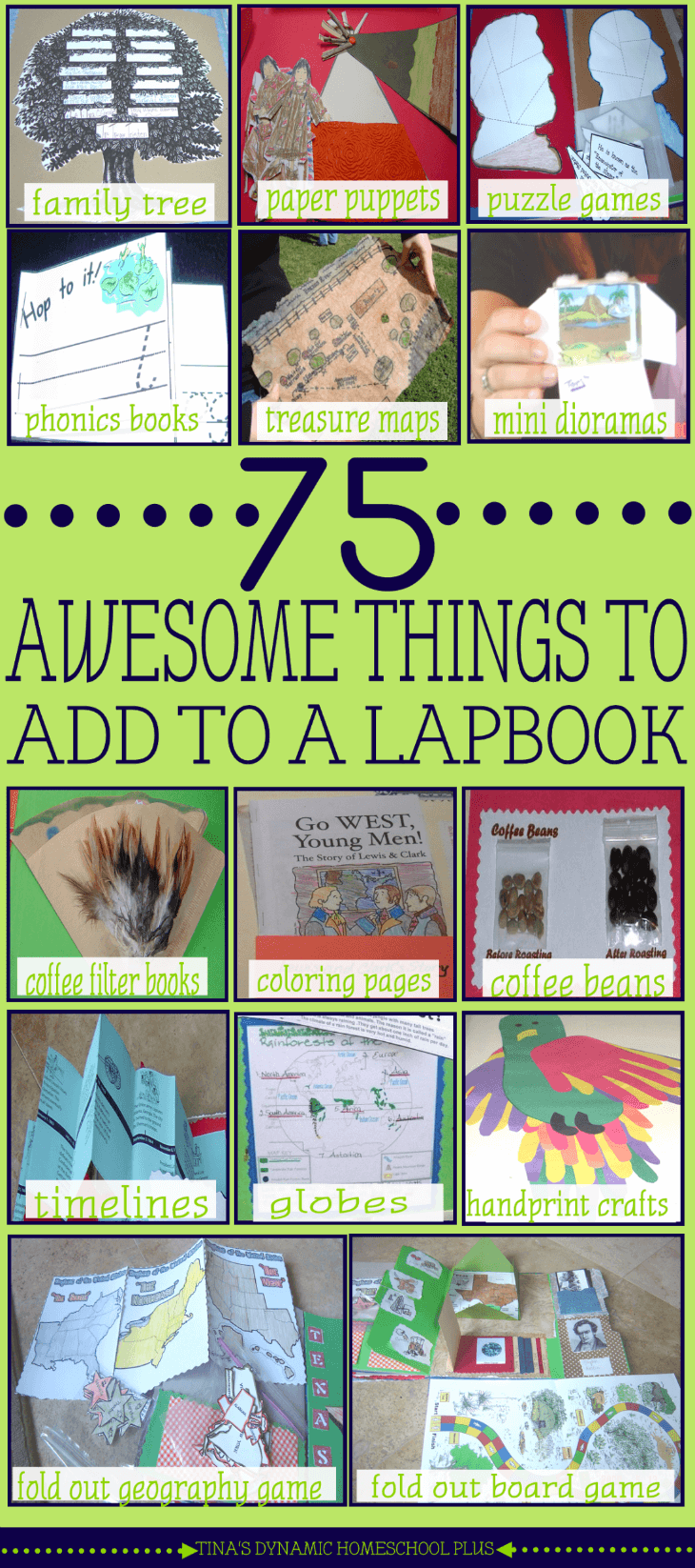
75 AWESOME THINGS TO ADD TO A LAPBOOK
Note from Lindsey:
I’ve been wanting to dive into lapbooking for a while now and Tina’s idea-filled post makes it so much easier.
[bctt tweet=”75 Awesome things to add a #Lapbook by @TinasHomeschool #LaughLearnLinkup”]


Thanks to everyone who submitted a post. Please check out the post above by clicking on the image. If you enjoyed these picks as much as we did, please share them also!

Have you joined our Pinterest Board yet?

Follow Tina Ernspiker’s board #LaughLearnLinkup {Featured Favorites} on Pinterest.


Come join us every Tuesday for the #LaughLearnLinkUp and share your #Parenting or #Homeschool #Tips!

Now give us your best posts!

An InLinkz Link-up


How to Make a Unit Study with Magazines for Kids

November 9, 2015 by Selena Robinson 1 Comment

We’ve been using unit studies in our homeschool since the very beginning. I love the idea of “settling in” to a specific topic and tying our school subjects into the topic, instead of the other way around.

Over the years, I’ve started creating our own homeschool unit studies. Often, I use a book or a video as the basis for the unit. But, recently, I’ve also found that I can create a unit using kids’ magazines! Here’s how to make a unit study with magazines for kids!

Disclosure: I received this product in exchange for this post and I was compensated for my time. All opinions are my own and I was not required to post a positive review.

How to Make a Unit Study with Magazines for Kids

Choosing a Good Set of Kids’ Magazines

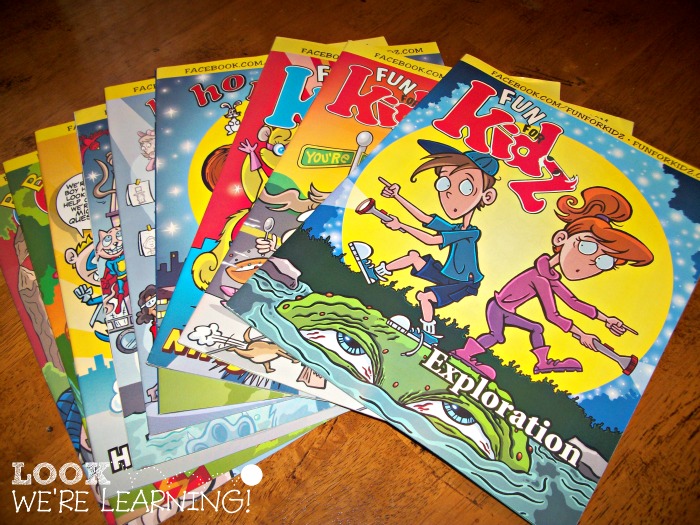
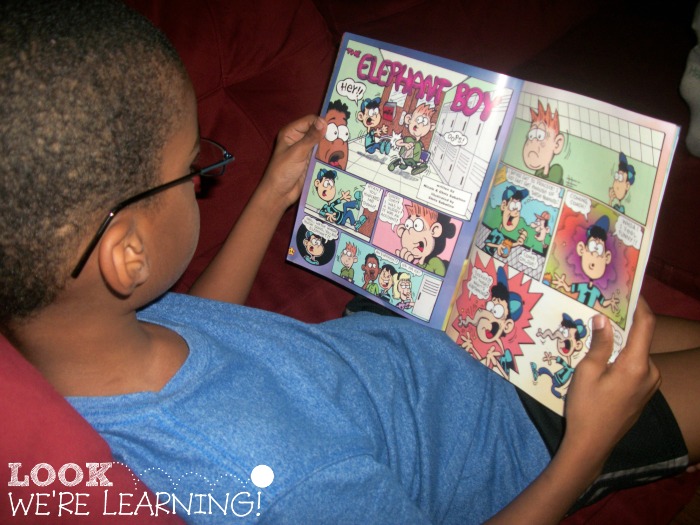
First, you’ll have to find a great set of magazines for kids. Most recently, we used Fun for Kidz magazine as a starting point for some of our units.

How to Make a Unit Study with Kids' Magazines - Look! We're Learning!

If it’s been awhile since you’ve perused a children’s magazine, I can tell you that times have seriously changed since I read them as a kid. Many kids’ magazines nowadays have a LOT of advertisements, and they may be for products or entertainment that you’d rather not show to your children.

Fun for Kidz is different. There are NO advertisements at all. So I can hand the magazine to my children and let them read without having to tear out questionable content in advance.

How to Make a Unit Study with Kids' Magazines - Look! We're Learning!

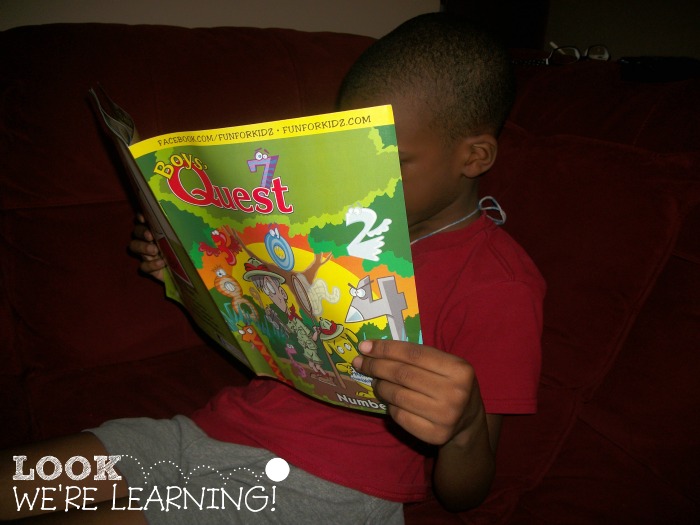
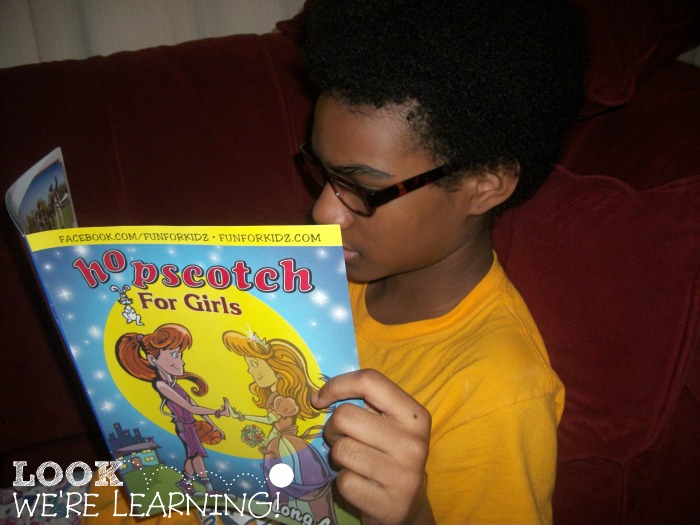
Fun for Kidz is available in three versions:

Fun for Kidz – the original magazine, which features stories, comics, games, activities, and non-fiction articles

How to Make a Unit Study with Kids' Magazines - Look! We're Learning!

Boys’ Quest – geared toward boys aged 6 to 14 and featuring exploration and discovery

How to Make a Unit Study with Kids' Magazines - Look! We're Learning!

and Hopscotch for Girls – geared toward elementary and middle school-aged girls and featuring articles, stories, craft activities, and puzzles.

As you can see, there is something in Fun for Kidz for everyone. In fact, the content was so good that my kids ended up swapping magazines after they were done! So girls can read Boys’ Quest and boys can read Hopscotch for Girls without feeling weird. 🙂

How to Make a Unit Study with Kids’ Magazines

Okay. So you have your magazines. Now, how do you make them into a unit study? Simple. You find an article that features a broad topic and you build your unit around it.

How to Make a Unit Study with Kids' Magazines - Look! We're Learning!

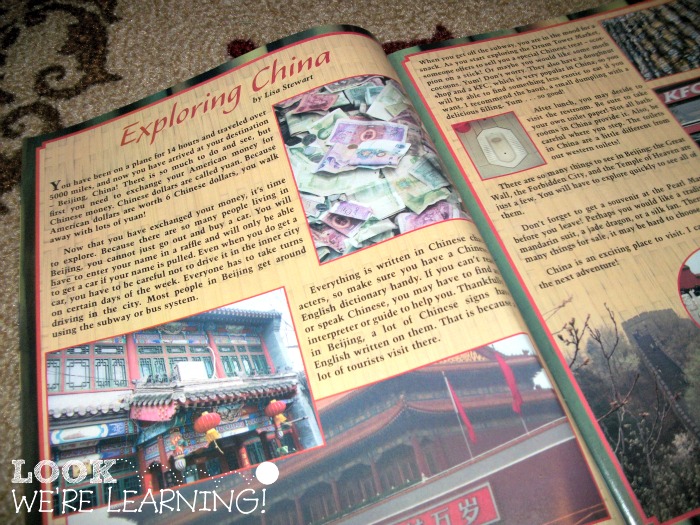
For example, this edition of Fun for Kidz has an article on China. That’s a super broad topic for a unit study. You can use the information in the article to research additional topics and find matching activities, movies, and books. Since the article mentions Beijing, learning to write and speak Chinese, and Chinese currency, those are excellent areas to focus on in the unit.

Maybe you could read a few books about Beijing (reading), watch a video about what the city looks like and how it was built (geography/history), learn how to calculate the currency exchange rate (math), try to cook an authentic Chinese dish (cooking), and brush up on how to write and pronounce a few words in Chinese (foreign language). That sounds like a pretty good unit to me!

How to Make a Unit Study with Kids' Magazines - Look! We're Learning!

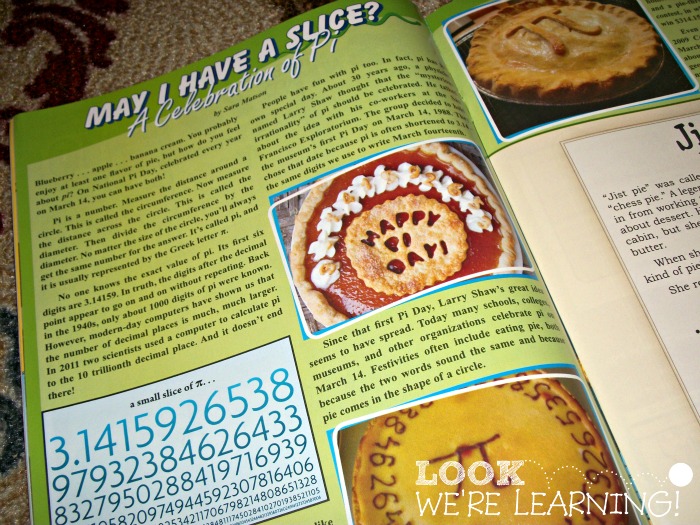
This was a short article about Pi. Why not use it as a starting point for a Pi Day unit?

How to Make a Unit Study with Kids' Magazines - Look! We're Learning!

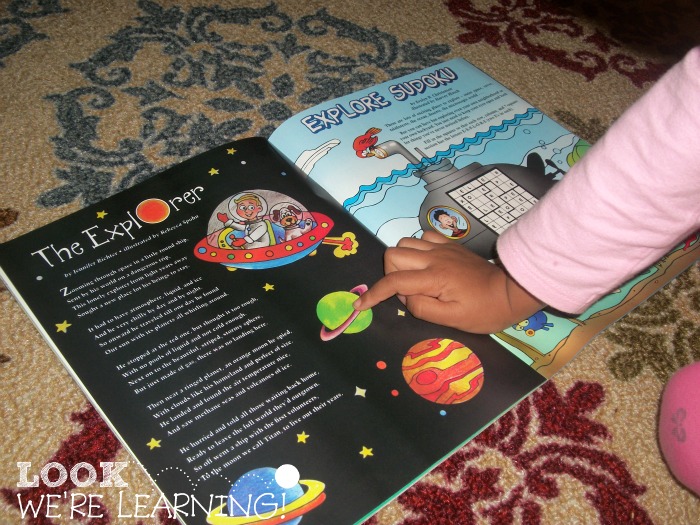
Piglet loved this poem about exploring outer space. Naturally, this would be a good fit for an outer space unit.

How to Make a Unit Study with Kids' Magazines - Look! We're Learning!

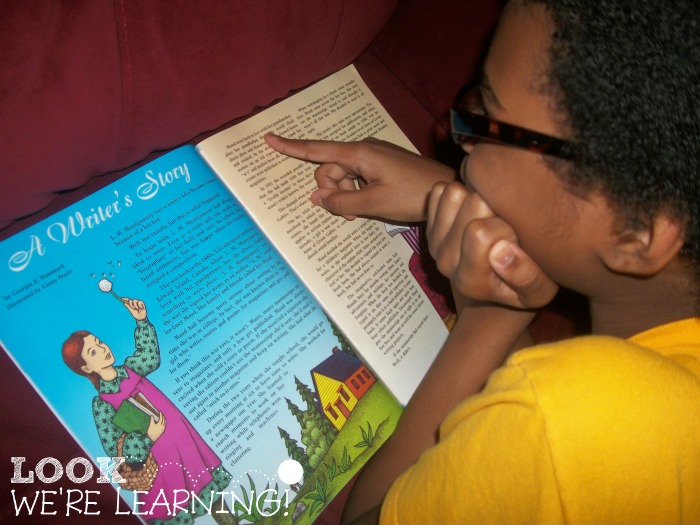
Anne of Green Gables is on our homeschool reading list for fifth grade this year. Tigger started reading this article about Lucy Maud Montgomery, which I think will end up being part of our Anne of Green Gables unit.

How to Make a Unit Study with Kids' Magazines - Look! We're Learning!

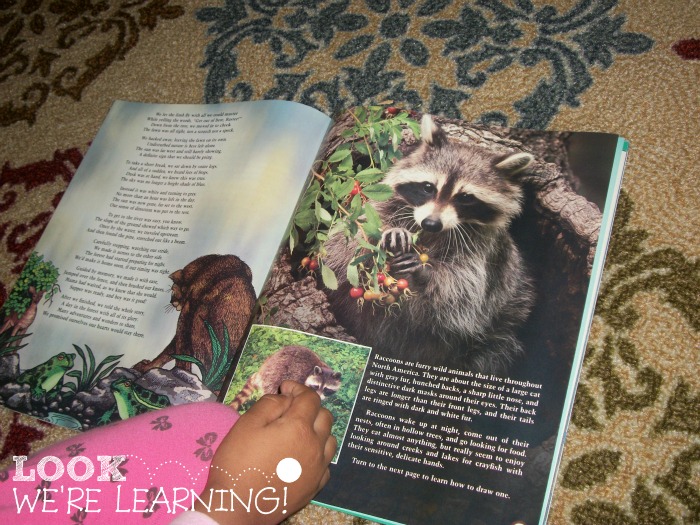
We’re talking about forest animals right now in our homeschool, so this article on raccoons would be a great intro to a raccoon unit!

How to Make a Unit Study with Kids' Magazines - Look! We're Learning!

Of course, when the kids are reading the magazine, sound effects are encouraged. 🙂

How to Make a Unit Study with Kids' Magazines - Look! We're Learning!

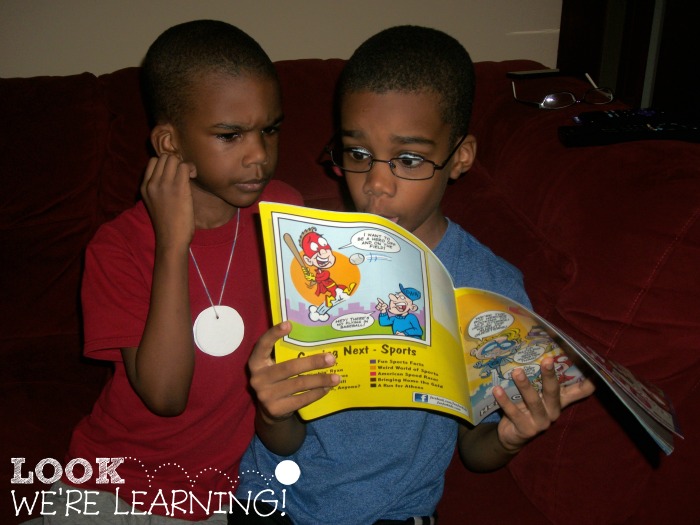
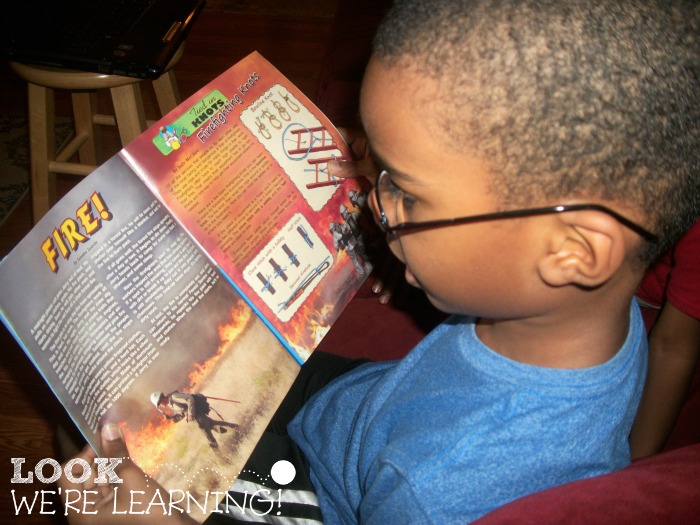
When Pooh saw the articles on firefighters, though, he was hooked. He’s wanted to be a firefighter for the last several months. So – that was our most recent unit study: a Firefighter Unit Study. And we used the Fun for Kidz articles as our inspiration!

How to Make a Unit Study with Kids' Magazines - Look! We're Learning!

After we read the articles, we watched a video about firefighters and then we were off on our latest learning journey! Get a look at our Firefighters Unit Study to see what we learned!

Firefighter Unit Study - Look! We're Learning!

We loved exploring Fun for Kidz, Hopscotch for Girls, and Boys’ Quest! And with so many great educational articles, we can use these kids’ magazines as the basis for several unit studies in the future!
If you’d like to try Fun for Kidz for yourself, you can get an awesome deal on your subscription through December 15, 2015! Order two subscriptions and get 50 percent off your order, including back issues, with the promo code HOMESCHOOL.

Terms:

  • This deal is only valid through December 15, 2015.
  • Postage for shipping magazines outside the U.S. is not included in the offer.

To learn more about Fun for Kidz, visit the company’s Facebook page and “Like” it to receive updates!

Firefighter Unit Study - Look! We're Learning!

Homeschool Unit Studies: Firefighter Unit Study

November 5, 2015 by Selena Robinson 2 Comments

Pooh has been saying that he wants to be a firefighter for the last few months. We went to a community helper event at our local library over the summer and he got the chance to shoot a fire hose (with help). He’s been on a firefighter kick ever since.

So, it was a good time to really learn about what firefighters do. I got the idea by reading an excellent kids’ magazine with Pooh, which I’ll be sharing next week. After we read an article about firefighters, we used what we learned to springboard into a firefighter unit study! Check out some of these resources below!

Firefighter Unit Study - Look! We're Learning!

Firefighter Unit Study

What Do Firefighters Do?

Learning about firefighters involves getting a look at what they do all day. Watch the video below with your kids and then ask them to answer the questions that follow.

1. Name at least two things firefighters do at the start of each day. ( Possible answers: Check the outriggers to make sure the ladder comes up, start the equipment to make sure it runs properly, check the lights and sirens, clean the kitchens and bathrooms, mop floors.)

2. How high does the fire truck ladder extend? (Answer: 115 feet)

3. How heavy is the rescue dummy used in the fire training exercise? (Answer: 125 pounds)

4. What is the difference between a pumper truck and a ladder truck? (Answer: A pumper truck is used for EMS calls, fire attacks, and car accidents. A ladder truck is used for roof operations.)

5. How long does a firefighter’s air supply last? (Answer: About 30 minutes, depending on how fast he or she breathes)

6. Why do firefighters need to connect to fire hydrants? (Answer: Fire trucks carry 500 gallons of water, which only lasts 2 1/2 minutes. The firefighters need to connect to fire hydrants to get more water.)

7. What color helmet does a battalion chief wear? (Answer: White.)

8. Name at least two pieces of personal protective equipment that firefighters use. (Possible answers: Steel-toed boots, suspenders, Nomex hood, helmet, mask, oxygen pack, heat-safe gloves, heat-safe jacket.)

Firefighter Activities and Crafts for Kids:

Make learning about firefighters into a hands-on activity with these fun firefighter crafts!

1. Fire Ladder Learning Activities – JDaniel4’s Mom: Little ones can learn how fire ladders work with this adorable list of math, reading, and pretend play activities!

2. Fire Safety Smart! Printable Pack – Look! We’re Learning!: Help your kids learn about fire safety and how to plan an escape route for your home with this hands-on printable pack!
3. What Puts Out a Fire? Experiment – I Can Teach My Child: This is a super simple science experiment that demonstrates how firefighters put fires out!

4. Spanish Fire Safety Resources – Discovering the World Through My Son’s Eyes: Great resources here for learning about fire safety and Spanish at the same time!
Kids’ Books about Firefighters:

If you want to learn more about what firefighters do, check out these great kids’ books about firefighters! (P.S.: We’ll be sharing even more great firefighter books in an upcoming post!)

1. A Day in the Life of a Firefighter by Heather Adamson

2. Even Firefighters Hug Their Moms by Christine Kole MacLean

3. Fly Guy Presents: Firefighters by Tedd Arnold

4. Curious George and the Firefighters by H.A. Rey

8 Resources for Learning the Times Tables

October 30, 2015 by Selena Robinson Leave a Comment

Are you an educator or parent with a frustrated child who is attempting to memorize the multiplication tables? Read on!

Times Tables Resources

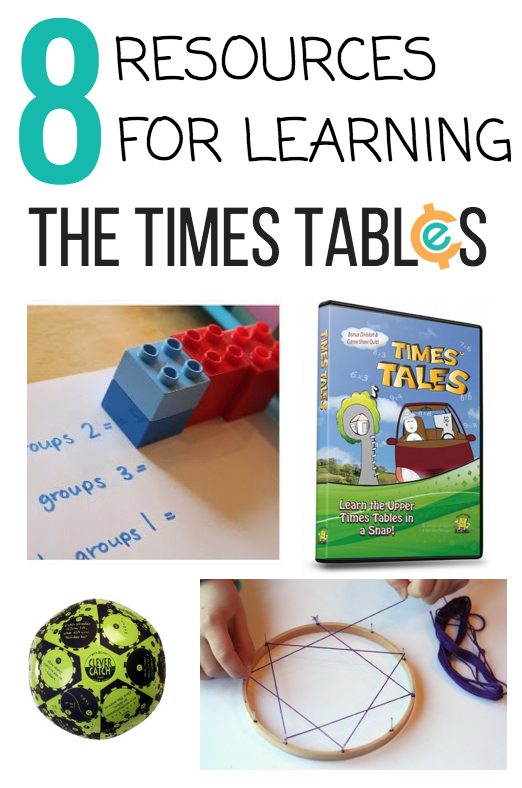
Hundreds of kids have learned their times tables in an hour using a very fun & easy to understand animated video. The Times Tales DVD is a two-part video series that uses stories to teach multiplication to kids. The videos use cute, simple stories that provide students with a “memory peg,” allowing them to quickly recall otherwise abstract multiplication facts. As students progress through the video, they’ll learn multiplication without even knowing it! It’s that easy!

About the Times Tales DVD – What is included?

  • Animated video comes on a DVD
  • CD includes printable worksheets and flashcards

What Educents customers are saying about Times Tales:

“Fun and effective! Did in 2 weeks what other curriculum didn’t do in a year!”

“My kids did NOT want to like this when I first opened it up, but they ended up liking it a LOT! They kept trying to “figure it out” so it took a while for my 2nd and 4th grader to just relax and watch the stories. We followed the recommended pace, and in 2 weeks this DVD solidified what other methods could not do for them in a year! Even my 3 yr old shouts out the answers to some of the quiz questions! Of course she doesn’t understand what she’s learning yet, but when her time comes, learning her multiplication facts will be painless and easy 🙂 Definitely recommend this program to anyone who has stressed over drilling boring multiplication facts into their kids! You WILL Love it! :)” -ML

“I can’t even imagine how many less papers my 5th grade teacher would have had to grade if we had this in my elementary school! We did multiplication drills every single day during our 2nd semester! Using this DVD really beats that.” – Celena J.

Times Tales Animated DVD & Printable Worksheets

Times Tales teaches kids the upper times tables without rote memorization. Students can simply follow along with the entertaining story. As they progress, they’ll be guided into associating the stories they’ve learned with real math. You can always find the Times Tales DVD at a discount on Educents.com!

Times Tales Multiplication Practice Set

Buy Now

More Activities to Practice Multiplication:

This hands-on activity uses legos to reinforce multiplication facts. Source: SchoolTimesSnippet

This hands-on activity uses legos to reinforce multiplication facts. Source: SchoolTimesSnippet

Early Multiplication: Grouping with Legos by School Time Snippets – Kristina and her son practice multiplications using Legos!

Multiplication Rap DVD – Kids discover what multiplication is all about, learn facts through 12, and practice skip counting.

Multiplication Clever Catch Ball – This colorful ball is an interactive way for kids to practice multiplication facts outside or during an organized classroom activity.

Visual way to teach multiplication to your student. Source: Lemon Lime Adventures

Visual way to teach multiplication to your student. Source: Lemon Lime Adventures

Patterned Multiplication Circles by Lemon Lime Adventures – Dayna and her 7-year old use this visual way to learn multiplication. This math craftivity is fun for all ages!

Musical Math with Sue Dickson’s Songs that Teach – This program makes memorizing the facts easy, sure, and fun with catchy songs that allow students to master the facts in no time!

30 Multiplication Facts Printable Worksheets – This low-cost packet includes 30 printable worksheets, 143 flash cards, six vocabulary word cards, and a multiplication chart.

A+ Math Multiplication Unit – Build a strong foundation in math with A+ Interactive Math’s multiplication unit.

3 Ways to Make Math Fun for Active Learners

October 22, 2015 by Selena Robinson Leave a Comment

Do your kids move and wiggle and jump around during school lessons? Mine too! Naturally, that’s par for the course when you’re raising kids with ADHD.

But there are lots of kids who don’t have ADHD and are still active learners. Here’s the problem: Teaching math generally requires concentration and wiggly kids tend to have a short attention span, which can make math class the most grueling part of the day.

In our family, we try to keep math lessons fun, interactive, and hands-on, so today I’m sharing some of our secrets. Check out 3 ways to make math fun for active learners using some wonderful homeschooling resources from Rainbowresource.com!

Disclosure: I received the products shown in this post for free and I was compensated for my time. All opinions are my own and I was not required to post a positive review.

Ways to Make Math Fun for Active Learners

Image: c/o pressmaster via Deposit Photos

Why Use Ways to Make Math Fun?

Math has been the bane of childhood for centuries. There are some kids who take to it right away and master it quickly. Then there are others (mine included) who just don’t seem to “get it”. I understand. After all, I was a humanities major and math was not my favorite subject either.

If you remember your math classes in public school, you likely recall sitting at a desk trying to complete a worksheet full of arithmetic problems or trying to take notes as your teacher wrote equations (at lightning speed!) on the chalkboard. That’s not going to work if you’re homeschooling an active learner. In our house, my kids are out of their seats before I finish demonstrating one problem.

The fascinating thing about ADHD is that kids who have it are actually capable of paying attention for extended periods of time if they are interested in the material. Catch their interest and you can get them to stay involved in the lesson. That’s why it’s worth our effort as parents to make math fun.

3 Ways to Make Math Fun for Active Learners

1. Use Math Games

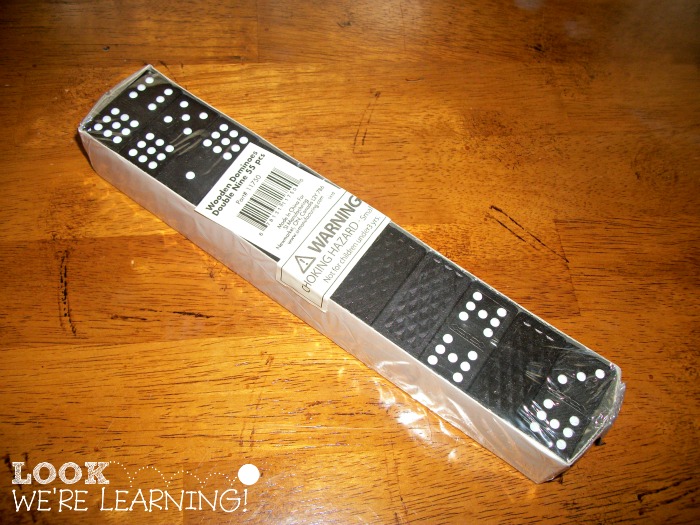
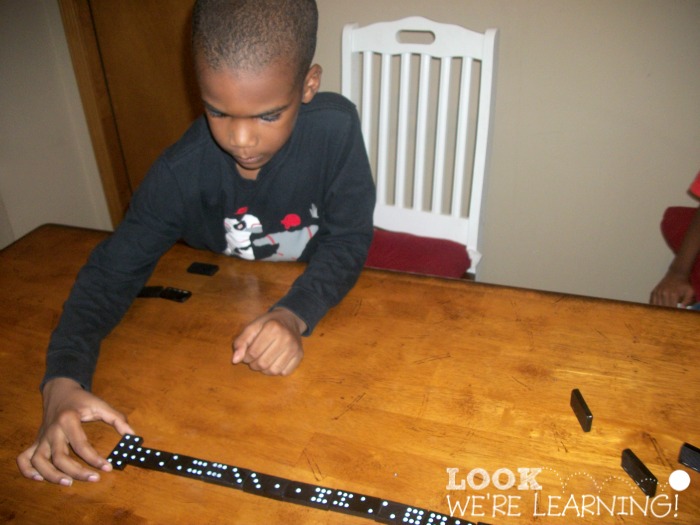
Math games are a wonderful way to make math into an interesting activity for kids. We got to try a Wooden Domino set from Rainbowresource.com. (Confession: I had never played dominoes before, so I had to do a little studying on my own.)

Ways to Make Math Fun for Active Learners - Look! We're Learning!

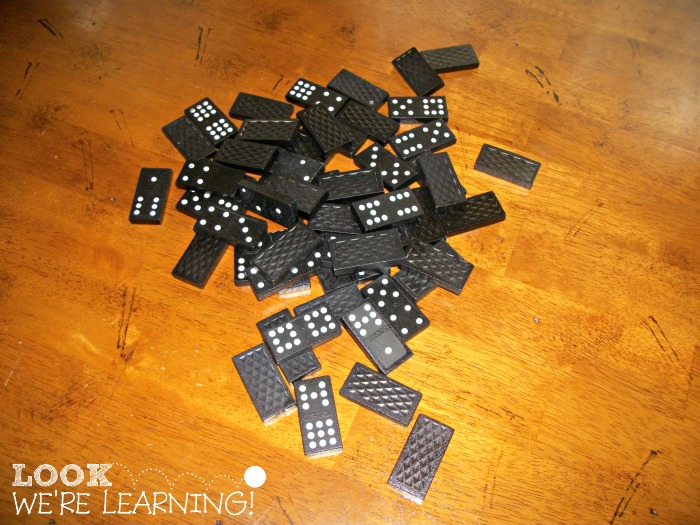
Learning to play dominoes is actually a great way to practice counting, number recognition, and doubles.

Ways to Make Math Fun for Active Learners - Look! We're Learning!

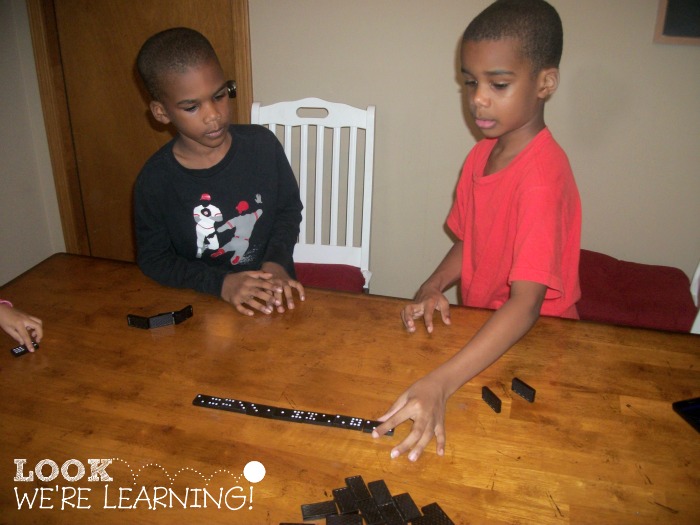
After I explained the basic rules of the game to the kids, we started playing!

Ways to Make Math Fun for Active Learners - Look! We're Learning!

They quickly matched the correct number of dots to the existing dominoes on the board.

Ways to Make Math Fun for Active Learners - Look! We're Learning!

Then they isolated the doubles by turning them vertically against the other dominoes. For Roo, that was his first introduction to the concept of doubles. Something that would have taken a handful of worksheets otherwise was learned in 20 minutes of play. 🙂

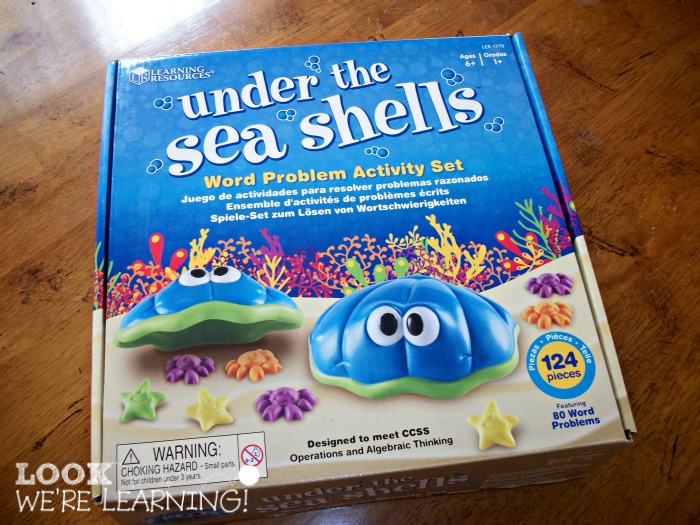
Word problems are one of the math concepts that give kids the most trouble, especially in early grades. So I was excited to use Rainbowresource.com’s Under the Sea Shells Word Problem Activity Set with my boys.

Ways to Make Math Fun for Active Learners - Look! We're Learning!

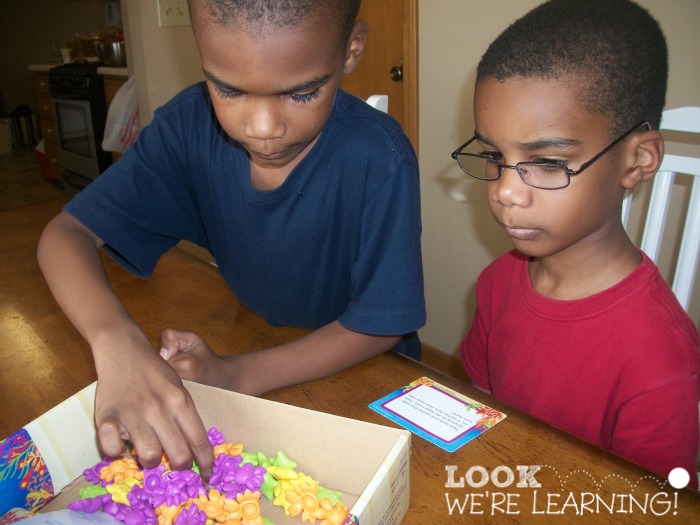
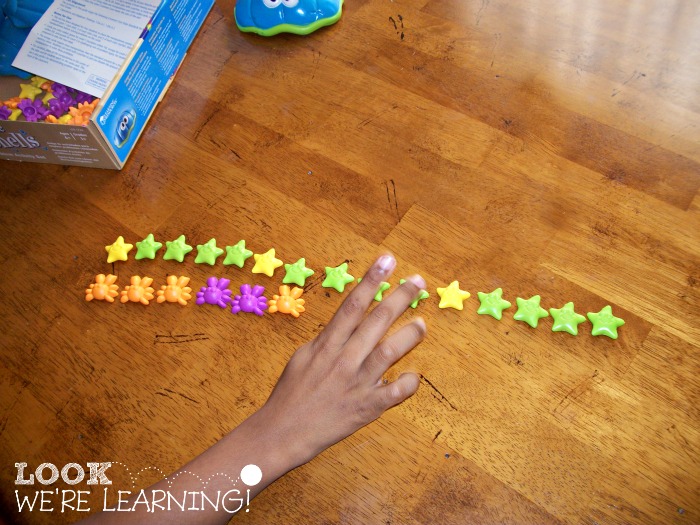
Inside the box are word problem cards, seashells, and stars and crabs for counting.

Ways to Make Math Fun for Active Learners - Look! We're Learning!

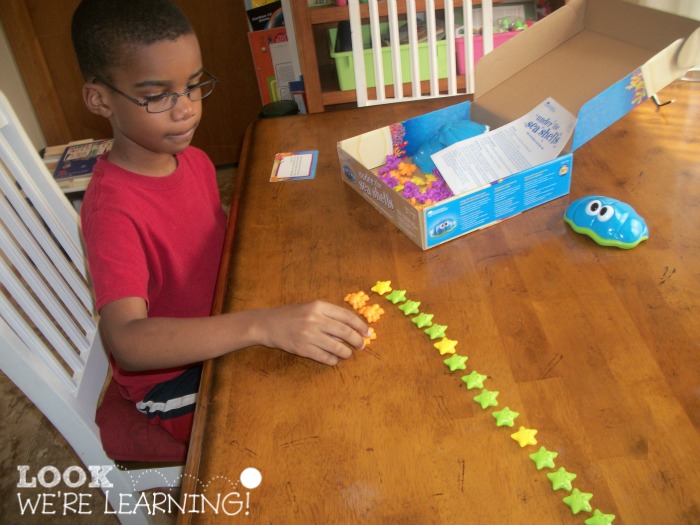
Kids read the problem, choose the correct color and number of manipulatives, and solve the problem.

Ways to Make Math Fun for Active Learners - Look! We're Learning!

Since there are “easy” problems and “advanced” problems, both of my boys could work on problem-solving at their specific grade level.

Ways to Make Math Fun for Active Learners - Look! We're Learning!

For Pooh, seeing the items in action made a HUGE difference. He was finally able to understand what we’re doing when we solve a word problem. We’re simply using numbers to represent what actually happened. Lightbulb moment! And since we were “just” playing, he learned it without the pressure of feeling like he had to meet a certain standard.

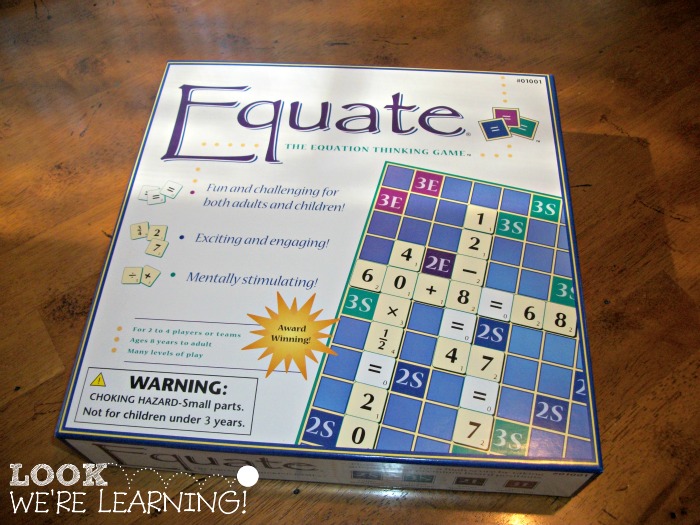
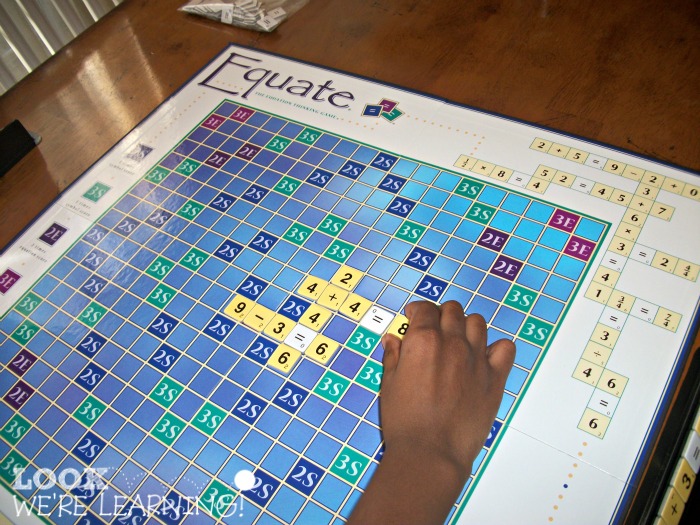
The boys loved playing dominoes and using the seashell game, but I was super excited about playing Equate: the Equation Thinking Game.

Ways to Make Math Fun for Active Learners - Look! We're Learning!

Do you love Scrabble? This is basically Scrabble with equations. So it’s a really cool way for kids to learn to form equations and to find ways to build on them.

Ways to Make Math Fun for Active Learners - Look! We're Learning!

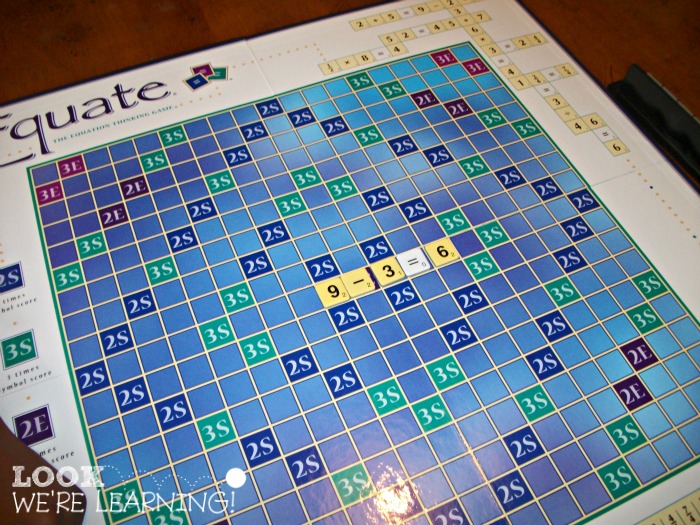
Players start by forming an equation on the board.

Ways to Make Math Fun for Active Learners - Look! We're Learning!

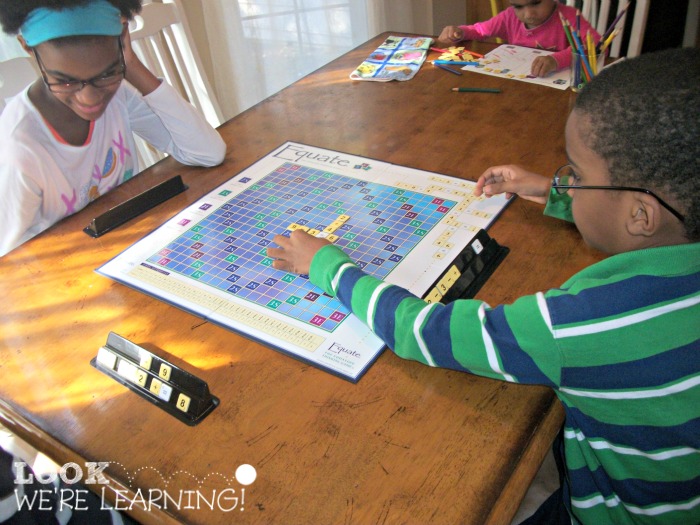
Then they build on the existing equation by using pieces of it to make other equations.

Ways to Make Math Fun for Active Learners - Look! We're Learning!

See? What I loved most about Equate is that, since you can remove certain operations from play, all three of my kids could play the game together, even though they’re at different grade levels. To make the game accessible for my younger boys, I removed the multiplication, division, and fraction operations. But I’m saving those for a private game with Tigger later. 🙂

What really made this awesome is that Pooh, who is math-averse, actually asked to play this game the next day! That’s the power of using math games!

2. Use Visual Math

Another great way to make math fun is to make it into a visual activity. When kids can “see” what they’re actually doing by solving a math problem, they can understand the concept a lot better.

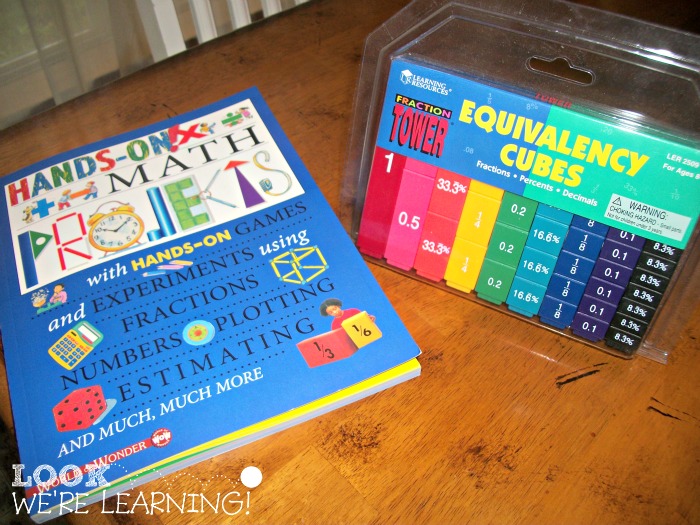
To help with our ability to visualize math, we got to try two products from Rainbowresource.com: the book Hands-On! Math Projects and the Fraction Tower Cube Equivalency Set.

Ways to Make Math Fun for Active Learners - Look! We're Learning!

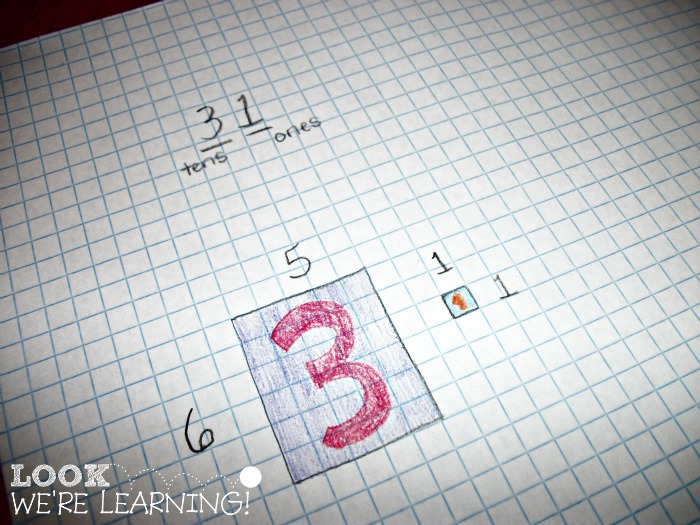
In the book Hands-On! Math Projects, kids can build structures, draw pictures, and play games that are all designed to reinforce math concepts. We started with the Value Your Digits! activity – a way to examine place value.

Ways to Make Math Fun for Active Learners - Look! We're Learning!

According to the instructions, kids are to draw out a grid of squares that represent the number values in certain digits. For example, with the number 31, they would draw a grid that had 30 squares in it and then draw a “3” inside the grid. Then they would outline a single square in which they would write a “1”.

The idea is to actually see the value of each place – that, in the number 31, “3” actually means 30 and the “1” means simply 1.

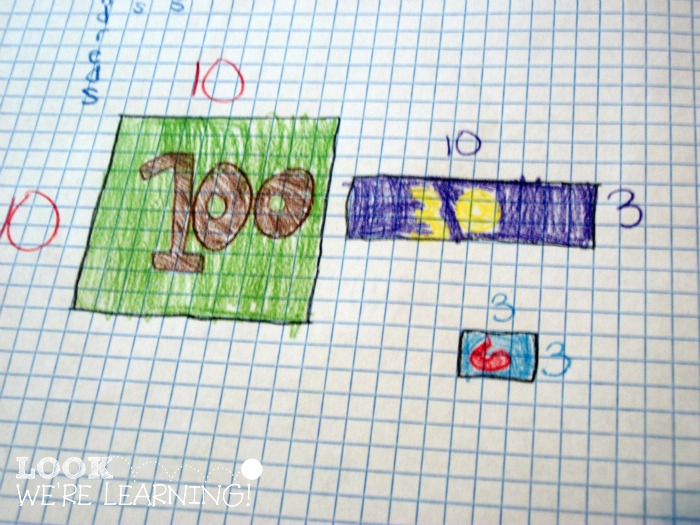
Ways to Make Math Fun for Active Learners - Look! We're Learning!

Tigger tried it with a three-digit number: 136. And that was the first time the boys really understood why the “1” is in the hundreds place!

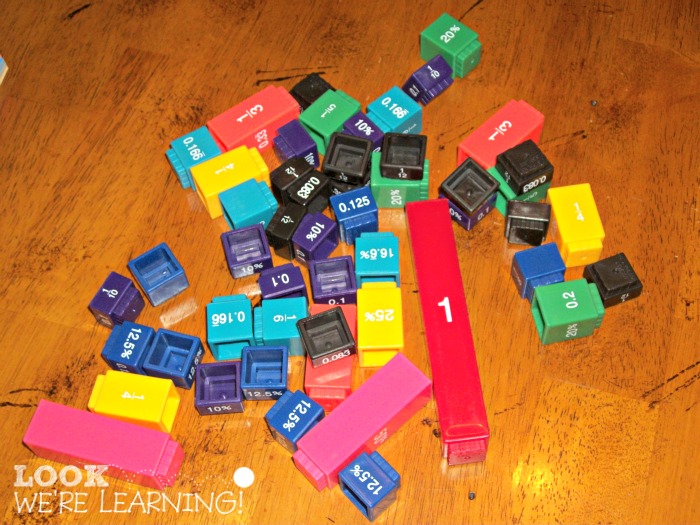
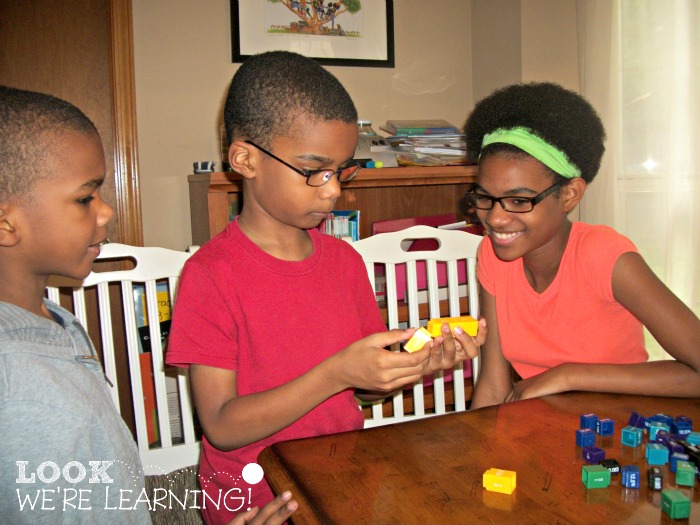
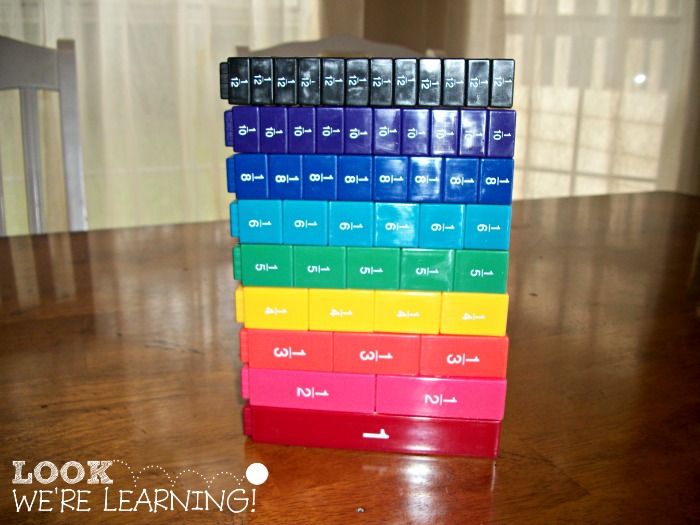
Then we wanted to work with fractions a bit, so we built a “fraction wall” – another of the activities in Hands-On! Math Projects. Time to use our Fraction Cube Equivalency Set!

Ways to Make Math Fun for Active Learners - Look! We're Learning!

As you can see, the set includes fractions made into cubes in varying amounts. There’s a tower of 1/10 fractions, a tower of 1/6 fractions, 1/3 fractions, and so on.

Ways to Make Math Fun for Active Learners - Look! We're Learning!

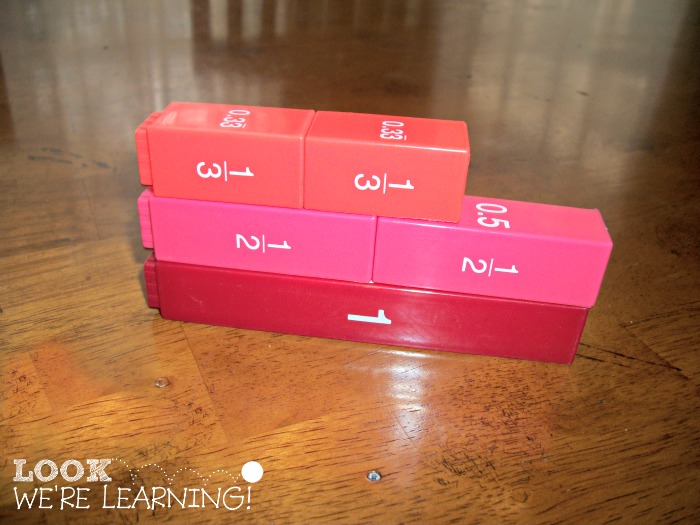
To build our fraction wall, we started with the “1” tower, which is a solid rectangle representing 1 whole. Then we started building our wall by adding enough of each fraction set to equal 1.

Ways to Make Math Fun for Active Learners - Look! We're Learning!

As the kids learned, fractions are merely pieces of a whole. The actual fraction you use simply describes how much of the whole you’re talking about. So they all mean the same amount if you use the right number of pieces.

Ways to Make Math Fun for Active Learners - Look! We're Learning!

10/10 is equal to 6/6, which is equal to 3/3, which is equal to 1. Everyone understood that afterward and I was a happy homeschooling mama.

Ways to Make Math Fun for Active Learners - Look! We're Learning!

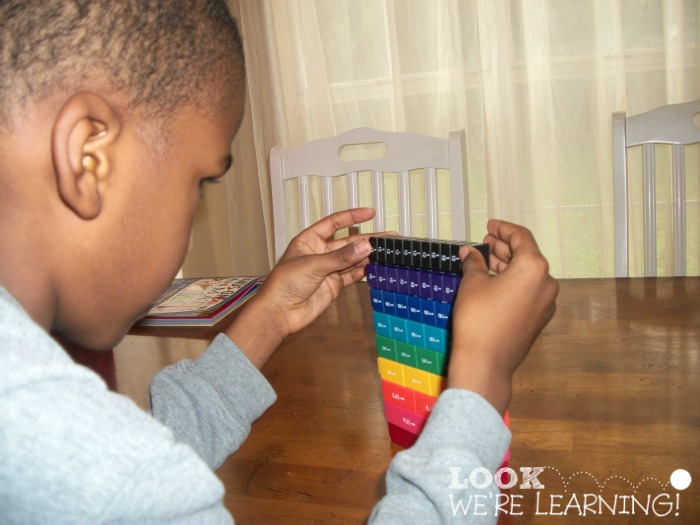
Ta-da! All finished! The kids learned equivalent fractions without a single worksheet! Plus, they actually learned the concept behind making equivalent fractions on paper, because they could see what they were creating.

3. Use Your Child’s Existing Interests

Really, the simplest way to make math fun for your active learner is to tie it in with something he or she is already interested in. For Tigger, that something is reading.

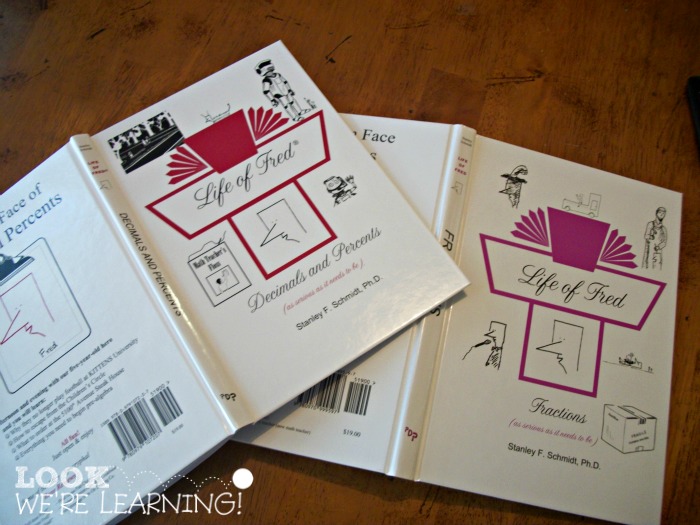
She, like her mom, is an avid bookworm. And that’s exactly the kind of person that the Life of Fred book series was written for. Since we’re covering both fractions and decimals in fifth grade this year, we were excited to try Life of Fred: Fractions and Life of Fred: Decimals from Rainbowresource.com!

Ways to Make Math Fun for Active Learners - Look! We're Learning!

In Life of Fred, kids follow the daily life of five-year-old Fred, a math professor (yes, you read that right) at Kittens University. In the Decimals book, Fred wants to build a robot, but he needs to weigh all of the parts together.

Ways to Make Math Fun for Active Learners - Look! We're Learning!

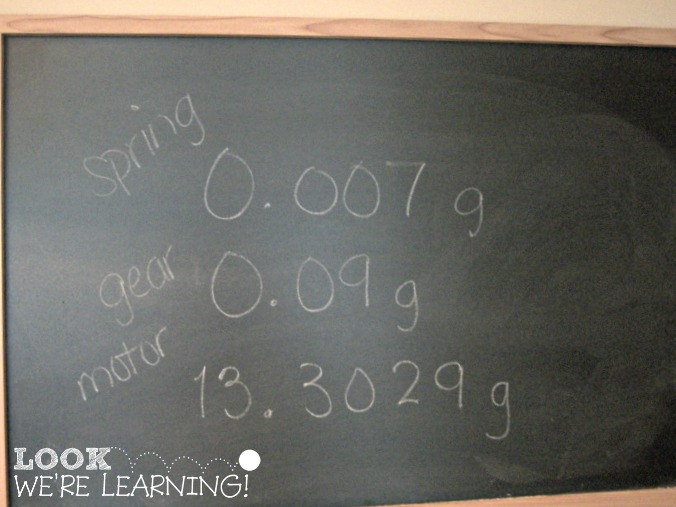
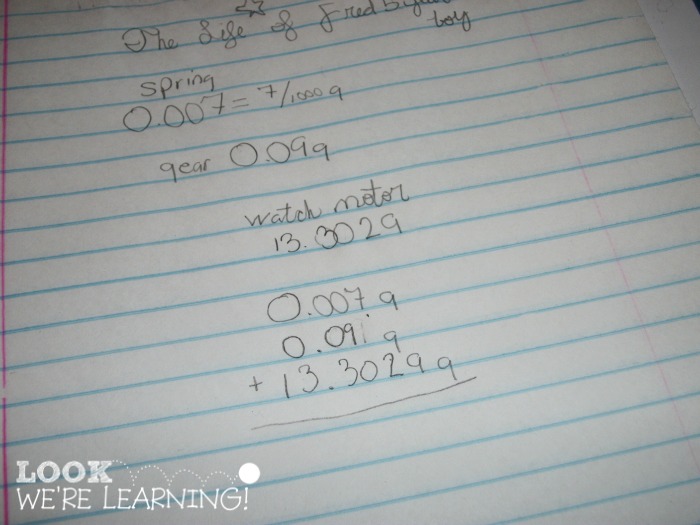
The spring weighs 0.007g, the gear weighs 0.09, and the motor weighs 13.3029 g. As the book so wonderfully (and nonchalantly) mentions, the key to mastering decimals is lining up the decimal points.

Ways to Make Math Fun for Active Learners - Look! We're Learning!

After Tigger read the section, she wrote down her problem and solved it correctly on the first try – all because she was actually interested in the story! She really wanted to know if Fred would be able to build his robot or not. Solving the math problem was just a step to finding that out.

Later we went on to fractions and we discussed Fred’s statement that you can reduce fractions by simply dividing the same number of objects into fewer groups.

Ways to Make Math Fun for Active Learners - Look! We're Learning!

In the book are practice problems to help kids see this in action. Tigger was asked to divide six pencils among two people, which works out to three per person. As she could see, three out of six (3/6) is the same as half (1/2) of the pencils.

Ways to Make Math Fun for Active Learners - Look! We're Learning!

Then the problem asked her to divide the same six pencils among three people. Working that out showed her that 2/6 is the same as 1/3 of the pencils.

Ways to Make Math Fun for Active Learners - Look! We're Learning!

Now that she had a grasp on the concept behind reducing fractions, I had her try a traditional math problem: reducing 7/21 by using the greatest common factor (GCF).

Ways to Make Math Fun for Active Learners - Look! We're Learning!

Success! That’s one math concept we can check off for this school year! And she understood the traditional problem because she had already gained an understanding by reading the story! She’s been asking to finish the books ever since. 🙂

As you can see, we loved every single product we reviewed from Rainbowresource.com! They were wonderful for helping our kids to love math class without having to force them to be still – something that would have made us all miserable.

To learn more about Rainbowresource.com‘s enormous product catalog, including even more products for families with active learners, keep up with the company using the social media links below!

  • Facebook
  • Twitter
  • Pinterest
  • Instagram
  • YouTube
  • Google Plus

Do you have any ways to make math for active learners? Share your tips in the comments!


5 Fun Ways to Learn at the Zoo

October 20, 2015 by Selena Robinson Leave a Comment

What child doesn’t love visiting the zoo? Naturally, zoos are popular for homeschooling field trips, but you can also make them into genuine opportunities to learn. Read on to find out 5 fun ways to learn at the zoo!

It’s Tuesday, so it’s also time for the Laugh and Learn linky! Check out our favorite posts from last week and read even more great homeschooling and parenting posts today!

5 Fun Ways to Learn at the Zoo

5 Fun Ways to Learn at the Zoo

We love the zoo in our family. In fact, we were just there last week for a homeschool class. My boys learned about black and white animals (lemurs, pandas, etc.) and my oldest daughter learned about the strongest animals on Earth. Trivia: Did you know that, when you measure according to the ability to pull its own weight, the Rhinoceros Beetle is stronger than a lion? Neat!

Homeschooling classes are just one way to learn at the zoo. Today I’m sharing five more over at Thinking Outside the Sandbox!

5 Fun Ways to Learn at the Zoo – Thinking Outside the Sandbox

Onward to the linky!

Come join us every Tuesday for the #LaughLearnLinkUp and share your #Parenting or #Homeschool #Tips!

Welcome to our 55th week of Laugh and Learn – Homeschool and Parenting Linkup!

Laugh and Learn – Homeschool and Parenting Linkup will be open by 6 am every Tuesday morning.

Each and every week, all of the hosts pick one favorite post to be featured on the next week’s linkup. All of your links will be shared on five blogs.

We are also sharing the top posts on Pinterest: #LaughLearnLinkup {Featured Favorites}. It’s added exposure for your awesome content!
Reminder: Please share this linkup! You can help us build a great homeschool and parenting group.
[bctt tweet=”Share your favorite #parenting or #homeschooling post with #LaughLearnLinkup. #ihsnet #ibabloggers”]

Your Fabulous Hosts 😉

Tina
Me and SawyerLos Gringos Locos
Tina lives abroad in Latin America with her husband and four children. Currently in Mexico, Tina is active in homeschool, travel, and her Bible ministry. She blogs about all of their adventures, and more at Los Gringos Locos.
Find Tina at her blog link above, and on the following social media networks:
Facebook
Twitter
Pinterest
Google +
Linkedin


Selena
Selena - head shot Look We're Learning

Selena is a writer and a homeschooling mom to four kids, including three with ADHD/SPD. Selena and her husband, Jay, are committed to teaching their children at home and loving every minute of it! You can read about the family’s homeschooling experiences at Look! We’re Learning, written by Selena!
Find Selena at her blog link above, and on the following social media networks:
Facebook
Pinterest
Twitter
Google +
Instagram
Sarah
sarah-dedicated-homeschooler Dedicated Homeschooler
Sarah lives in Kentucky, USA, where she and her husband homeschool three children. Sarah writes for and about, families with special needs. She hopes to provide support and encouragement to all special needs parents in the homeschool community. Visit Sarah at Dedicated Homeschooler.
Find Sarah at her blog link above, and on the following social media networks:
Facebook
Instagram
Pinterest
Twitter
Haley
Haleys Vintage Finds & DealsHaley's Vintage Finds & Deals
Haley hopes to encourage stay at home moms. She wants to help them learn how to make an extra income, to stretch a budget, to make crafts, and other useful information. Haley always has updates on the kids, and their funny antics. Visit Haley at Haley’s Vintage Finds & Deals.
Find Haley at her blog link above, and on the following social media networks:
Facebook
Pinterest
Instagram
Twitter
Google+
YouTube
Lindsey
Lindsey is a passionate writer eager to touch the hearts and minds of homeschoolers and parents abroad. As a devoted mother to two, happy homeschooler, and scatterbrained housewife, she's on a mission to find love and joy in "the simple life" and invites you to join her! Lindsey is a passionate writer eager to touch the hearts and minds of homeschoolers and parents abroad. As a devoted mother to two, happy homeschooler, and scatterbrained housewife, she's on a mission to find love and joy in "the simple life" and invites you to join her!
Lindsey is a passionate writer eager to touch the hearts and minds of homeschoolers and parents abroad. As a devoted mother to two, happy homeschooler, and scatterbrained housewife, she’s on a mission to find love and joy in “the simple life” and invites you to join her! Visit Lindsey at Nitty Gritty Homeschooling. Find Lindsey at her blog link above, and on the following social media networks:
Facebook
Google+
Instagram
Pinterest
Twitter
YouTube


Grab a Button / Badge:

If you were featured this week, we would love for you to use this badge below. We really appreciate all your hard work, and sharing with us each and every week!

Laugh Learn Linkup

We would also love if you could use this badge on any post you shared with us. Or a text link would also be greatly appreciated. More shares and links helps us build a better and bigger linkup for all us to benefit from.

Laugh Learn Linkup


The Winners for the Week of October 20th:

Featured on #LaughLearnLinkup


Tina’s pick for this week…

Solar System Unit Study and FREE Printable K-3 Activity Pack
Note from Tina:
I am going to save this for our boys. Outer space is always cool!
[bctt tweet=”Outer space is always a cool homeschool study unit! By @momteaches2 #LaughLearnLinkup”]


Selena’s pick for this week…

Finding Balance in the Homeschool
[bctt tweet=”Finding balance while homeschooling by @classichomesch #LaughLearnLinkup”]


Sarah’s pick for this week…

Lego Math Race with FREE Printable
Note from Sarah:
I’m really not crazy about math, and two of my kids hate it. But when you add Legos…even I want to do math.. Thanks for this great little game.
[bctt tweet=”Have fun with Lego Math Race by @alldayeverydaym #LaughLearnLinkup”]


Haley’s pick for this week…

Teddy Bear Printable Kindergarten Worksheet Set
Note from Haley:
My kids would love these!
[bctt tweet=”Teddy Bear Kindergarten Worksheets by @learning_2walk #LaughLearnLinkup”]


Lindsey’s pick for this week…

Fall into Art
Note from Lindsey:
These works of art are amazing!
[bctt tweet=”Fall Into Art by @AmyOes #LaughLearnLinkup”]


Thanks to everyone who submitted a post. Please check out the post above by clicking on the image. If you enjoyed these picks as much as we did, please share them also!

Have you joined our Pinterest Board yet?

Follow Tina Ernspiker’s board #LaughLearnLinkup {Featured Favorites} on Pinterest.


Come join us every Tuesday for the #LaughLearnLinkUp and share your #Parenting or #Homeschool #Tips!

Now give us your best posts!

An InLinkz Link-up


Farm Shoebox Diorama Printable Pack - Look! We're Learning!

Farm Shoebox Diorama Printable Pack

September 15, 2015 by Selena Robinson Leave a Comment

We started our dinosaur unit a few days ago, but we’ll be learning about farms soon too! So I put together a simple farm shoebox diorama printable pack that you can make with your kids in just a few minutes!

This activity is a super fun one for creating a farm unit study with young children. Kids can put together their own diorama while learning about common farm animals, equipment, and more!

Read on to see how to get your farm diorama printable pack free! And be sure to grab our free farm animal flashcards while you’re here!

Make a farm shoebox diorama with this free On the Farm Shoebox Diorama Printable Pack!

On the Farm Shoebox Diorama Printable Pack

To use this printable pack, you’ll need: (Affiliate links provided here for convenience. For details, see our Disclosure Policy.)

  • Printer (with ink)
  • Printer paper
  • Child-safe scissors
  • Glue
  • Shoebox (By the way, if you don’t have a shoebox, you can paste these scenes onto construction paper instead.)

In this pack, you’ll find diorama frames featuring farm objects, including a tractor, a barn, a fenced background, a cow, and a hen with chicks. Plus, there’s a sun you can paste onto the background.

Be sure to cut out the stand-up frames and the smaller squares underneath the pictures as one piece. You’ll fold the smaller square under the top picture to create a 3-d image.

Farm Shoebox Diorama Scenery

Take a look at this pack in action with our Farm Shoebox Diorama Craft!

Scroll down to get your free On the Farm Shoebox Diorama Printable Pack!

Be sure to check out these other farm learning ideas!

Farm Do A Dot Mats - Look! We're Learning!

Printable Farm Animal Flashcards - Look! We're Learning!

Super Easy Farm Shoebox Diorama Craft

And get more ideas for hands-on crafts on my Simple Crafts for Kids Pinterest board!

To get your copy of our free On the Farm Shoebox Diorama Printable Pack, click the image or the link below to download it!

Learning Printables from Look! We're Learning!

>>> On the Farm Shoebox Diorama Printable Pack <<<

Simple Science Experiments: Colorful Celery

September 4, 2015 by Selena Robinson 1 Comment

Do your kids love to perform science experiments? A really easy one is to make colorful celery! If you’re looking for some simple science experiments, you can’t get much easier than this one!

I am slowly learning to appreciate science. For years, I shied away from it, because it seemed too technical and abstract. But when I was taking biology a couple of years ago in college, I had to do several experiments at home and document my results. That’s when I started appreciating the value of performing experiments for yourself. And my kids love them!

Check out how you can easily learn about plants by making colorful celery!

Simple Science Experiments - Colorful Celery

Simple Science Experiments: Colorful Celery

We got the idea for this experiment from the book 501 Science Experiments. This is definitely a book that will stay with our family for some years. We’ll never run out of science ideas with this one. 🙂

Simple Science Experiments - Colorful Celery

In fact, we’ve had this book for four or five years and I think we’ve done two of the experiments so far. That’s going to change during this school year, though.

Simple Science Experiments - Colorful Celery

All you need for this experiment is a few stalks of celery (with the ends trimmed), a measuring cup, two glasses, and some food coloring.

Simple Science Experiments - Colorful Celery

Fill each glass half full of water. Then add a good amount of red food coloring to one glass and blue food coloring to the other glass. (Really, you could use any colors you want, but I thought red and blue would show up best.)

Leave the glasses out at room temperature for at least 8 hours.

Simple Science Experiments - Colorful Celery

Come back and take a look! If you look closely, you can see that some of the spots inside the celery have taken on the color of the liquid in each glass.

Simple Science Experiments - Colorful Celery

But the best way to observe the results is to peel back the rounded part of the celery stalk. Just peel a tiny amount off, otherwise you’ll take off too much and miss where the liquid moved up the plant.

Simple Science Experiments - Colorful Celery

See? Just like other plants, celery carries water and nutrients up through the stalk in an attempt to bring food to the leaves at the top. Even when you cut the leaves off, the stalk can still transfer nutrients, including the colored liquid.

When you peel back the top layer, you can actually see how the coloring has traveled. Neat!

What simple science experiments do your kids like? Share them in the comments!

Simple Sensory Play with a Muffin Tin!

August 21, 2015 by Selena Robinson 1 Comment

Piglet is our last child and, I have to admit, I didn’t do many sensory activities with my other kids when they were her age. Until recently, I didn’t think sensory play was really important for kids.

Then we found out that Tigger has SPD, so we started integrating more sensory activities around the house. So, when I heard that Cathy James was releasing a new book that’s all about sensory activities for little ones, I was super excited to try it out! If you’re stumped for ideas, this book is full of simple sensory play ideas that take almost no time at all!

Disclosure: I received a copy of this book in exchange for this post. All opinions are my own and I was not required to post a positive review. 

Simple Sensory Play

Simple Sensory Play with a Muffin Tin

For Piglet’s first official sensory play attempt, we decided to try the activity “Creative Concoctions” from Cathy’s new book Super Sensory Invitations to Play!

Simple Sensory Play with a Muffin Tin

All you do is fill a muffin tin with whatever you have around the house. The goal is to include materials for as many senses as you can.

I took Cathy’s suggestion and used shaving cream, rice, water with food coloring, and dried beans. All of these were things I already had in our pantry. Win!

I will say that I had to be very clear with Piglet that she was not to eat ANYTHING. Otherwise, I’m sure she would have confused the shaving cream for whipped cream. 🙂

Simple Sensory Play with a Muffin Tin

At first, I encouraged Piglet to feel the shaving cream. She didn’t exactly like the way it felt, though.

Simple Sensory Play with a Muffin Tin

So I gave her a plastic spoon and she was far more comfortable.

Simple Sensory Play with a Muffin Tin

I showed her how to add the colored water to the shaving cream. She loved doing it on her own!

Simple Sensory Play with a Muffin Tin

Then she started adding rice and the dried beans.

Super Sensory 2

Simple Sensory Play with a Muffin Tin

After a while, we ended up with rainbow shaving cream!

Simple Sensory Play with a Muffin Tin

Throughout the entire activity, she described what she did: “I mix it up.”, “I’m doing an activity.”, “I stir it.” I guess it ended up being a language activity too! 🙂

Simple Sensory Play with a Muffin Tin

That looks like evidence that a tiny person enjoyed herself quite a bit.

All in all, she ended up sitting at our dining room table for nearly 30 minutes with this one activity! I couldn’t believe how much she enjoyed it and it was so simple! I am definitely an early childhood sensory play convert. 😉

If you want to see even more simple sensory ideas from the book Super Sensory Invitations to Play, click the image below to get a look at what’s inside!

Super Sensory Invitations to Play

This post is part of the Super Sensory Invitations to Play book tour! Stop by to visit the other blogs on the tour to see more wonderful sensory activities from the book!

Super Sensory Invitations to Play Blog Tour

Aug 2 :: Powerful Mothering

Aug 3 :: The Educators’ Spin On It

Aug 4 :: Simple Fun for Kids

Aug 6 :: Homegrown Friends

Aug 7 :: The Fairy and the Frog

Aug 8 :: Mum in The Made House

Aug 12 :: Mama Smiles

Aug 13 :: Thriving STEM

Aug 14 :: Mom Inspired Life

Aug 19 :: Kids Craft Room

Aug 20 :: Fun-A-Day

Aug 21 :: Look! We’re Learning!

Aug 23 :: Lemon Lime Adventures

Aug 26 :: Bambini Travel

Sept 1 :: Laughing Kids Learn

Sept 14 :: Best Toys for Toddlers

Sept 18 :: Fantastic Fun and Learning

  • « Previous Page
  • 1
  • 2
  • 3
  • 4
  • 5
  • …
  • 9
  • Next Page »
Hi! I'm Selena, a veteran teacher and homeschool mom to four. I'm so glad you're here!
About Me Contact Terms of Use Privacy Policy Places I Share
Facebook Pinterest Instagram
Homeschool Printables Unit Studies Shop the Store
Copyright ©2026, Look! We're Learning!. All Rights Reserved. Design by Pixel Me Designs