Look! We're Learning!

Early Learning. Happy Teaching.

  • Shop
  • Printables
  • Homeschool
  • Crafts
  • Parenting
  • Blog

Sharks! – A Shark Food Chain Game

September 28, 2017 by Selena Robinson 3 Comments

My kids, like most kids, just love sharks.

They are totally fascinated with how powerful they are, how quickly they swim, and how they eat pretty much everything.

In fact, I think that last one might be the thing they like most about them.

So I was ecstatic to get a copy of the gorgeous picture book “How to Survive As a Shark” from Innovation Press! As we read the book, we learned so many things about sharks that we didn’t know before, including how they sleep and what they eat!

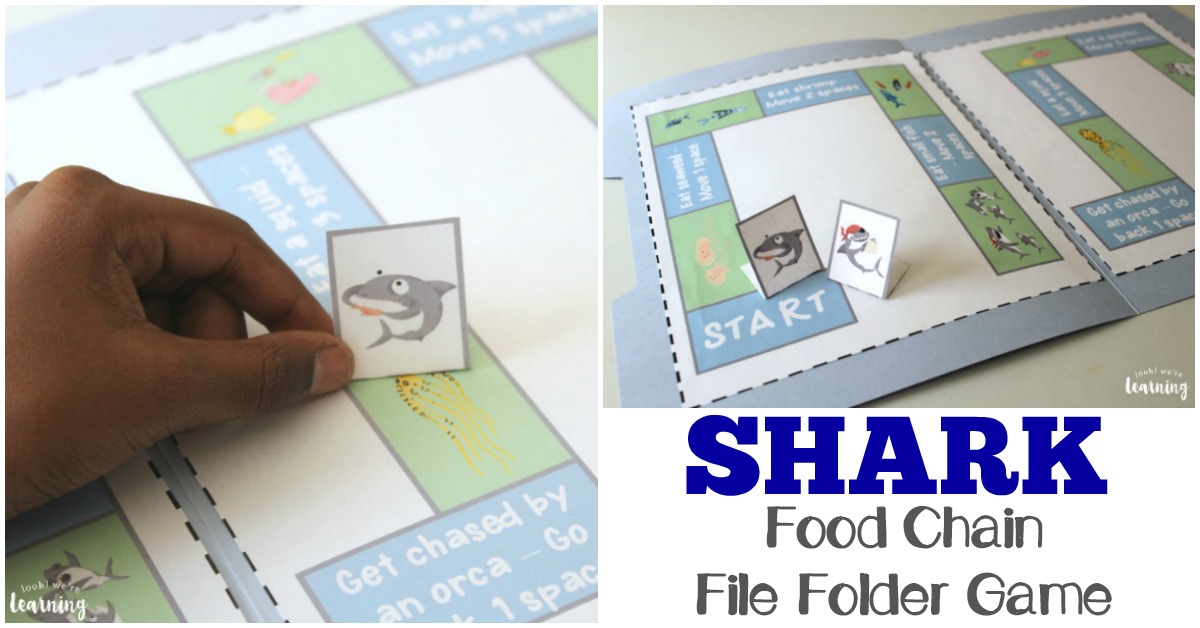
And that gave me the idea to turn the shark’s diet into a fun file folder game!

Read on to see how to get a copy of this shark food chain game for your students!
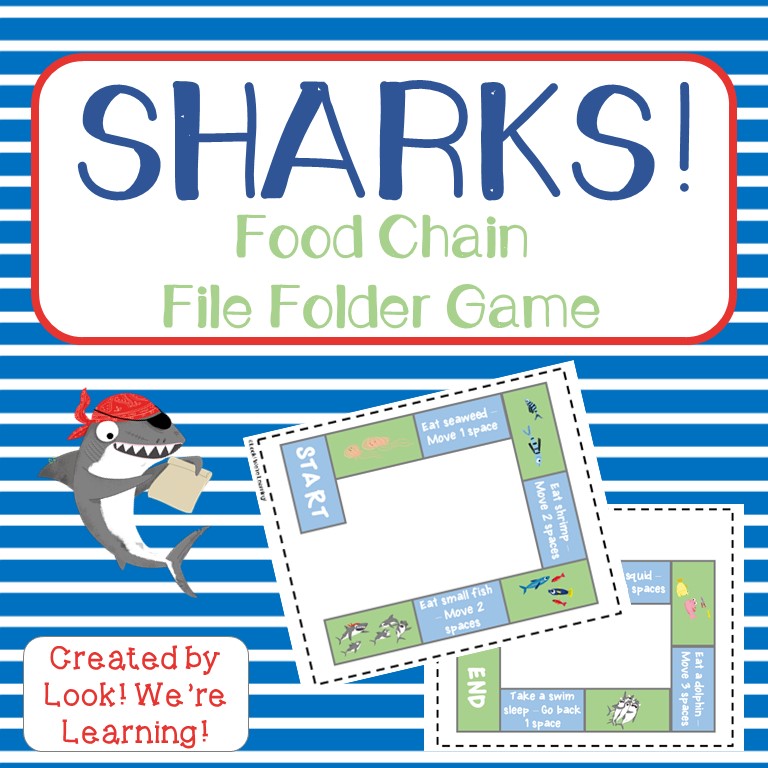
Shark Food Chain Game

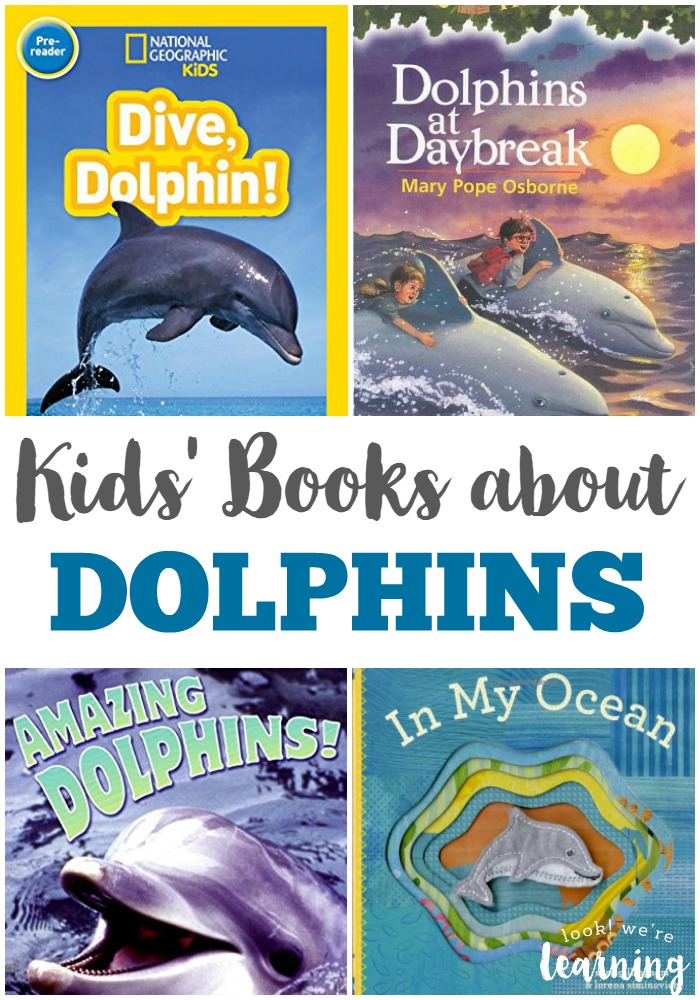
Learn even more about marine animals with our list of beautiful books about dolphins for kids to read!

They’ll love studying how these animals survive in such a harsh environment, even when sharks are swimming around!

Disclosure: I received a copy of this book in exchange for this post. All opinions are my own and I was not required to write a positive review.
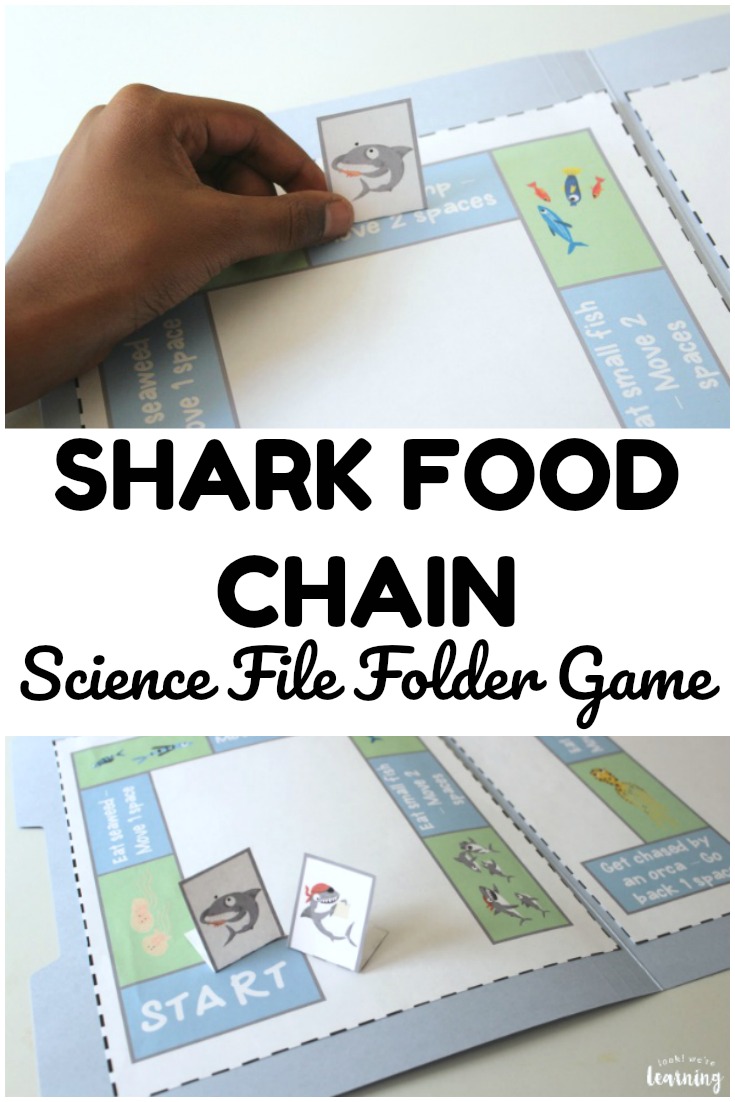
Learn about what sharks eat to live in this fun shark food chain file folder game!

How to Survive As a Shark: Shark Food Chain Game

Most people (me included) think that sharks are at the top of the ocean food chain.

But they’re not! There’s an animal that eats sharks!

That was just one of the cool facts we learned from the gorgeous picture book “How to Survive As a Shark” by Kristen Foote and Erica Salcedo.

By the way, if you want to get the book for your kids, you can check it out through this affiliate link: How to Survive As a Shark.
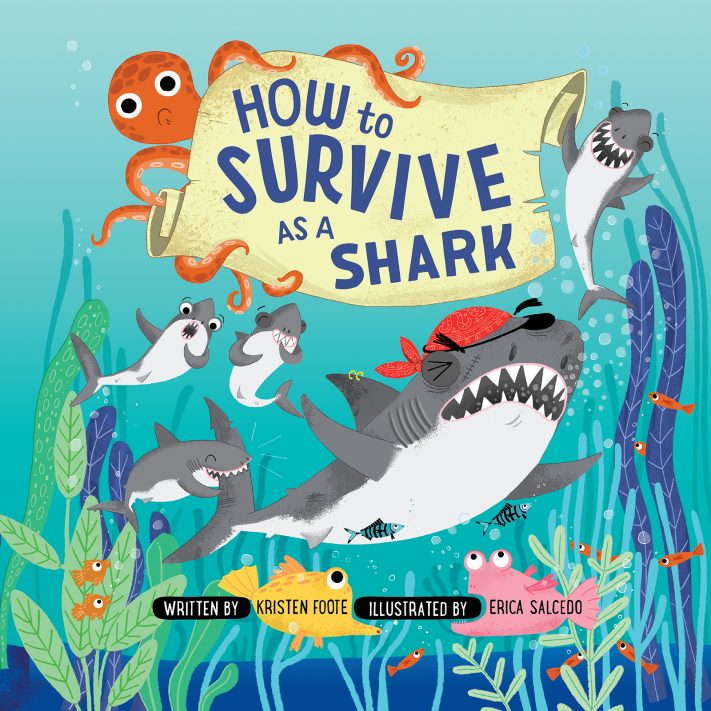
How to Survive As a Shark

In this story, a young shark gets taken under the “fin” of an older shark who’s survived some tough ocean battles over the years. He lost his eye in one and wears a wicked cool eye patch as a result.

Through the book, kids learn how sharks are born, what they eat as they grow, and what eats them! (I won’t tell! You have to read the book!)

After sharing the story together, we decided to make a simple shark food chain game to help my kids remember what sharks eat.
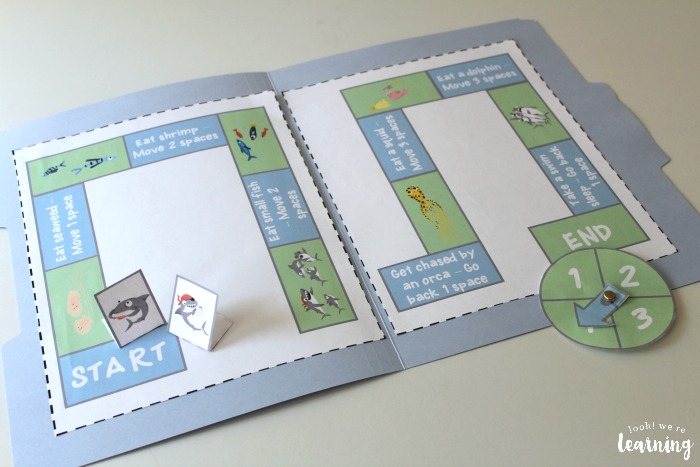
Shark Food Chain Game

To use this shark file folder game at home, you’ll need the following: (This post contains affiliate links. For details, see our Disclosure Policy.)

  • One file folder
  • Printer (with ink)
  • Printer paper
  • Scissors
  • Cardstock
  • Brass fastener
  • Glue stick

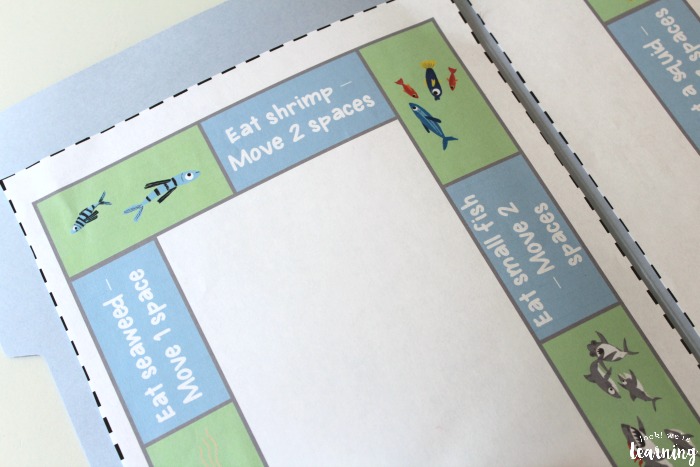
Printable Shark Food Chain Board Game

Full assembly instructions are included in the product.

Basically, you print the game and glue it inside the file folder. Page one should appear on the left side and page two should appear on the right.

Cut out the game spinner (with arrow) and the two game pieces.

If you want the spinner to really work well, print it on cardstock or you can glue it onto cardstock after printing.

Use the brass fastener to attach the arrow to the spinner and you’re ready to roll!
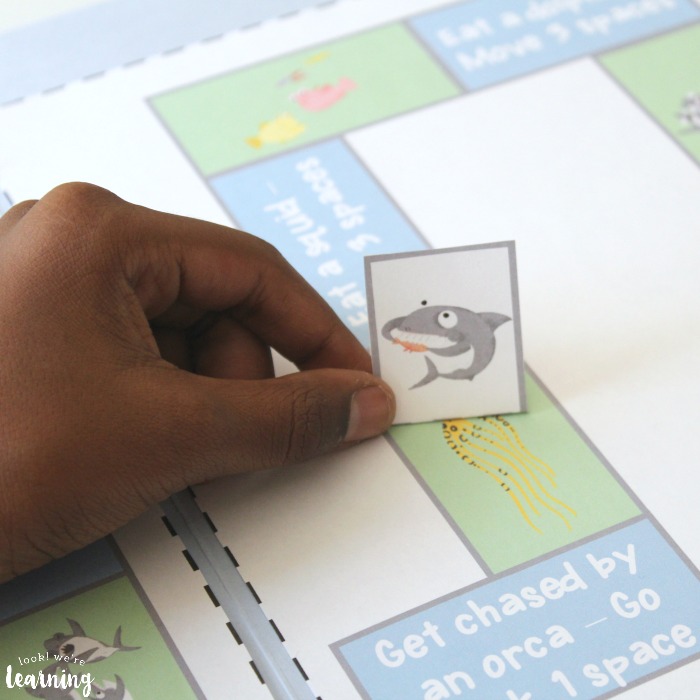
Studying the Shark Food Chain

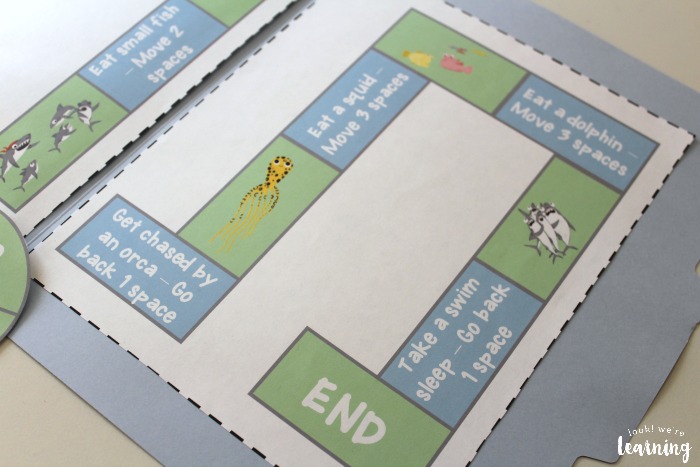
With this game, players take the journey of a young shark from infancy to adulthood. Seaweed is one of the shark’s first foods.
Learning About the Shark Food Chain

As they grow, they consume larger and larger prey. As adults, sharks may eat squid and even dolphins!
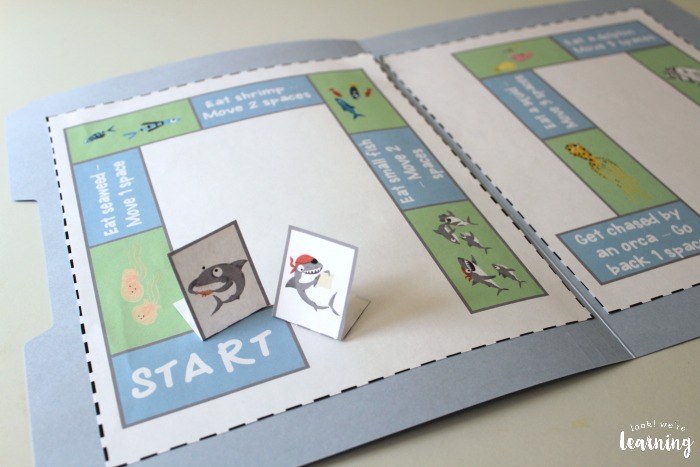
Playing a Shark Food Chain Game

This game is designed for two players. Kids can use the included game pieces to travel the board.
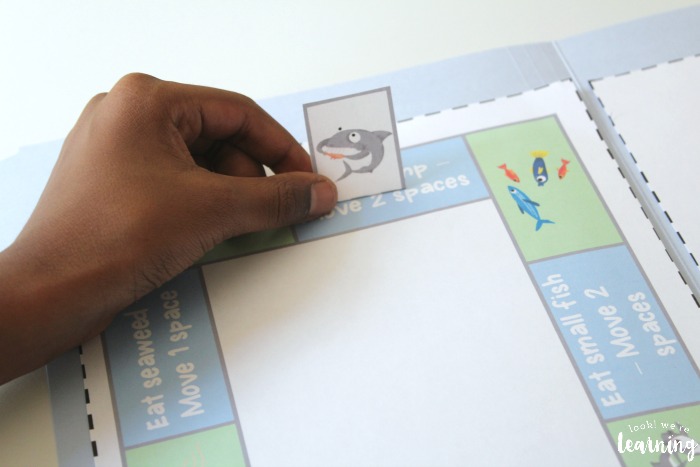
Playing a Shark Food Chain File Folder Game

The game spinner lets them move from one to four spaces.

As they land on spaces with directions, they get to move forward or back.
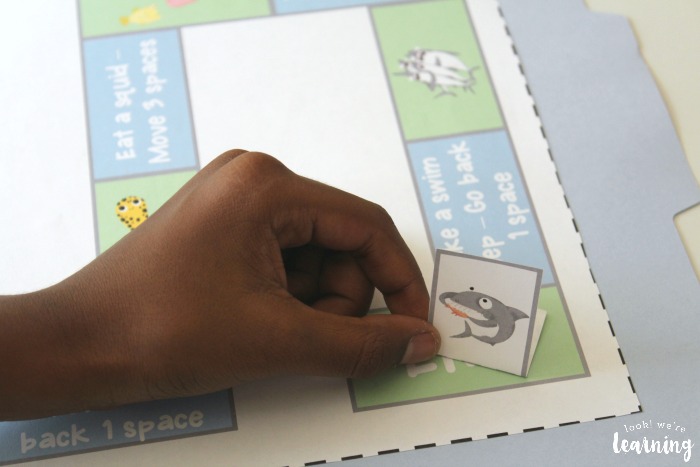
Shark Food Chain File Folder Game

The first one to the end wins!

This is such a neat way to learn what sharks eat and it helps to reinforce what they learn in the book in a fun, hands-on way!

Scroll down to get your copy of our Shark Food Chain Board Game!
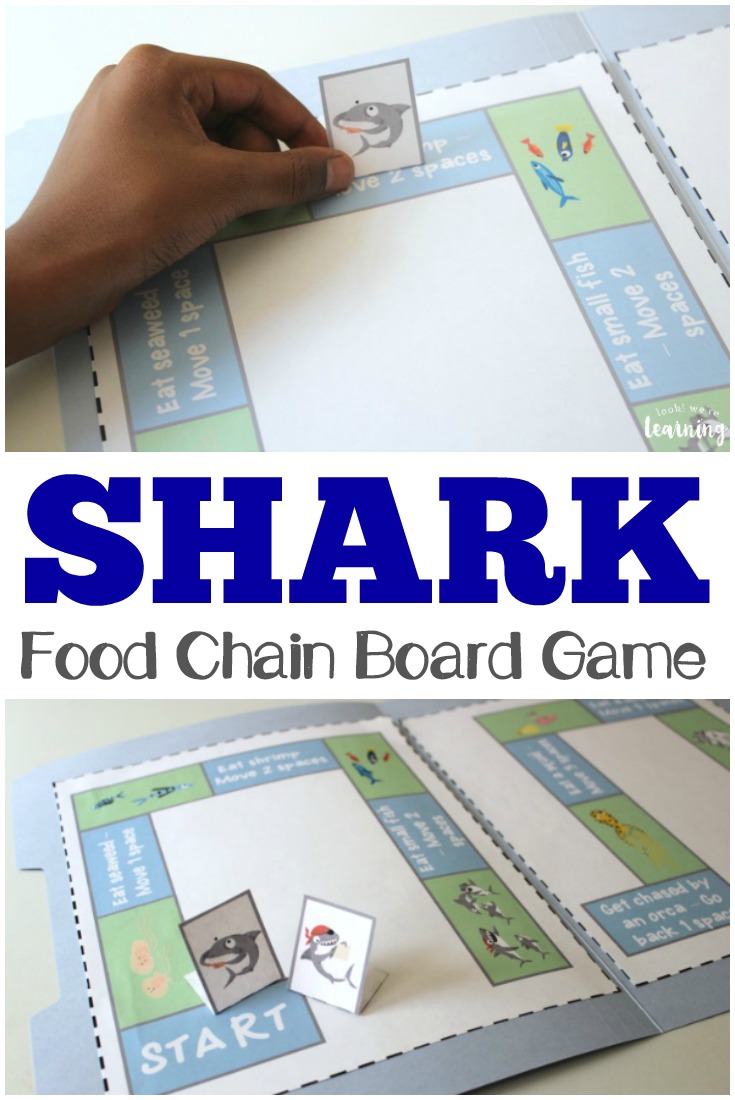
Learn about the fascinating world of sharks with this printable shark food chain game!

Try some of these other ways to learn about the ocean!

Dolphin Facts for Kids

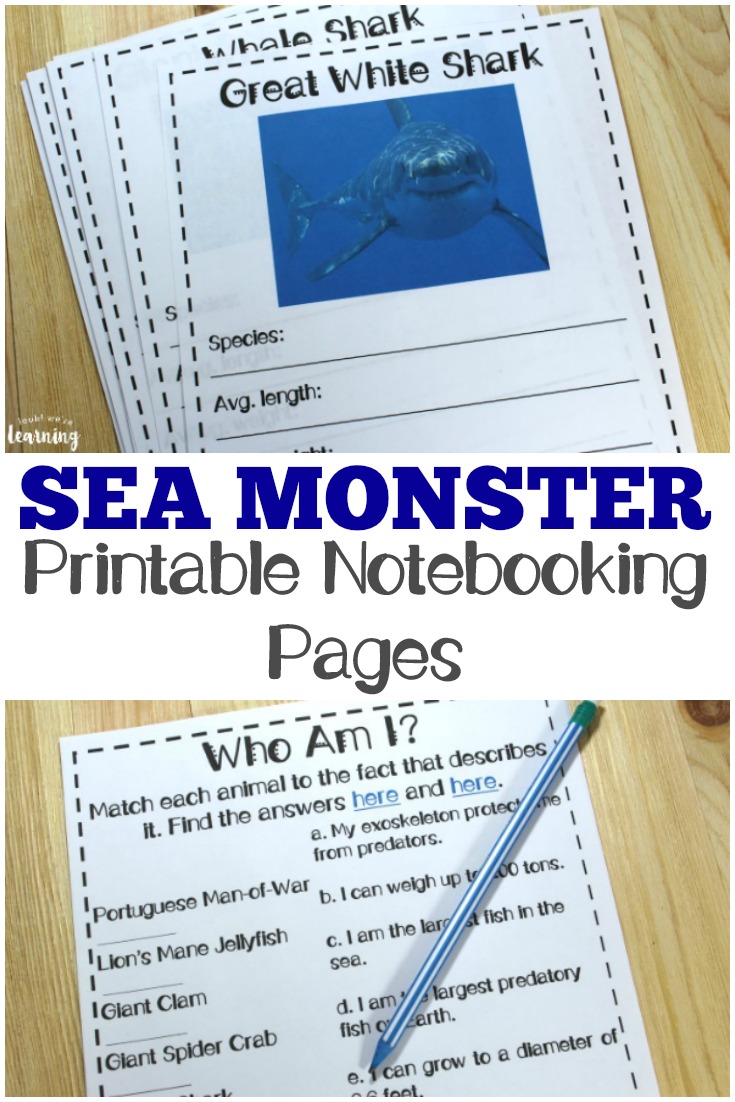
Pick up these printable sea monster notebooking pages to learn more about incredible creatures of the deep!

Books about Dolphins for Kids


Shark File Folder Game


To get your copy of this Sharks Food Chain File Folder Game, visit my Teachers Pay Teachers store or check it out below!

Filed Under: Homeschooling Printables, Science Tagged With: homeschool printables, science

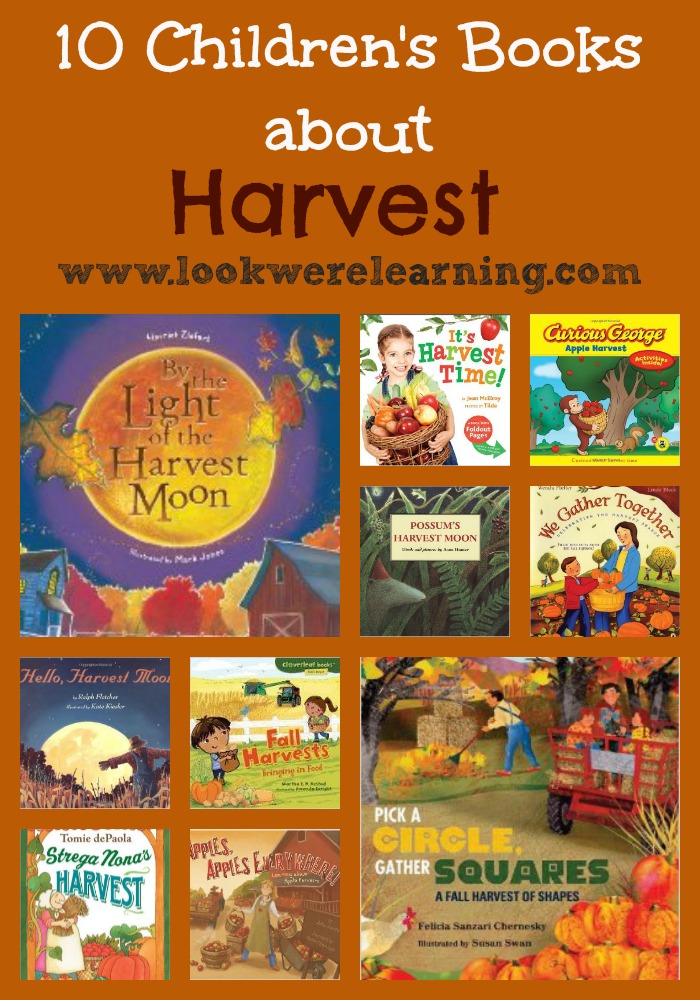
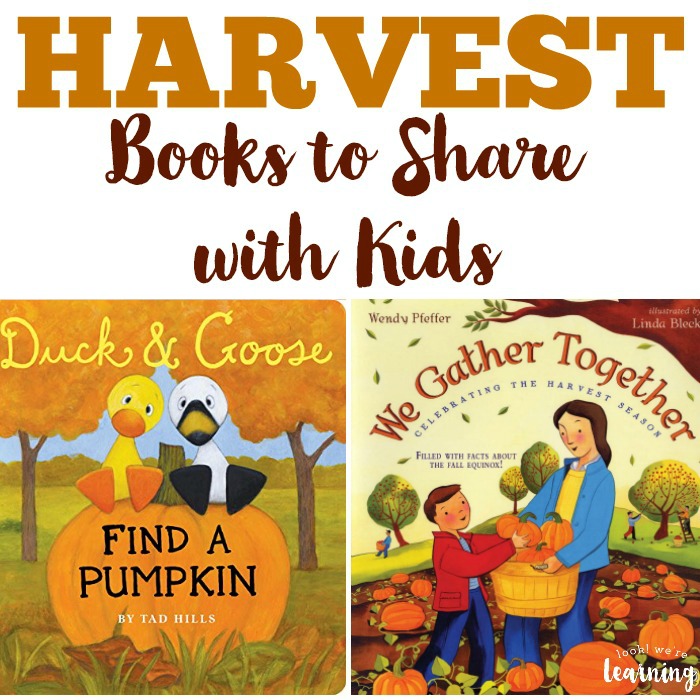
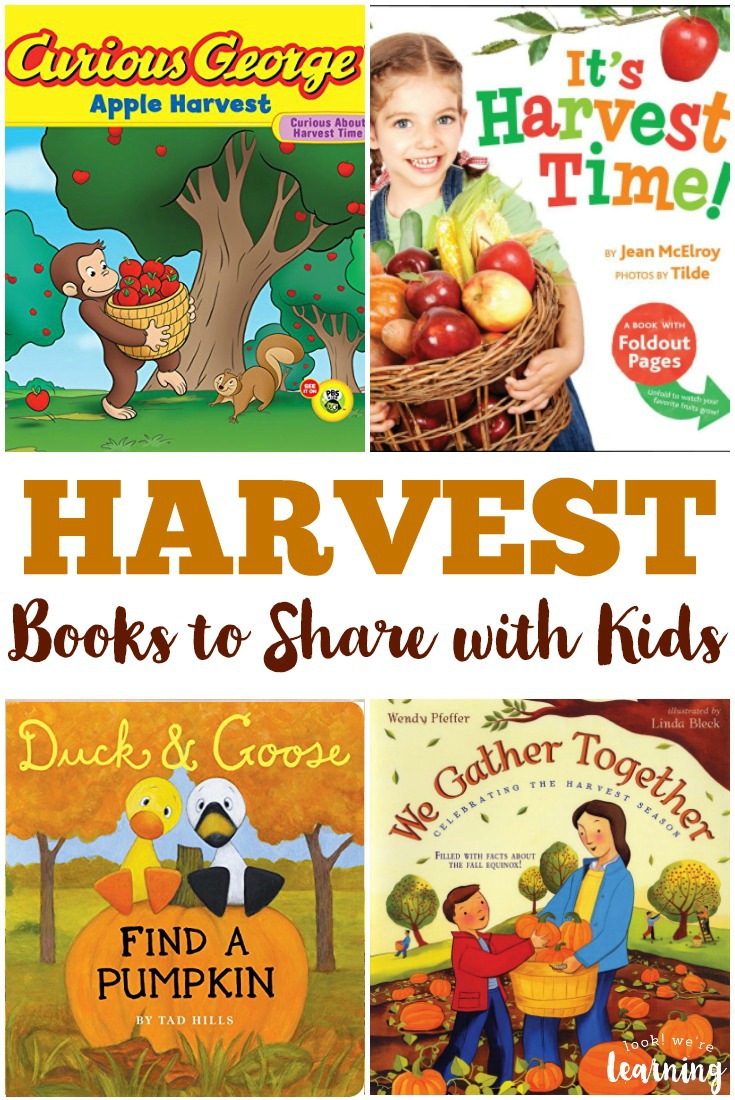
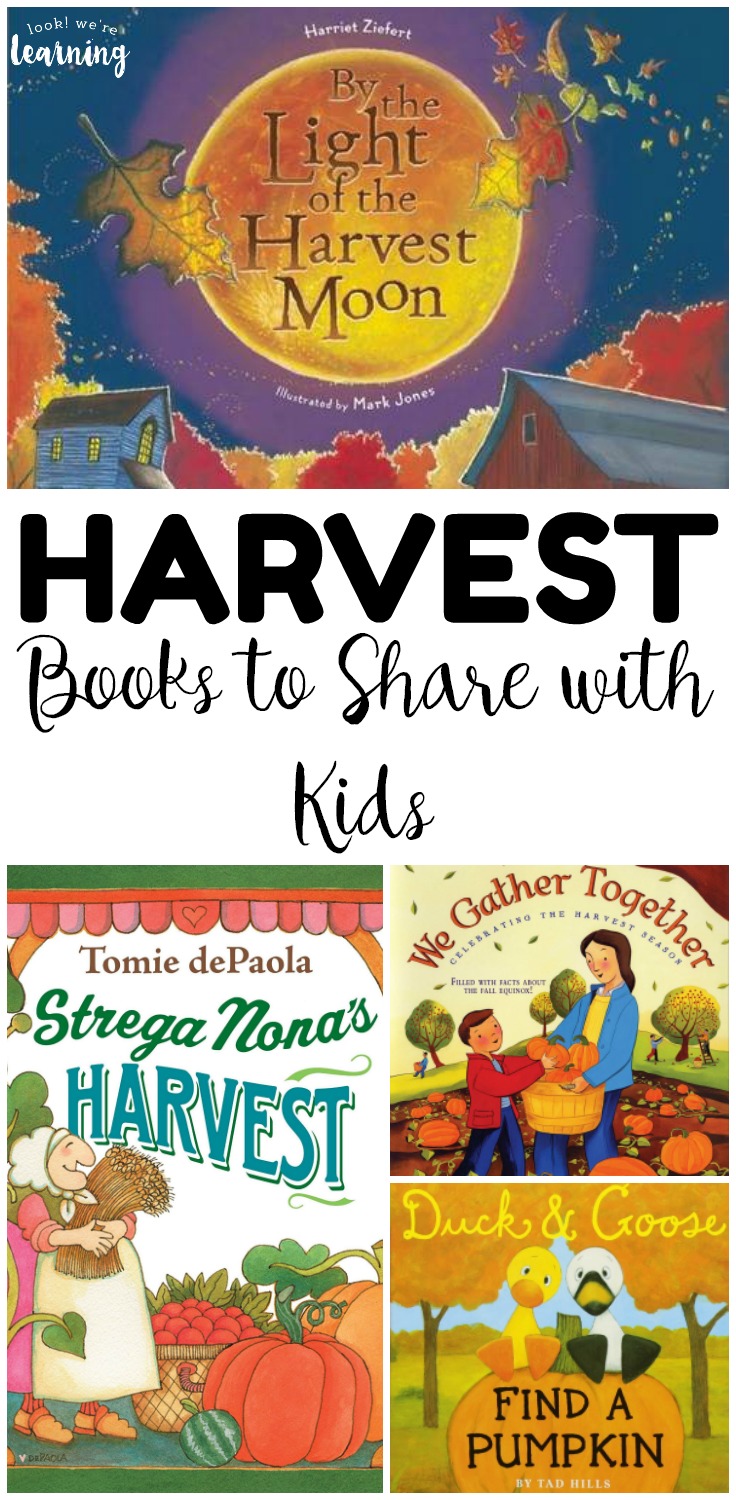
15 Beautiful Children’s Books about Harvest

September 25, 2017 by Selena Robinson 5 Comments

We’re getting well into the harvest season and it’s a perfect time to read about this time of year with the kids!

We’ve already featured a harvest unit study, but I wanted to share a few more children’s books about harvest that feature picking apples, pumpkins, corn, and all kinds of fall produce.

There are even books that talk about the harvest moon, which is a great way to talk about lunar cycles.

Harvest Books for Kids to Read

Once you read a couple of these books, be sure to take the kids pumpkin picking, apple picking, or running through a corn maze. You might even want to make an apple pie with your kids!

By the way, if you can make an apple pie successfully, please explain it to me. I’m terrified of attempting to make a pie from scratch.

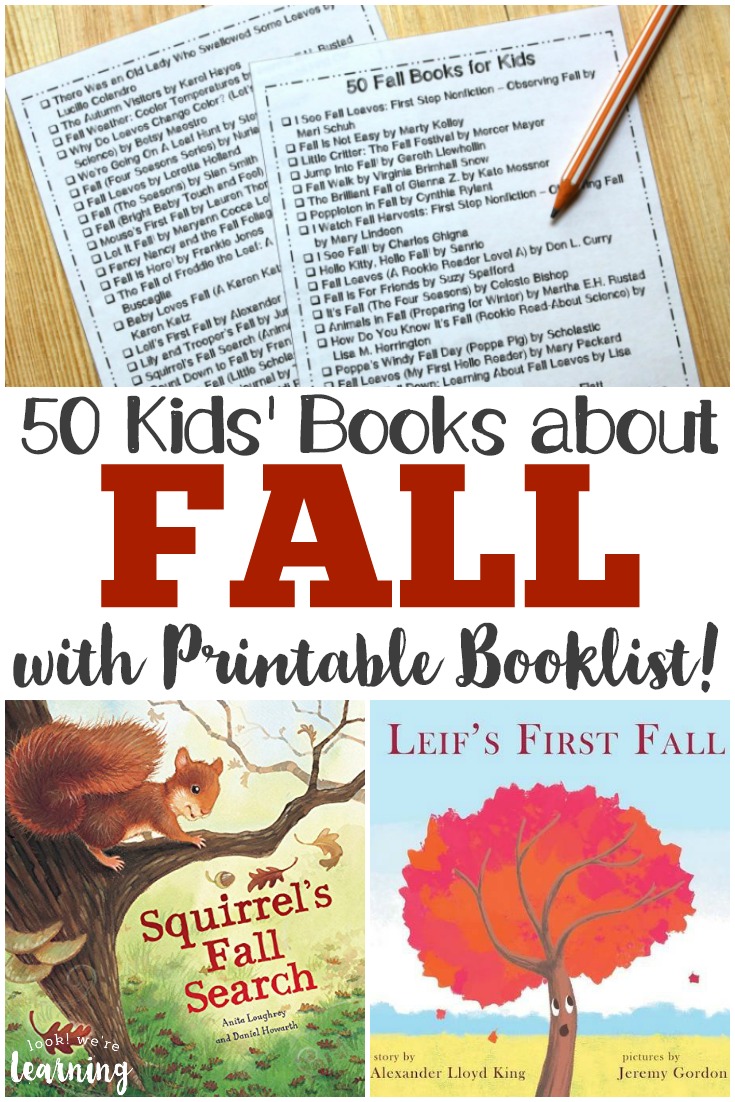
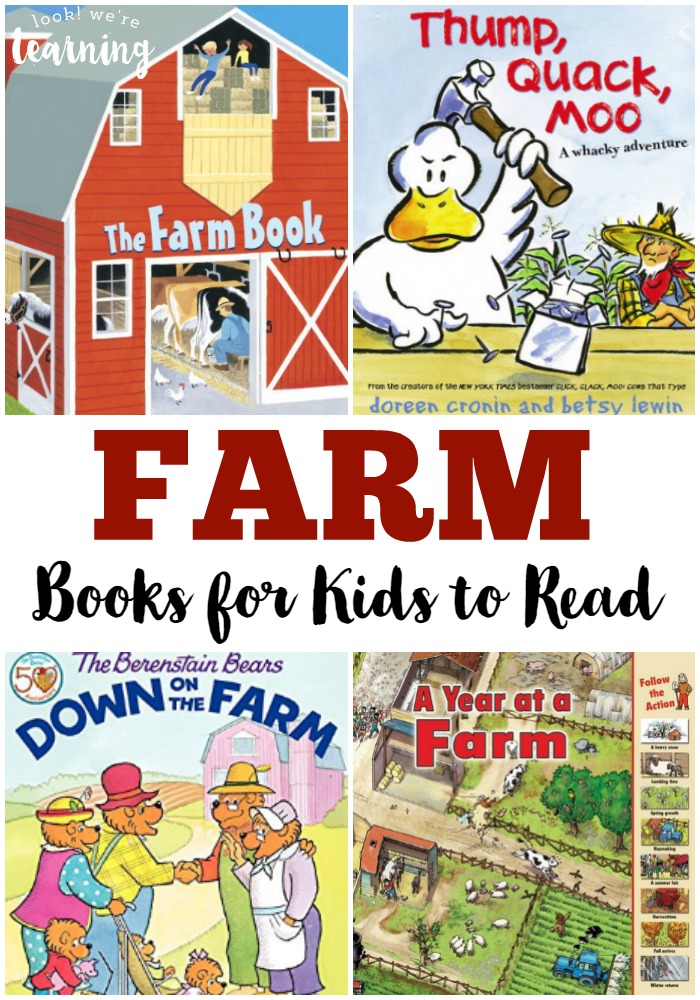
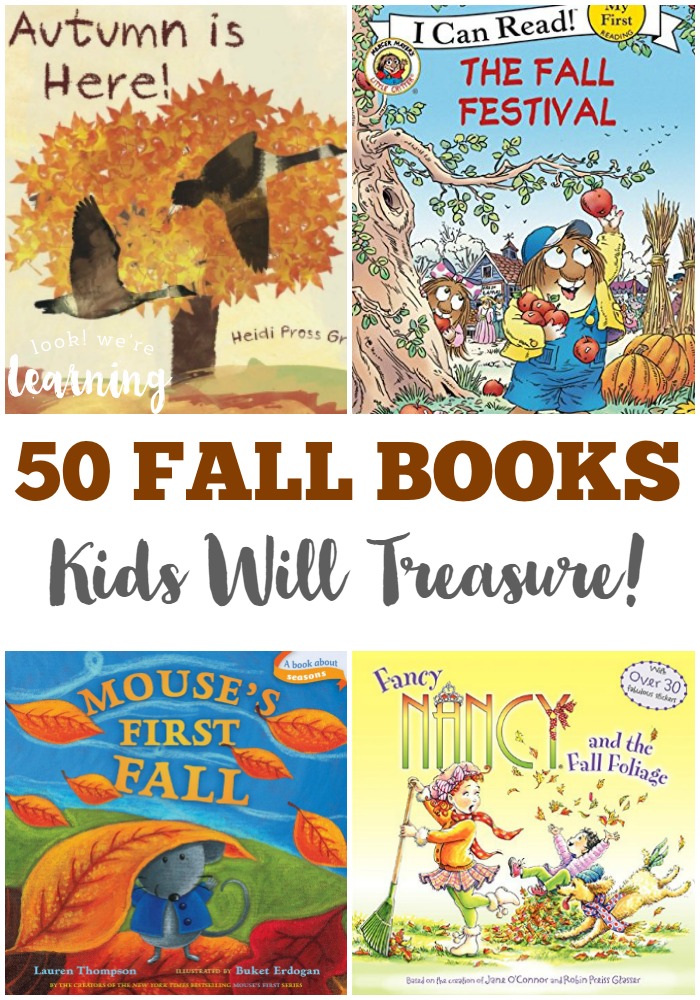
If you love these books, don’t miss our roundup of 50 Fall Books for Kids or our list of Children’s Books about Farms!

These beautiful harvest books for kids are lovely for sharing autumn stories together as a family!

15 Beautiful Children’s Books about Harvest

This post contains affiliate links. For details, see our Disclosure Policy.

1. Possum’s Harvest Moon – Anne Hunter

2. Strega Nona’s Harvest – Tomie dePaola

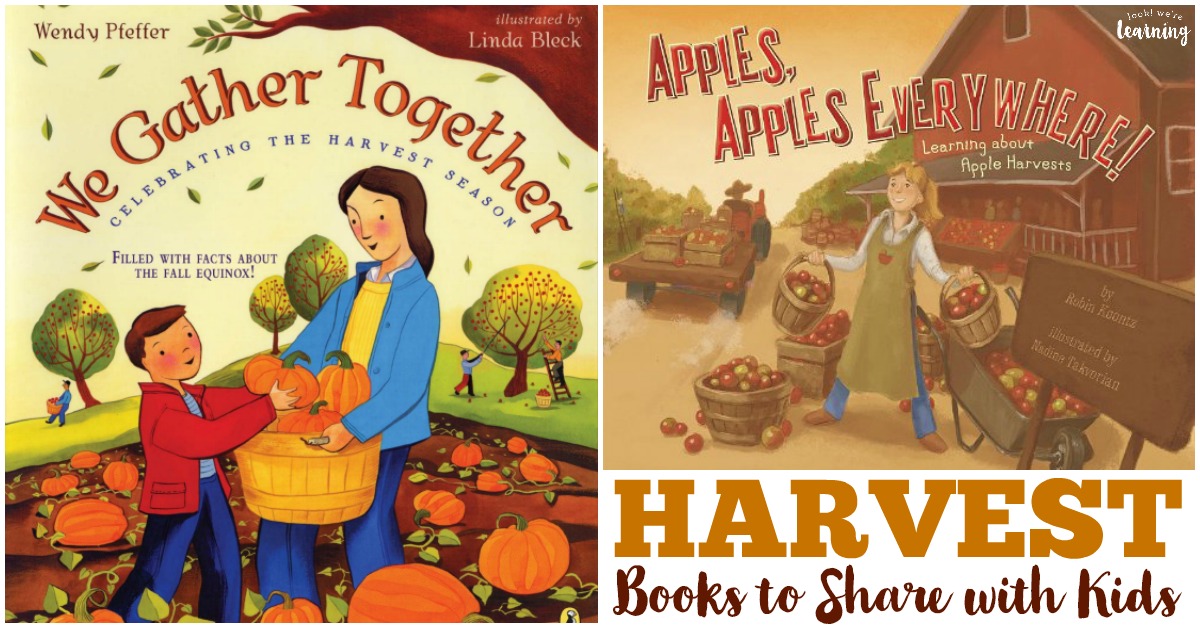
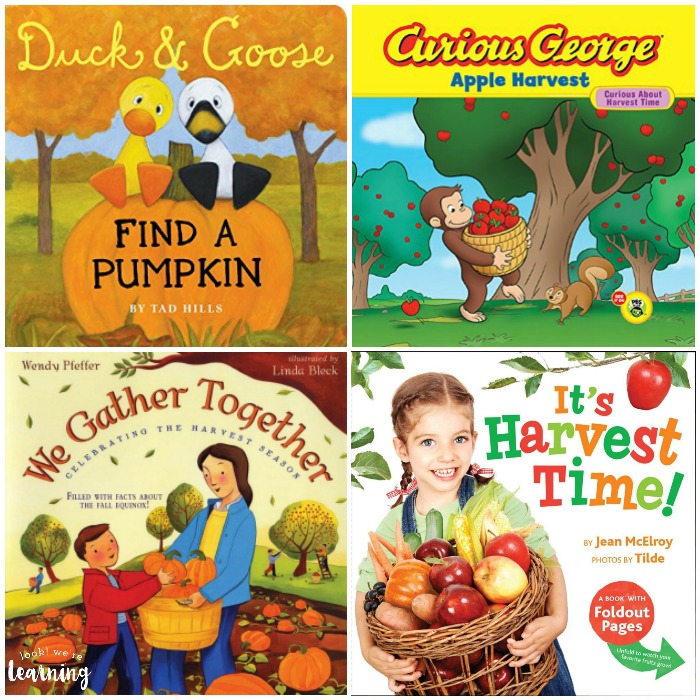
3. We Gather Together: Celebrating the Harvest Season – Wendy Pfeffer

4. Pick a Circle, Gather Squares: A Fall Harvest of Shapes – Felicia Sanzari Chernesky

5. Hello, Harvest Moon – Ralph Fletcher

6. Fall Harvests: Bringing In Food – Martha E. H. Rustad

7. It’s Harvest Time! – Jean McElroy

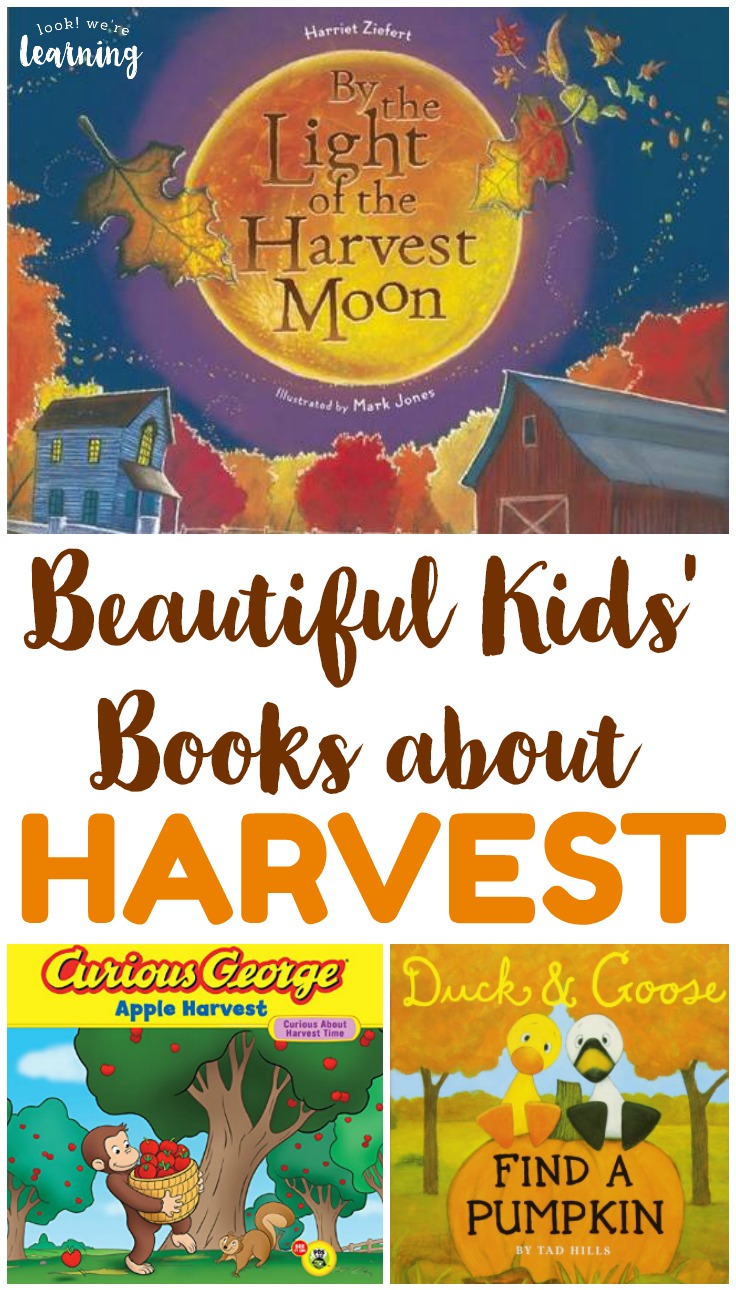
8. Curious George: Apple Harvest – H.A. Rey

Harvest Books for Kids

Fall Playdough Mats

9. Apples, Apples Everywhere!: Learning about Apple Harvests – Robin Koontz

10. By the Light of the Harvest Moon – Harriet Ziefert

11. Tractor Mac: Harvest Time by Billy Steers

12. Harvest Time: Celebrate Fall! by Erika L. Shores

13. Duck and Goose Find a Pumpkin by Tad Hills

14. Seed, Sprout, Pumpkin, Pie (Picture the Seasons) by Jill Esbaum

15. Bitsy’s Harvest Party by Melody Carlson

Children's Books about Harvest

Don’t miss these other book lists for kids!

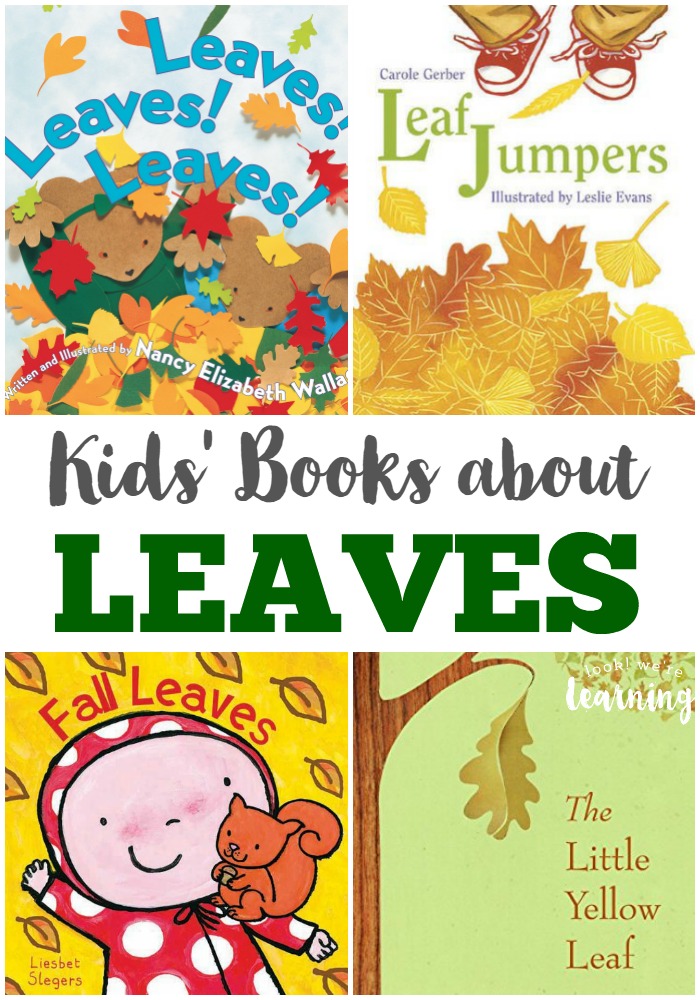
These kids' books about leaves are packed with gorgeous illustrations - perfect for reading this fall!

Pick up this printable fall books for kids booklist to keep track of the gorgeous fall stories you share this autumn!
These fun farm books for kids are perfect for reading about farms, learning about farm animals, or doing a farm unit study!
Learn about how food is grown with these great children's books about harvest!

For more tips to make your kids into readers, check out my Reading for Kids board on Pinterest!

This post is part of The Massive Guide to Homeschool Reading Lists by iHomeschool Network! Click over to read tons of awesome booklists shared by my fellow homeschooling bloggers!

ReadingLists

Welcome the fall season with these beautiful harvest books for kids! Share a few of these children's books about harvest during read aloud time!

Filed Under: Book Lists, Reading Tagged With: book lists, children's books, children's books about harvest, fall, fall books, farm books, farms, harvest, harvest books, harvest books for kids, kids books about harvest, reading

What to Do When Your Tween Shuts You Out

September 21, 2017 by Selena Robinson Leave a Comment

You ask your tween “What’s wrong”?” She looks down and away from you. Replies “Nothing.” You say “No, there’s definitely something. You can tell me about it. What’s going on?” She responds “Nothing! Why do you keep asking me about it?” before folding her arms and retreating to her room.

If you’re nodding along as you read this exchange, then congratulations! You’re probably parenting a tween too!

My husband and I have four children, but we are in the midst of parenting our very first-ever tween. And when I say that it is a learning experience, please believe that we are the ones getting the education.

I remember catching an attitude with my mother on a handful of occasions, but she was of a different generation. (The generation that hoped you would call the cops on them.) So her method of handling attitude problems was… different than the one we’re trying with our kids.

As a result, parenting tweens has been a brand new experience for my husband and me. After beating my head against a wall for weeks, we’re finally starting to see some improvement. Which is why I thought I’d share some things I’ve found that work when your tween shuts you out.

Having some issues with a younger child? Don’t miss these tips for how to show love to a defiant child!

Is your tween refusing to talk with you It's frustrating, isn't it Here's what to do when your tween shuts you out.

Image c/o: duplass / depositphotos

What to Do When Your Tween Shuts You Out

Don’t take it personally.

First, try not to take her attitude personally. She may direct the bulk of her attitude toward you, but a lot of times, you just happen to be nearby at the time. And worse – you’re actively trying to find out how she feels, which may not be a topic she wants to discuss.

I kept thinking “she’s doing this just to bother me” or “she just wants to see me get upset”, but that’s not really true. Very, very few kids are malicious toward their parents. They’re just a little self-centered, which is normal. Before you reach out, try to check your own emotions at the door.

Share their world.

Your tween has plenty on her mind – from schoolwork (a big one) to her favorite movies or songs to the opposite sex (which may be a new and unnerving interest). Try to take an active interest in what she likes, even if she doesn’t talk about it.

For example, if your child is listening to a song, ask about it in a positive way. “Who’s that by?” “That’s a great song. I like it! Does that artist have any other songs you like?” Please, please, please don’t say something like “What’s that junk? That doesn’t sound like music! We had real songs in my day!” Just don’t. If she’s open to sharing more, sit down and listen. If not, give it time and don’t push.

Be patient.

Which brings me to the third thing to remember when your tween shuts you out: be patient. Your tween needs a lot of time to process her feelings and thoughts. Pressuring her to talk about them right away can make her more confused and frustrated. Give her time to decide how she feels and what she wants to share and then be willing to listen to it all, no matter how strange, halting, or uncomfortable it sounds.

Once she starts to open up, be receptive to it all or she may retreat behind her wall of silence again. That’s the last thing we want.

What to do when your tween shuts you out

How do you handle it when your tween shuts you out or tries the silent treatment? What do you do to let them know you’re still there for them? Share your expertise in the comments!

Don’t miss these other parenting posts!

Whenever I'm out with the kids, the question I hear the most is How do you do it Well, to be honest, I don't! Here's what it's like to be a fake supermom.
Are you an overwhelmed homeschooler Trust me, I get it. Here's what I do when homeschooling feels like too much to handle.

Plus, get more tips for thriving as parents on my Parenting with Joy Pinterest board!

Filed Under: Parenting Tagged With: parenting, parenting support

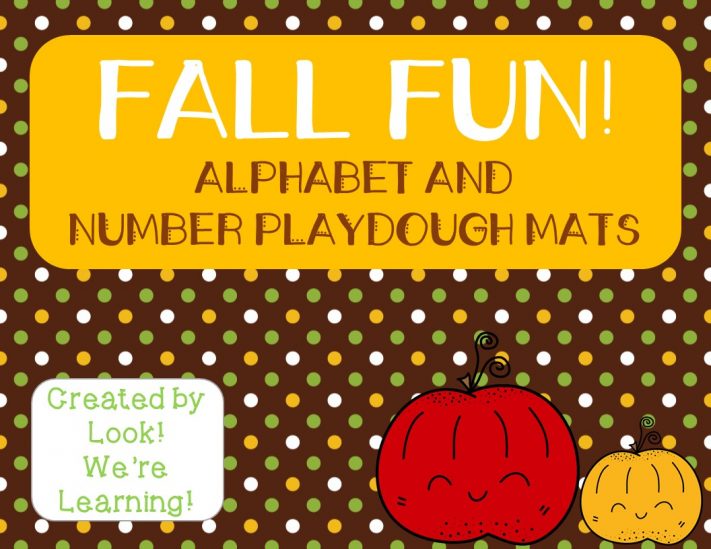
Preschool Playdough Mats: Alphabet and Number Fall Playdough Mats

September 19, 2017 by Selena Robinson 2 Comments

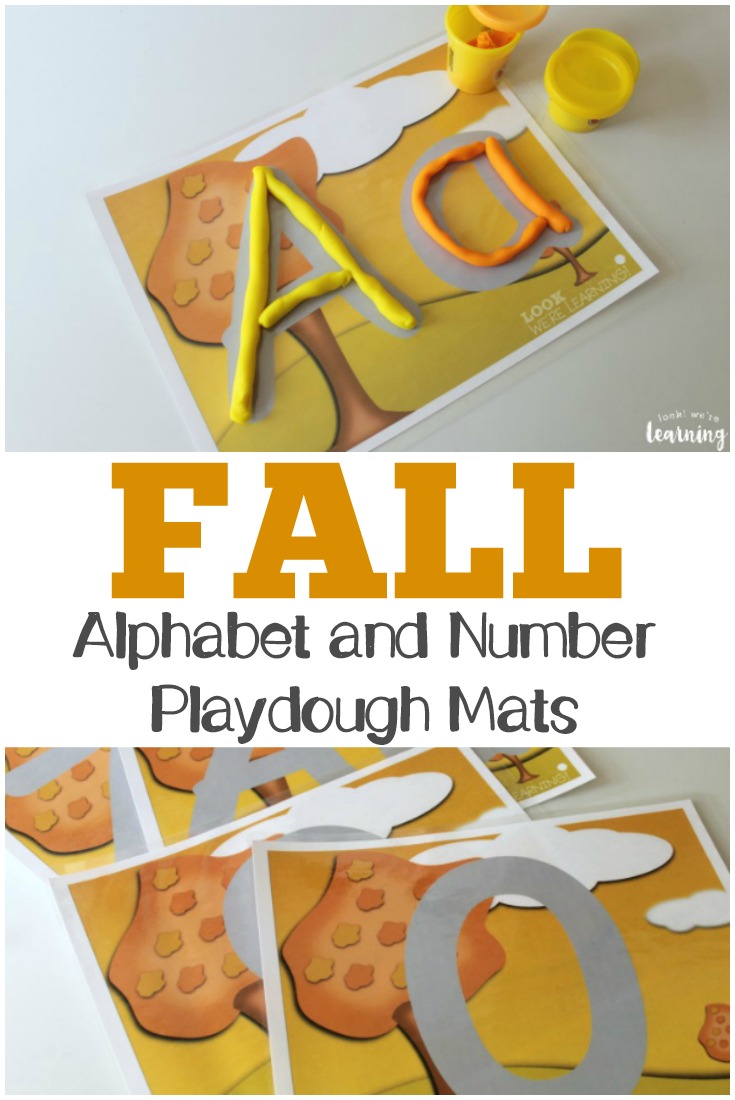
We’ve been enjoying releasing all of our newest fall-themed products lately! Today we’re wrapping things up with a set of Alphabet & Number Fall Playdough Mats!

If you’re teaching toddlers or preschoolers this year, you’ll love using these mats to help them work on fine motor skills and letter/number recognition!
Plus, it’s always fun to play with playdough, even for adults!

Alphabet Fall Playdough Mats for Kids

By the way, don’t miss our other preschool playdough mats, including our apple tree counting mat – another easy fall project for PreK!

Use these printable fall playdough mats to teach your little ones to form letters and numbers!

Preschool Playdough Mats: Alphabet & Number Fall Playdough Mats

To use these preschool fall playdough mats, you’ll need the following: (Affiliate links provided here for convenience. For details, see our Disclosure Policy.)

  • Printer (with ink)
  • Printer paper
  • Laminator
  • Playdough

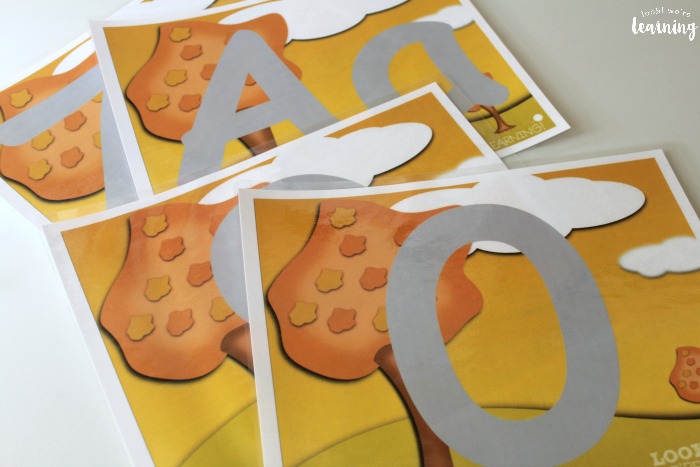
Fall Alphabet Playdough Mats

This pack includes:

  • 26 letter mats showing both uppercase and lowercase letters
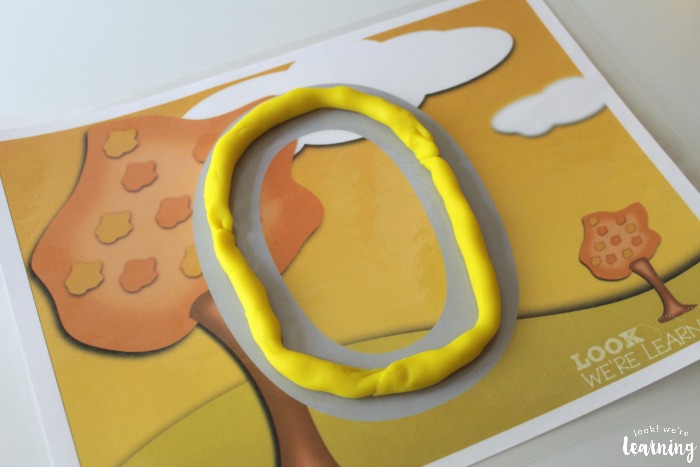
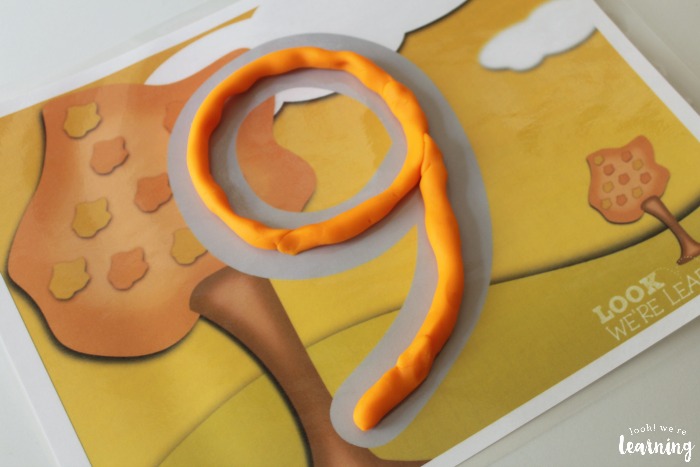
  • 10 number mats showing the numbers 0-9

Fall Playdough Mats for Kids

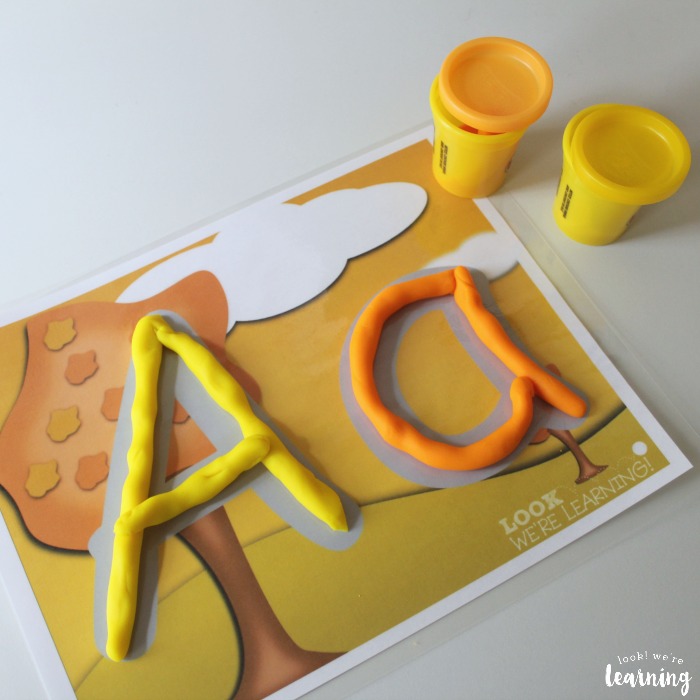
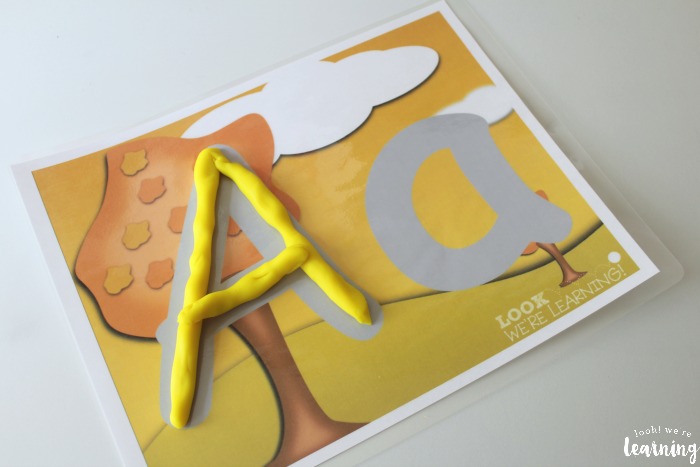
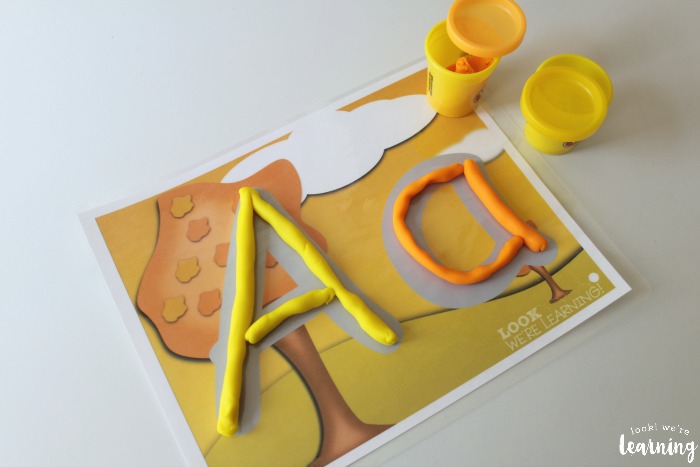
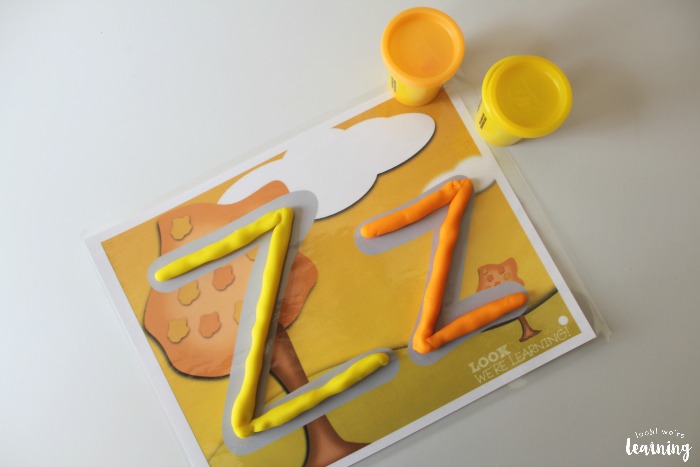
To use these mats, show the kids how to roll their playdough into rope-like shapes.

Alphabet Fall Playdough Mats

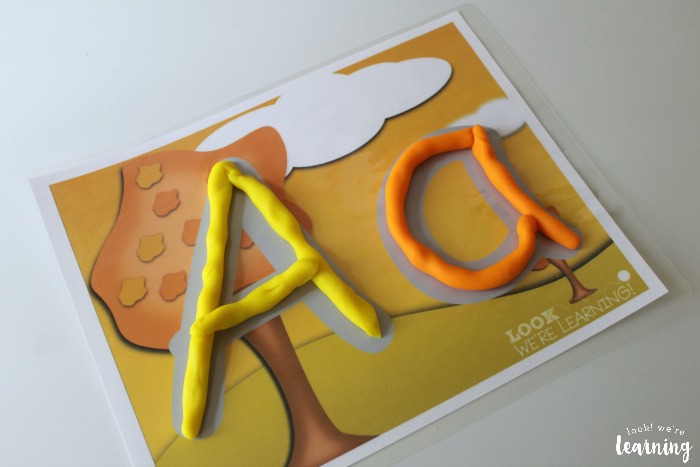
Once they form the playdough ropes, they can connect them together to trace the shapes of the letters and numbers on the mats.

Printable Fall Alphabet Playdough Mats

We decided to use fall-themed colored playdough as well.

Fall Alphabet Playdough Mats for Kids

There are mats for each letter – from A all the way to Z! So if you’re using letter of the week with your preschoolers, you can choose one letter per week and work on practicing forming the letters as you go.

Fall Number Playdough Mats

Plus, there are printable fall playdough mats for the numbers 0-9 as well!

Fall Number Playdough Mats for Kids

Be sure to laminate them before you use them with any playdough, especially if you want to reuse them at another time.

Scroll down to get your Alphabet and Number Fall Playdough Mats!

Toddler Books about Fall:

Make this activity into an easy fall pre-k unit with these fun toddler books about fall!

1. Fall Is Here by Frankie Jones

2. Fall Mixed Up by Bob Raczka

3. I Love Fall! by Allison Inches

4. Fall by Roger Priddy

Homemade Playdough Recipes:

Need some ideas for making your own playdough for use with these mats? Check out these simple recipes!

1. DIY Edible Playdough – Look! We’re Learning!

2. No Cook Playdough – The Imagination Tree

3. Kool-Aid Playdough – Look! We’re Learning!

4. Cotton Candy Playdough – Mama Miss

Don’t miss these other fall activity posts!

50 Fall Books for Kids

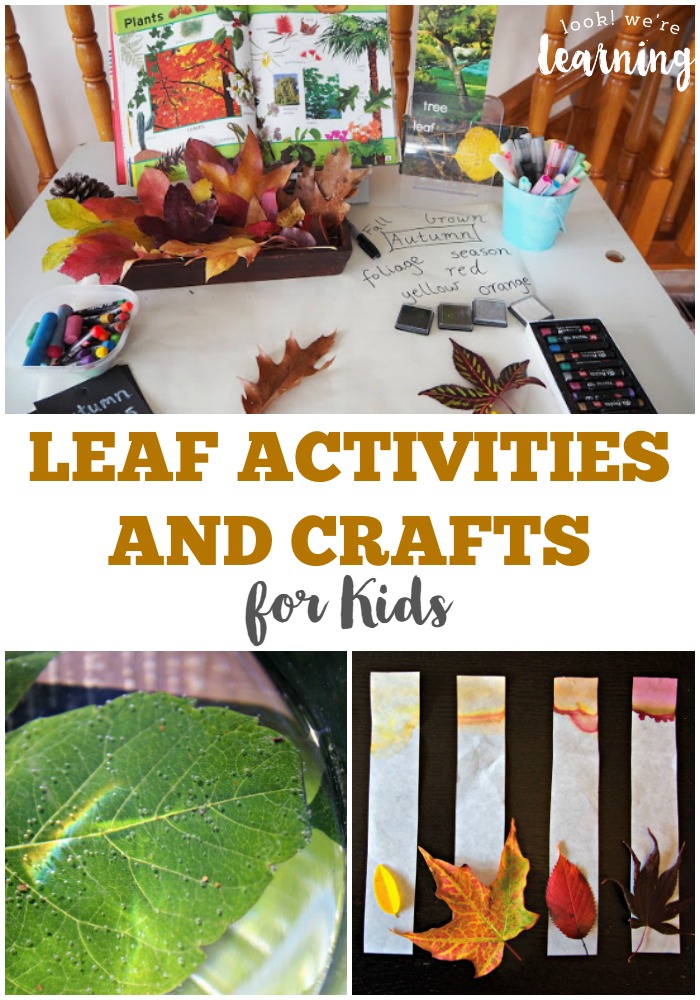
Fun Fall Leaf Activities for Kids @ Look! We're Learning!

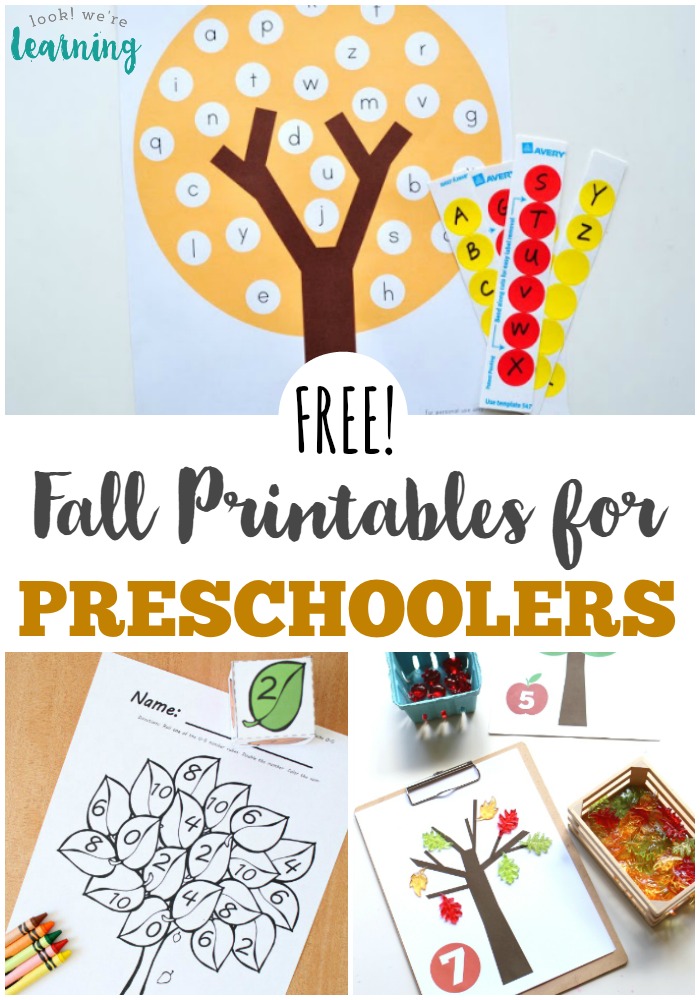
Use these free fall printables for preschoolers to help your little ones learn about autumn!

Fun Fall Playdough Mats

To get your copy of our Fall Fun Literacy Mats, check out the details below!

Filed Under: Homeschooling Printables, PreK Homeschooling Tagged With: fall, fall activities, fall playdough mats, playdough, playdough mats, prek, preschool, preschool playdough mats

Our Minimalist Homeschool Schedule

September 18, 2017 by Selena Robinson 1 Comment

We’ve been homeschooling for nine years now. And, since I’m a planning junkie, I have tried literally scores of different homeschool schedules. In a way that’s been a good thing. Since we’re teaching kids with ADHD at home, being flexible has been one of the keys to our homeschool success.

But all kids, and kids with ADHD especially, need consistency. And one thing I have not been consistent in is our daily homeschool schedule. Know why? I was trying to cram way too much in every day. No human on Earth can possibly maintain the type-A kind of schedule I was attempting to follow every day.

Now that we’re practicing a minimalist style of homeschooling, I’m using a far more streamlined schedule and it is working wonders. If you’re feeling overwhelmed by lesson planning, get a look at our minimalist homeschool schedule! It’s a really simple way to get started.

Overwhelmed by planning your homeschool day? Try this minimalist homeschool schedule to get started!

Image c/o: massonforstock / depositphotos

A Minimalist Homeschool Schedule

Note: Our two oldest kids are using K12 at home this year, so this homeschool schedule is largely based on their live class times. Because they have live classes each day, those windows are excellent for working with my two younger children.

My third-grade son is working at a fourth-grade level in most subjects and at a third-grade level in others and he has ADHD, so I tend to use short lesson times to keep his interest. My kindergartner has her lessons as the same times, though with different materials.

As you’ll see, we cover math and ELA every day. The rest of the subjects are done weekly. I schedule time in the afternoon for independent work so that they can practice what they learned in the morning. Friday is largely a review day, with time for elective subjects based on what they’re interested in that week.

Without further ado – here’s our minimalist homeschool schedule:

Monday:

9:00 – Math

9:30 – ELA

10:00 – Health

1:30 – Independent work

Tuesday:

9:00 – Math

9:30 – ELA

10:00 – Geography

1:30 – Independent work

Wednesday:

9:00 – Math

9:30 – ELA

10:00 – Science

1:30 – Independent work

Thursday:

9:00 – Math

9:30 – ELA

10:00 – Art

1:30 – Independent work

Friday:

9:00 – Math review

9:30 – ELA review

10:00 – Elective (Foreign language, music, coding)

And that’s it! It truly is a minimalist homeschool schedule, because we’re focusing on the most essential subjects right now. My number one goal is to help my hyper son get into the routine of having his school lessons daily. Then we can branch out into longer sessions or even more advanced subjects.

What homeschool schedule are you using this year? What have you learned from prior years that’s helped you develop a consistent routine? Share your experiences in the comments!

A Minimalist Homeschool Schedule

Want to simplify your homeschool? Try these tips!

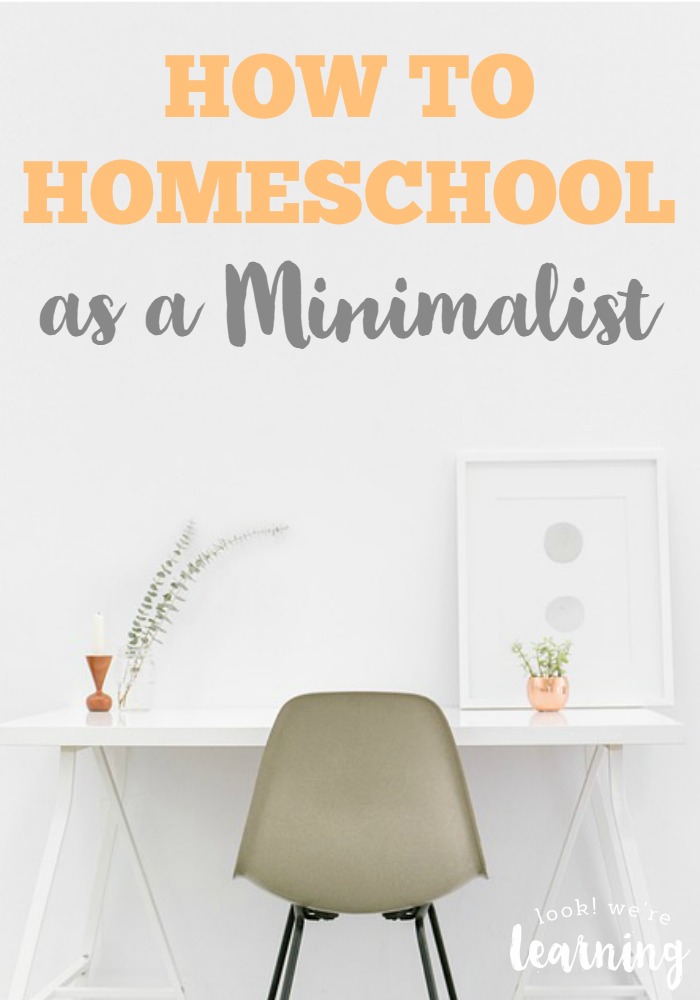
How to Homeschool as a Minimalist

Think you're behind on homeschool planning You're not. You don't need a lot to homeschool, even if you're a newbie!

Need to streamline your homeschool lessons? Take a look at this minimalist homeschool curriculum for fourth grade!

Get more ideas for planning your school year on my Homeschool Planning Pinterest board!

And you can receive regular teaching tips and ideas in our email newsletter! Just use the widget below to sign up. 😉

This post is part of the Back to Homeschool Blog Hop hosted by iHomeschool Network! Click over to read more homeschool schedule ideas from our fellow bloggers!

Back to Homeschool Blog Hop 2017

Notebooking Pages LIFETIME Membership

Filed Under: Homeschool Planning, Homeschooling Tagged With: homeschool planning, homeschool schedule, minimalist homeschooling

Our K12 Daily Schedule for Two Grades

September 14, 2017 by Selena Robinson 4 Comments

Our two oldest children are trying a brand new method of home education this year: K12. And adjusting to it has been…an interesting experience.

After years of relaxed homeschooling, shifting into a full school day based around live classes, offline assignments, and readings was a complete course change. We’ve have seriously bumpy days, days that were awesome, and plenty in between.

Now, though, we’ve developed a K12 daily schedule for two grades that has simplified our daily routine quite a bit – something we really needed since we’re still homeschooling our two youngest kids. If you’re considering K12 for your kids, take a look at our daily schedule to see what it could look like in your family!

Are you considering K12 for your kids? Here's a look at our K12 daily schedule for two grades!

Image c/o: seregam / depositphotos

Our K12 Daily Schedule for Two Grades

As you look at this schedule, keep in mind that this is the routine for our kids, who are in seventh and fourth grade. Younger children who use K12 tend to spend very little time in online classes and the vast majority doing offline work with their learning coaches (usually parents).

In upper elementary grades, though, kids start to spend more time with their online teachers. In fourth grade, the ratio is about 2 hours of online education to 3.5 hours of offline education per day.

My seventh-grader, though, spends about 3.5 hours of class time online and about 2 hours in offline assignments. These totals vary by day, but it averages out to about this much.

Now – for a look at each child’s daily schedule.

Our K12 Seventh Grade Schedule

Each K12 student has live classes called “Class Connects”. These daily sessions feature live instruction from a professional teacher and interaction with other students. My seventh-grader has Class Connects in four subjects: Math, ELA, Social Studies, and Science.

Here’s her weekly Class Connect schedule:

Monday: 8:30 a.m. – Social Studies; 10:00 a.m. – ELA; 11:30 – Science

Tuesday: 8:30 a.m. – Math; 10:00 a.m. – ELA; 11:30 – Social Studies

Wednesday: 8:30 a.m. – Math; 10:00 a.m. – Social Studies; 11:30 a.m. – Science

Thursday: 8:30 a.m. – Math; 10:00 a.m. – ELA; 11:30 a.m. – Science

Friday: 8:30 a.m. – Math

Since she finishes her classes at the same time Monday through Thursday, she stops at 12:30 to have lunch and then gets started on homework. We encourage her to take a look at her assignments for the week on Sunday evening, so she can plan out how much work to do each day. Getting behind is NOT fun.

The remaining subjects (Art, Health, and Phys. Ed.) are self-paced, so we work on those day by day. By the time she completes all of her assignments, homework, and studying for the next day, she’s usually done at 3:00 p.m.

There’s only one live class on Friday, so we spend most of the day catching up on anything that’s unfinished or studying for quizzes. We generally wrap up by noon on that day and have a long weekend.

Ultimate Guide to Brain Breaks

Our K12 Fourth Grade Schedule

My fourth-grader is a completely different story. Since so much of his work is completed offline, I am still the primary educator, which takes a significant amount of time each day.

Here is his Class Connect weekly schedule:

Monday: 9:00 a.m. – Science

Tuesday: 9:00 a.m. – ELA; 10:15 a.m. – Math; 12:45 – Social Studies

Wednesday: 9:00 a.m. – ELA; 10:15 a.m. – Math

Thursday: 9:00 a.m. – ELA; 10:15 a.m. – Math

I spend about an hour on Sunday evenings looking at his schedule and his upcoming assignments. The lesson plans are already written for the subjects I need to teach, but I still have to read over them and make sure we have the necessary supplies in advance.

We get a monthly instructional calendar from his school, which outlines how much to do for each subject per day. All of the assignments are related to the live classes, so I tend to wait until after he’s had a live class on the topic before I start an assignment.

So, I often hold off on teaching Social Studies for the week until after he’s had his Social Studies class on Tuesday. That way, he’s already been introduced to the topic. Fridays are his days “off” from Class Connects, so I save most of our science experiments for that day when we’ll have plenty of time to complete them.

As with my seventh-grader, my fourth-grader’s art, health, and phys. ed. classes are also self-paced, so we do some of those day by day to keep up with the hour requirement.

Our Daily K12 Schedule for Two Grades

I’ll be sharing my homeschool schedule for my younger kids next week, but here’s a hint: It’s largely situated around our K12 daily schedule.

Are any of you using K12 with your kids this year? How do you schedule your routine? Share your ideas and experiences in the comments!

Need more school scheduling tips?

15 Homeschool ADHD Schedule Ideas - Awesome for teaching active kids at home!

Minimalist Homeschooling - How to Streamline Your Homeschool Schedule

Tired of falling behind on your lesson plans? Learn how to schedule a flexible homeschool year instead!

And see plenty of tips and ideas for structuring your homeschool year on my Homeschool Planning Pinterest board!

This post is part of the Back to Homeschool Blog Hop hosted by iHomeschool Network! Click over to read more homeschool schedules you can use from our fellow bloggers!

Back to Homeschool Blog Hop 2017

P.S. Get regular tips, support, and ideas for teaching kids at home in my email newsletter! You can sign up using the widget below. 😉

Notebooking Pages LIFETIME Membership

Filed Under: Homeschool Curriculum, Homeschool Planning Tagged With: homeschool planning, homeschool schedule, k12

Coffee Filter Crafts for Kids: Coffee Filter Elephant Craft

September 12, 2017 by Selena Robinson Leave a Comment

Whenever I take my kids to the zoo, one of the first animal exhibits they want to see is the elephant pit. At our local zoo, there are three elephants and, over the years, we’ve spent hours standing there watching them as they eat, walk, bathe, and perform…uh…other bodily functions. (It’s nature!)

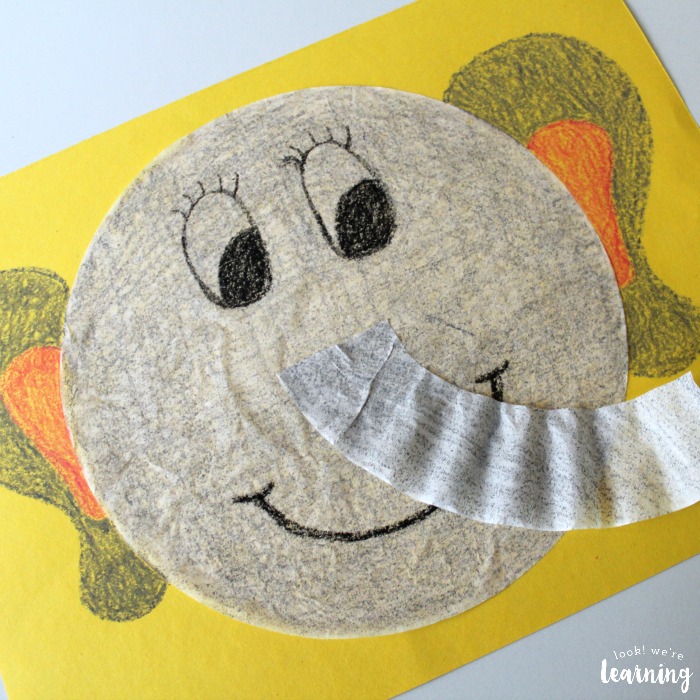
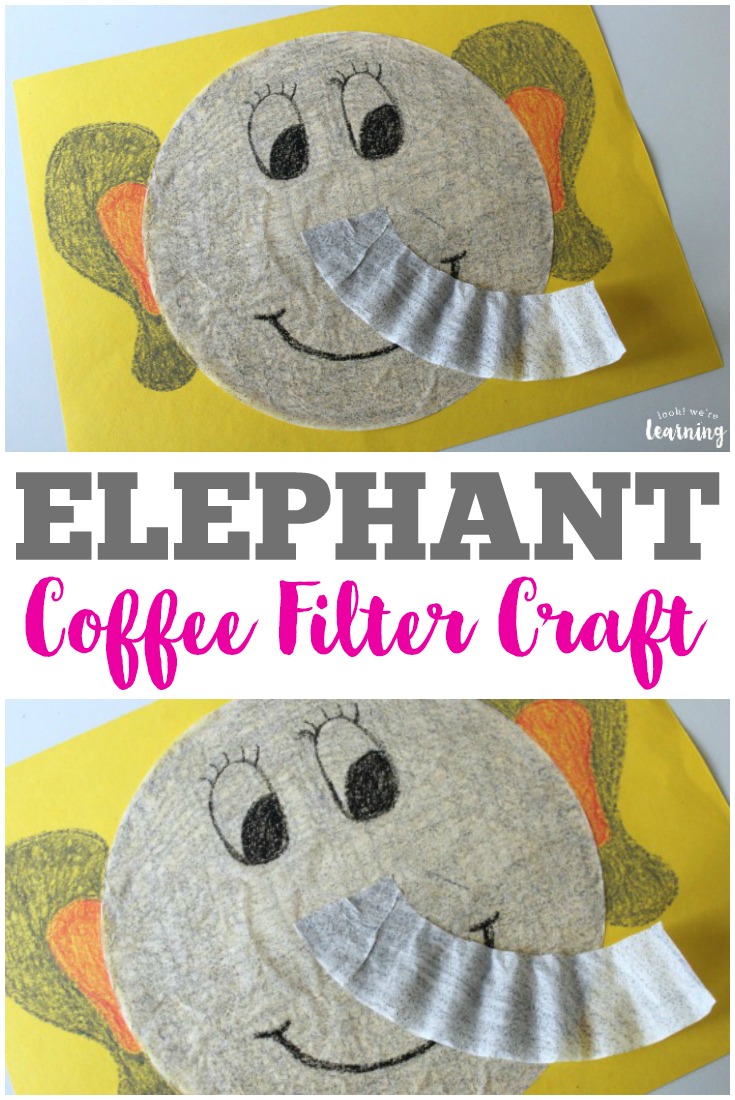
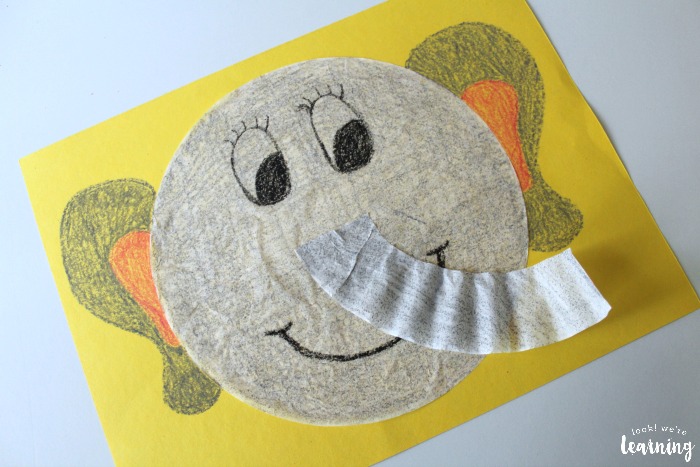
As we were thinking about some new coffee filter crafts for kids we could make, we hit upon a coffee filter elephant craft! So that’s what we made. And it was such a fun project I wanted to share it!

Easy Coffee Filter Elephant Craft for Kids

This would be a perfect craft to make when you’re learning about zoo animals, the African savannah, or even Asia! Plus, kids can make their own wild animal collection by adding our coffee filter moose craft or our coffee filter owl craft! Read on to see how we made this cute elephant craft.

If you want to teach the kids about zoo animals, be sure to check our our printable zoo animal flashcards too!

Take a trip to the zoo with this cute coffee filter elephant craft for kids!

Coffee Filter Crafts for Kids: Coffee Filter Elephant Craft

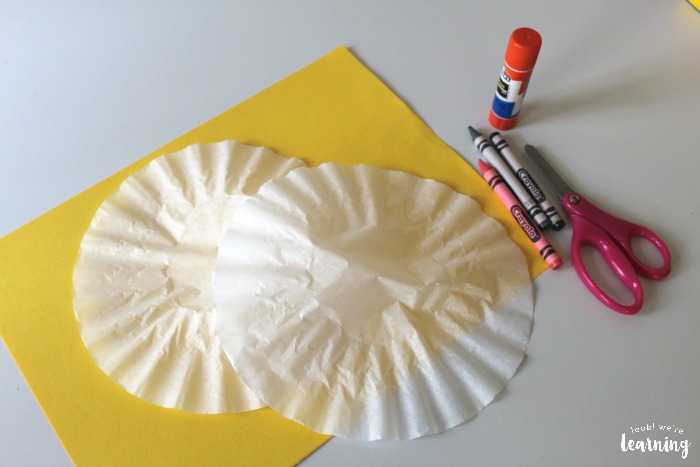
To make this coffee filter elephant craft, you’ll need the following: (Affiliate links are provided for convenience. For details, see our Disclosure Policy.)

  • Two white basket coffee filters
  • Crayons
  • Construction paper
  • Glue stick
  • Child-safe scissors

Coffee Filter Elephant Craft Supplies

As you can see, this craft only takes a few supplies, so you won’t need to make a store run. Unless, of course, you’re actually out of coffee. 😉

How to Make a Coffee Filter Elephant Craft

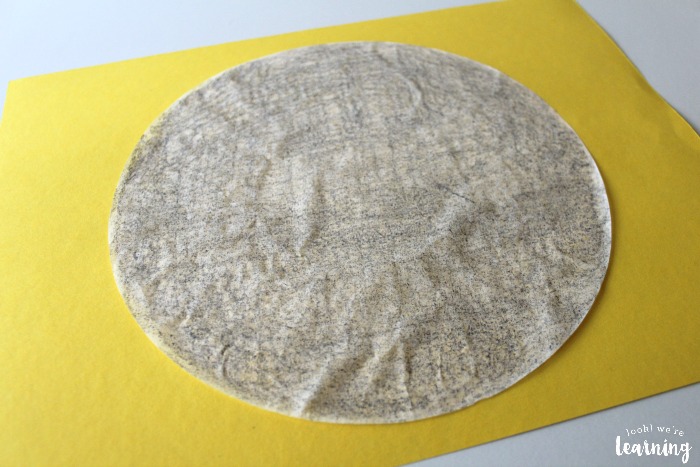
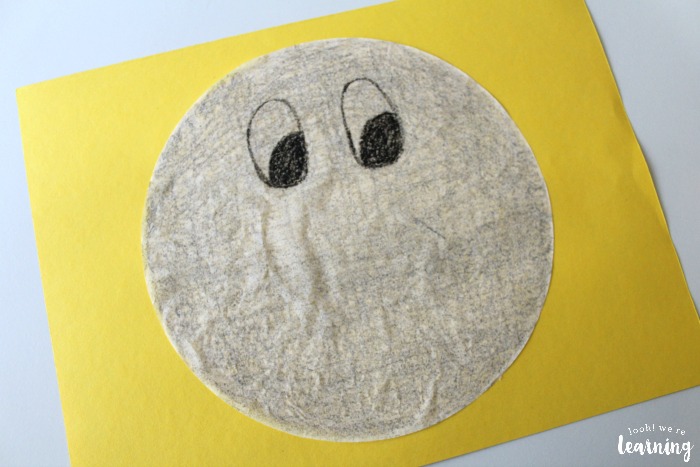
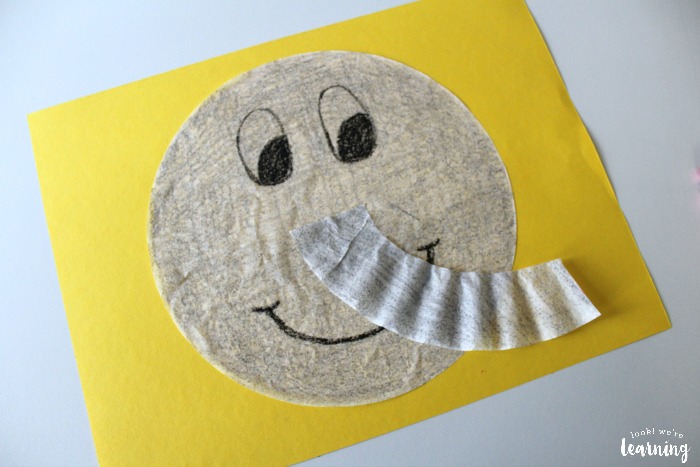
Color one of the filters gray and then glue it to the center of a piece of construction paper. We used yellow, but any light color will work. (You want the details you add with the gray crayon later to show up well.)

Elephant Coffee Filter Craft

Use a black crayon to draw two eyes at the top center of the filter.

Coffee Filter Elephant Craft Project

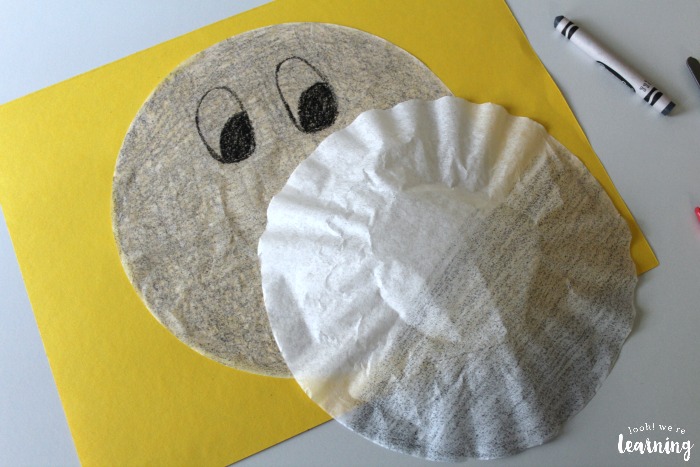
Now we’re going to pause to make the trunk. Use the gray crayon to color in half of the other coffee filter.

Making a Coffee Filter Elephant Craft

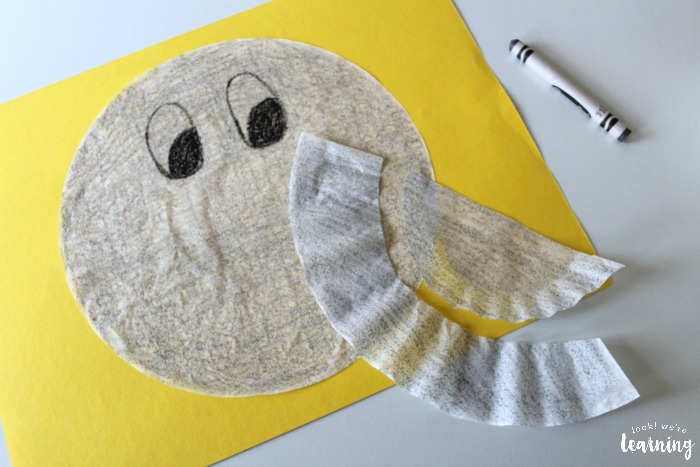
Cut the gray half off of the filter and discard the uncolored part. Now use the scissors to cut the center half-circle out of the gray filter. Keep the outer crimped ring.

Easy Coffee Filter Elephant Craft

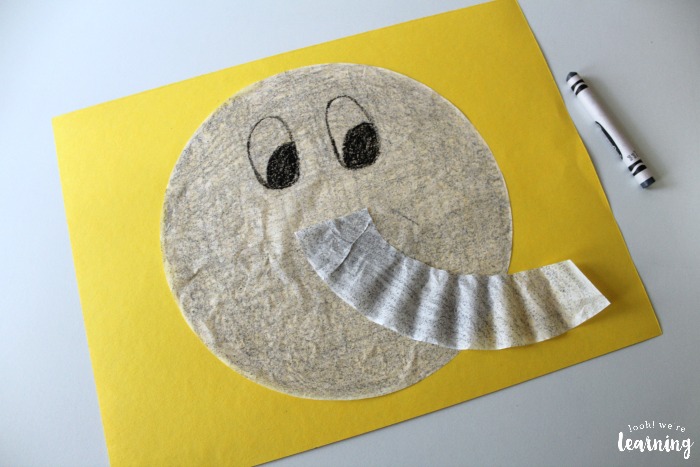
Glue one end of the crimped ring to the center of the filter you glued down. Now your elephant has a trunk!

Simple Coffee Filter Elephant Craft

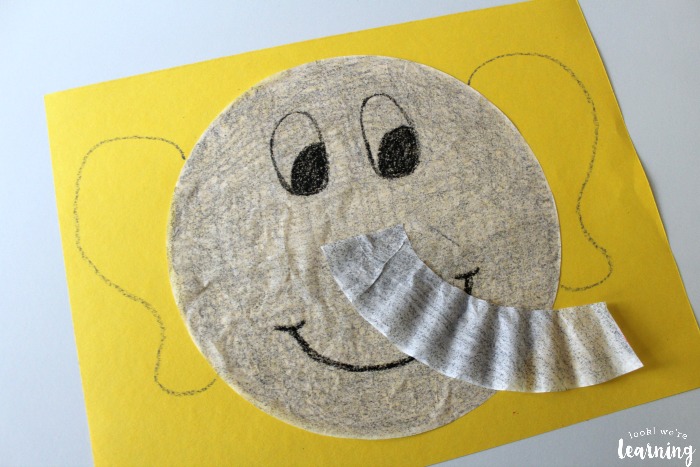
Lift up the trunk to draw a smile on the elephant’s face. Ours is a happy elephant, of course. You can draw the smile on first and then glue on the trunk, but I prefer to glue the trunk on first because it helps me center the smile. Either way. 🙂

Fun Coffee Filter Elephant Craft

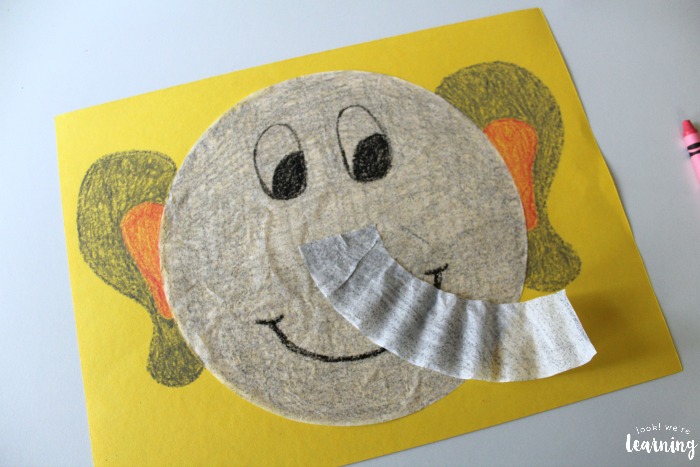
Now use the gray crayon to outline a large ear on either side of the elephant’s face.

Simple Coffee Filter Elephant Craft for Kids

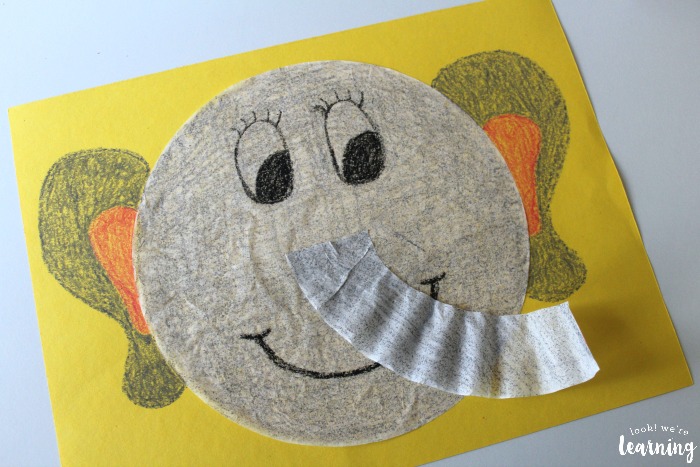
Use a pink crayon to color in a smaller half-circle on the ears, then color the rest in with the gray crayon. At this point, I felt we were done. But then I remembered that the elephants we always see at the zoo have very, very long eyelashes.

Making a Paper Elephant Craft for Kids

So we added some of our own!

Cute Coffee Filter Elephant Craft for Kids

And now we’re done with our coffee filter elephant craft!

This was a blast to make! And the kids will love picking up the picture and making the trunk “wiggle”.

Let your children try some of these other coffee filter animal crafts!

This cute coffee filter owl craft is a fun way to add art to a lesson about woodland animals!

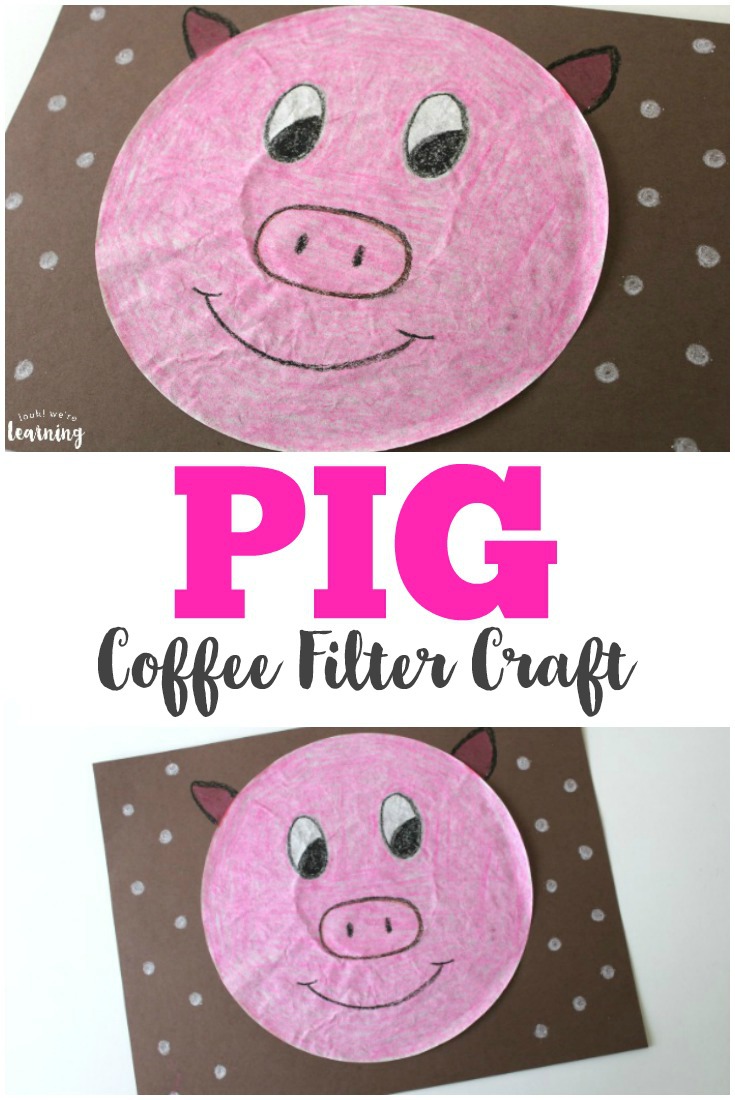
Make this sweet coffee filter pig craft with the kids for an easy art project!

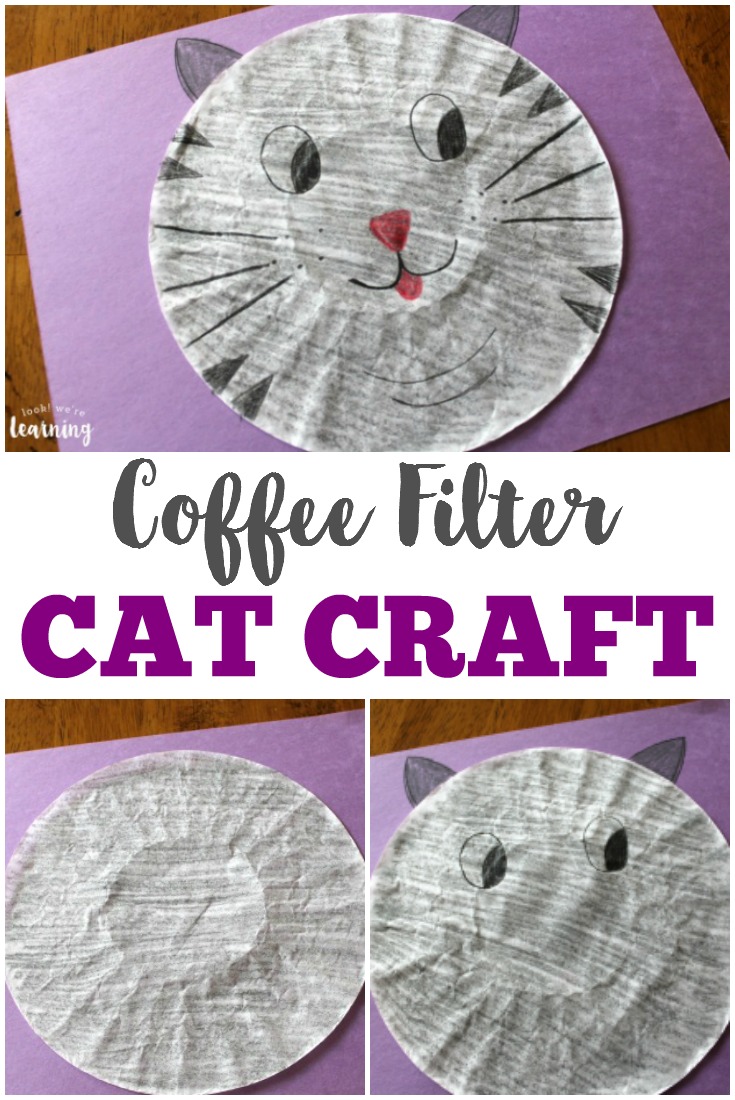
This adorable coffee filter cat craft is a perfect activity to share with kids!

Plus, see more fun craft projects on my Simple Crafts for Kids Pinterest board!

Filed Under: Crafts Tagged With: coffee filter crafts, crafts

Homeschooling In a Small Space

September 11, 2017 by Selena Robinson 10 Comments

We’re a family of six. We live in a 1600-square foot house (and that’s including the garage).

One of the major issues that homeschooling families face is finding the space to store their school supplies and we’re no strangers to that problem. As much as I would like to have a dedicated school room, we just don’t have the space or the money to have one. So, like many of you, we just have to make do with what we have.

If you’re strapped for storage room, take a look at how we practice homeschooling in a small space!

It is possible to homeschool multiple children in a small space! See how we make our small homeschool space work!

Homeschooling In a Small Space

Since our home is packed to capacity (two of us to each bedroom), we don’t have a spare room that we can convert into a “homeschool room”. I’d love to have one, but it’s probably not in the cards any time soon. So, we tend to keep our homeschooling supplies in a few strategic places around the home.

But – a note of caution: It’s really easy to just stash homeschool stuff all over the place. Seeing all that clutter around makes it hard for me to concentrate, though, so I tend to just avoid using the materials at all.

And that’s how I ended up with homeschool “storage zones”.

Homeschooling in a Small Space

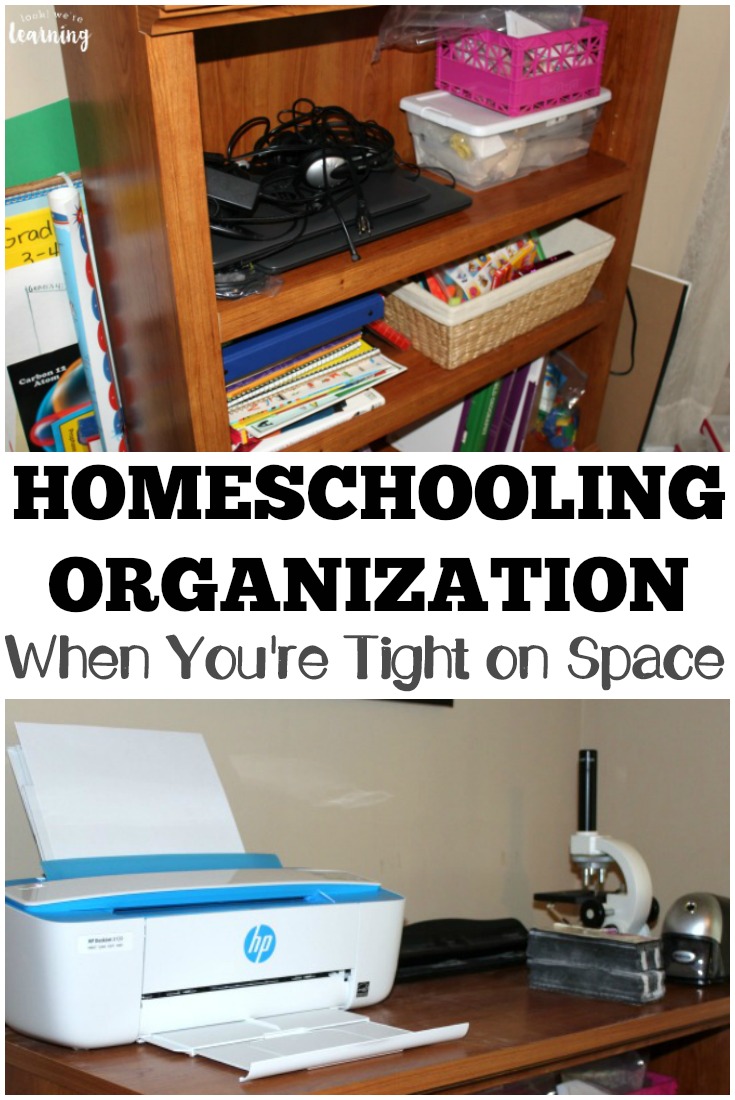
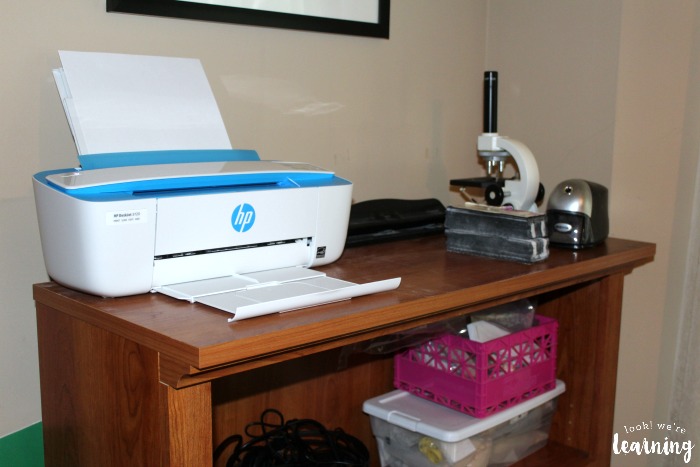
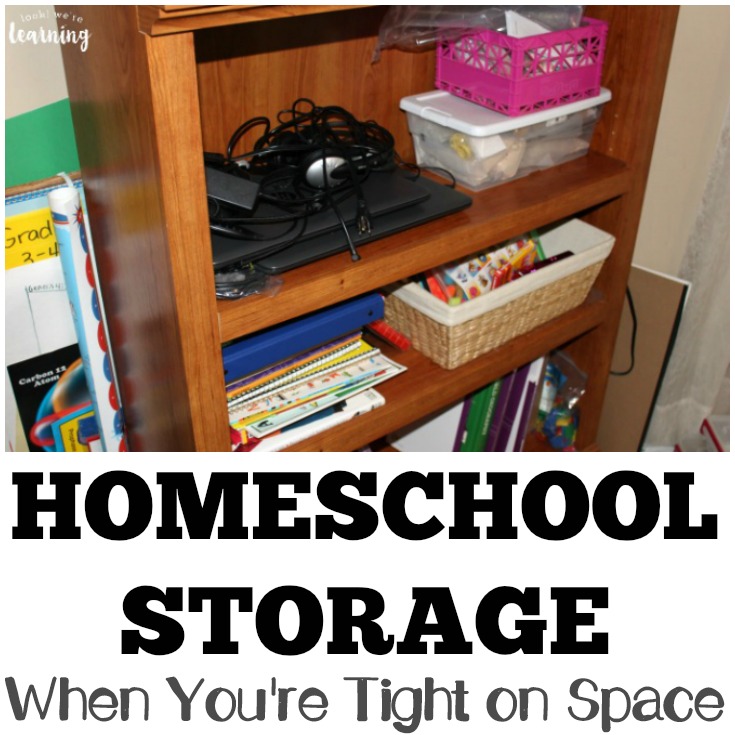
Our dining room does double duty and serves as our school room most of the time. We have a bookcase on one short wall where we keep the items we use the most. Our anchor charts and educational posters get stored behind the bookcase.

Using a Small Homeschool Space

At the top, I keep our school printer, the kids’ microscope, a pencil sharpener, and a three-hole punch. Anything more and it turns into a drop zone for everything we have.

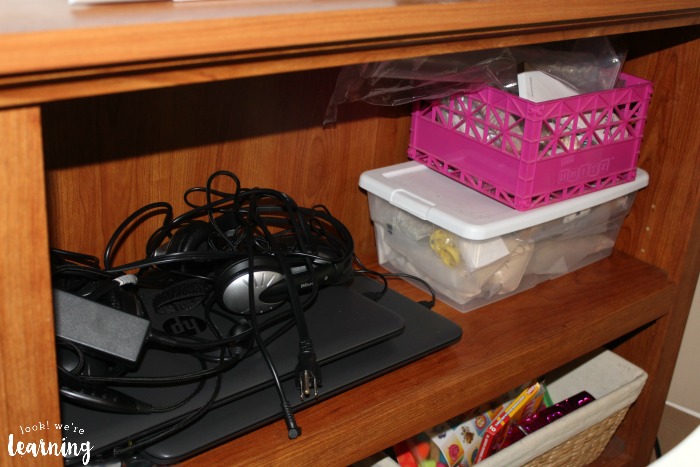
Storing Tech Homeschool Supplies in a Small Space

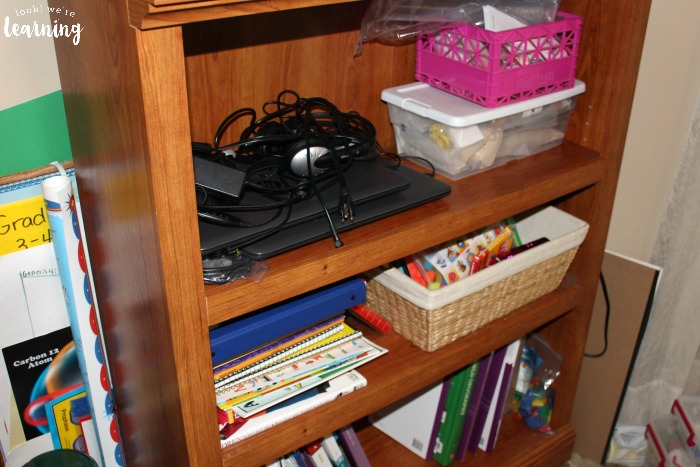
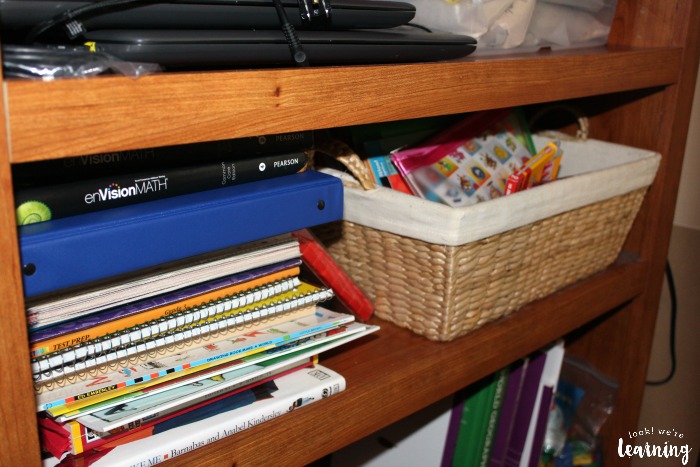
On the shelves below, we keep our homeschool materials according to grade level. Our two oldest children are using K12 this year, so we keep their computers and science supplies on the top shelf.

Storing Multiple Grade Level Resources Together for Homeschool

My two youngest children are still being taught exclusively by Mom, so their books and materials are on the shelves below. My third/fourth-grader’s books are on the left and the basket on the right holds the workbooks and printables for my kindergartner.

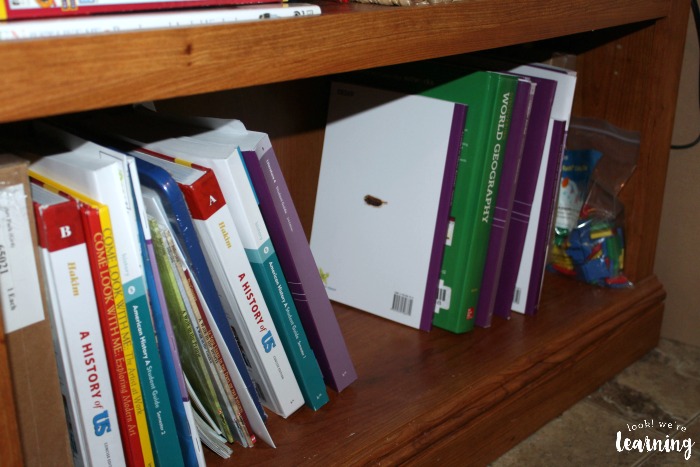
Storing K12 School Materials in a Small Space

The bottom shelf is used for the textbooks that were sent to us for use with our K12 students. As you can see, they sent us quite a bit. I try to keep it separated by grade level, but it’s a constant work in progress.

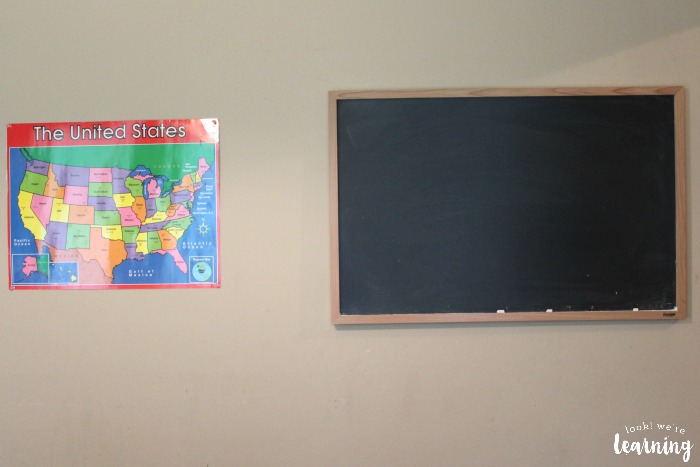
Using a Small Chalkboard for Homeschooling

On the full wall of our dining room, we keep a small chalkboard and a space for our educational charts and posters. I rotate that out, depending on what we’re studying at the moment. Right now, my youngest son is working on identifying the states, so that’s the chart we’re displaying.

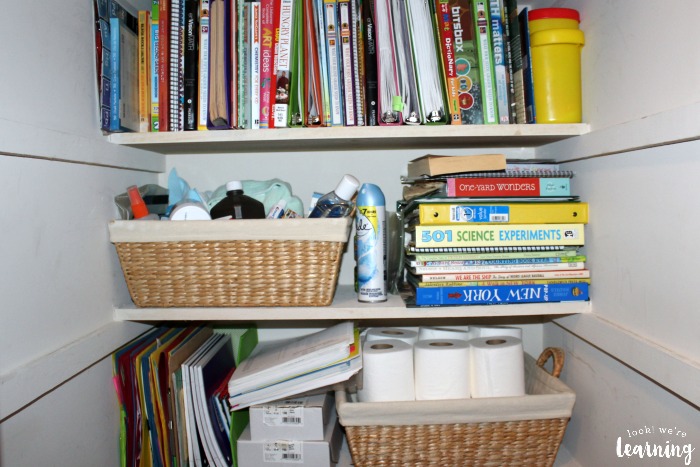
Storing Homeschool Books in a Sma

This is our curriculum closet, which originally served as our hall closet. It already had shelving, thankfully, so it was a perfect place to put many of our materials.

As you can see, this space has to serve as a hall closet AND a homeschool storage space. I corral the household things in baskets and the homeschool things in separate stacks. The row at the top is textbooks for upper elementary grades. The lower shelves hold blank notebooks, lapbooks we intend to reuse, and storybooks we’ll be discussing with the kids this year.

I go through our books and materials every year and declutter the resources we won’t be using anymore. That keeps me from overfilling the closet. (Which is so very easy to do.)

Storing Homeschool Supplies in a Small Space


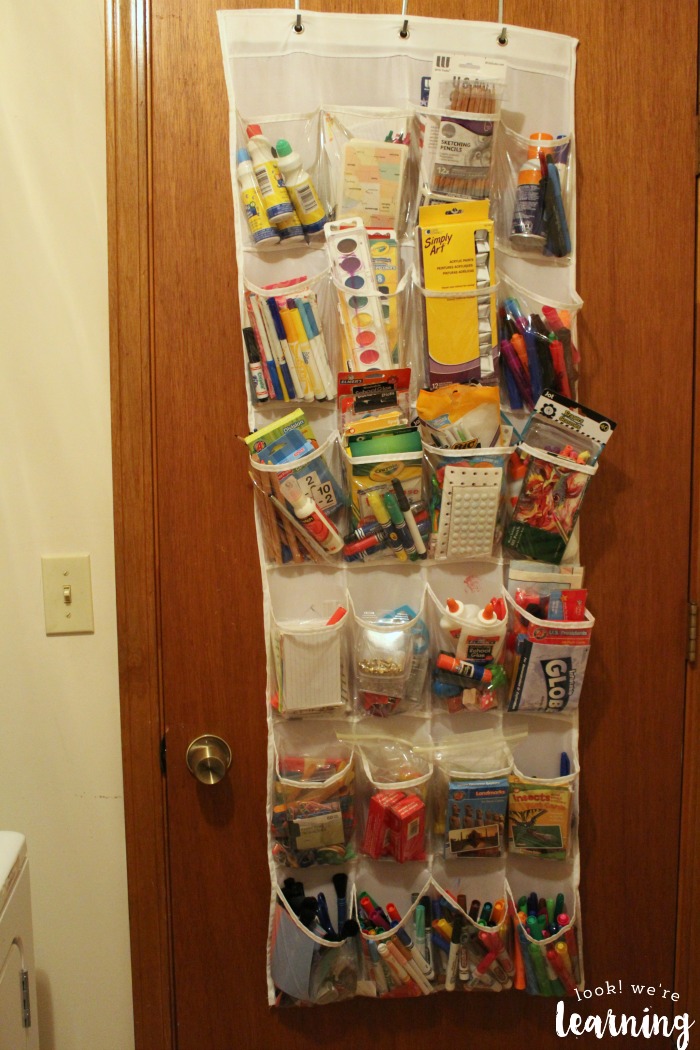
And finally, I use a clear hanging shoe holder on the backside of the closet door to hold writing instruments, flash cards, and small office supplies. As you can see, I have a tiny overbuying problem when it comes to markers.

I will not buy any more markers. I will not buy any more markers. I will not buy any more markers.

I should probably make myself write that 100 times today.

How do you keep your homeschooling supplies from overtaking your home? Do you have any tips for schooling in a small space?

Small Homeschool Space Organization Ideas

Need more tips for getting your homeschool ready for the new year?

Tired of falling behind on your lesson plans? Learn how to schedule a flexible homeschool year instead!

Think you're too broke to homeschool your kids Believe it or not, homeschooling doesn't have to cost a lot!

Think you're behind on homeschool planning You're not. You don't need a lot to homeschool, even if you're a newbie!

And see plenty of suggestions for organizing your homeschool supplies on my Homeschool Organization Pinterest board!

P.S. You can get homeschooling and parenting tips in your inbox each week when you sign up for our email newsletter!

This post is part of the Back to Homeschool blog hop from iHomeschool Network! Click over to read more tips for making the most of your homeschool space!

Back to Homeschool Blog Hop 2017

Notebooking Pages LIFETIME Membership

Filed Under: Homeschool Organization, Homeschool Planning Tagged With: homeschool organization, homeschool organization tips

Coffee Filter Crafts for Kids: Coffee Filter Owl Craft

September 5, 2017 by Selena Robinson Leave a Comment

A few years ago, we took our kids to a live birds of prey show. During the performance, we got to see several kinds of owls swoop right over our heads! It was my first time being up close to these animals and it was incredible. I had no idea that owls could be that big! Or that beautiful!

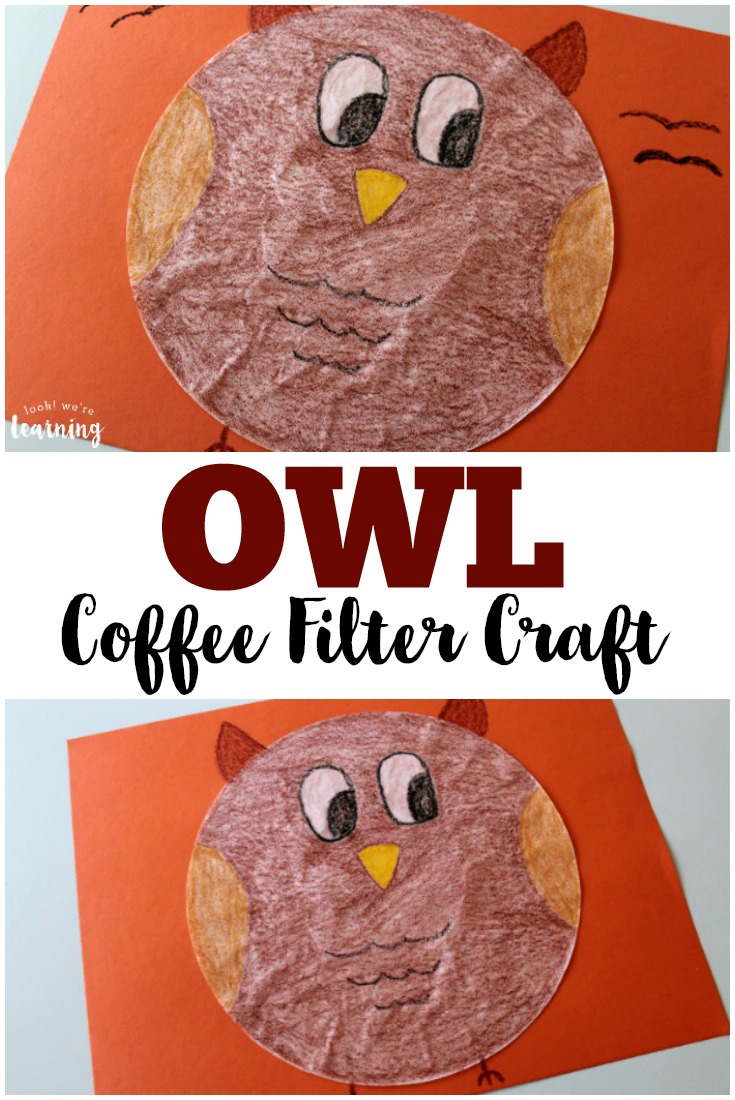
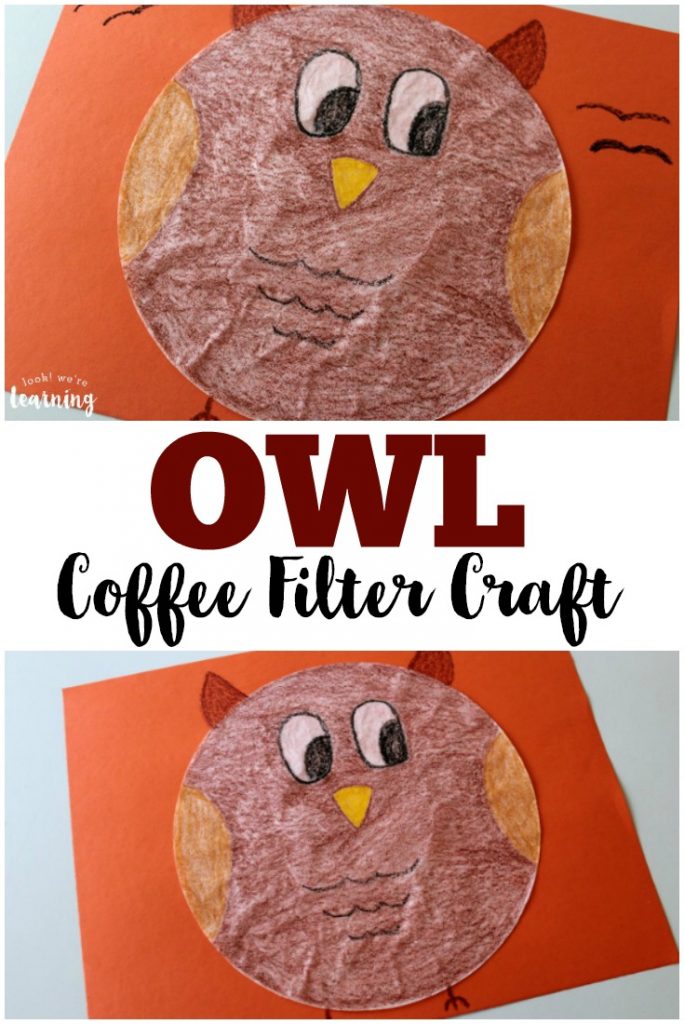
Since then, we’ve been learning more about these amazing animals. So I thought that it would be fun to add a new project to our collection of coffee filter crafts for kids: a coffee filter owl craft!

Cute Owl Craft for Kids

This craft is really easy and simple to customize. Kids can use any color they want and add the details they like: feathers, beak, wings – even horned tufts!

If the kids enjoy this project, learn more about these animals with our list of beautiful owl books for kids!

This cute coffee filter owl craft is a fun way to add art to a lesson about woodland animals!

Coffee Filter Crafts for Kids: Coffee Filter Owl Craft

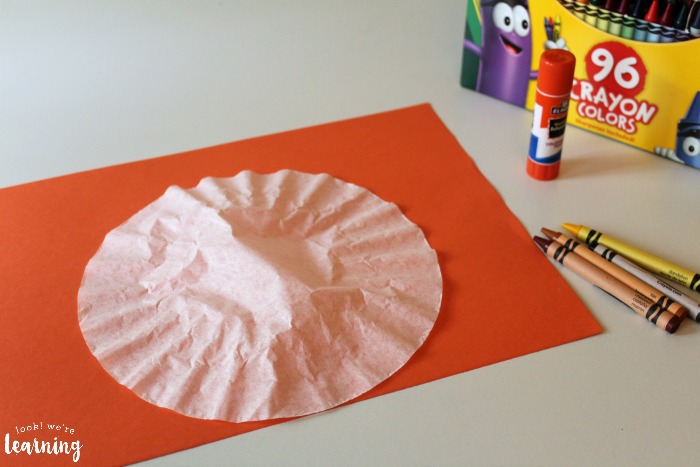
To make this coffee filter owl craft, you’ll need the following: (Affiliate links are provided here for convenience. For details, see our Disclosure Policy.)

  • One white basket coffee filter
  • Construction paper
  • Glue stick
  • Crayons

Coffee Filter Owl Craft for Kids

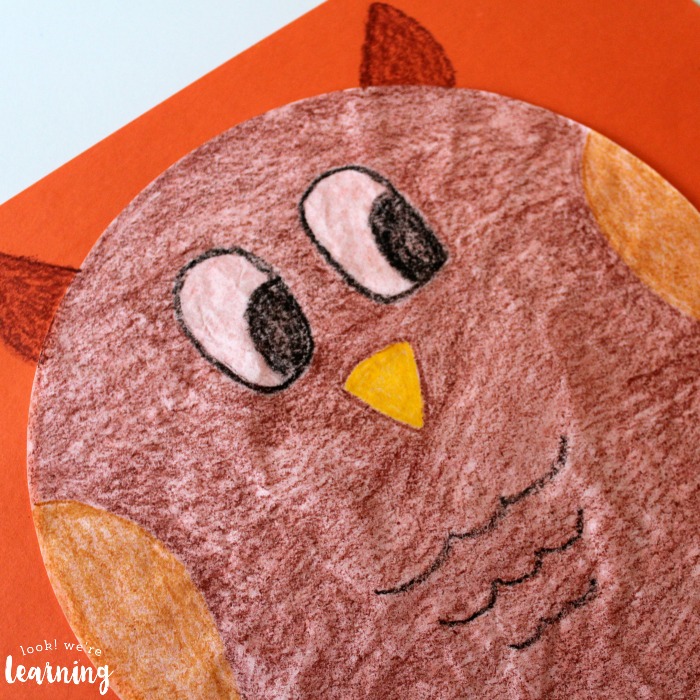
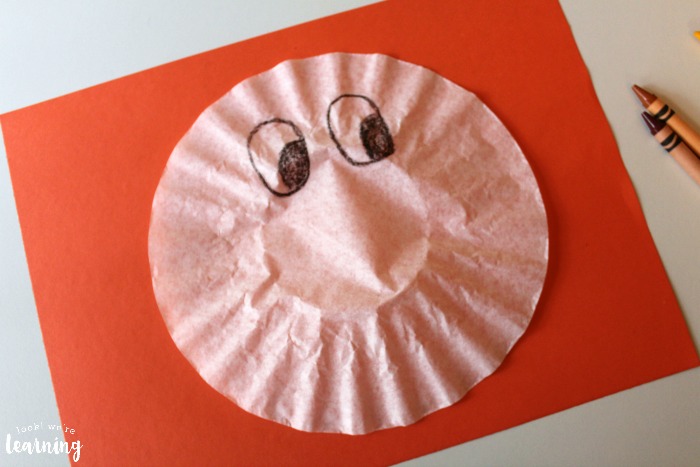
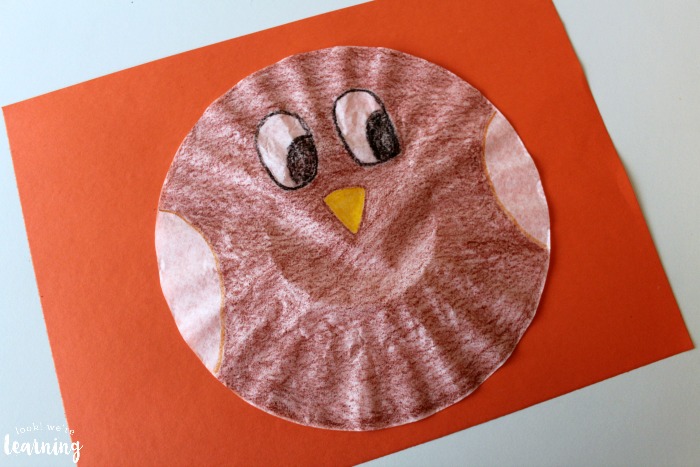
Start by outlining two eyes toward the top of the coffee filter. Be sure to leave the whites uncolored.

Making a Coffee Filter Owl Craft

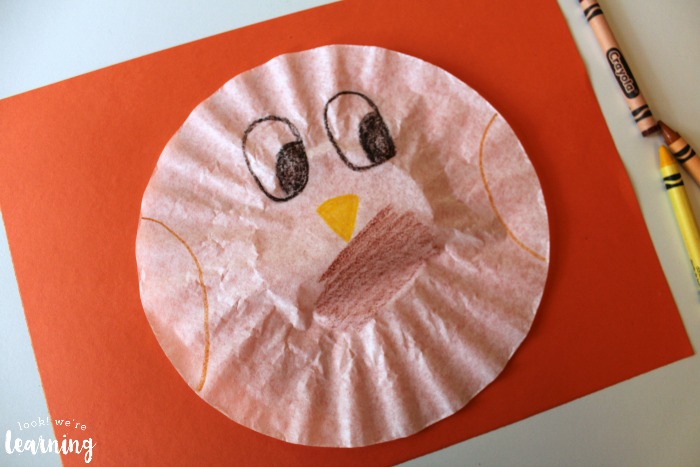
Use a tan crayon to outline two half-circles on either side of the coffee filter. These will be the folded “wings”.

Cute Coffee Filter Owl Craft

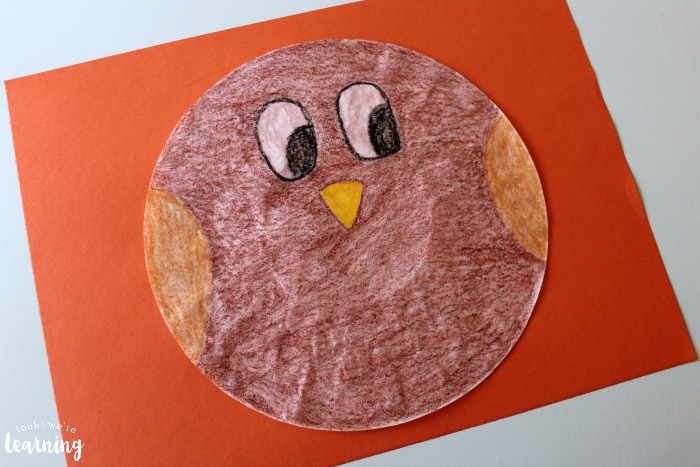
Draw a triangle in the center below the yes using the bright yellow crayon. Then color in the rest of the filter with a brown crayon.

Coffee Filter Owl Craft for Kids to Make

When you’re finished coloring, the wings are all you’ll have left to do.

Making an Owl Craft for Kids

Now use the tan crayon to color in the wings.

Simple Coffee Filter Owl Craft

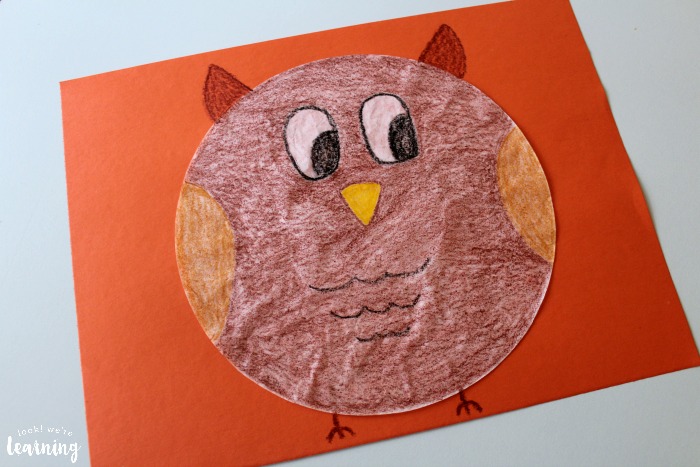
Let’s add a few details: We used a black crayon to draw plumage on the belly. Then I used the same brown crayon that I used to color in the body to add talons and horned tufts.

Owl Coffee Filter Craft for Kids

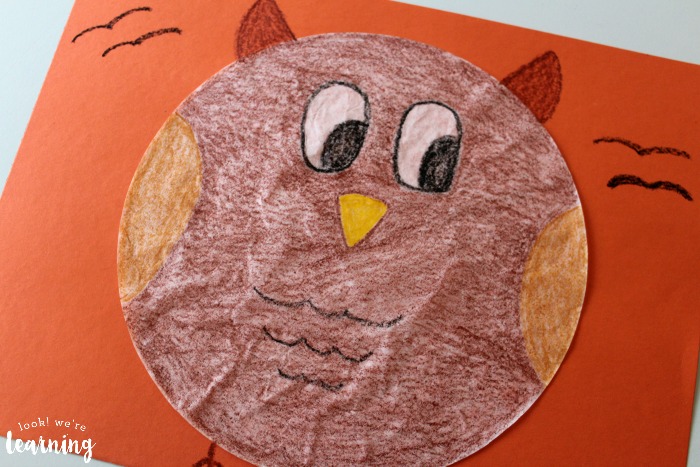
Add a few other birds flying in the distance and you’re done!

You can practically hear him saying “Hoot!”

Oh, that’s just me? Okay.

Don’t miss these other learning ideas and activities for kids!

Looking for easy fall crafts for kids? There are plenty of fall art projects to choose from here!

These owl books for kids feature gorgeous pictures and illustrations for learning about these nocturnal flyers!

Make this sweet coffee filter pig craft with the kids for an easy art project!

Share more fall fun with the ideas on my Fall Activities for Kids Pinterest board!

Filed Under: Crafts Tagged With: coffee filter crafts, crafts

Simple Minimalist Kindergarten Homeschool Curriculum

September 4, 2017 by Selena Robinson 1 Comment

My last little one is learning at kindergarten level this year. She’s working at first grade in some concepts, but there are a few important kindergarten objectives that I want her to grasp before we move on.

So we’ll be focusing there and then moving forward as she becomes comfortable.

In keeping with my desire to make homeschooling a lot less stressful than it has been previously, I’m practicing minimalist homeschooling this year.

Basically, that means using as few resources as possible to make lesson planning, teaching, and guiding as easy as possible.

And so…here’s a look at my minimalist kindergarten homeschool curriculum!

Simple Minimalist Homeschool Kindergarten Curriculum

This is a great list if you’re trying to keep your homeschool plans simple this year.

By the way, if you’re teaching older kids, take a look at our minimalist fourth grade curriculum plans too!

Get your little one off to a gentle start with this minimalist homeschool curriculum for kindergarten!

A Simple Minimalist Homeschool Curriculum for Kindergarten

Image c/o: eskaylim / depositphotos

Note: This is a very minimalist homeschool curriculum for kindergarten. So this truly focuses on the basics: reading, writing, and arithmetic.

I also include science, because I believe it is essential to introduce science to kids as early as possible. Thinking scientifically comes so naturally to young ones and it’s wonderful to encourage that way of exploration from the start.

All-in-One Program: ABC Mouse will be our primary homeschool program for kindergarten. We got to try it earlier this year and my little one has absolutely loved it. After working with it over the summer, her reading ability has skyrocketed. So, we’re sticking with it for this entire school year.

Reading: While ABC Mouse is a great core program, I want our kindergartner to get some structured practice in reading and responding, so we’re using 180 Days of Reading for Kindergarten to give her some regular reading practice daily. It’s also a good way to make sure we hit all the sight words for this grade level.

Handwriting: Since she already knows the alphabet and how to write each letter, we’ll be focusing on improving her overall handwriting. To do this, we’ll be using a standard Roselle Paper Primary Pad to do some basic copywork each day. We’ll try to complete one sentence each morning to warm up and see how her handwriting progresses through the year.

The Ultimate Guide to Brain Breaks eBook

Math: Our supplemental math practice will be the Early Math section from Khan Academy. When this grade level was first introduced, I leapt for joy. We love Khan Academy, but I was looking for something to help my younger kids with basic math skills and this is it. Our kindergartner loves it.

Science: Finally, for science, we’ll be working through the Usborne First Encyclopedia of Science together. I used this book with my boys when they were younger and it was a big hit. In fact, our Floating Egg Experiment came out of this book!

In addition to these core subjects, we’ll be sharing plenty of crafts and stories together this year. Look out for list of reading choices for kindergarten – coming soon!

What are you using to homeschool your kindergartners this year? Share your curriculum picks in the comments!

Minimalist Homeschool Curriculum for Kindergarten

Want to see more of our minimalist homeschool curriculum choices? Check out these posts for suggestions!

Need to streamline your homeschool lessons? Take a look at this minimalist homeschool curriculum for fourth grade!

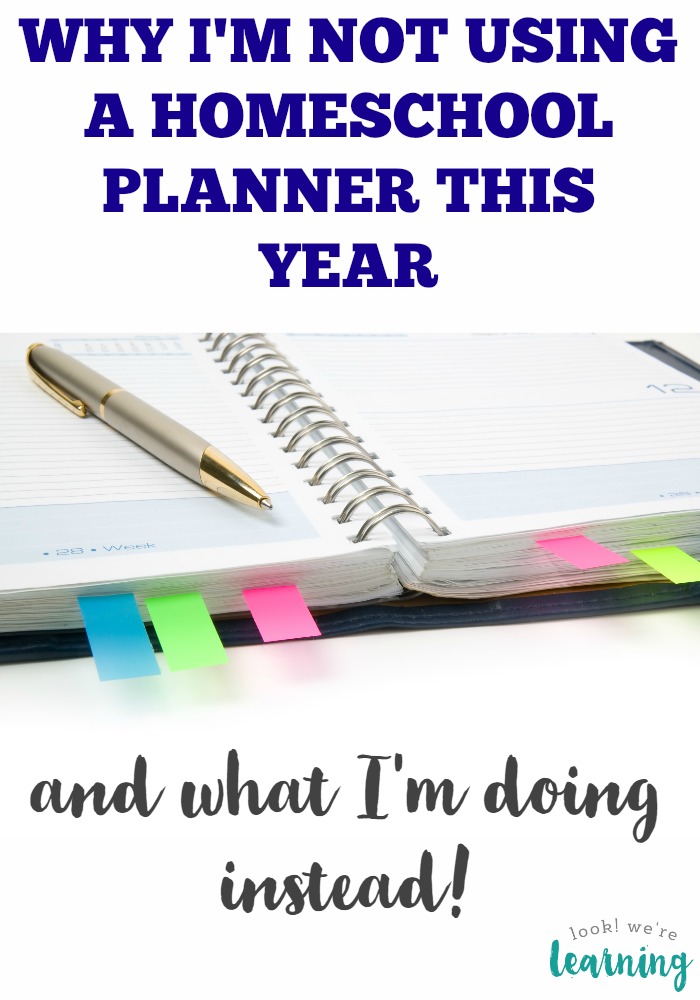
How to Homeschool Without a Planner @ Look! We're Learning!

How to Homeschool as a Minimalist

See more tips for getting your homeschool year started on my Homeschool Planning Pinterest board!

This post is part of the Back to Homeschool Blog Hop hosted by iHomeschool Network! Click over to read more curriculum choices from our fellow bloggers!

Back to Homeschool Blog Hop 2017

Filed Under: Homeschool Curriculum Tagged With: homeschool curriculum, kindergarten, minimalist homeschooling

  • « Previous Page
  • 1
  • …
  • 42
  • 43
  • 44
  • 45
  • 46
  • …
  • 98
  • Next Page »
Hi! I'm Selena, a veteran teacher and homeschool mom to four. I'm so glad you're here!
About Me Contact Terms of Use Privacy Policy Places I Share
Facebook Pinterest Instagram
Homeschool Printables Unit Studies Shop the Store
Copyright ©2026, Look! We're Learning!. All Rights Reserved. Design by Pixel Me Designs