Look! We're Learning!

Early Learning. Happy Teaching.

  • Shop
  • Printables
  • Homeschool
  • Crafts
  • Parenting
  • Blog
Studying Animal Predators with Scanorama Interactive Books

Interactive Homeschool Science with Scanorama Books!

September 20, 2016 by Selena Robinson Leave a Comment

I cannot tell you how much my boys love learning about animals. They get so excited when they get a chance to see animals up close or even just to read about them. A lot of it has to do with their fascination with the Wild Kratts, which is just fine with me!

In particular, my sons love studying animal predators. As typical boys, they love learning about big, strong animals that eat other animals. So I was psyched to get to try the Scanorama series from Silver Dolphin Books! One of the books is called Deadly Predators, which I just knew would be a huge hit with my kids. And they ended up loving it even more than I thought!

See why the Scanorama series is so popular with kids (even kids who don’t love to read) and enter to win one of your own below!

Disclosure: I received this product in exchange for this post and I was compensated for my time. All opinions are my own and I was not required to post a positive review.
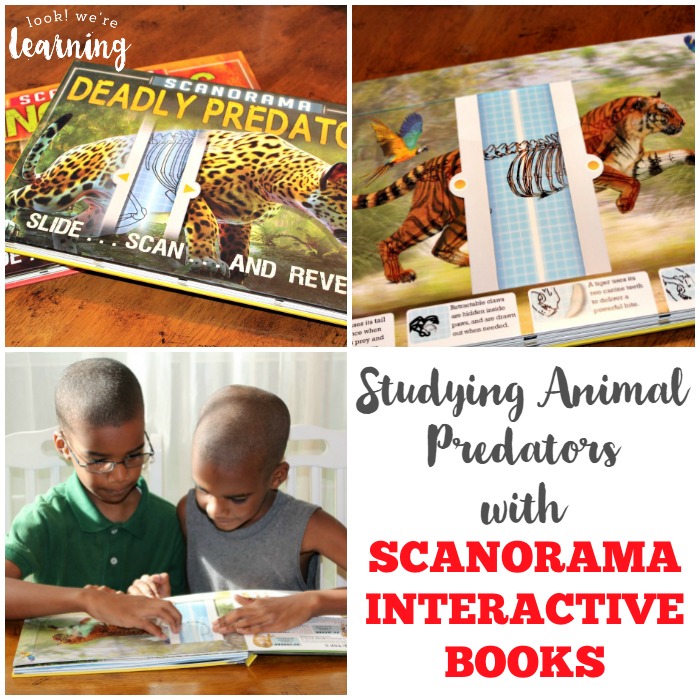
Reading about Animal Predators with Scanorama Interactive Books

How Do Scanorama Interactive Homeschool Science Books Work?

If you’re kind of puzzled about the name “Scanorama”, I get it. At first, I wondered what it was all about too. Here’s the simple explanation:

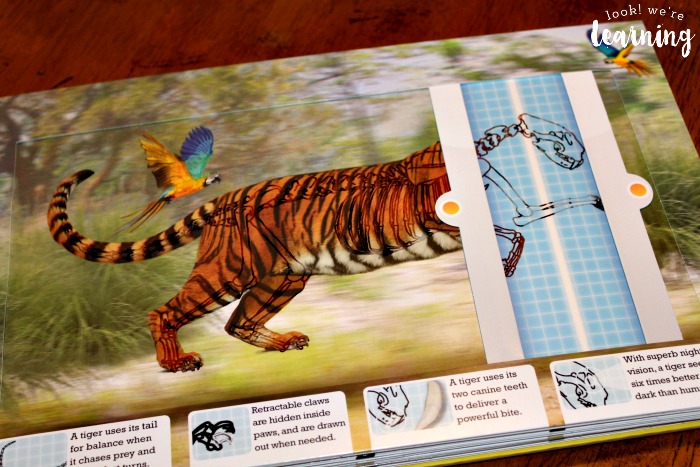
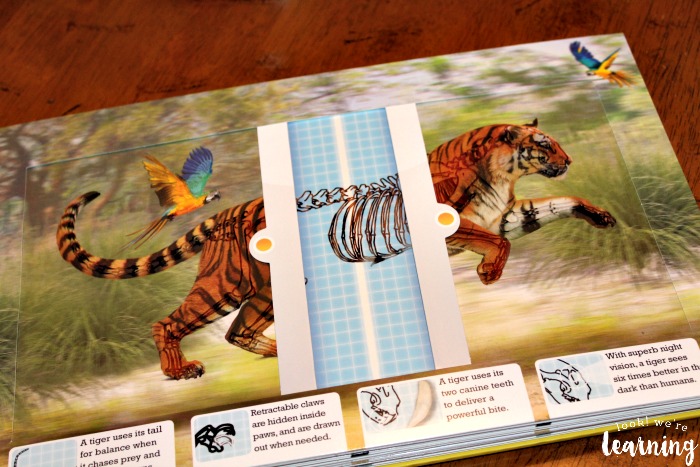
Titles in the Scanorama series let kids scan over images of animals and get an X-ray view of their skeletons. Did I mention I have typical boys? They were truly wowed by that feature, as you’ll see later on.

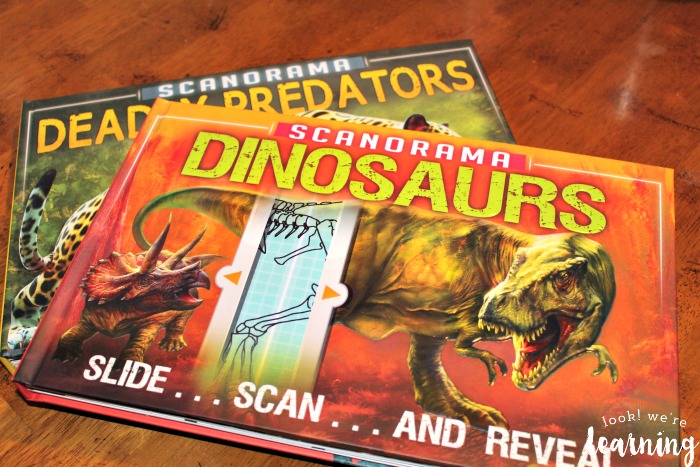
Oh – and see that book about dinosaurs peeking out from behind the Deadly Predators book? Read on for something awesome involving that one. 😉
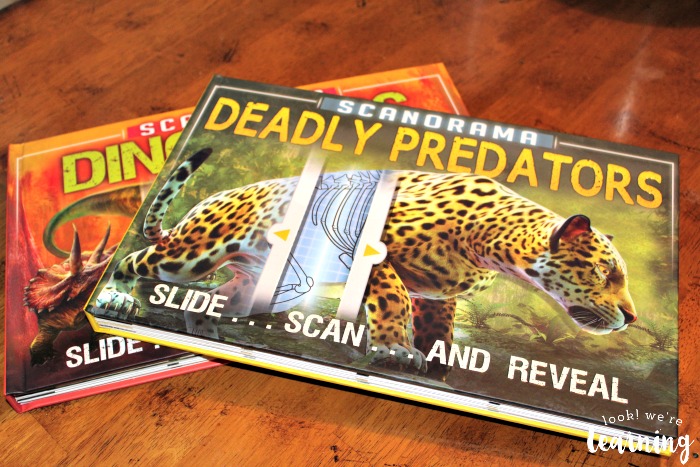
Scanorama Deadly Predators Book

There are three different titles in the Scanorama series available from Silver Dolphin Books:

  • Scanorama: Deadly Predators
  • Scanorama: Dinosaurs
  • Scanorama: Amazing Animals

We got a look at the first two. Take a look at the Scanorama series in action below. (This page is from the Deadly Predators book.)
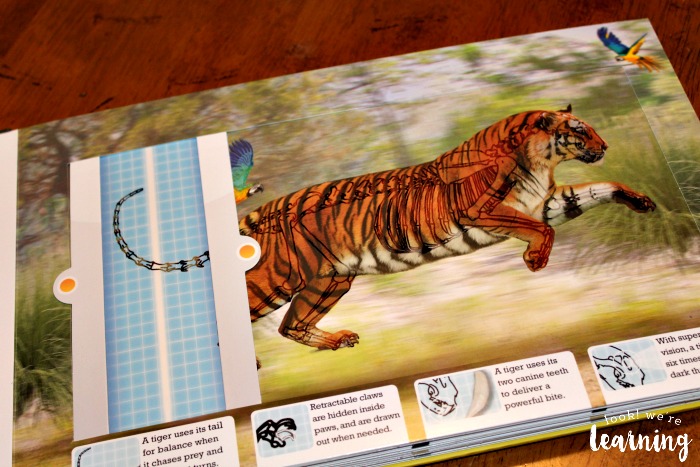
Studying Tiger Bones

Scanning Tiger Vertebrae

Viewing Tiger Bones

See how kids can “scan” over the image and investigate how the animal’s skeleton contributes to its prowess? That’s just super, duper neat.
Reading about Fierce Reptiles

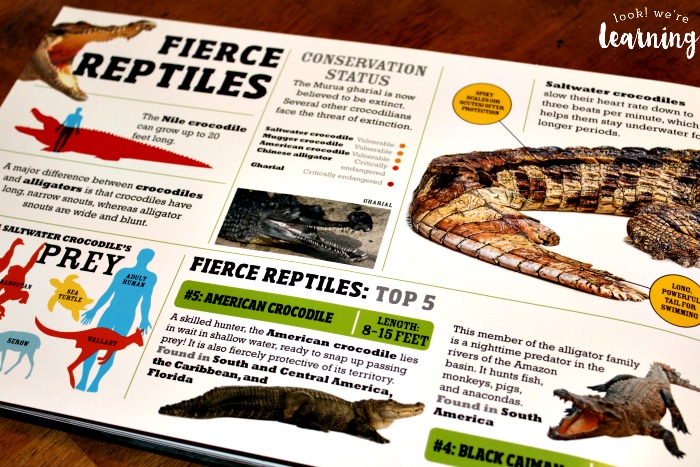
Plus, there is a LOT of information in each book about the kinds of animals covered. The Deadly Predators book contains sections about several types of predators, including scorpions, reptiles, big cats, sea mammals, and more.

Oh, and fair warning: There is a section about spiders, which contains vivid, full-color pictures of spiders. (Just so you don’t do like I did and drop the book in sheer terror when you come to that part.)

Learning about Big Cats with Scanorama Homeschool Science Books

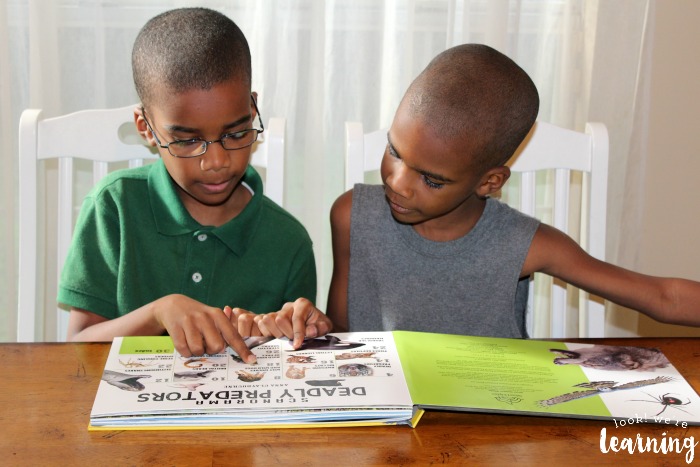
When I handed the Scanorama series book Deadly Predators over to my boys, they had a short conference about which section of the book they wanted to cover first.
Exploring Deadly Animal Predators

And, as I expected, they reached a unanimous decision: Big Cats. So big cats it is!
Reading about Big Cats

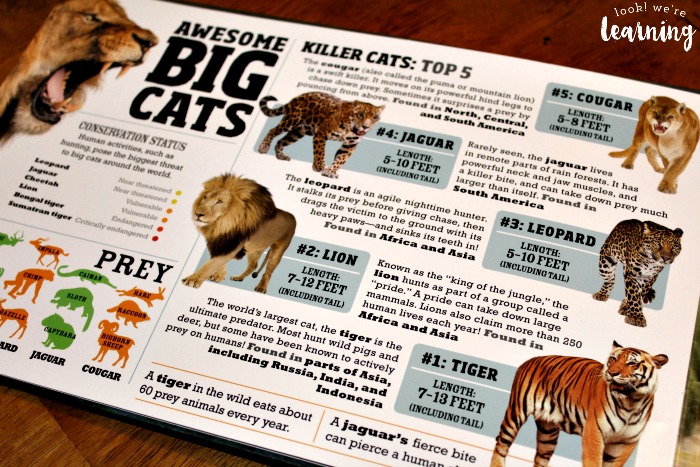
In the section, they got to examine five different big cats. And, since they’re already huge fans of wildlife, they knew some of the information. But, they were impressed at how long each animal was. I don’t think they had realized just how long a tiger can be before!
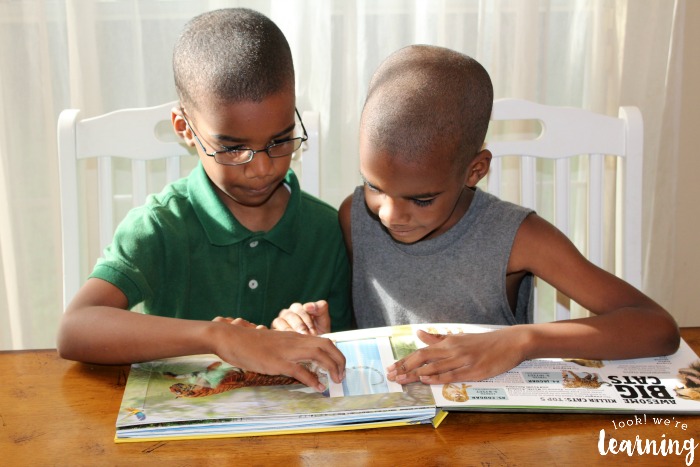
Exploring Scanorama Predators Books

When they discovered the “scan” picture of the tiger, they truly came to life!
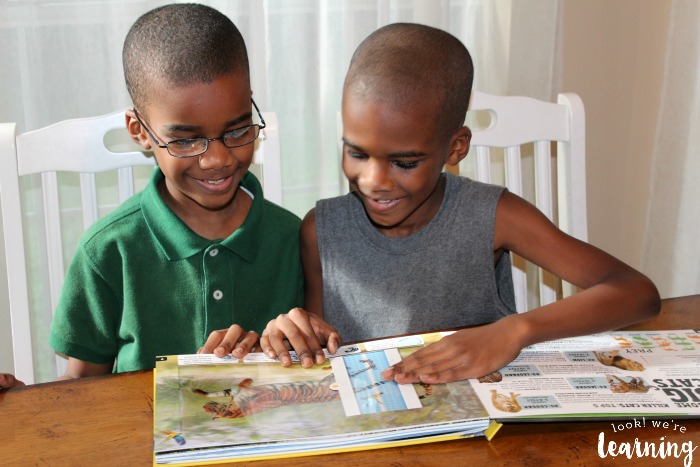
Studying Animals with Scanorama Interactive Books

I had to keep telling them, “No. Wait. Let your brother have a turn.” and “You just did it. Let him try!” and “Okay, okay, everyone will get a chance.” I literally had two boys fighting over a book. That is an actual first in our household.
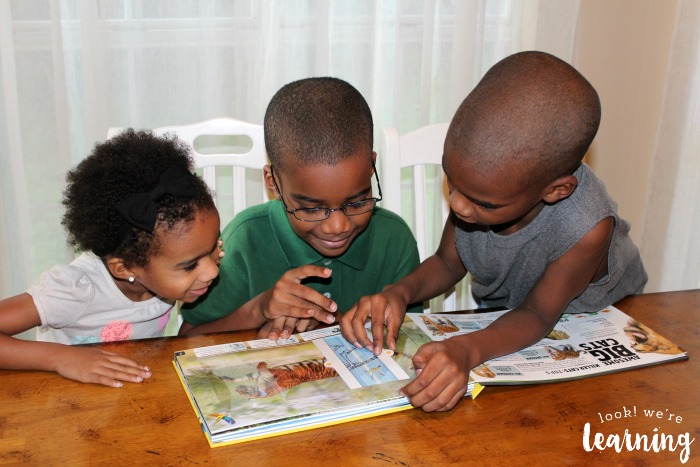
Reading Scanorama Books Together

Even our preschooler wanted to get in on the fun!
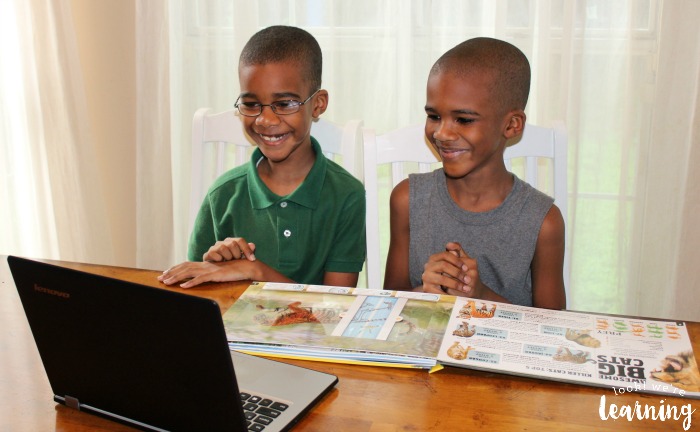
Watching a Video about Big Cats for Kids

Then we watched a short video about big cats. The boys really enjoyed it, as you can see.

Actually, they were laughing at the way the lady in the video says “jaguar”, but they were still learning something, I swear!
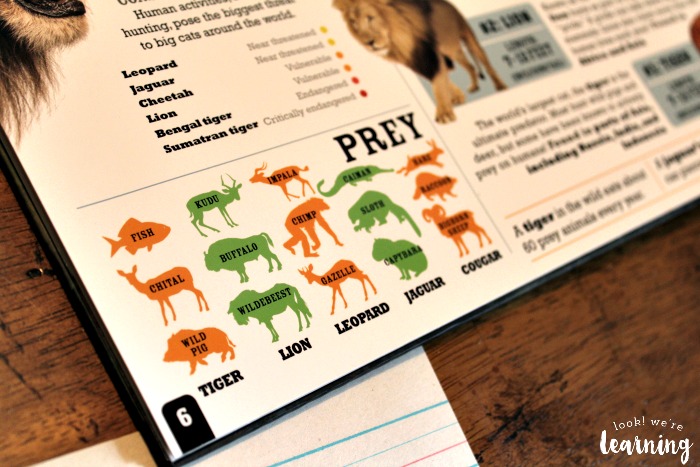
Learning about Big Cat Carnivores

Finally, we took a look at the different kinds of prey each big cat eats.
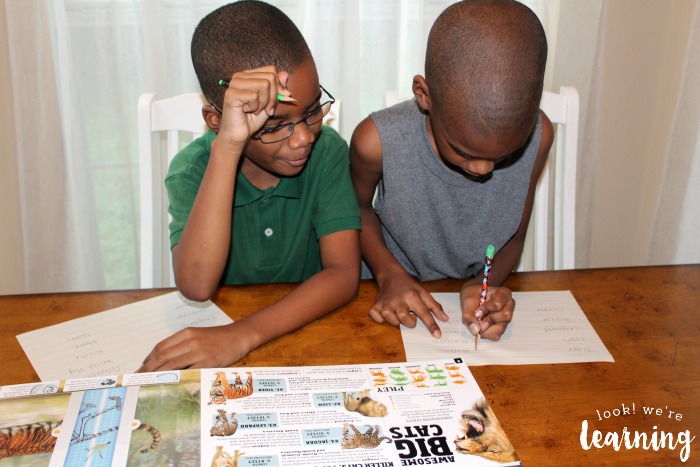
Matching Predators with Prey

And the boys did a quick matching activity using the diagram in the Deadly Predators book.
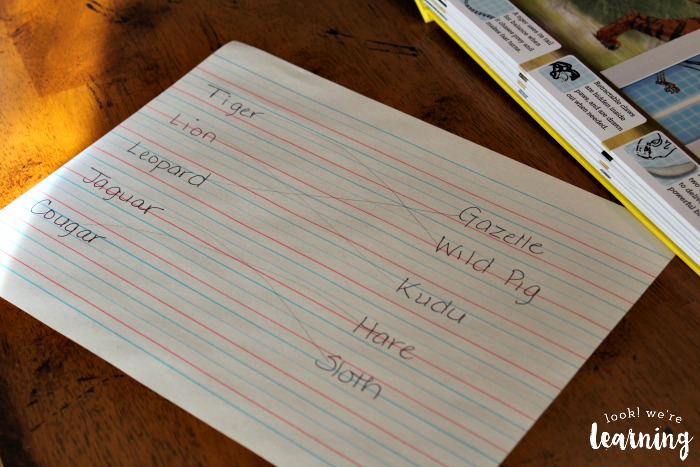
Predator and Prey Matching Activity

Finito! And we had all that fun just from one section of one book in the Scanorama series! Be sure to stop by and browse all three book titles and pick up one your kids will get excited about too!
Studying Animal Predators with Scanorama Interactive Books

Want one of these books for your family? Enter to win the Scanorama book of your choice from Silver Dolphin! TEN WINNERS will receive one of the three Scanorama books: Deadly Predators, Dinosaurs, or Amazing Animals! To enter, just use the Giveaway Tools widget below! (Books will be shipped to US or Canadian addresses only.)

Entry-Form

To learn more about the awesome books available from Silver Dolphin, follow the company on social media:

  • Facebook
  • Twitter
  • Pinterest
  • YouTube
  • Instagram

Now – for ANOTHER giveaway! 😉

Scanorama Dinosaurs Book

Remember that Scanorama book about dinosaurs I mentioned earlier?
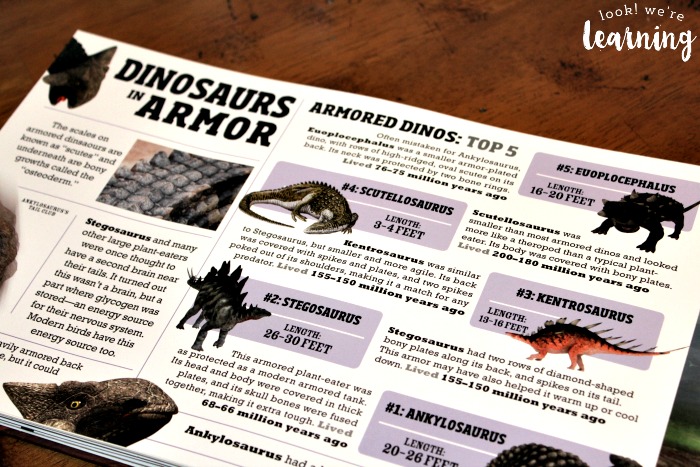
Reading about Armored Dinosaurs

It’s just as awesome as the one about predators!
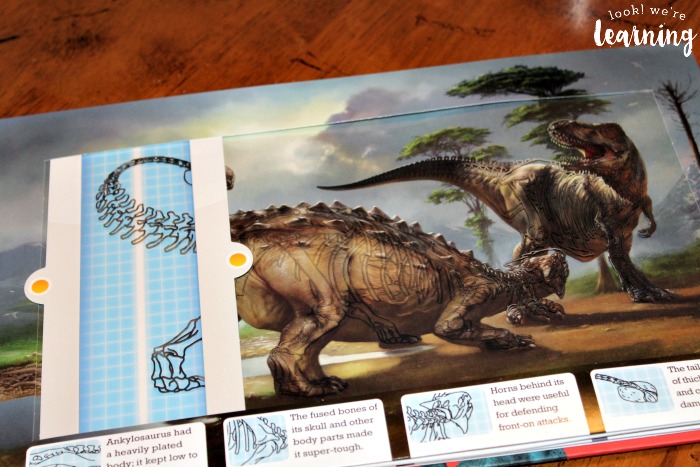
Viewing Dinosaur Skeletons

Right down to the scan-and-see-inside-the-creatures feature!
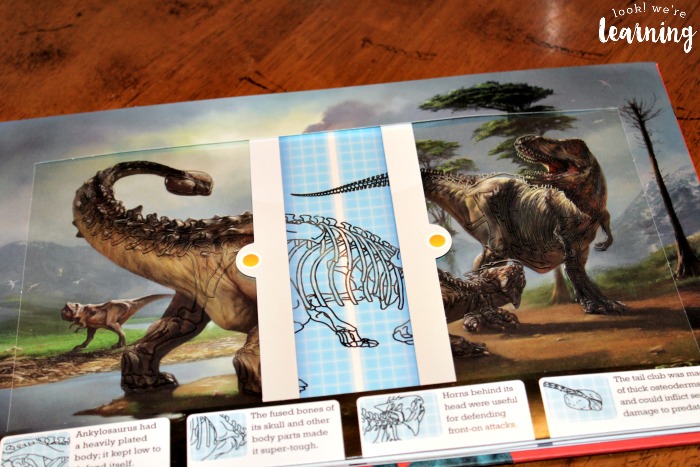
Scanning Dinosaur Skeletons

If you have kids that are dino-crazy, they’re sure to love this book!
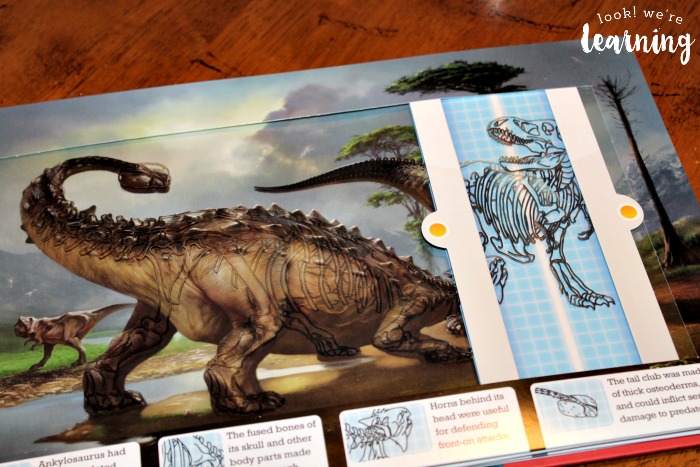
Examining Dinosaur Skeletons

So I’m giving it away to one of my readers! To enter the giveaway, stop by the Look! We’re Learning! Facebook page at 8:12 p.m. EST tonight! It’s the easiest contest in the world to enter, I promise. 🙂 Full rules will be posted and the giveaway will be open for a week, so you have plenty of time to enter and win!
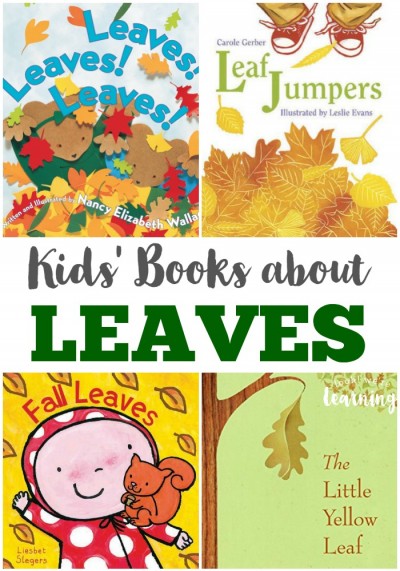
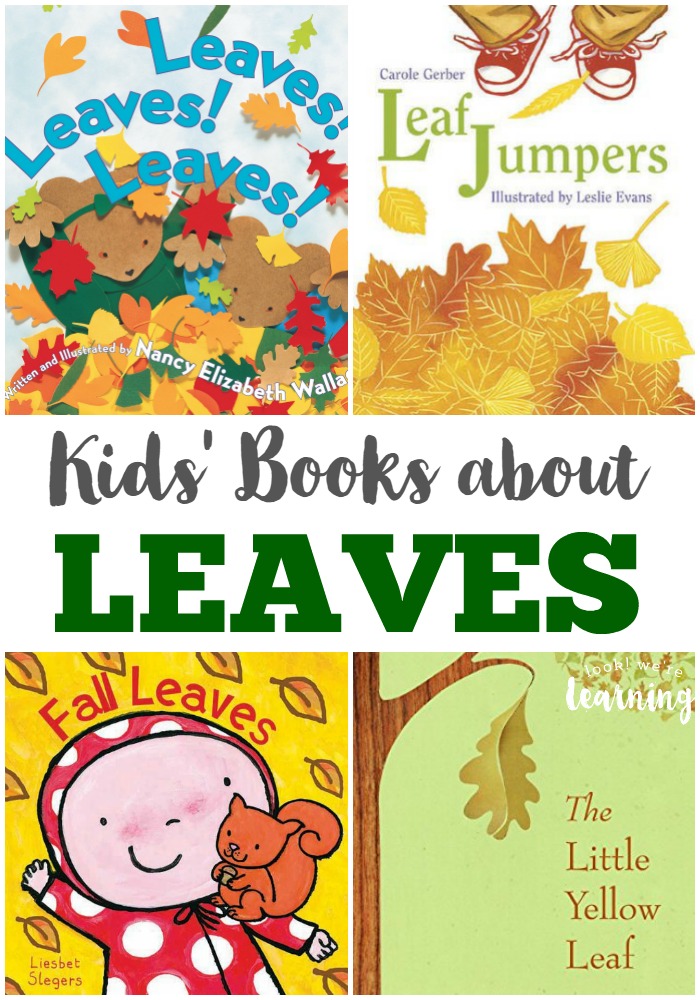

These kids' books about leaves are packed with gorgeous illustrations - perfect for reading this fall!

Kids’ Books about Leaves

September 12, 2016 by Selena Robinson Leave a Comment

We’ve been sharing lots of fall fun for kids lately, including apple tree playdough mats, plenty of fall leaf activities and crafts you can make as a family, and kids’ books about camping. But we’ve been missing leaf books! Doh!

I love watching the leaves change during autumn. It’s like the whole world just explodes with color. I remember a Calvin and Hobbes comic strip that referred to fall leaves as nature’s fireworks, and I couldn’t agree more.

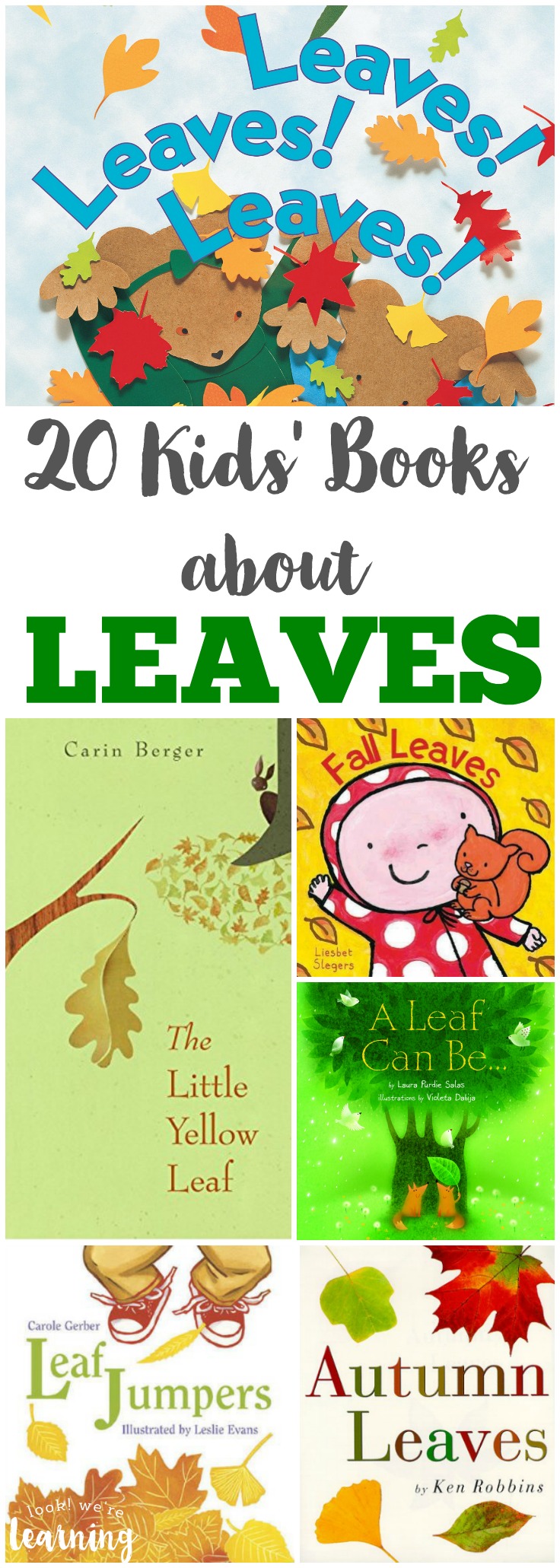
So – since reading is a major part of our homeschool, here are some beautiful kids’ books about leaves you can share with your children this fall!

These kids' books about leaves are packed with gorgeous illustrations - perfect for reading this fall!

Kids’ Books about Leaves

This post contains affiliate links. For details, see our Disclosure Policy.

1. The Little Yellow Leaf by Carin Berger

2. The Leaves on the Trees by Thom Wiley

3. Look What I Did With a Leaf! (Naturecraft) by Morteza E. Sohi

4. Leaf Jumpers by Carole Gerber

5. Look Once, Look Again: Plant Leaves (Look Once, Look Again Science) by David M. Schwartz

6. A Leaf Can Be… (Millbrook Picture Books) by Laura Purdie Salas

7. On My Leaf by Sara Gillingham

8. Leaves! Leaves! Leaves! by Nancy Elizabeth Wallace

9. Autumn Leaves by Ken Robbins

10. Fall Leaves (Clavis Toddler: Daily Life) by Liesbet Slegers

11. Leaves by David Ezra Stein

12. When the Leaf Blew In by Steve Metzger

13. Leaves in Fall (Bullfrog Books: What Happens in Fall?) by Mari Schuh

14. Leaves Fall Down: Learning About Autumn Leaves by Lisa Bullard

15. My Leaf Book by Monica Wellington

16. Fletcher and the Falling Leaves by Julia Rawlinson

17. Zero is the Leaves on the Tree by Betsy Franco

18. Robin Hill School: Fall Leaf Project (Ready-to-Read) by Margaret McNamara

19. The Magic School Bus: The Wild Leaf Ride (Scholastic Reader, Level 2) by Judith Stamper

20. There Was an Old Lady Who Swallowed Some Leaves by Lucille Colandro

Books about Leaves for Kids

Use these activities to find more ways to include leaves in your learning!

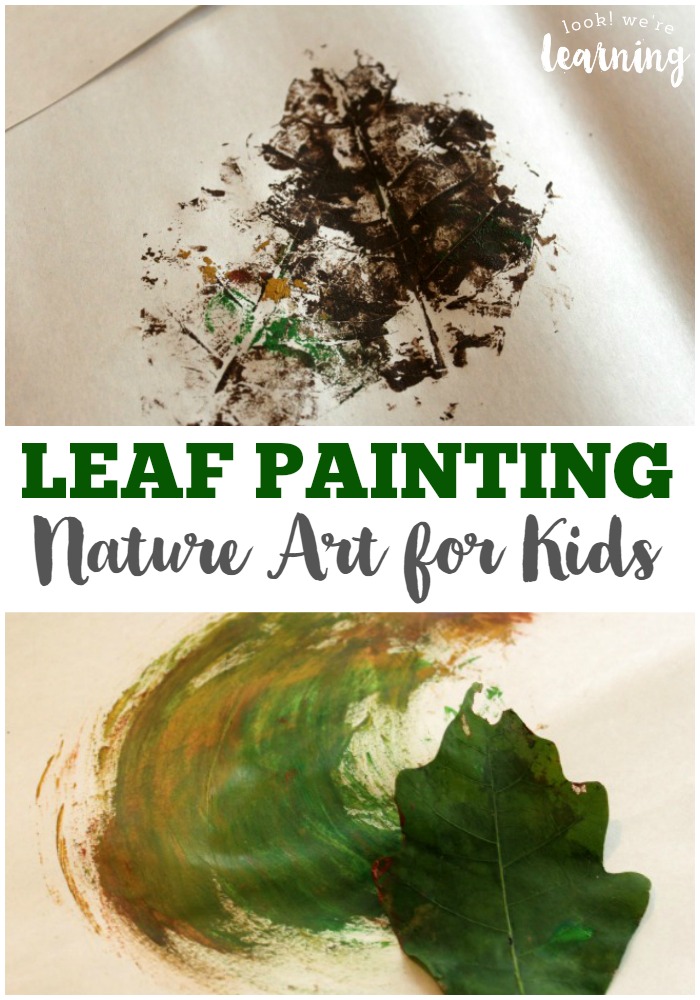
Nature Art Leaf Painting with Kids

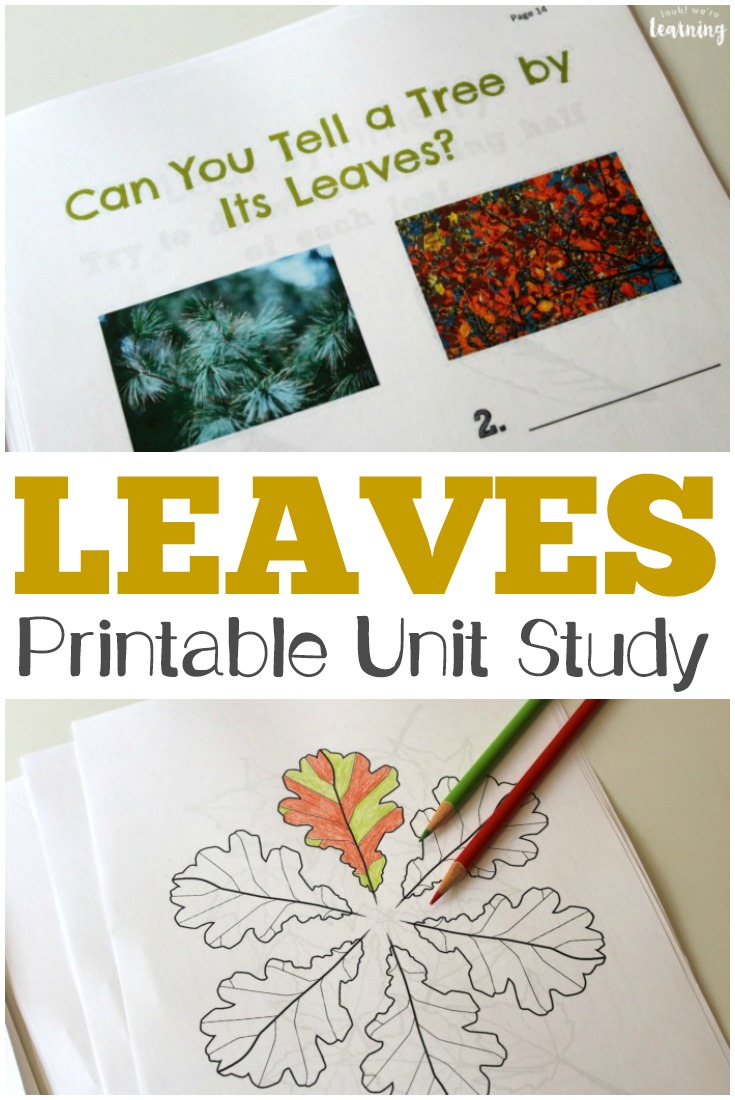
This All About Leaves Printable Unit Study is a perfect way to study the science of fall foliage with kids!

Fun Fall Leaf Activities for Kids @ Look! We're Learning!

Get more fall fun ideas from my Fall Activities for Kids board on Pinterest!

Plus, you can receive exclusive learning printables and teaching tips in our email newsletter! Sign up using the widget below.

Share these books about leaves with the kids during storytime this autumn!

Practice counting and fine motor skills with this fun playdough apple tree counting mat!

Preschool Playdough Mats: Apple Tree Counting Mat

September 9, 2016 by Selena Robinson 7 Comments

try-a-fun-way-to-teach-counting-to-your-preschooler-this-apple-tree-printable-counting-mat

Piglet, our youngest, is starting PreK this year. She is so excited about it.

Of course, she also thinks that she will begin kindergarten immediately after the first day of preschool.

Since she’s working on PreK concepts, I’ll be sharing a lot more preschool resources this year, including preschool playdough mats!

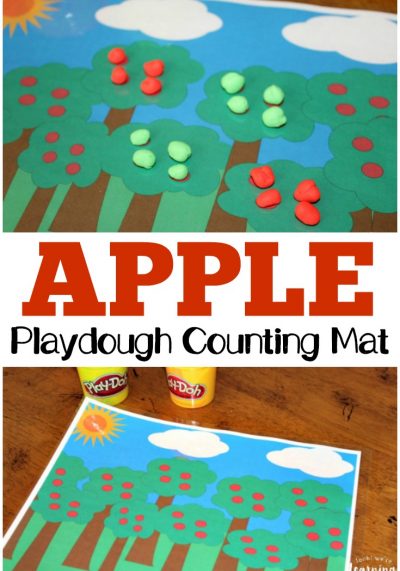
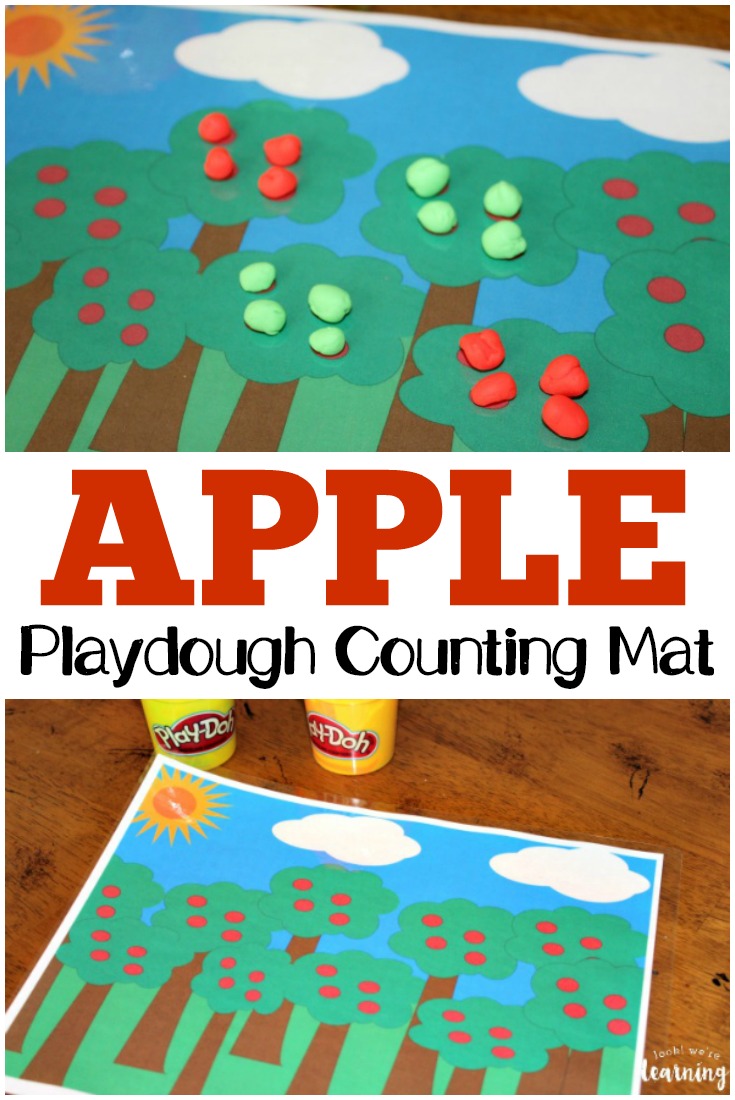
Here in the U.S., we’re all gearing up for fall, so here’s a fun Playdough Apple Tree Counting Mat you can use with your toddler or preschooler too!

PreK Apple Tree Playdough Counting Mat

Read on to see how to grab this for your students.

And for more apple fun, don’t miss our Apple Alike! Same or Different Worksheets or our Apple Preschool Counting Puzzles!

Practice counting and fine motor skills with this fun playdough apple tree counting mat!

Preschool Playdough Mats: Apple Tree Counting Mat

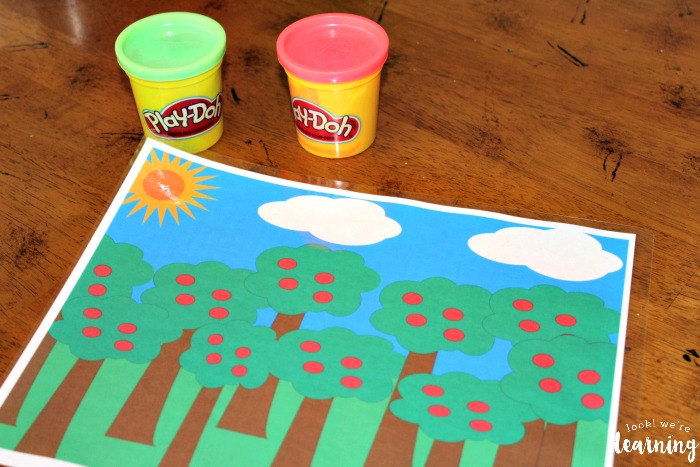
Here are the supplies we used for our mats: (Affiliate links provided here for convenience. For details, see our Disclosure Policy.)

  • Printer (with ink)
  • Printer paper
  • Scotch Thermal Laminator
  • Play-Doh – 24 Pack of Colors

That’s it! You definitely want to laminate these first so that they can be reused.

Supplies For the Apple Tree Playdough Counting Mat

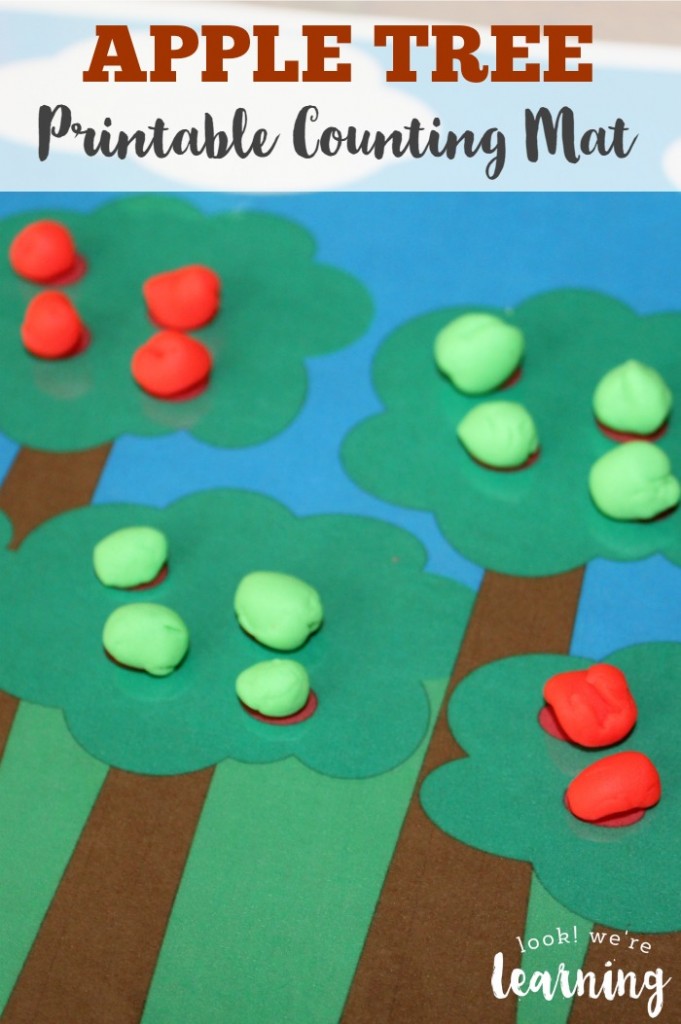
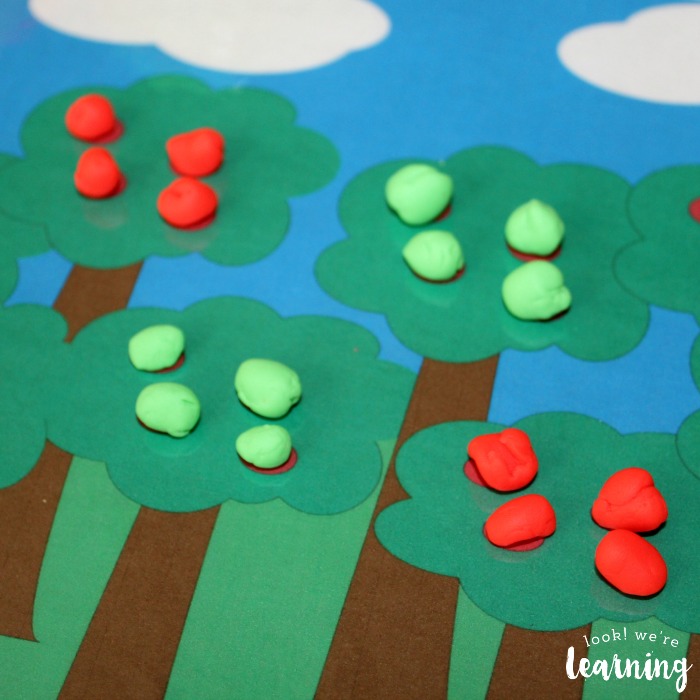
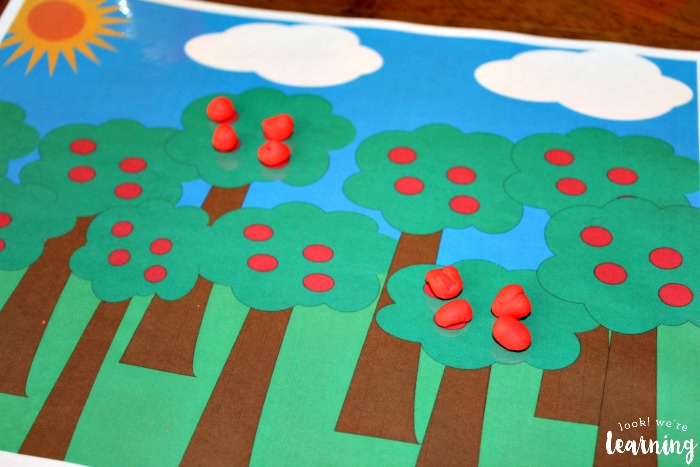
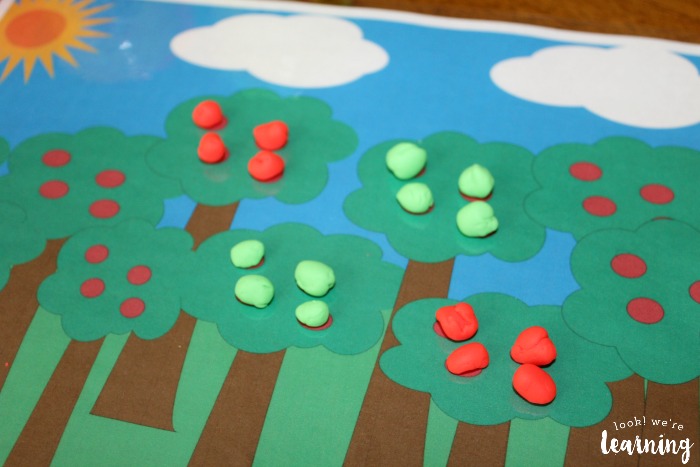
Since the apples are grouped on the trees in sets of four, this was a simple way to work on skip counting.

Using the Apple Tree Counting Mat

Just add four apples to each tree and count them.

Counting by Four with Apple Tree PreK Playdough Mats

Use a different color to work on counting and sorting. (How many green apples are there? How many red apples are there?)

Fall Playdough Mats

Then a little reinforcement. If there are four green apples on this tree and four green apples on this tree, how many green apples are there altogether? Oh, so four plus four is how much?

Next thing you know, your preschooler will be saying that 4 x 2 = 8. 🙂

Scroll down to get your copy of our Playdough Apple Tree Counting Mat!

Check out these other fall learning ideas for preschoolers!

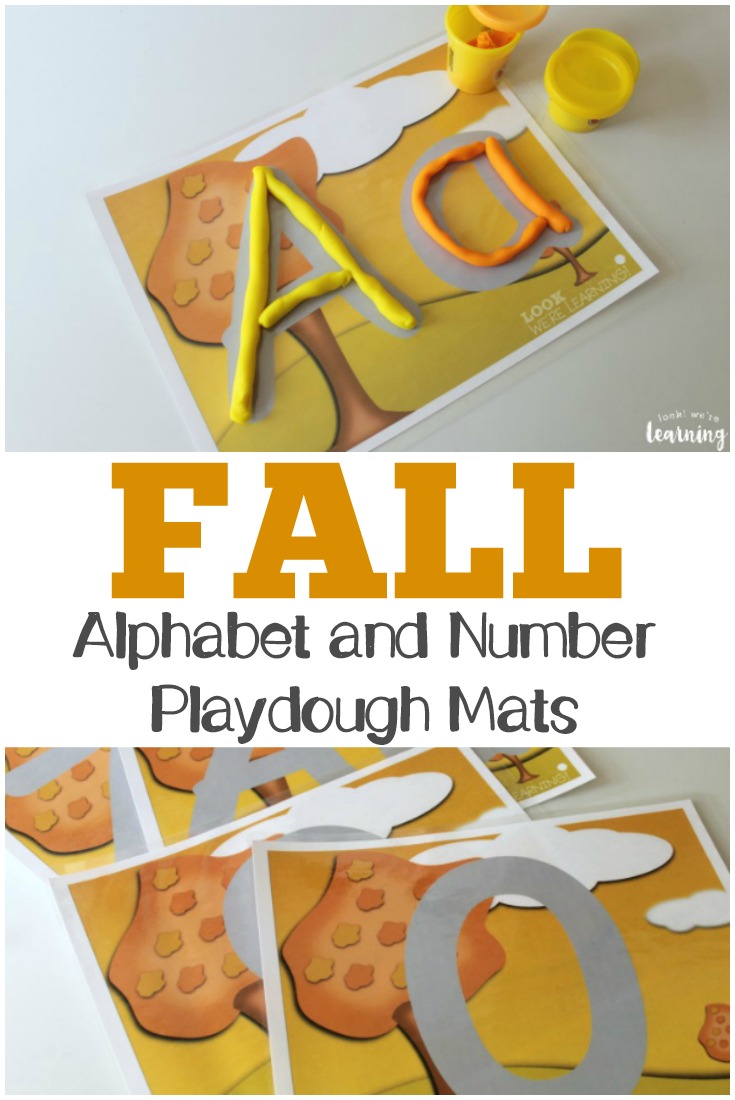
Use these printable fall playdough mats to teach your little ones to form letters and numbers!

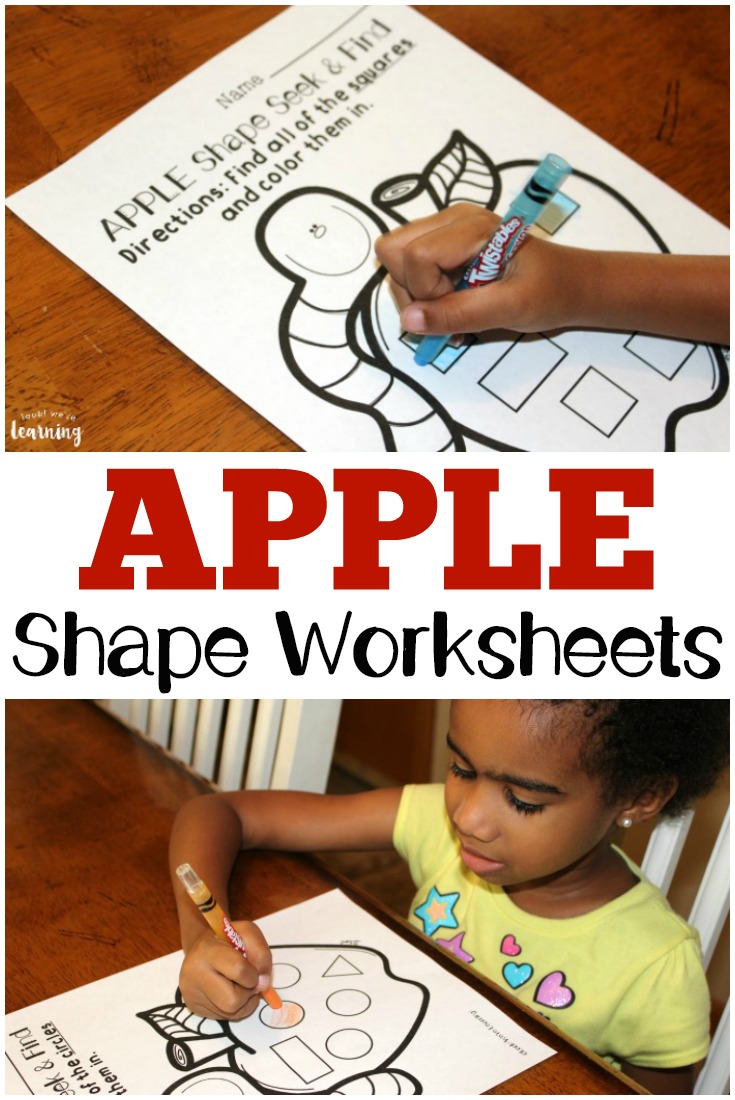
Early learners will love practicing shape recognition with these apple shapes worksheets for preschool!

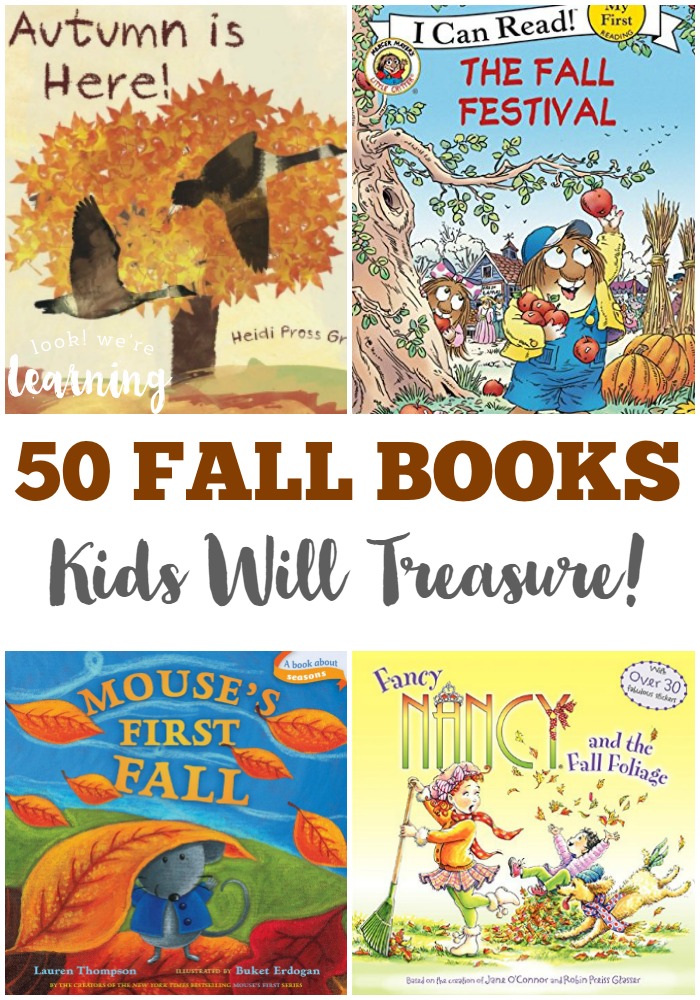
And don’t miss our list of awesome fall books for kids to share this year!

50 Fall Books for Kids

Get more ideas for fall fun with kids from my Fall Activities for Kids board on Pinterest!

apple-tree-counting-mat

Grab your copy of our Printable Apple Tree Counting Mat for free when you sign up for our email newsletter! You’ll receive access to this printable, plus loads of other learning resources, in our exclusive Subscriber Library!

Free Unit Studies

This post is part of the Free Unit Studies roundup! Stop by to see more fun posts about Apples and Pumpkins from my fellow bloggers!

Corn Kernel Fall Tree Craft from Play Dough & Popsicles

Kids in the Kitchen: Pumpkin Chocolate Chip Muffins from Crafty Mama in ME

Learning About Pumpkins {Free Printables Round Up} from Faith and Good Works

Books about Pumpkins for Kids from CraftCreateCalm

Pumpkin Recipes for Kids from FrogMom

Harvest Theme Word Search from Tales of Education at Home

Board Books About Apples and Pumpkins for Toddlers from The Jenny Evolution

Pumpkin Science Activities from iGameMom

Apple Read and Play from My Storytime Corner

Pumpkin Preschool Printables from Living life and learning

Pumpkin Patch Alphabet Match from Schooling a Monkey

Apple Sight Word Game from Books and Giggles

Challenge Math – Apple Theme from Planet Smarty Pants

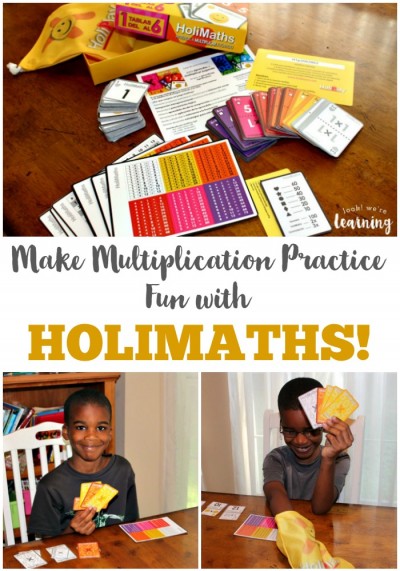
We're loving the HoliMaths Multiplication Card Game - It's a great way for kids to make multiplication practice fun!

Make Times Tables Fun with HoliMaths Multiplication Game for Kids!

September 6, 2016 by Selena Robinson 1 Comment

I’ve worked on multiplication with my oldest child for years. And I mean, actual YEARS. It took a while to get her to try learning her times tables, and then it took even longer to get her to work at remembering them. After several grades, the only hurdle left was getting her to enjoy working with multiplication. (Am I the only person who actually did multiplication problems for fun? Probably.)

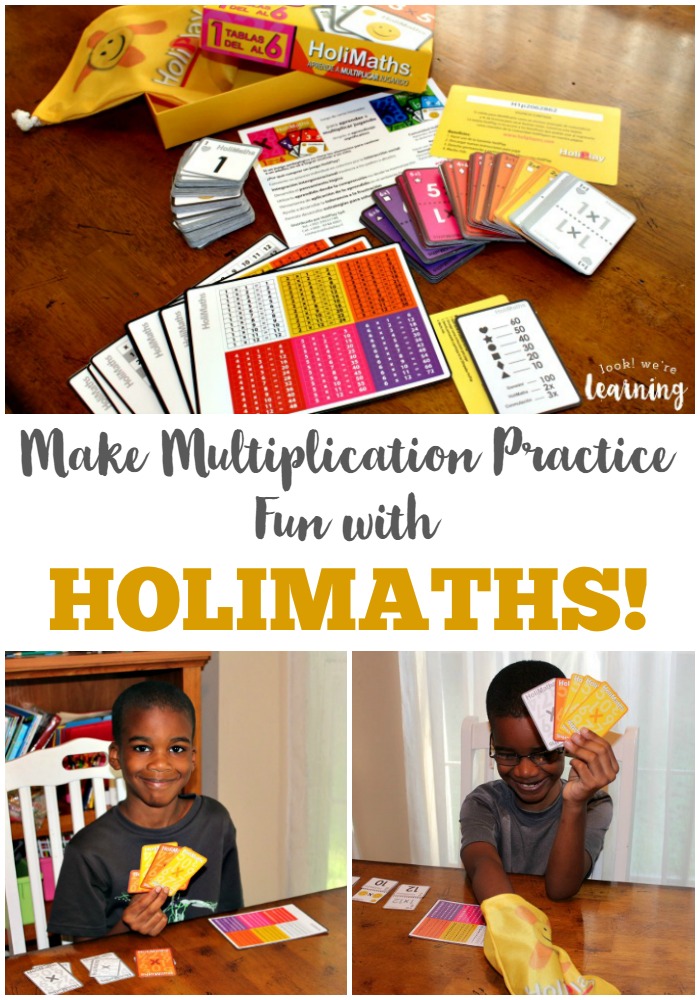
Thanks to HoliMaths, a brand new multiplication game for kids, practicing times tables can be actual, honest-to-goodness fun! Plus, several of my kids could play it together!

Read on to see how practicing multiplication is a snap with HoliMaths!

Disclosure: I received this product in exchange for this post and I was compensated for my time. All opinions are my own and I was not required to post a positive review.

We're loving the HoliMaths Multiplication Card Game - It's a great way for kids to make multiplication practice fun!

What is HoliMaths Multiplication Game for Kids?

HoliMaths is a fun and flexible multiplication card game that kids can play with or without adult supervision. There are ten, yes, ten different ways to play with these cards, so you’re almost guaranteed that your kids will never get bored.

HoliMaths Multiplication Card Game

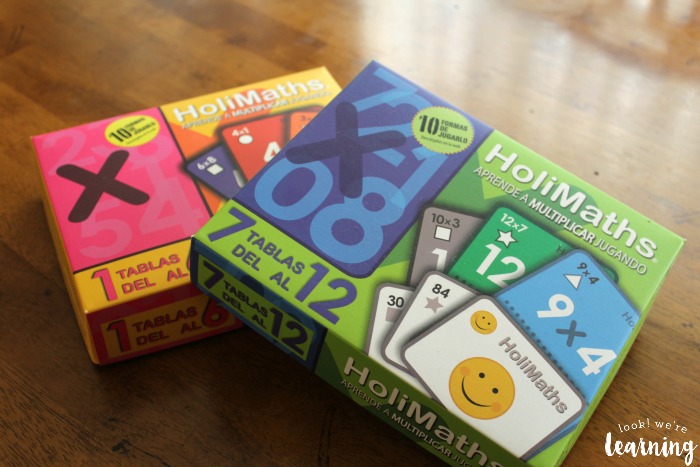
HoliMaths comes in two levels: One game featuring times tables from 1 to 6 and a second featuring times tables from 7 to 12. Each game can be played by up to six players, so if you have both games, you could have up to 12 people playing the game at any time.

And, yes, the boxes are in Spanish. More on that in a bit.

What's In the HoliMaths Game Box

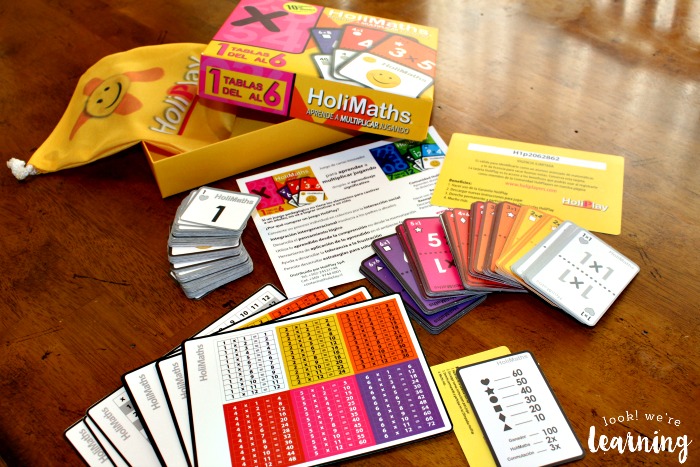
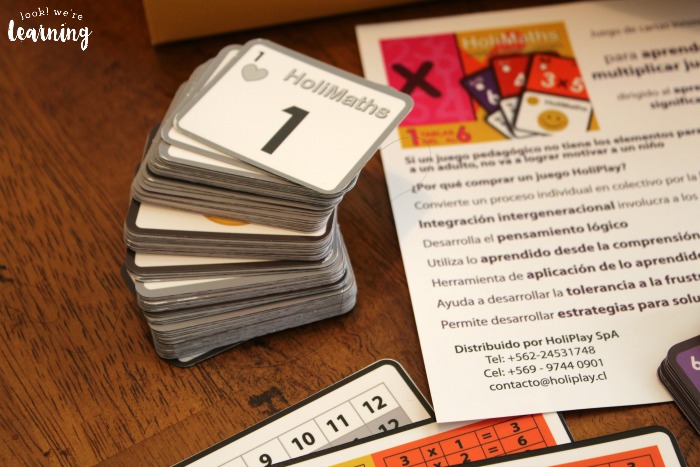
Here’s what’s inside the HoliMaths game box. It’s a lot, right?

HoliMaths Multiplication Tables

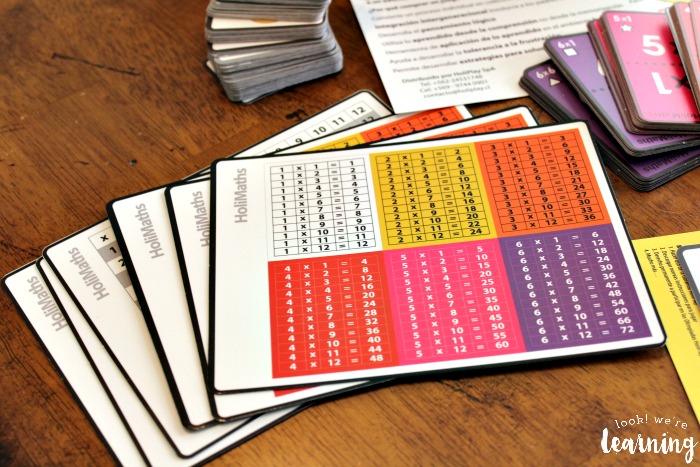
The game includes multiplication table charts – one for each player.

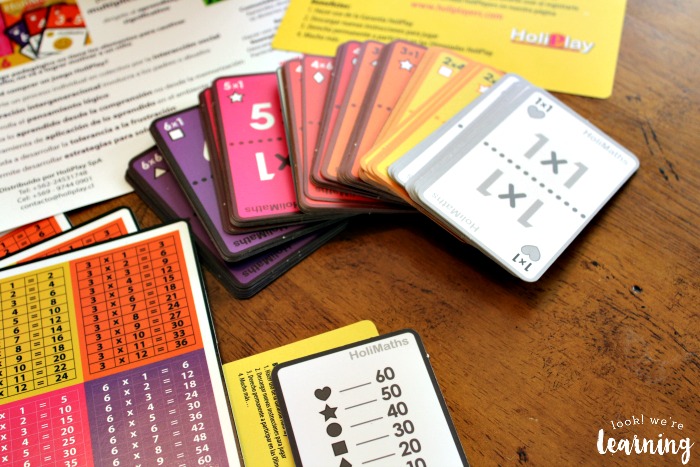
HoliMaths Problem Cards

There are also multiplication problem cards. In this set, there are times tables from 1 to 6, so each set is color coded. The ones tables cards are all grey, the twos tables cards are all yellow, and so on.

The card at the bottom of the image with the symbols is the scoring system. Since each card is coded with a symbol, you can look at the point (puntaje) card to see how to count each correct pair. The player with the most points at the end wins!

HoliMaths Solution Cards

Finally, there are many small solution cards. These are pretty important, as you’ll see next.

How to Play HoliMaths Multiplication Game for Kids

So how do you play HoliMaths? As I mentioned earlier, there are ten different game play options. Since our game included kids of several grade levels, I started with the Classic Play method (Method #1). For a look at how to play each version of HoliMaths, see the How to Play section on the HoliMaths website.

As I also mentioned earlier, most of the documentation in the game box is in Spanish. That’s because the game was originally designed for a Spanish-speaking audience. But you don’t have to be bilingual to play HoliMaths! There’s an English-language version of the website, complete with video instructions in English!

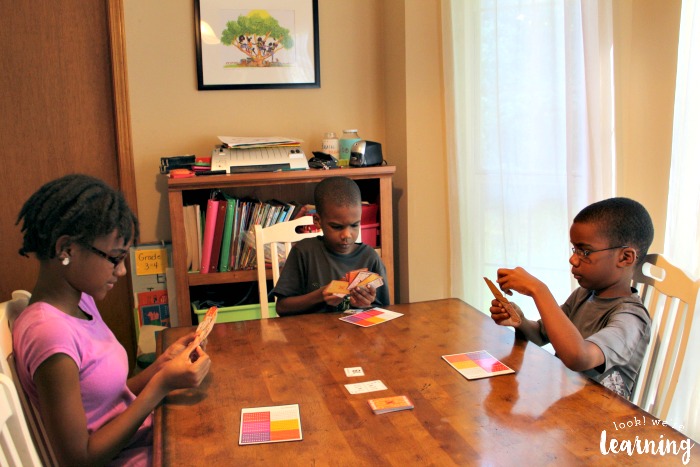
HoliMaths Game Play

This version is basically Go Fish, but with times tables. 🙂

We chose three times tables to work with, since we had three players. Because my boys are in 2nd and 3rd grade, respectively, we used the ones, twos, and threes tables to play with.

Using HoliMaths Multiplication Cards

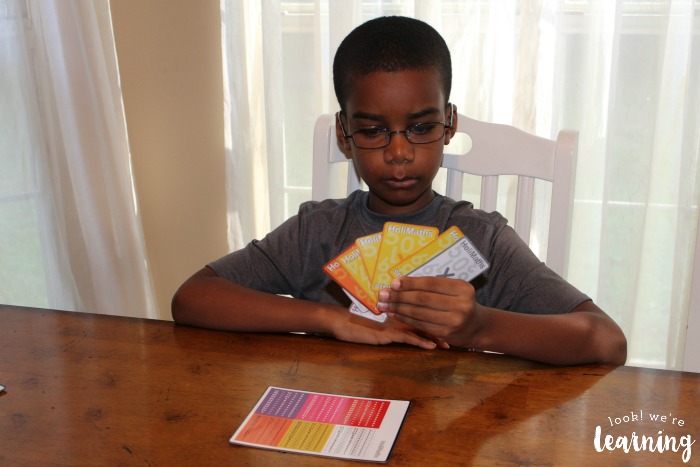
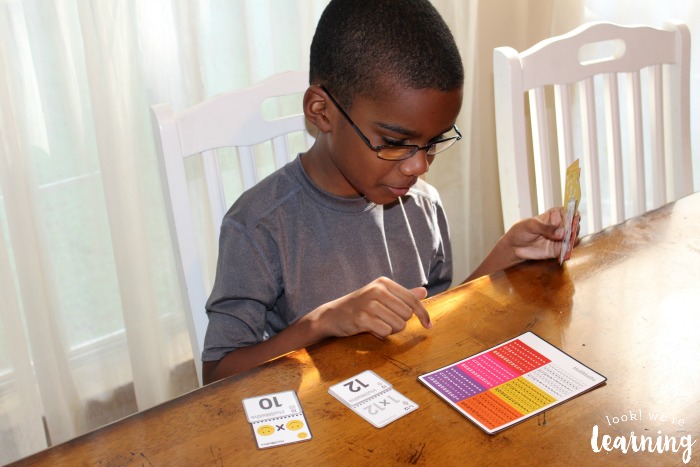
My sons haven’t memorized their multiplication tables yet, so we handed out a times tables chart for each player as we dealt out the cards. That way, they could find the solutions to the problems on their cards easily – without getting frustrated.

Using HoliMaths Multiplication Card Game with Kids

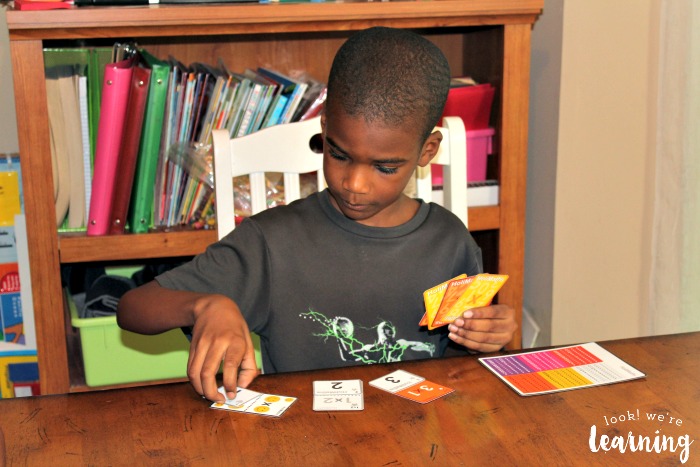
The idea is to make a match of a problem card with the correct solution card. My third grader, for example, had the problem card 1 x 12. When he looked at the correct color-coded table on the chart, he saw that 1 x 12 = 12. So he had to match that problem with a solution card featuring the number 12.

Playing HoliMaths Multiplication Card Game

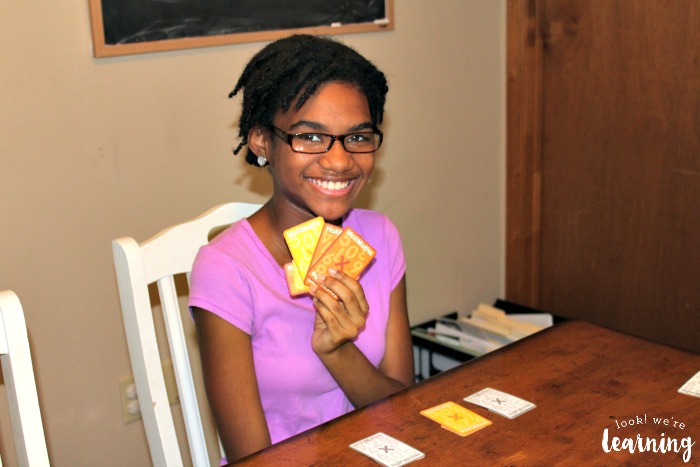
As you might have noticed, some of the cards have smiley faces on them. These are “wild” cards – they can be used to represent any problem or solution you need to make a match. First, you clear all of the matches out of your hand as soon as the cards are dealt. Then, you tackle the remaining cards in the game.

Making Matches with HoliMaths Multiplication Card Game

As the kids removed the matching problems and solutions from their hands, they became much more comfortable with using the game cards. One of the suggestions in the “How to Play” section that I love was to have the kids call out the problem and solution once they matched them up. That way, you can see if they’re answering each problem correctly.

My kids, who always love a bit of drama, decided to announce their math matches with great fanfare. Like this:

Child 1: *Loud clearing of throat*

Child 2: “What is it?”

Child 1: “I declare that 1 times 12 is equal to 12!”

It’s silly, but it works! They were reciting multiplication facts left and right!

HoliMaths Multiplication Card Game Playing

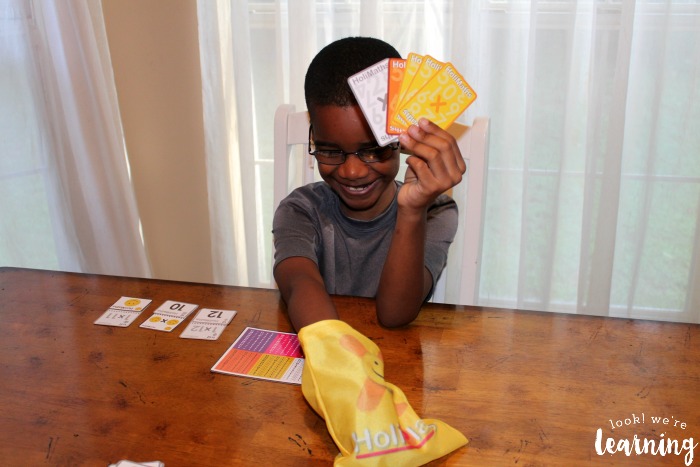
If you can’t find a match for your problem cards or solution cards, you draw another problem card from a pile on the table and you draw a solution card from the game bag. As the game continues, each player empties their hand and then counts up their score.

Playing with HoliMaths Multiplication Card Game

At the end of our game, our youngest player actually had the highest score! He was pretty excited about his success.

We really loved playing this fun multiplication game for kids! I can’t wait to “plan” a morning of multiplication practice with my boys by just having them play HoliMaths for an hour or so. They’ll be thrilled!

Be sure to visit HoliMaths to learn more about this game, all the ways you can play it with your kids, and how to get it for yourself!

HoliMaths Multiplication Card Game - A Fun Way to Practice Times Tables with Kids

Now for the fun – the HoliMaths giveaway! Use the Giveaway Tools widget below to enter! By the way, if you buy the product (in Kickstarter) and win the giveaway, HoliMaths will send you a refund. 😉

Entry-Form

And don’t forget to follow HoliMaths on social media for product news!

  • Instagram
  • Twitter
  • Facebook
  • Tumblr
  • Pinterest
  • Google+
  • YouTube

Get more ideas on how to make math fun from my Math Mania board on Pinterest!

The Ultimate Guide to Brain Breaks

We're using a minimalist homeschool program for 6th grade, 3rd grade, 2nd grade, and PreK this year. Get the details!

A Minimalist Homeschool Program for 6th Grade, 3rd Grade, 2nd Grade, and PreK

September 5, 2016 by Selena Robinson 4 Comments

We usually hold off on beginning our new homeschool year until the first week of September each year. Which means we’re starting up this week! Woohoo!

Since we’re entering our 8th year of homeschooling, I don’t have the same intense excitement I once did. Now it’s more of a relaxed anticipation to what we’ll learn this year.

I’ve also changed my entire homeschooling approach this time around. After many years of hoarding curriculum and books, I’m making the change to minimalist homeschooling. I’ve been exploring it for the past few months and now I’m finally ready to take the plunge.

So – what does minimalist homeschooling look like when you’re trying to teach four children? Take a look at our minimalist homeschool program for 6th grade, 3rd grade, 2nd grade, and PreK!

We're using a minimalist homeschool program for 6th grade, 3rd grade, 2nd grade, and PreK this year. Get the details!

Image c/o: Mr. Webicon / depositphotos

A Minimalist Homeschool Program for 6th Grade

Our sixth grader has definitely become a more independent student. So her workload is substantially heavier than the younger kids, as it should be for a middle schooler.

Still, since she has ADHD, it’s important that I don’t overwhelm her with lots of different curriculum choices. All that changing up takes a mental toll on her and adds to her stress level. This year, we’re keeping it pretty simple.

Minimalist Homeschool Program for 6th Grade

Here are my 6th grader’s homeschooling resources for this year:

  • ELA: National Geographic Hampton-Brown Edge Interactive Level B – A teacher friend of ours gave us this book and the accompanying practice workbook when she retired and, boy, am I glad. This is an excellent resource for teaching reading, writing, and language.
  • MATH: For math, we’ll be using CTC Math, which my daughter is loving. Plus, we’ll be supplementing with pre-algebra classes via Mr. D Math.
  • HISTORY: This year, we’re focusing on the 1920s using the book The 1920s in America from Kendall Hunt Publishing. We’ll also be reviewing ancient civilizations
  • SCIENCE: We had so much fun with Real Science-4-Kids Level 6 that it’s going to be our science curriculum!
  • GEOGRAPHY: I’m putting together her geography curriculum based on the National Geographic World Atlas for Young Explorers and the book Hungry Planet: What the World Eats. We’ll be covering both world cultures and the inequalities of human society.

Notebooking Pages Free Membership

A Minimalist Homeschool Program for 3rd Grade

My third grader has a huge interest in animals, so we’ll be visiting the zoo a TON this year. Since he’s an avid reader (as are all my kids), he’ll have a substantial reading list to complete. (I’ll be sharing all the kids’ reading lists in the coming weeks.)

Minimalist Homeschool Program for 3rd Grade

For 3rd grade, we’ll pretty much be using these three resources:

  • What Your Third Grader Needs to Know – The CoreKnowledge series is excellent for giving you a framework for the elementary grades.
  • CTC Math – We have the Family subscription, so all of my three oldest kids are using this program.
  • Ancient and World History Unit Study Bundle – It’s time to introduce my boys to ancient civilizations, which is one of my favorite history topics! This is a super huge unit study bundle that is worth every penny.

With these, we’ll get the math basis we need and we’ll get the introduction to our other topics as well. When we find a topic of interest, it’s off to the library we go!

Since this is a standardized testing year for him and for my 6th grader, I picked up Spectrum Test Prep: Grade 6 and Spectrum Test Prep: Grade 3. But other than that, I’m not stressing too much about teaching to the test.

The Ultimate Guide to Brain Breaks eBook

A Minimalist Homeschool Program for 2nd Grade

My ultimate goal is to combine my 2nd grader and my 3rd grader into one mega grade each year. Think of how much lesson planning energy I’d save! Plus, they could study together and help each other out! One day…

For now, I’m doing a sort of 2/3 year with the two. So their topics of study are pretty much the same this year. I’ll just be adapting specific lessons as needed to make sure they each understand everything they’re learning.

Minimalist Homeschool Program for 2nd Grade

Our 2nd grader will be using these resources:

  • What Your Second Grader Needs to Know – Yes, again. It’s a really good way to make sure you cover all the bases.
  • CTC Math – This is my most active child and he has really taken to CTC Math. I couldn’t be happier!
  • Ancient and World History Unit Study Bundle – My boys are pretty much on the same level with reading comprehension, so they’ll be taking history together this year. Plus, it saves me time!

A Minimalist Homeschool Program for PreK

It feels a little strange to think about what a minimalist homeschool program is like for a preschooler. After all, we’re talking about a preschooler. But I’ve been a first-year homeschooler and I remember stressing about planning my preschool curriculum for my first daughter. Oh, how times have changed.

Minimalist Homeschool Program for Preschool

My preschooler’s homeschool program will consist of two main resources:

  • Teach Me Mommy – A wonderful preschool-at-home program written many years ago that is affordable and thorough. Just really, really good.
  • Starfall – This is a free website and app, but you can pay $35 a year and get the full version. It’s worth it. My preschooler loves it! And because it’s has PreK through 1st grade content, she can skip around and learn whatever she likes. She’s already learning about parallelograms!

Minimalist Homeschooling for 6th Grade, 3rd Grade, 2nd Grade, and PreK

What are you using for homeschool curriculum this year? Have you ever tried a minimalist homeschool program? Let me know about your experiences in the comments!

Interested in learning more about minimalist homeschooling? Check out these posts!

Simple Homeschool Lesson Planning

Minimalist Homeschooling Digital Decluttering

How to Homeschool as a Minimalist

Get more ideas for your homeschooling year on my Homeschool Planning board on Pinterest!

This post is part of the 2016 Back to Homeschool Blog Hop hosted by iHomeschool Network! Click on over to read other awesome homeschool curriculum choices from my fellow bloggers!

2016 Back to Homeschool Blog Hop


Fun Fall Leaf Activities for Kids @ Look! We're Learning!

25 Leaf Activities for Kids

September 2, 2016 by Selena Robinson 7 Comments

Did I mention I love fall? I think that I say that every time I write about a fall activity.

But it’s true! Fall is my favoritest time of the year. Well, second favoritest after summer. (Also – is favoritest a word? It should be.)

We’ve made lots of leaf-themed activities before, including leaf flashcards, leaf garlands, and leaf snow globes.

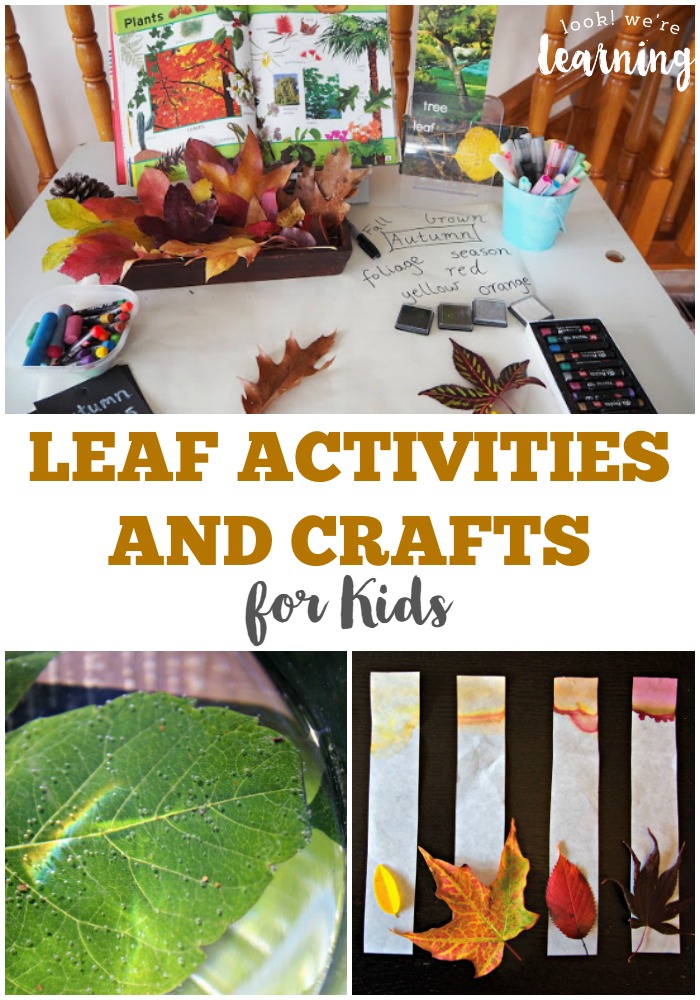
But you can never have too many leaf ideas! These leaf activities for kids are a beautiful way to start discovering the season with the family!

Fun Fall Leaf Activities for Kids @ Look! We're Learning!

 25 Leaf Activities for Kids

1. Have some art fun with this Leaf Painting for Kids activity!

2. Learn about the special features that make leaves turn colors with this Leaf Chromatography experiment!

3. Try this How Do Leaves Breathe Experiment to find out how leaves get carbon dioxide!

4. These lovely Negative Leaf Impressions are a simple way to add art into your fall unit!

5. Gather the prettiest leaves in the neighborhood and make this Preserved Leaf Mobile!

6. Hand your smallest one some of these Fall Leaf Stickers and let them decorate a gift box!

7. Download this All About Leaves Printable Pack to talk about science and language arts with leaves!

8. This Autumn Leaf Threading activity is perfect for preschoolers!

9. There aren’t a lot of nature crafts that take my breath away, but this Stick and Leaf Butterfly Craft is downright gorgeous!

10. Let the kids set up an Autumn Leaf Investigation Table to encourage open-ended exploration!

11. Use those old toilet rolls to make this beautiful Toilet Paper Roll Leaf Stamping Tree!

12. Help tots learn their colors with this Fall Leaf Color Matching Activity! 

13. Get a Maple Leaf Paper Punch and let the kids cut out leaf shapes!

Pages: 1 2
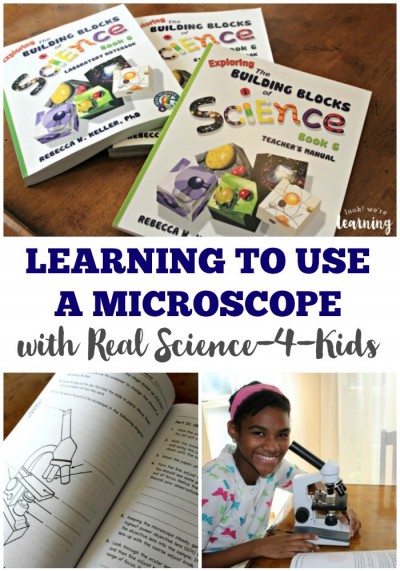
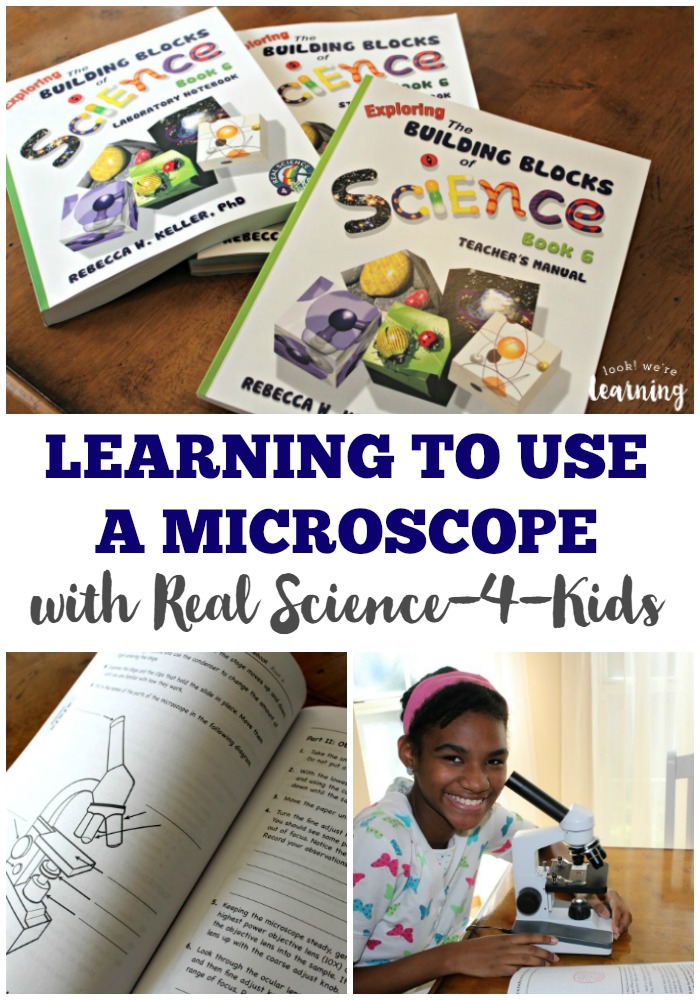
Learning to Use a Microscope with Real Science-4-Kids

Learning How to Use a Microscope in Middle School with Real Science-4-Kids

August 30, 2016 by Selena Robinson Leave a Comment

My new middle schooler has always been interested in science. She loves examining nature and conducting basic experiments. One thing we had yet to introduce her to, though, was the microscope.

When I took college biology last year, I had my very first experience with a light microscope and it was awesome. So I was excited to show her how to use it as well.

But I wasn’t quite sure how to teach her microscope basics. After all, my college textbook was a little too advanced. I still wanted her to have a chance to learn it without me hovering somewhere nearby.

Enter Real Science-4-Kids! This homeschool science program for grade 6 offers plenty of hands-on biology lessons and experiments!

Read on to see how we used Real Science-4-Kids to teach our child how to use a microscope in middle school!

Disclosure: I received this product in exchange for this post and I was compensated for my time. All opinions are my own and I was not required to post a positive review.

Learning to Use a Microscope with Real Science-4-Kids

What’s Included in the Real Science-4-Kids Grade 6 Curriculum?

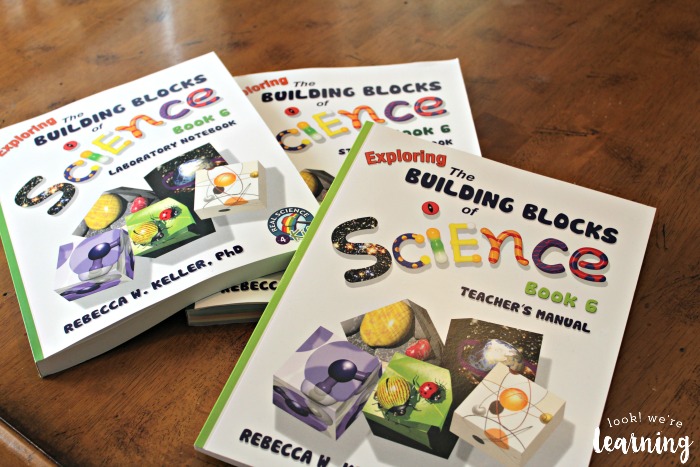
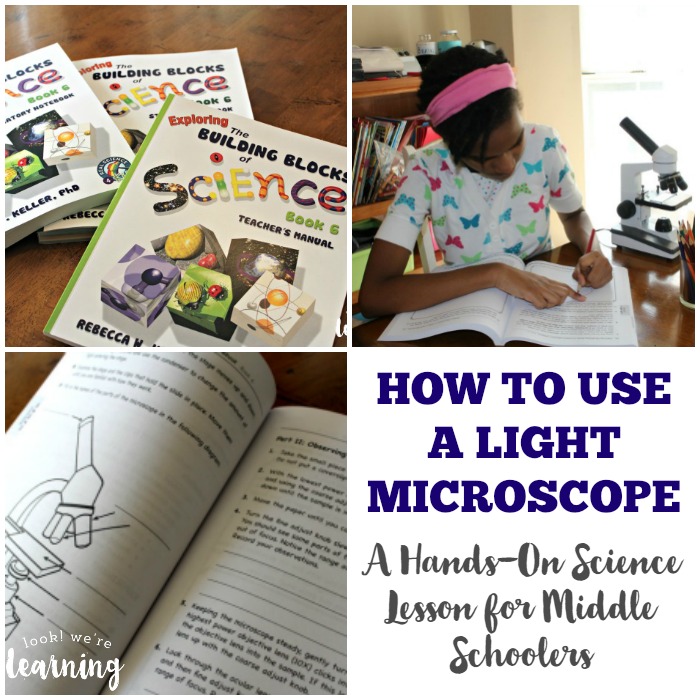
Real Science-4-Kids offers its science program, Exploring the Building Blocks of Science, in several grades, including grade 6.

The Grade 6 program includes the following materials:

  • Exploring the Building Blocks of Science: Book 6 Teacher’s Manual
  • Exploring the Building Blocks of Science: Book 6 Student Textbook
  • Exploring the Building Blocks of Science: Book 6 Laboratory Notebook

Need a higher grade level? Exploring the Building Blocks of Science Book 7 will be released just in time for the new school year!

Exploring the Building Blocks of Science Grade 6 Curriculum

Initially, I didn’t think that I would need all three books. But as I examined them, I was extremely impressed at how clearly everything is written and how thorough (but not overwhelming) the program is.

The teacher’s manual is a sort of guideline for which lessons and resources to use and when. The student textbook is written directly to the student, so I was able to give the book to my daughter and let her read the lessons, define the terms, and follow the instructions herself. It’s a really great way to reinforce independent learning at this level.

The laboratory notebook is for students to write down and draw their observations as they conduct the experiments in the book. After all, the goal here is to raise scientists. 🙂

Want to learn more about Real Science-4-Kids? Listen to the program author, Dr. Keller, explain more about how the program works!

Learning How to Use a Light Microscope

Okay. Microscope time!

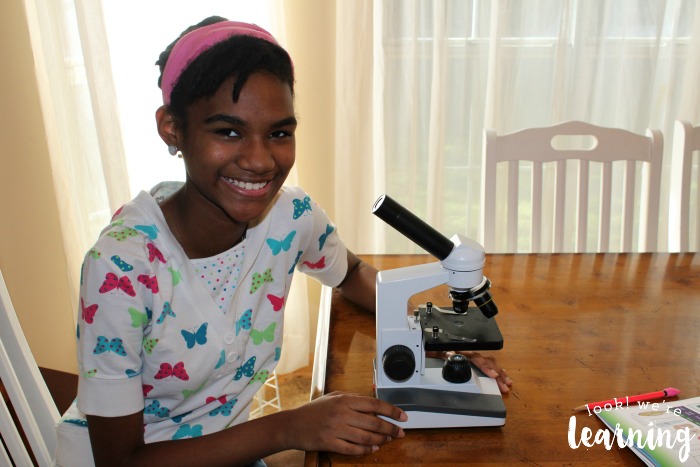
Choosing a Microscope for Middle Schoolers

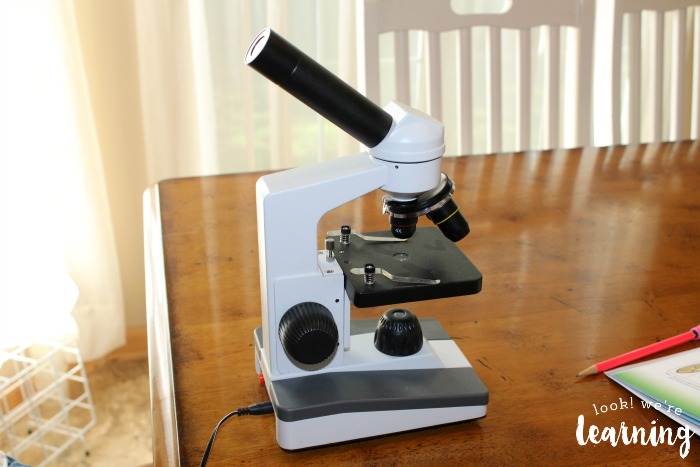
Ours is the My First Lab Ultimate Digital Microscope, which is monocular. But if you’d like a binocular model, the OMAX Binocular Compound Microscope looks pretty good as well. The student textbook contains a nice summary of the features to look for when choosing a good light microscope.

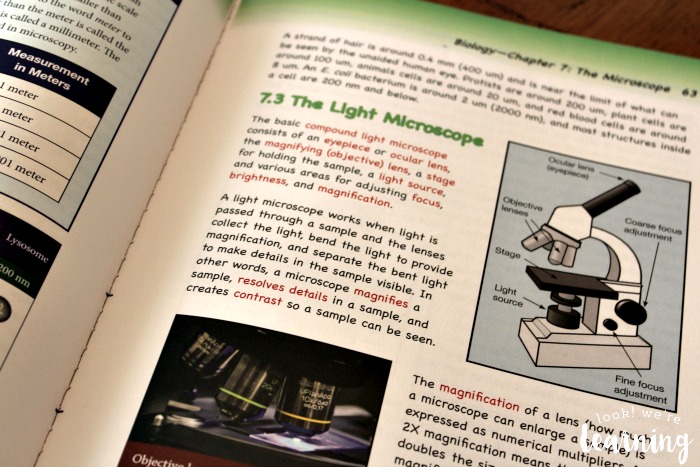
Parts of the Light Microscope

Unit 7 in the program deals with microscope basics. I assigned section 7.1 through 7.3 as reading. Then we started working with our microscope.

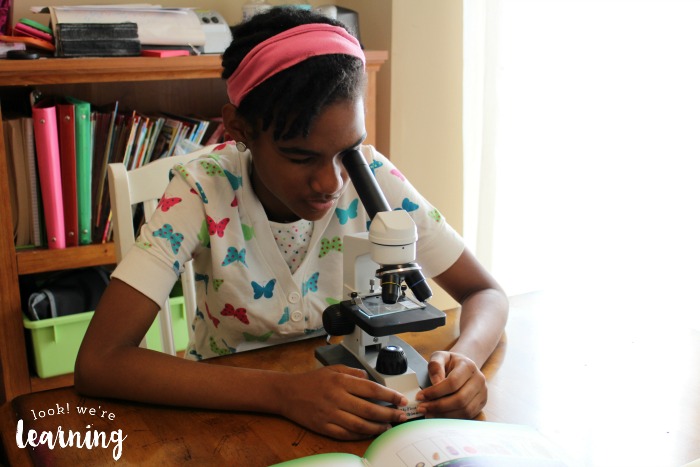
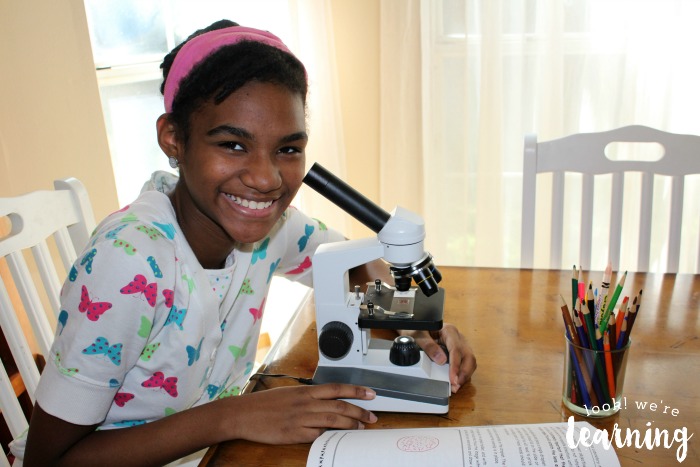
Introducing Middle Schoolers to the Light Microscope

As you can see, my child was basically waiting for me to shut up so she could get her hands on the microscope.

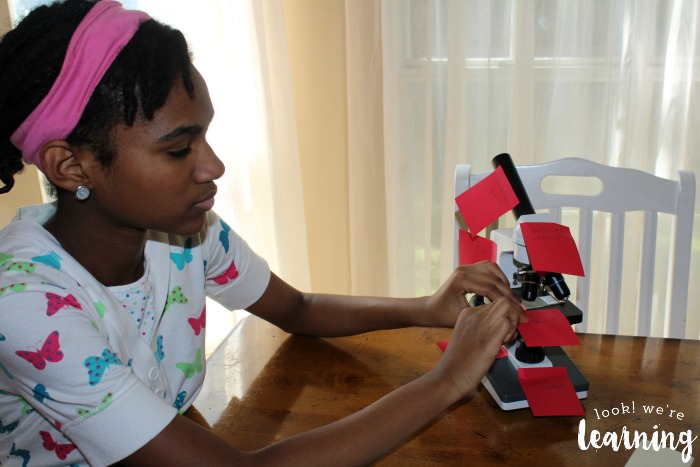
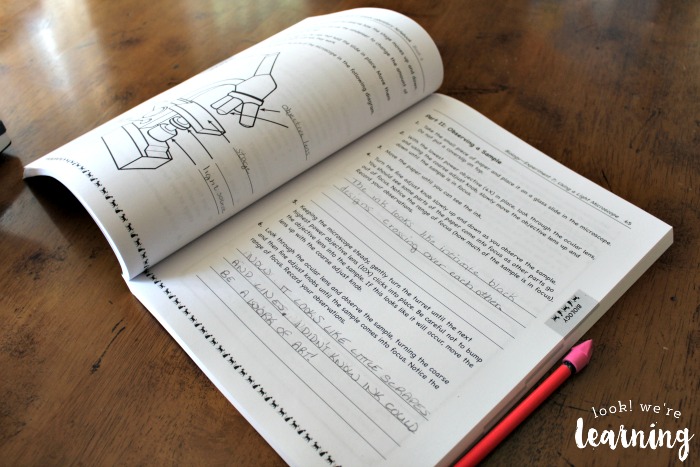
Labeling Parts of a Light Microscope

To help her identify the parts of the device, we grabbed a few Post-Its and wrote the name of each part (corresponding to the diagram in the textbook) and then labeled them.

Learning the Parts of a Microscope

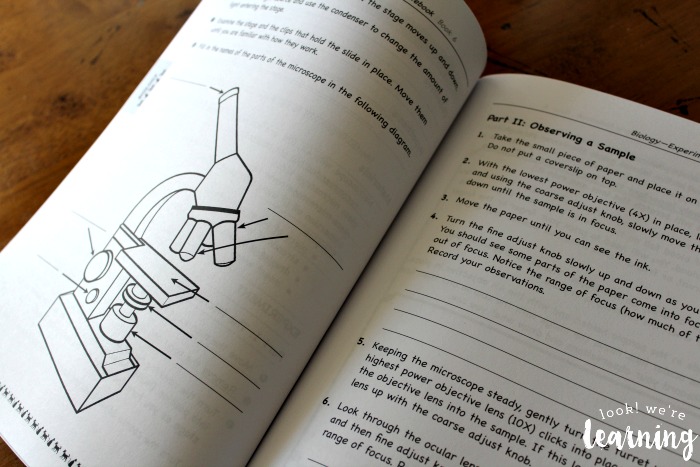
After that, it was easy peasy to fill in the diagram in the textbook!

Testing Out a Microscope in Middle School

As part of the science lesson, we looked at various biological samples under the microscope, including pencil markings and blood. Since we already had prepared microscope slides with a sample of frog blood, we didn’t have to prepare them, which saved time. But if you want to make your own slides, you’ll need to pick up some blank slides to get started.

Making Observations from Microscope Experiments

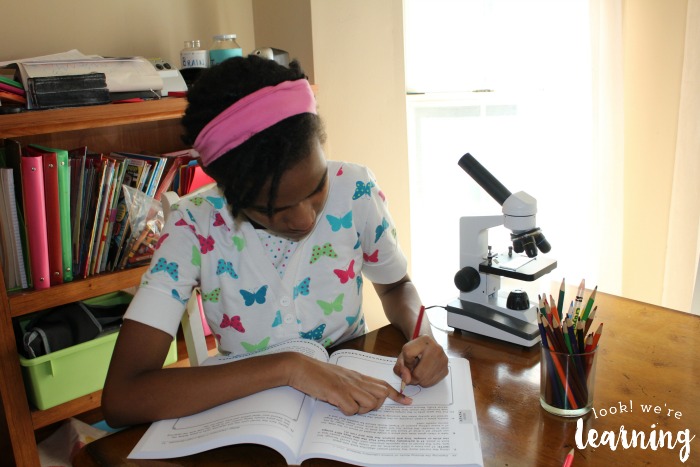
First, we wrote down letters in pencil and examined them at 4x magnification and 10x magnification. Tigger wrote down her observations afterward and surprised to see how different the markings appeared at a higher magnification.

Drawing Observations in a Science Notebook

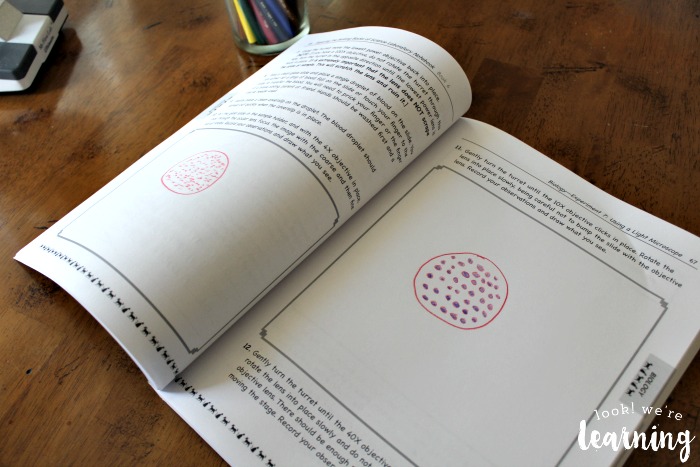
Next, it was time to examine a drop of blood under the microscope. This was really, really neat. At 4x magnification, we could see a pink mass with circles inside (the individual blood cells).

Exploring Magnification with a Microscope

As we increased the magnification to 100x, though, we could see even more detail, including colors inside the individual blood cells. Following the experiment instructions, Tigger drew pictures of how the sample changed as the magnification increased.

Teaching Middle Schoolers to Use a Microscope

I basically had to tear her away from the microscope afterward.

If you’re looking for a comprehensive (and affordable) grade 6 science curriculum, stop by and visit Real Science-4-Kids to pick up the Grade 6 Science bundle today! And science isn’t the only subject offered by Gravitas Publications! Visit the homepage to browse all of the company’s homeschooling helps!

Teaching Middle Schoolers to Use a Light Microscope

Want to score this program for 30 percent off? Click the image below to get a discount on your science purchase through September 30! Or visit my referral link to get your savings! (Once you buy, you can also sign up to get your own referral link and get rewarded when your friends buy the program!)

RS4K-30percent-off

Learn more about Real Science-4-Kids and Gravitas Publications by following the company on social media!

  • Twitter
  • Facebook
  • Pinterest
  • Instagram
  • Blog

Get more ideas for teaching homeschool science from my It’s Science board on Pinterest!


Studying the Harlem Renaissance with Kendall Hunt Publishing

Studying the Harlem Renaissance with Kendall Hunt Publishing

August 25, 2016 by Selena Robinson Leave a Comment

My sixth grader has been showing more of an interest in black history lately, which is awesome because I love teaching it! We’re creeping up on the ’20s again, so I thought we’d go back and look at the 1920s during this homeschool year.

The ’20s were pretty great for black history. There were some horrible things happening, due to increased racial tension, but the Harlem Renaissance also took place that decade and that was a milestone era for African-American art.

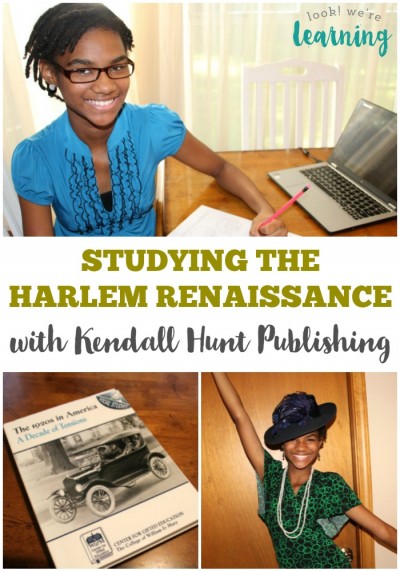
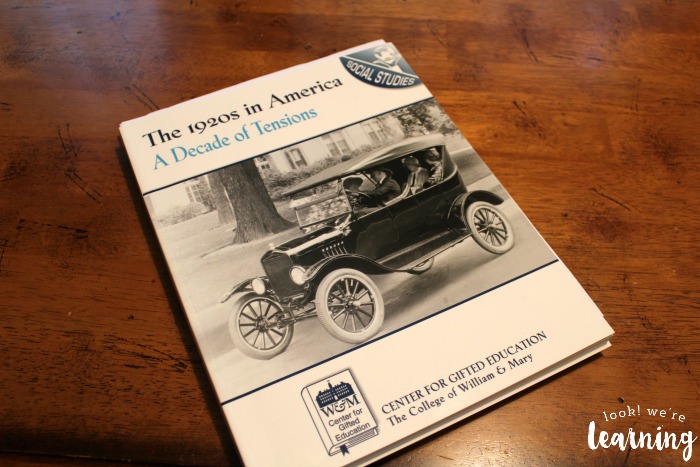
So I was excited to try the book The 1920s in America: A Decade of Tensions from Kendall Hunt Publishing! It has units on both the racial tension of the 1920s and the Harlem Renaissance! Read on to see how we used this textbook to cover this fascinating period in black history!

Learning about the Harlem Renaissance

For more black history learning ideas, don’t miss our Ruby Bridges unit study and our list of 31 African-American storybooks for kids, including several history picture books!

Disclosure: I received this product in exchange for this post and I was compensated for my time. All opinions are my own and I was not required to post a positive review.

Studying the Harlem Renaissance with Kendall Hunt Publishing

Covering The Racial Tension of the 1920s with Kendall Hunt Publishing

Kendall Hunt is a curriculum company that offers textbooks and unit studies for grades PreK through 12th. There are a TON of resources to look through. Don’t believe me? Stop by and drool over the curriculum catalog. 🙂

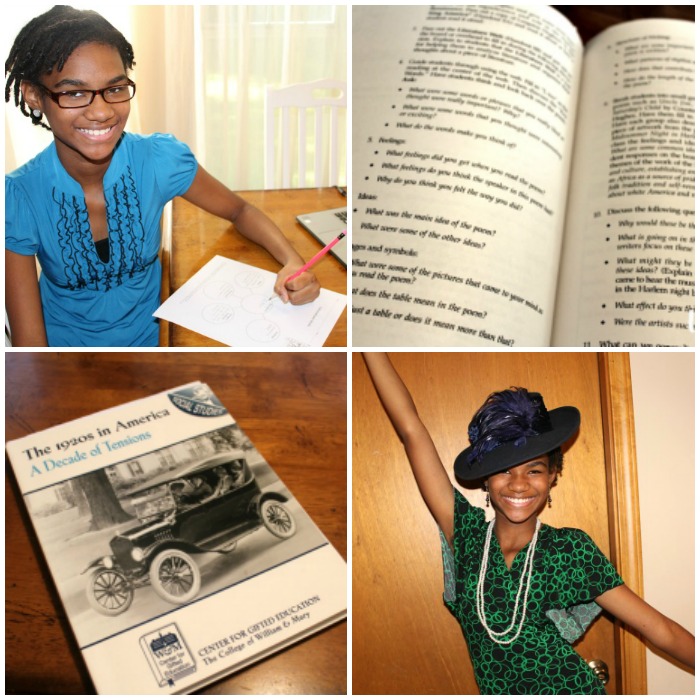
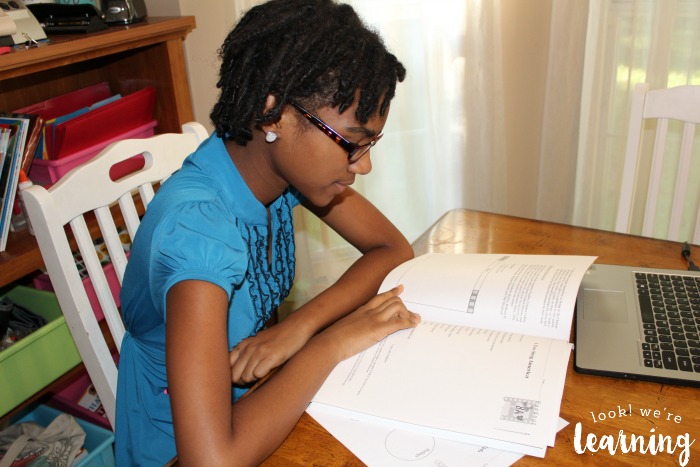
The textbook The 1920s in America: A Decade of Tensions, which is part of the William & Mary Center for Gifted Education Social Studies program, is designed for public school education, but I found it to be an easy text to adapt to a homeschool unit.

Kendall Hunt The 1920s in America Textbook

One of the things I love about the textbook is that it contains a unit about the existing racial tension of the decade before embarking on a discussion about the Harlem Renaissance. We can only appreciate the importance of those artistic achievements if we understand what life was like for many black Americans at the time.

So we began as the unit does: with a look at the Ku Klux Klan of the 1920s.

Since we live in the Deep South, we see reminders of the KKK’s influence every now and then. (In fact, they were recruiting in a local neighborhood recently.) While I don’t want to frighten my daughter, I do want her to understand the very real issues that confronted black Americans in the past and still exist today.

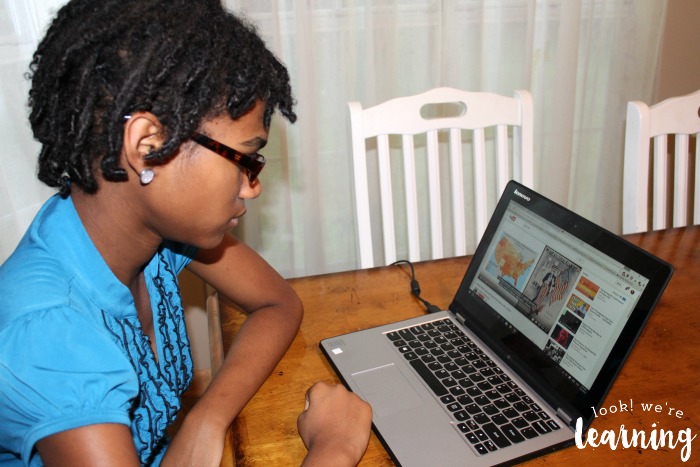
Using YouTube to Study the 1920s

After we watched the video about the KKK, we talked a bit about life in the post-reconstruction South for black people. It was pretty grim. Poverty was rampant, jobs were scarce, and racism was everywhere.

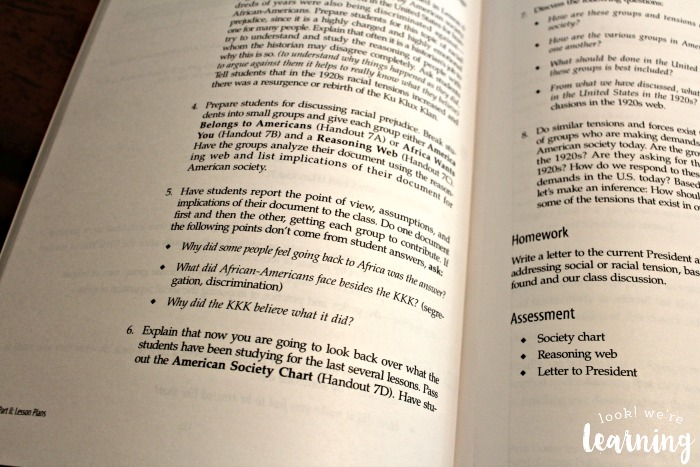
As the textbook instructed, we took a look at the black nationalism movement next to discover the rationale for returning to Africa. And, of course, you can’t talk about black nationalism without discussing Marcus Garvey. After we watched a short video about Garvey, it was time to complete the point of view exercise in the textbook. (There are also two essays in the textbook: one written by a leader of the KKK and another written by a proponent of black nationalism.)

POV Exercise about the 1920s

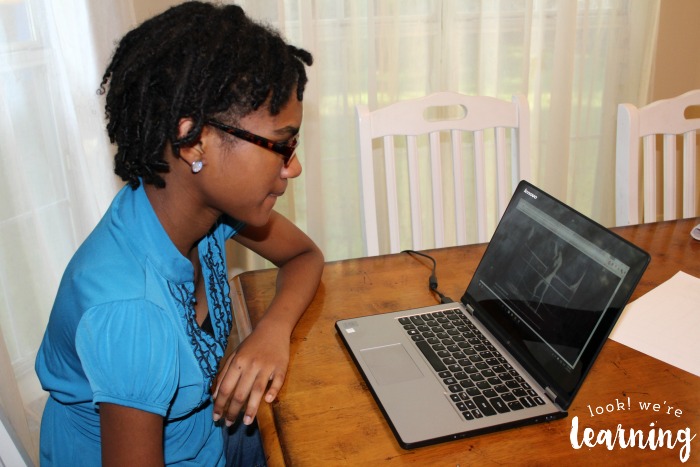
As we got a feel for the everyday life of the average black American in the 1920s, we were ready to explore the beauty of the Harlem Renaissance and why it was so important to African-American society.

Exploring the Harlem Renaissance with Kendall Hunt Publishing

We began by watching a short video about the Harlem Renaissance.

Studying the Harlem Renaissance with Video

I asked my daughter to summarize why seeing the artistic accomplishments of the era would be so impressive to black Americans. Here’s what she wrote:

“The Harlem Renaissance gave the black folks a chance to make something that they would later be proud of. The black people who saw the art by other black people felt a ray of hope.”

Exactly.

Reading Langston Hughes Poetry

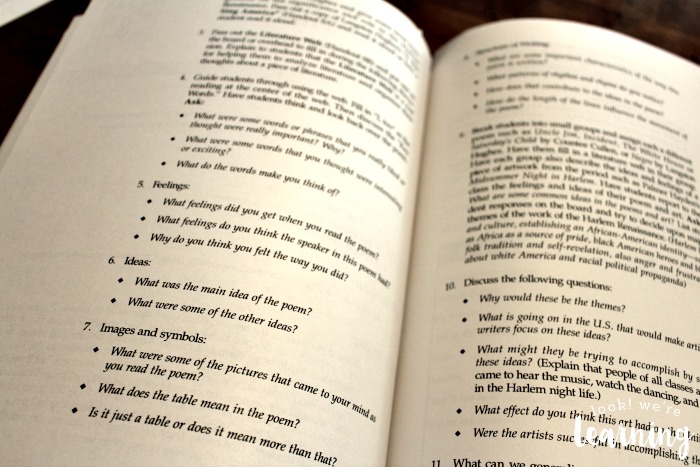
To continue the unit, we read the poem I, Too by Langston Hughes, which is quoted in its entirety in the textbook.

Off-topic a bit here, but Langston Hughes is one of my very favorite writers ever in history. Ever.

Organizing Feelings about African American Poetry

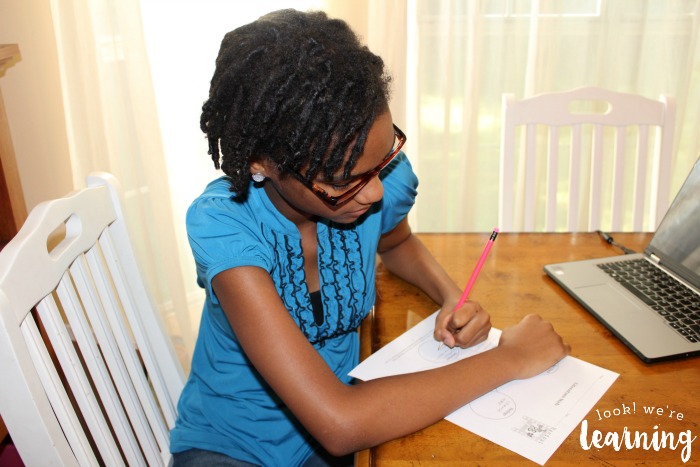
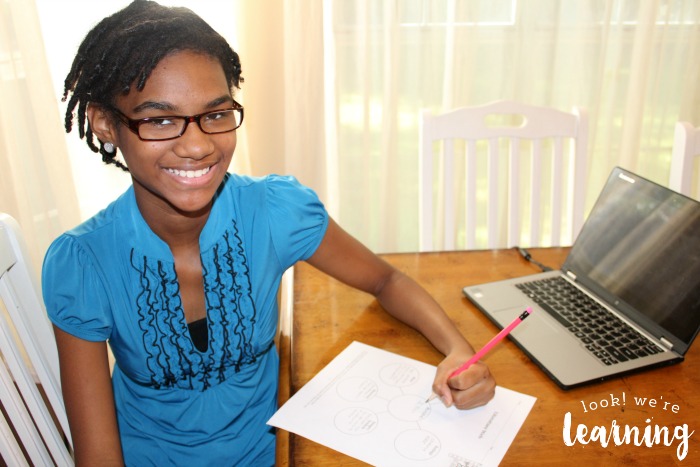
After we read the poem a few times, we used the included Literature Web printout and the questions in the unit to help examine our feelings about the work.

Organizing Responses to Literature

I loved this exercise, by the way. It’s such a nice method for helping kids to think about the way a poem makes them feel and then analyze those emotions. It’s also a good introduction to recognizing symbolism, something that’s crucial to our understanding of literature.

Completing a Literature Web about African American Poetry

As she filled in the Literature Web, my daughter started to find deeper meaning in the poem than she originally picked up. It’s amazing that a written work which consists of about 20 lines can say so much.

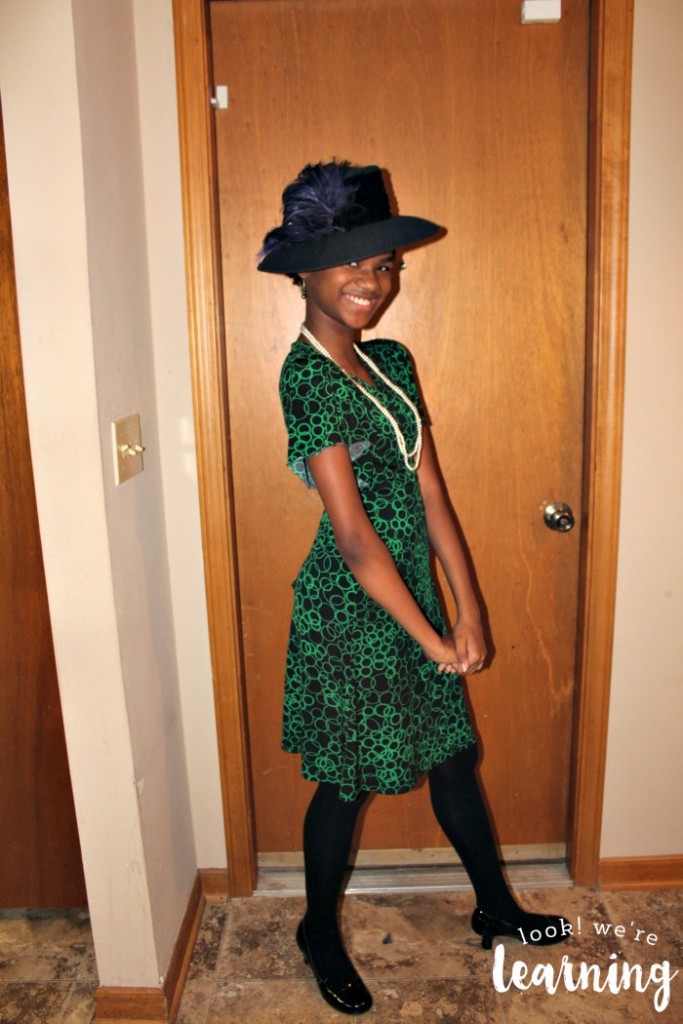
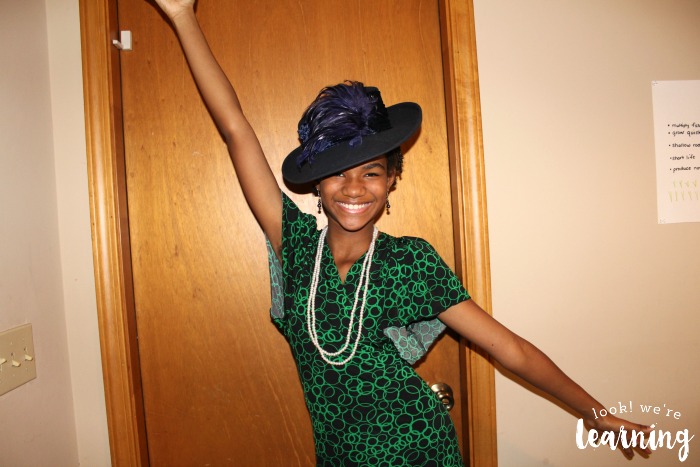
Of course, I couldn’t let a lesson about the Harlem Renaissance go by without dressing her up – just a little.

Dressing Up for a Harlem Renaissance Unit

Women were extra sharp in those days. So we stopped by Goodwill and picked up a hat with feathers and a long necklace, then paired them with a dress she already had.

Simple DIY Harlem Renaissance Costume

Fabulous!

This was a wonderful history lesson – one of my favorites ever in our homeschool. And I really appreciated how the textbook The 1920s in America: A Decade of Tensions helped me organize the lesson and structure it so that it would make the most impact on my daughter’s understanding of American history.

Want to learn more about Kendall Hunt Publishing? Follow the company on Facebook and Twitter for news about products and promotions!

Get more ideas for teaching history to your kids on my Living History board on Pinterest!


Using Bouncy Bands for Kids with ADHD

Using Bouncy Bands for Kids with ADHD

August 24, 2016 by Selena Robinson Leave a Comment

Can we talk about wiggle worms for a minute? As I’ve mentioned extensively on the blog, we’re homeschooling multiple children with ADHD, which means that wiggly kids are an everyday occurrence around here.

Using a simple fidget is a proven way to help kids with ADHD improve attention span and executive functioning. And, since attention span is important for successful homeschooling, fidgets are pretty much a necessity in our family.

But, a lot of fidgets are rather…distracting. They go around the finger or the hand and are designed to be moved with the other hand. Which means that my other kids are staring at my fidgety kid fidgeting with his or her fidget. Not ideal. 🙂

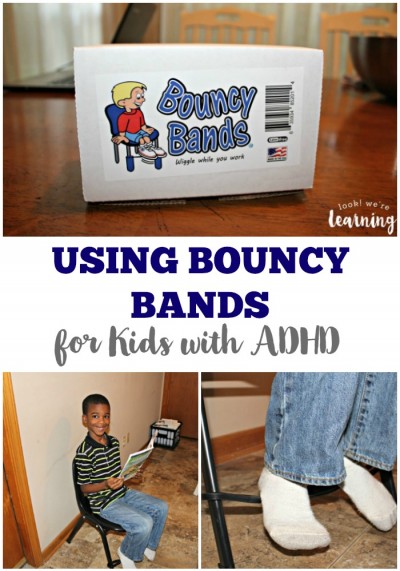
So I was thrilled to try Bouncy Bands! These inconspicuous fidgets are awesome for keeping kids attentive without attracting too much attention. Read on to learn more about this great product!

Disclosure: I received this product in exchange for this post and I was compensated for my time. All opinions are my own and I was not required to post a positive review.

Using Bouncy Bands for Kids with ADHD

What are Bouncy Bands?

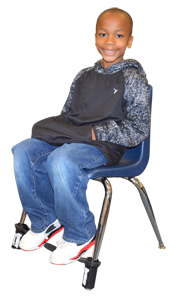
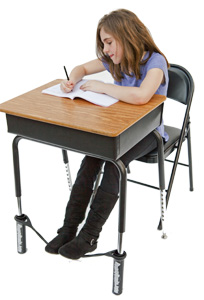
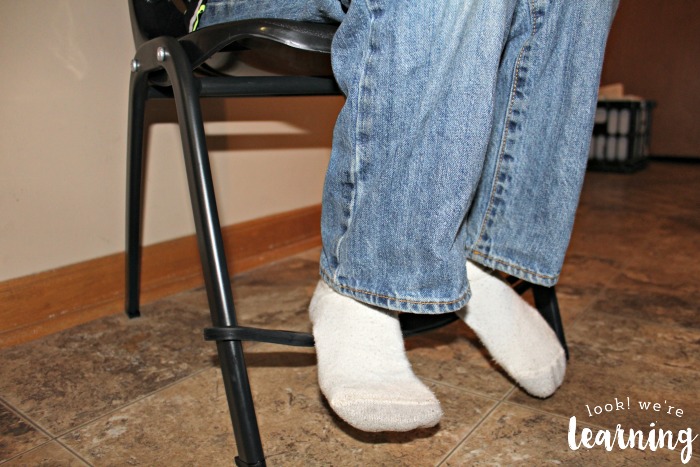
Bouncy Bands are simple resistance band fidgets for kids’ feet. They’re designed to go around the legs of a desk or chair, so that kids can rest their feet on them and move them whenever they feel like it.

Bouncy Bands Logo

Here’s a look at the chair model.

Bouncy Bands Desk Model

And the desk model – which is particularly good for older kids who might have longer legs.

Bouncy Bands Desk Model

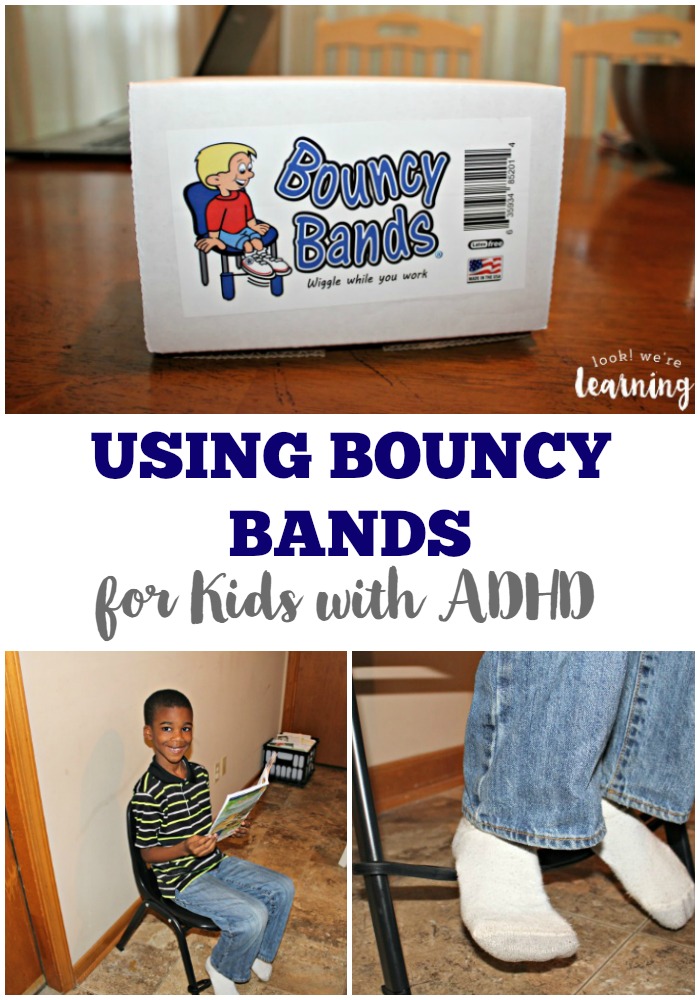
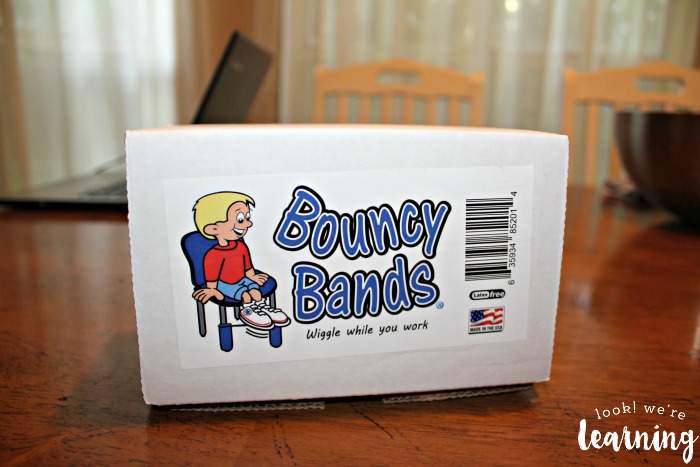
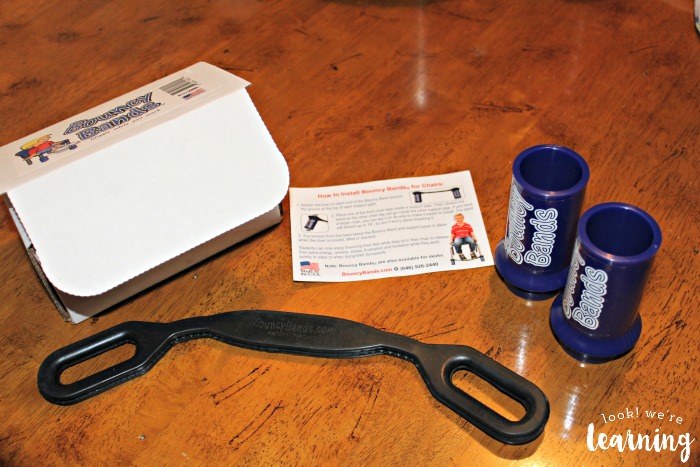
When you buy a set of Bouncy Bands, you can expect to receive a box like this.

Bouncy Bands Packaging

Inside are the band, the support pipes (which come in blue or black), and a simple instruction sheet.

Bouncy Bands Unboxing

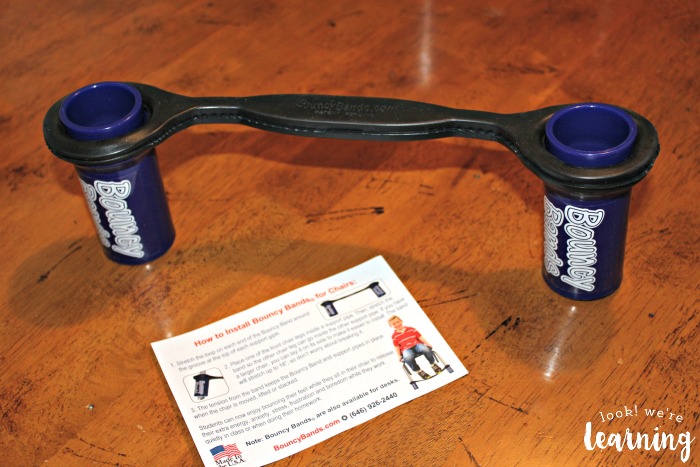
Assembly couldn’t be easier. Just wrap the band’s left and right holes around the tops of the support pipes. Done!

Bouncy Bands Assembly

However, here is the issue we faced: The band’s pipes wouldn’t fit around our dining room table legs. And the dining room is where we homeschool.

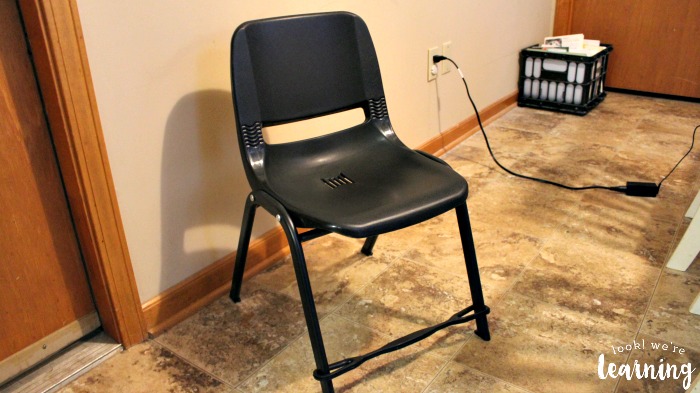
So I bought a simple stackable school chair. But then I discovered that the support pipes STILL wouldn’t fit around the legs. (The legs of this chair are kind of oblong-shaped.)

Using Bouncy Bands Without Support Pipes

Eureka! I just removed the support pipes and the band fit just fine.

BTW, if you want to get a chair that these pipes are sure to work with, try this model. If you want to try the desk version, this school desk should do the trick.

Using Bouncy Bands for Kids with ADHD

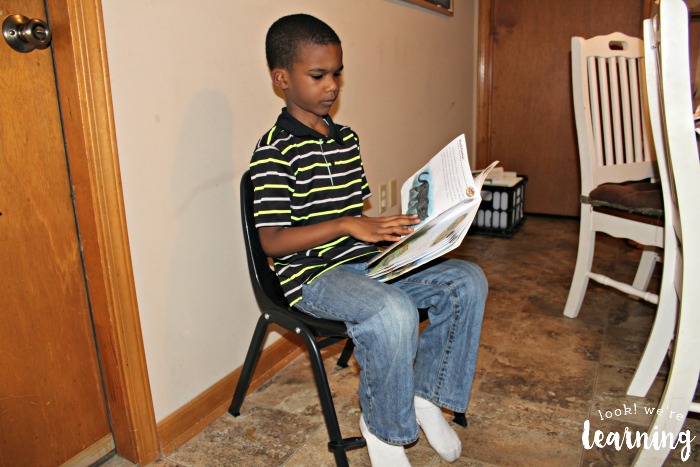
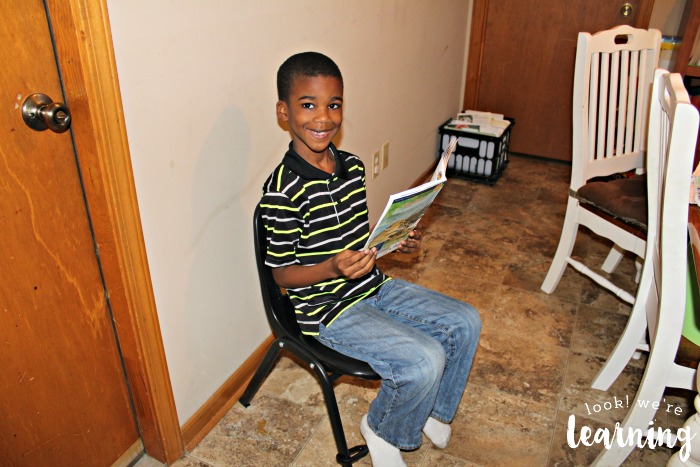
Our seven-year-old is, by far, the most active of our kids. He’s basically in constant motion. So he was the best tester in our family for Bouncy Bands.

Using Bouncy Bands for a Chair

I had him sit in a chair and read a book while using the band as a fidget. Guess what?

How Bouncy Bands Work

It worked!

I thought he would bounce his legs like a maniac and get even more worked up. But he didn’t. He just bounced them occasionally – very gently – and kept his eyes on his book. I was thoroughly impressed.

Using Bouncy Bands for Reading

Want to see Bouncy Bands in action? Check out my video review from my YouTube channel!

To learn more about Bouncy Bands, visit the product website for details about assembly and to read more reviews! Plus, keep up with Bouncy Bands on Twitter, Pinterest, and Facebook for more!

Need more tips for homeschooling kids with ADHD? Follow my ADHD Tips board on Pinterest!

Don’t miss my Homeschooling with ADHD ebook! It’s packed with tips and suggestions to make this special homeschooling journey a success!

DHD eBook @ Look! We're Learning!

Make this fall one to treasure with the kids with this list of 50 wonderful fall books for kids to read!

50 Gorgeous Fall Books for Kids to Treasure

August 22, 2016 by Selena Robinson 6 Comments

Kids Books about Fall
Fall Picture Books for Kids
Fall Books for Kids to Treasure
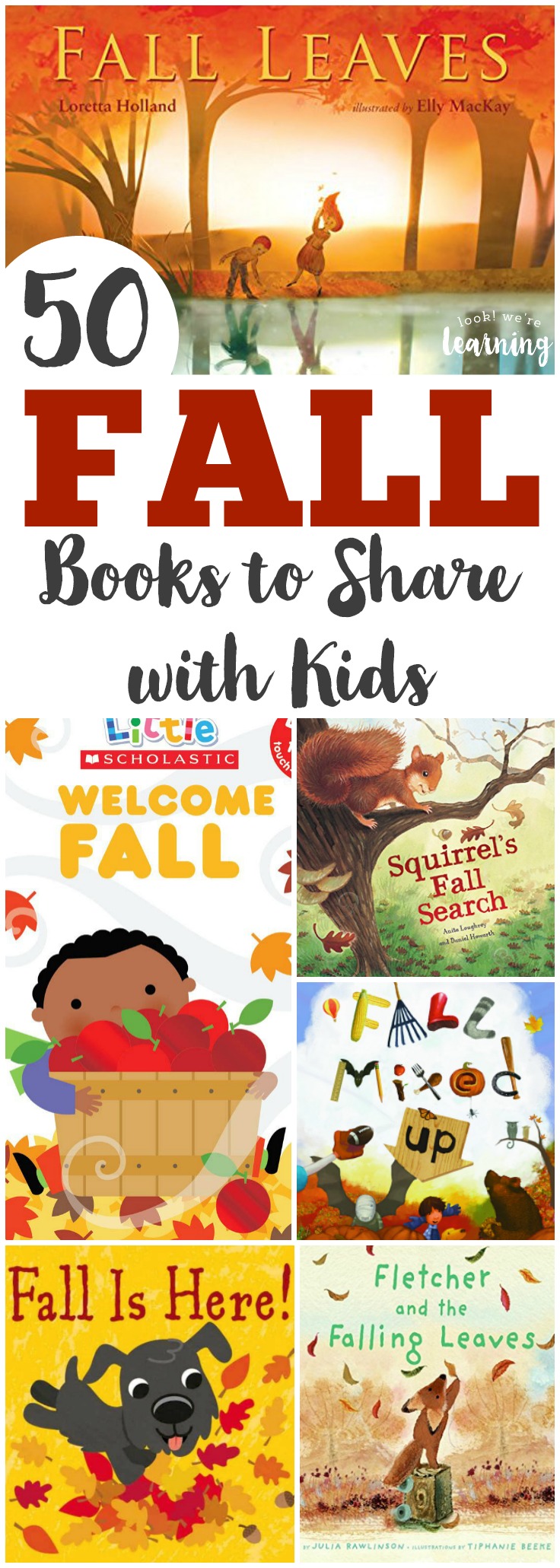
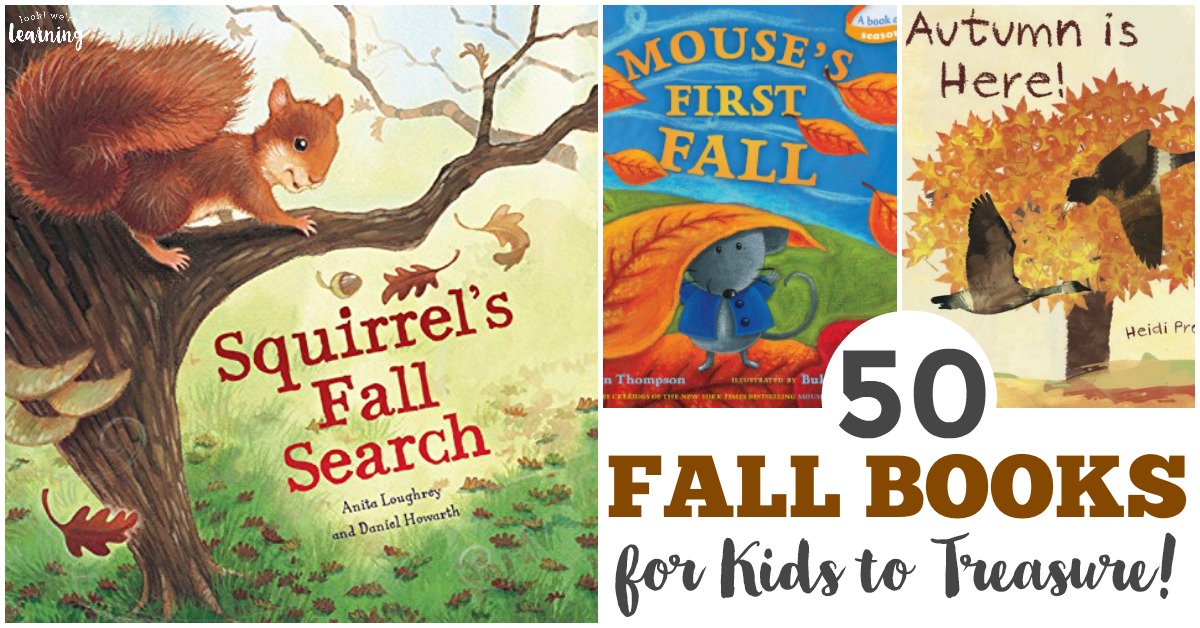
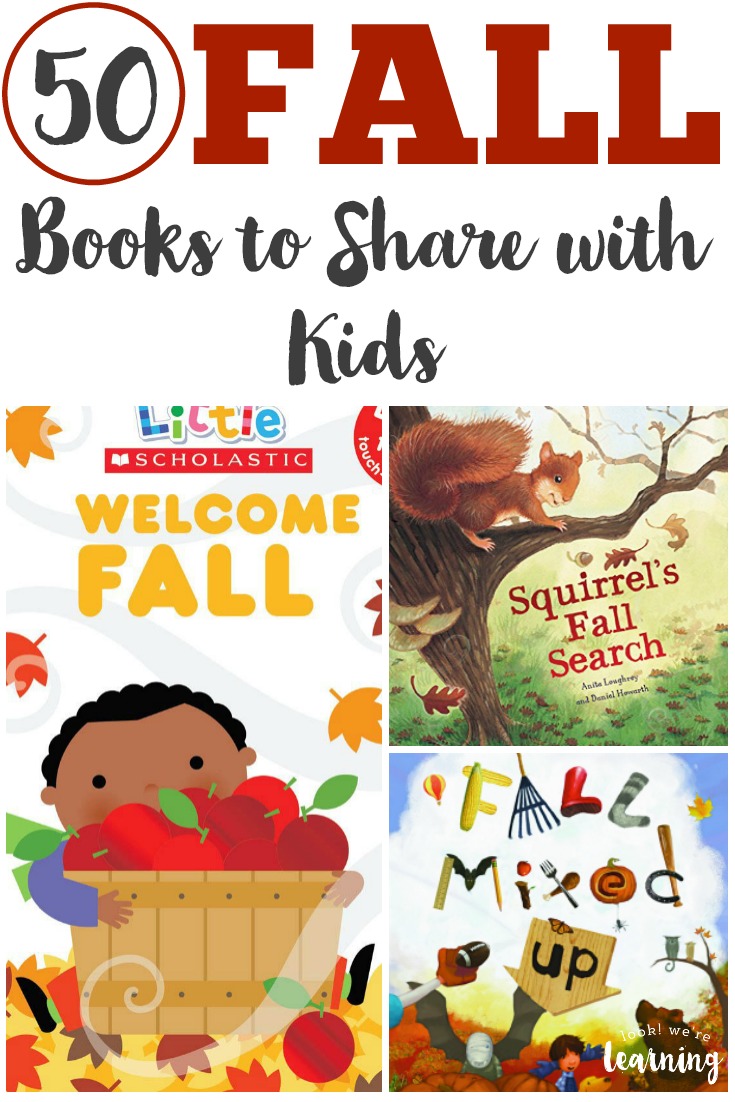
Fall is a wonderful time of year for sharing stories with the children. Here is a list of 50 wonderful fall books for kids this autumn!

Can you smell it? That’s the smell of fall in the air!

Fall is my absolute favorite season of all. The air gets cooler, the leaves start to turn colors, and you just feel like baking delicious food and snuggling up with family. It’s beautiful.

So what better time is there to read gorgeous picture books with the kids? Get your kids ready for the autumn with these 50 beautiful fall books for kids! They’re packed with lovely illustrations and heartwarming stories children will love!

Fall Books for Kids to Share

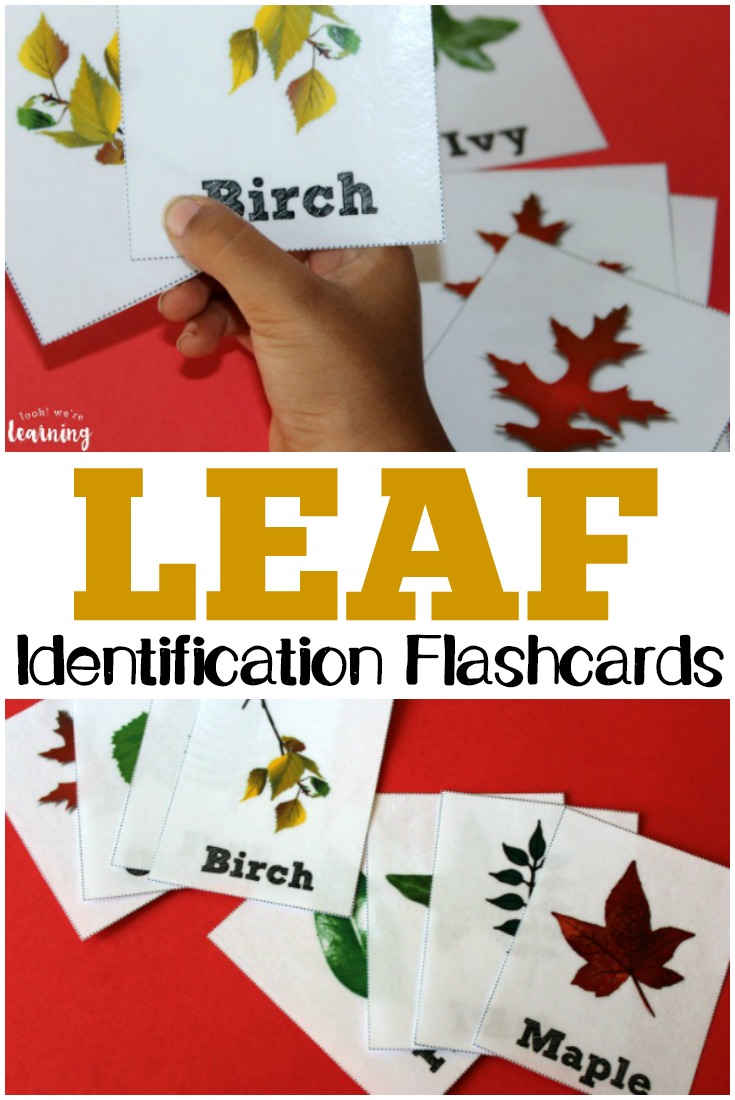
There are a TON of ways to make fall into a learning experience with children. Check out this list of 50 free fall printables for kids and pick up a set of our free Leaf Identification Flashcards or our Fall Printable Reading Journal for Kids!

BONUS! Want to keep track of all the fall books for kids you read this autumn? Grab the printable fall booklist for kids further down in this post!

Make this fall one to treasure with the kids with this list of 50 wonderful fall books for kids to read!

50 Gorgeous Fall Books for Kids to Treasure

This post contains affiliate links. For details, see our Disclosure Policy.

Raising readers is an important part of our homeschooling journey. We want our kids to be able to read, not just for school, but for life.

Since fall is such a cozy season for families, I thought these beautiful fall books for kids would be awesome to share with you all. I hope you love them as much as we do!

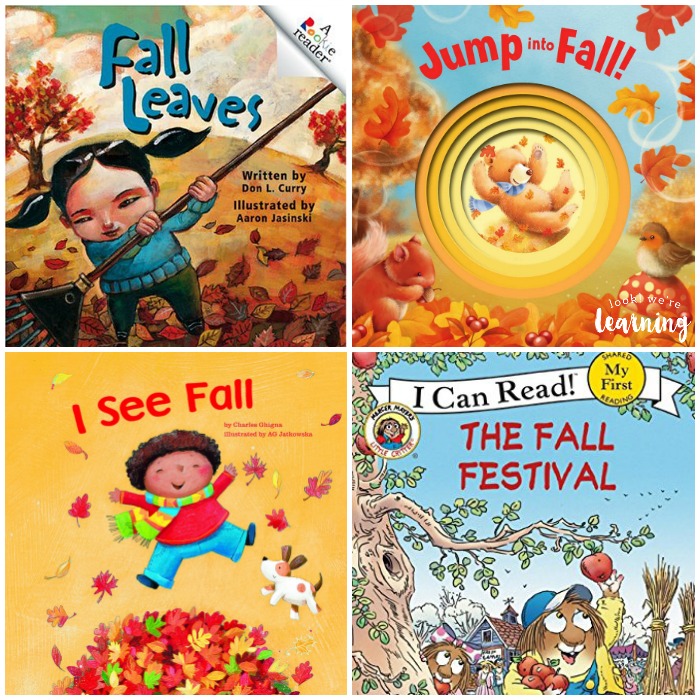
1. I See Fall Leaves: First Step Nonfiction – Observing Fall by Mari Schuh
2. Fall Is Not Easy by Marty Kelley
3. Little Critter: The Fall Festival by Mercer Mayer
4. Jump Into Fall! by Gareth Llewhellin
5. Fall Walk by Virginia Brimhall Snow
6. The Brilliant Fall of Gianna Z. by Kate Messner
7. Poppleton in Fall by Cynthia Rylant
8. I Watch Fall Harvests: First Step Nonfiction – Observing Fall by Mary Lindeen

Fall Books for Kids to Read

9. I See Fall! by Charles Ghigna
10. Hello Kitty, Hello Fall! by Sanrio
11. Fall Leaves by Don L. Curry
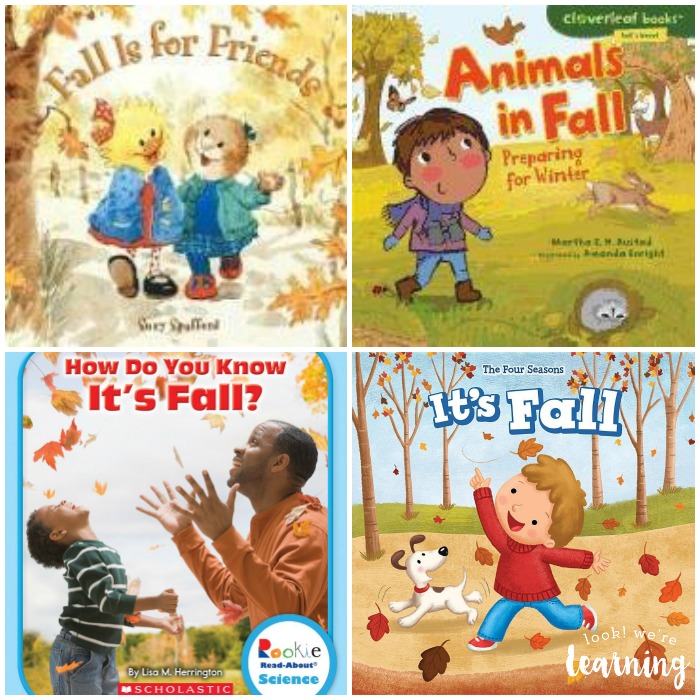
12. Fall is For Friends by Suzy Spafford
13. It’s Fall! (The Four Seasons) by Celeste Bishop
14. Animals in Fall (Preparing for Winter) by Martha E.H. Rustad
15. How Do You Know It’s Fall? (Rookie Read-About Science) by Lisa M. Herrington
16. Peppa’s Windy Fall Day (Peppa Pig) by Scholastic

Fall Books for Kids to Read with Parents

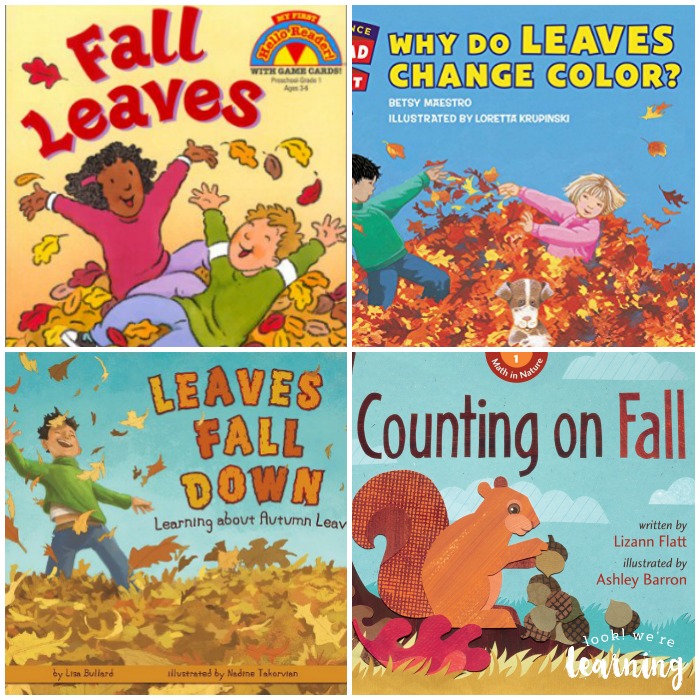
17. Fall Leaves (My First Hello Reader) by Mary Packard
18. Leaves Fall Down: Learning about Fall Leaves by Lisa Bullard
19. Counting on Fall (Math in Nature) by Lizann Flatt
20. I Love Fall! (A Touch and Feel Board Book) by Allison Inches
21. It’s Fall (Celebrate the Seasons) by Linda Glaser
22. Fall Mixed Up by Bob Raczka
23. Fletcher and the Falling Leaves by Julia Rawlinson
24. Leaf Man by Lois Ehlert
25. There Was an Old Lady Who Swallowed Some Leaves by Lucille Colandro

Fall Playdough Mats

See more gorgeous fall books for kids and score your free printable fall booklist on page 2!

Pages: 1 2
These fun camping books for kids feature plenty of stories you'll love to share around the campfire!

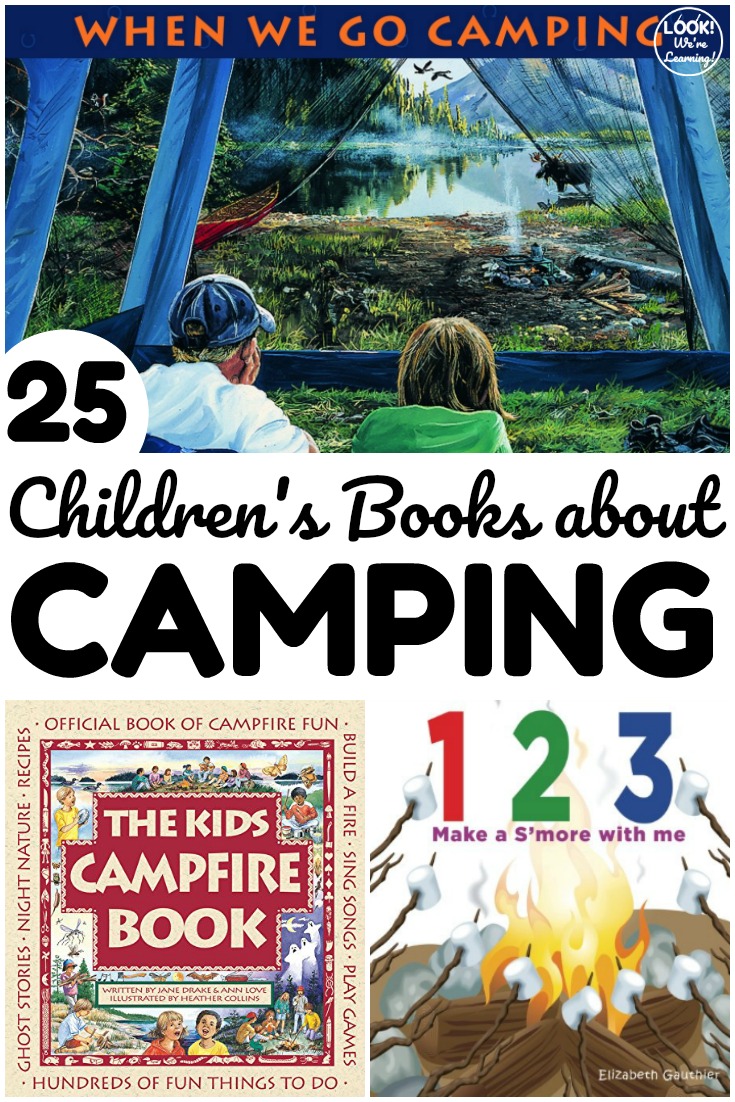
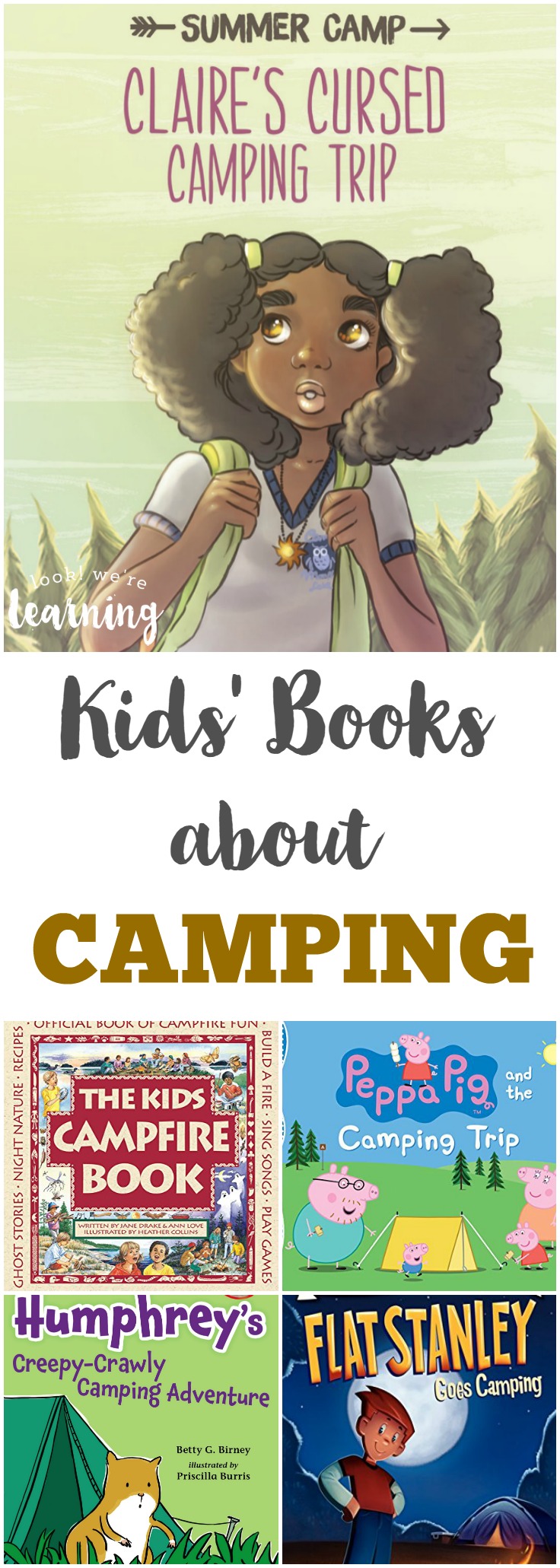
25 Kids’ Books about Camping

August 19, 2016 by Selena Robinson 5 Comments

Are you planning a camping trip this year? Get your kids excited for the trip with these fun kids books about camping!

Honestly, I’ve never been camping. My parents weren’t really outdoor-sy and, frankly, the thought of sleeping outdoors doesn’t thrill me either. 

But my kids have said that they want to try it, so the hubs and I agreed to rent a cabin in the woods as a first step in that direction. Our trip is next week, so these books are right on time!

25 Camping Books for Kids to Read

One of the things I’m looking forward to the most is just spending some quiet time with the family without outside distractions.

No hectic schedules, no other commitments, no working – just chill family time. If you’re a camping expert, please share your tried-and-true tips for making it an awesome outing!

And if you’re looking for more beautiful kids’ books for your family, don’t miss this list of beach books kids will love!

These fun camping books for kids feature plenty of stories you'll love to share around the campfire!

25 Kids’ Books about Camping

This post contains affiliate links. For details, see our Disclosure Policy.
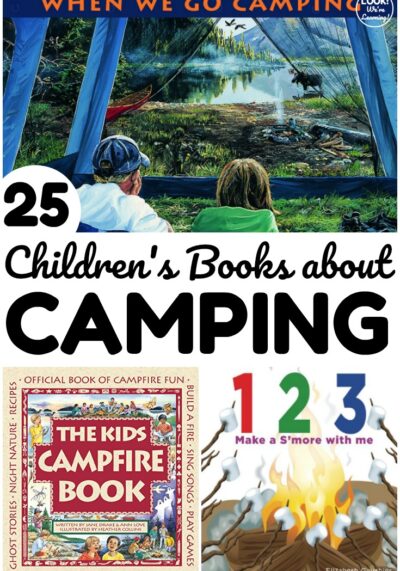
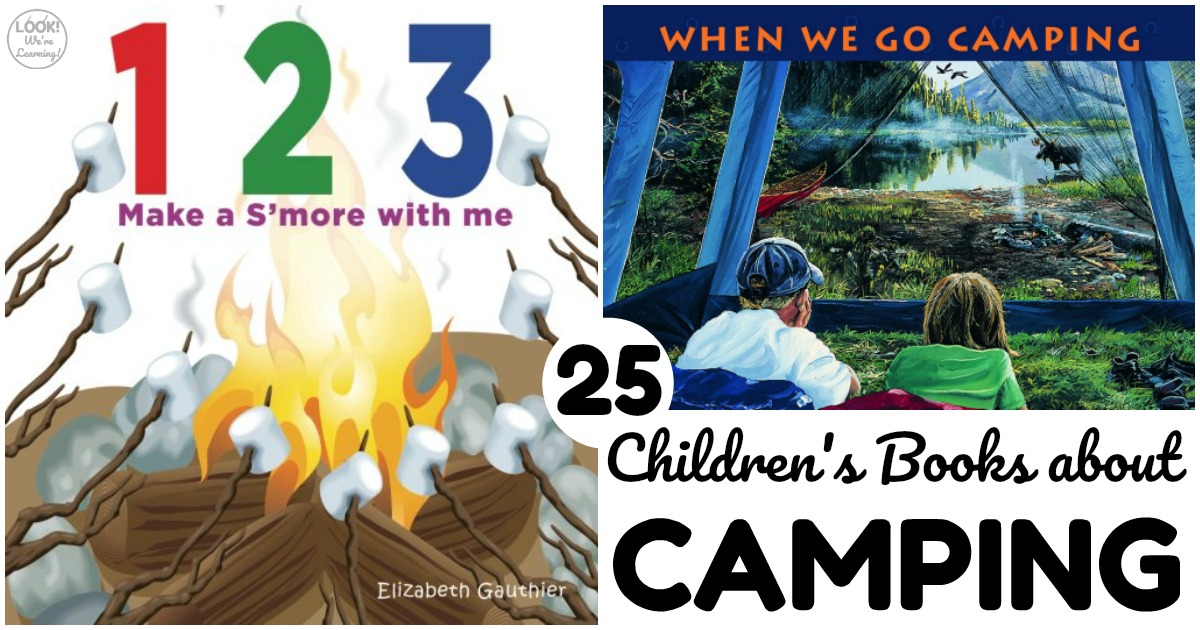
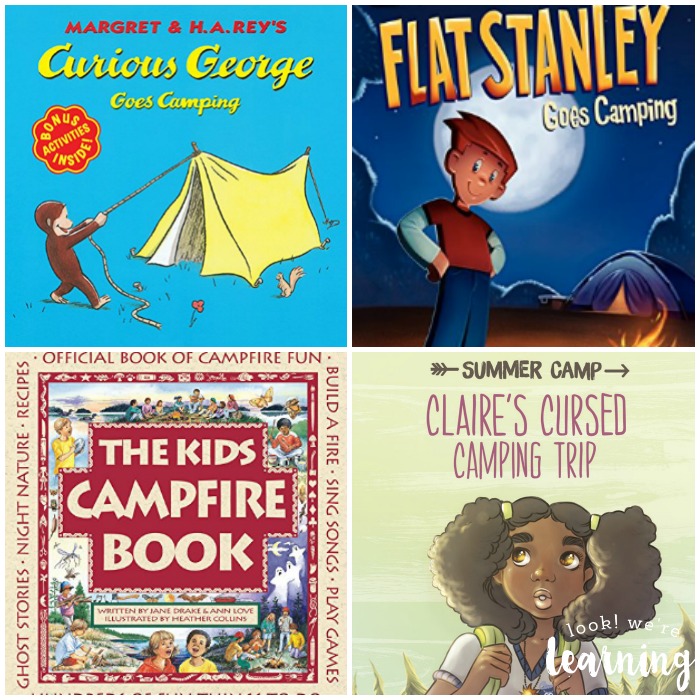
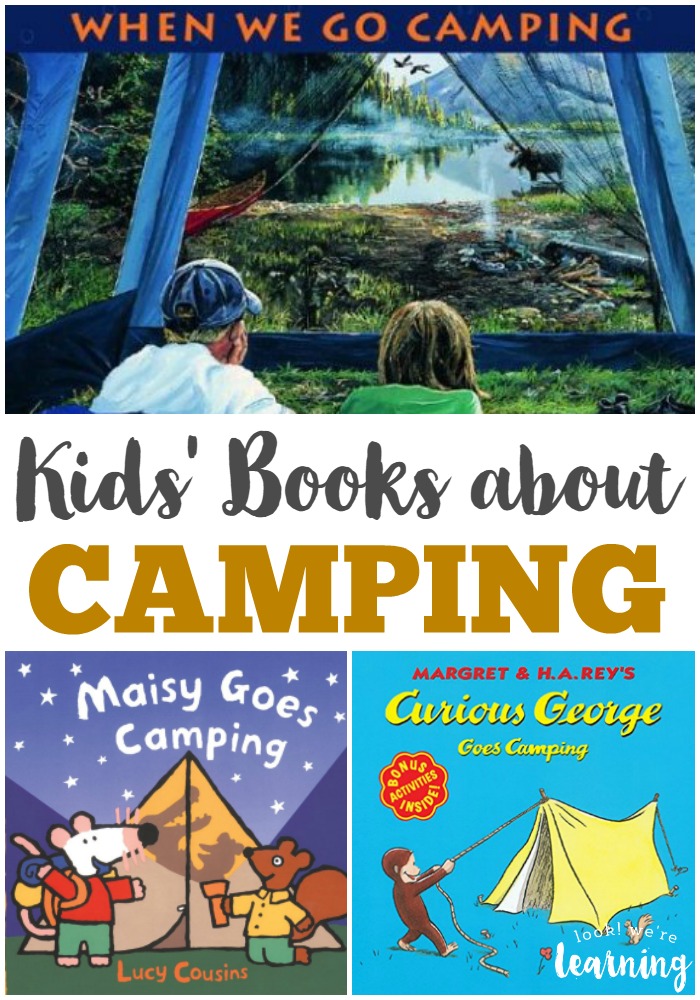
1. Maisy Goes Camping: A Maisy First Experience Book

2. The Kids’ Outdoor Adventure Book: 448 Great Things to Do in Nature Before You Grow Up

3. Flat Stanley Goes Camping

4. S is for S’mores: A Camping Alphabet

5. Alvin Ho: Allergic to Camping, Hiking, and Other Natural Disasters

6. Curious George Goes Camping

7. Camping Catastrophe! (Ready, Freddy #14)

8. Camp Daze Mad Libs

9.Toasting Marshmallows: Camping Poems

10. Camping Fun Sticker Activity Book

Books about Camping for Kids

11. When We Go Camping

12. Peppa Pig and the Camping Trip

13. The Berenstain Bears Blaze a Trail

14. Claire’s Cursed Camping Trip

15. Humphrey’s Creepy-Crawly Camping Adventure

16. The Kids’ Campfire Book: Official Book of Campfire Fun

17. Camp Out!: The Ultimate Kids’ Guide

18. Fred and Ted Go Camping

19. Amelia Bedelia Goes Camping

20. A Camping Spree with Mr. Magee

21. Llama Llama Loves Camping

22. Good Night, Campsite

23. A Campfire Tail

24. Froggy Goes to Camp

25. 1, 2, 3 – Make a S’more With Me

Kids Books about Camping

Don’t miss these other book lists for kids!

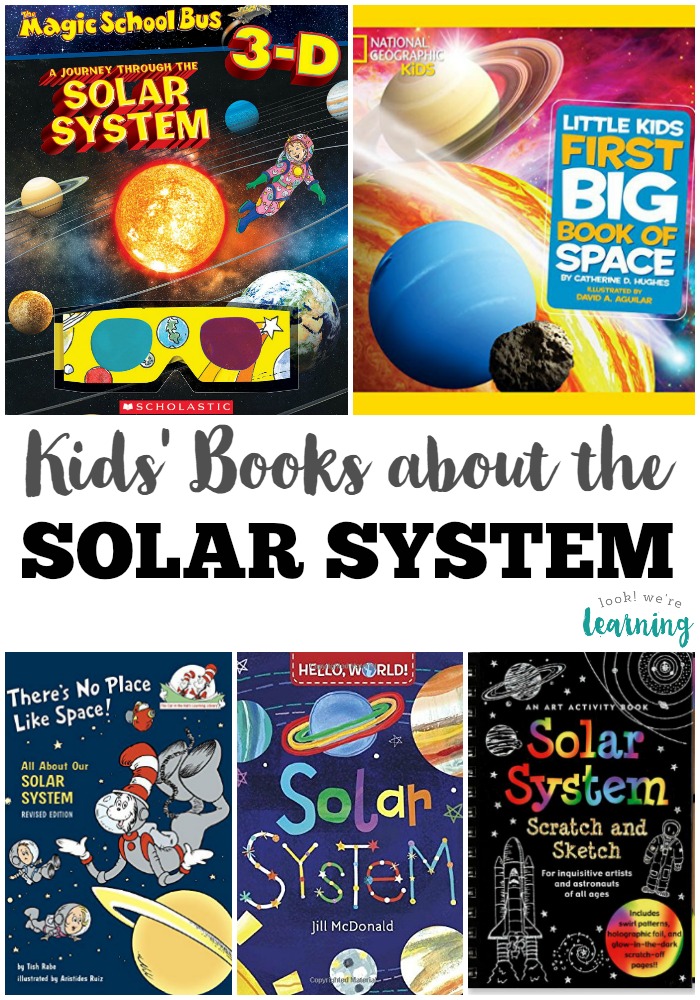
Kids Books about the Solar System

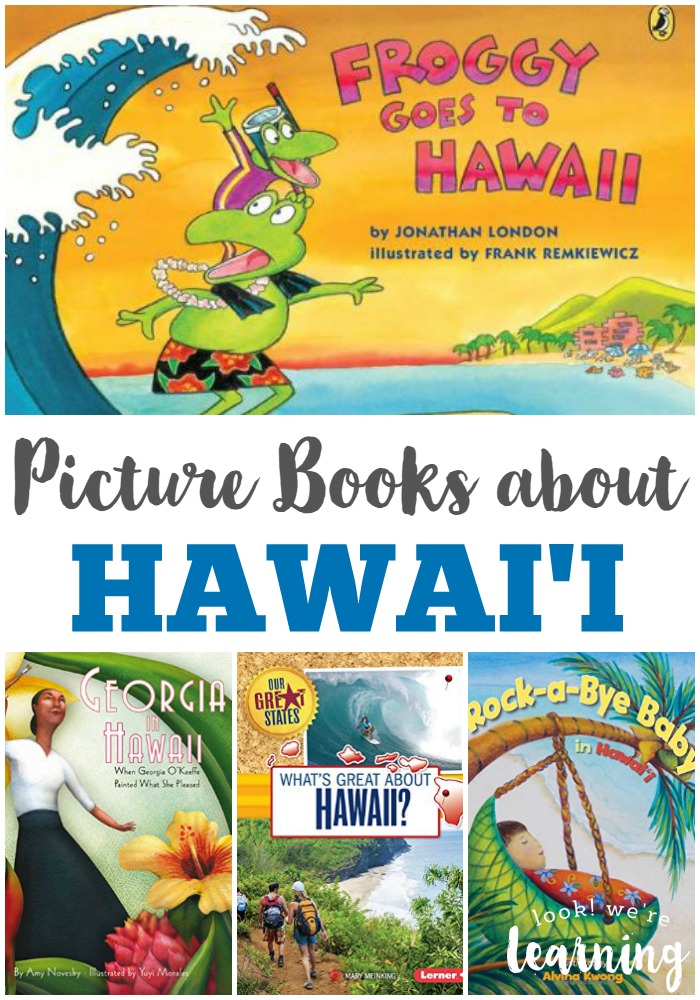
Kids' Picture Books about Hawaii

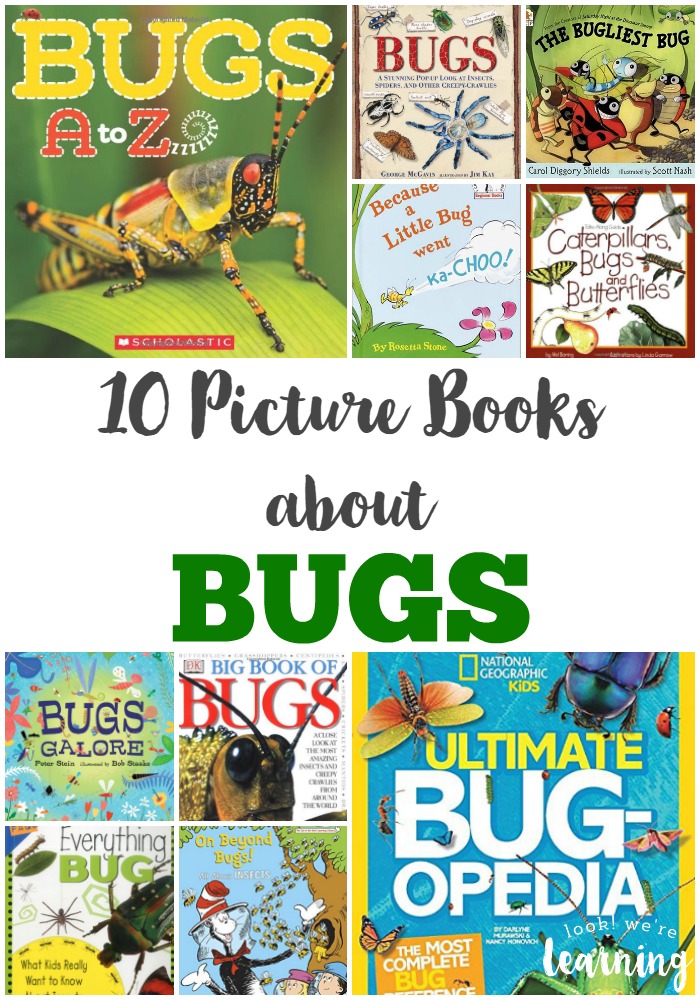
Picture Books about Bugs

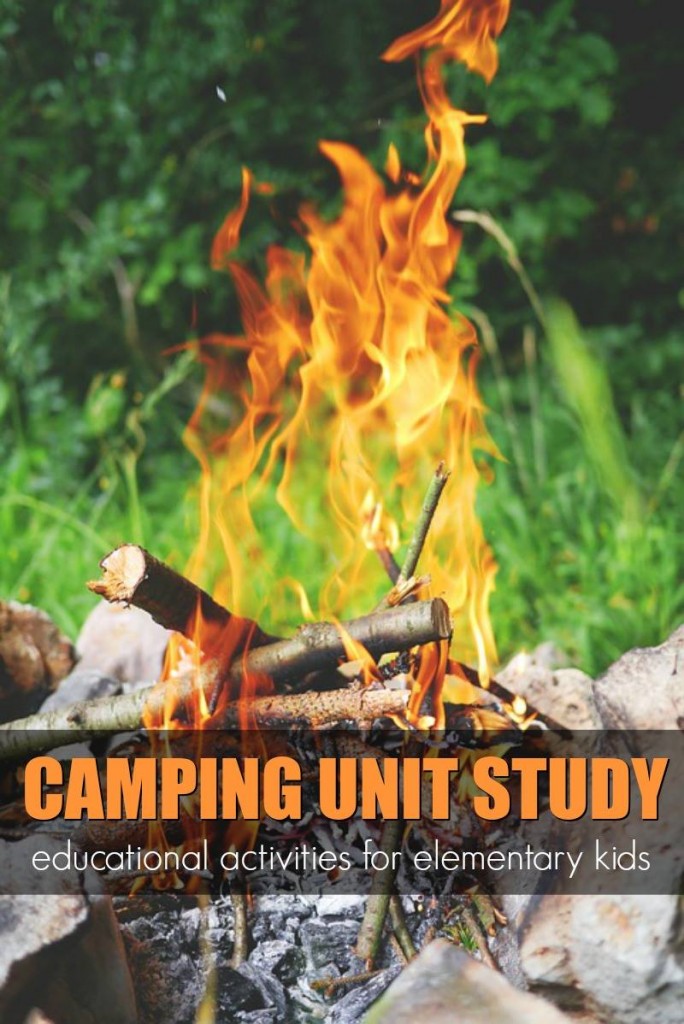
Camping Unit Study

This post is part of the Camping Kids Unit Study roundup! Click over to read more camping themed posts!

Camping Writing Worksheets – My Joy-Filled Life
Camping Hacks for Kids – FrogMom
Homemade Firestarters – Schooling a Monkey

Fun Kids Books about Camping

Middle School Student Organizers

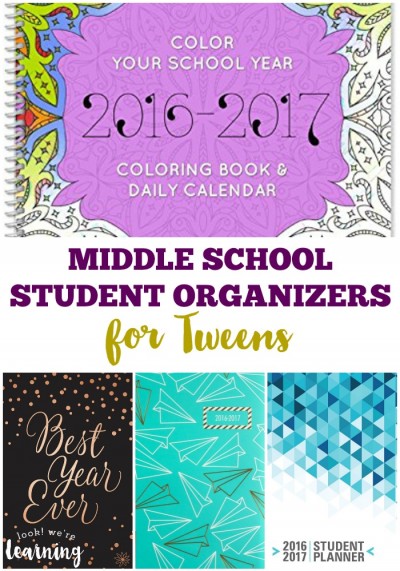
Middle School Student Organizers for Tweens

August 12, 2016 by Selena Robinson 2 Comments

It’s back to school time! And this year, I have a rising middle schooler. Eeek!

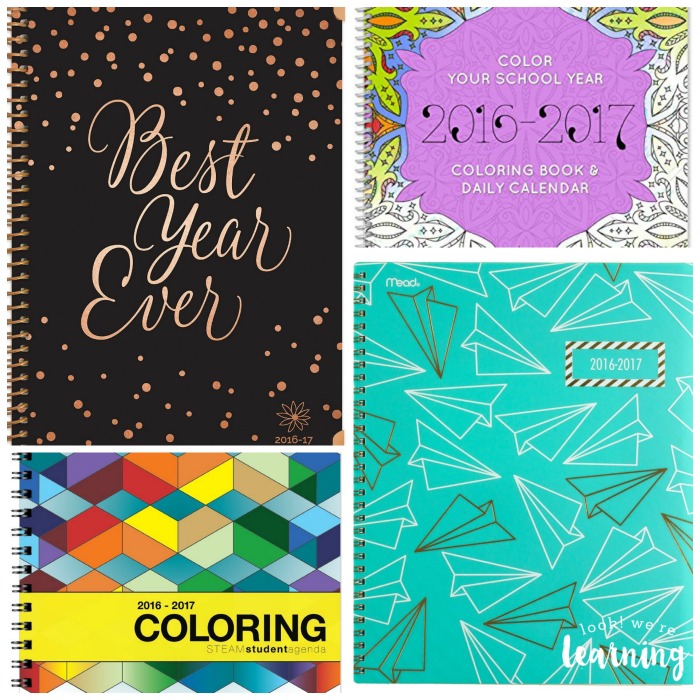
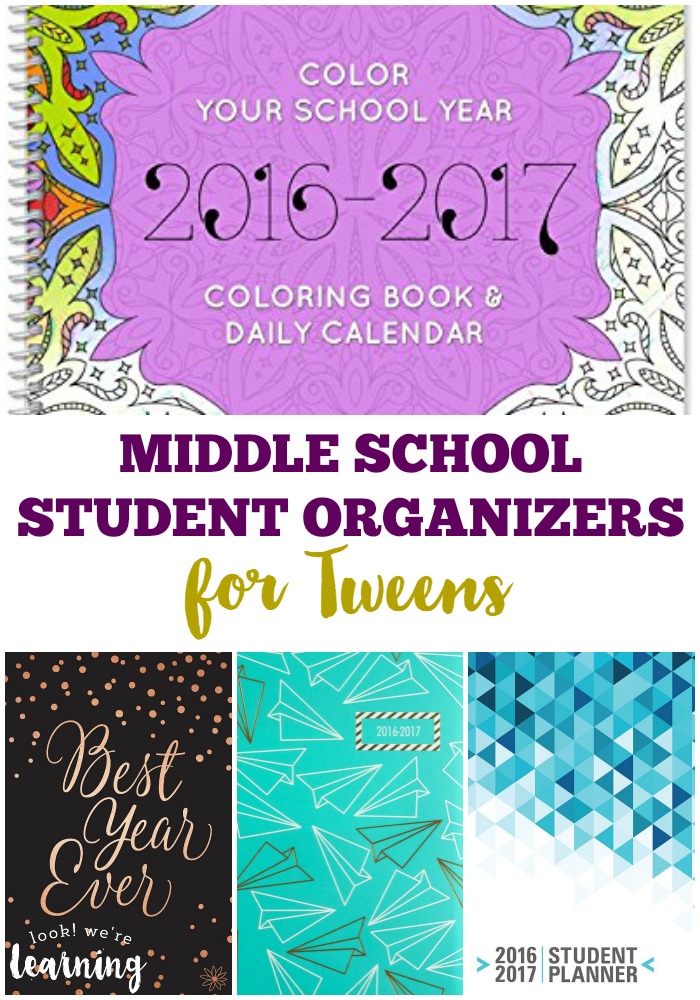
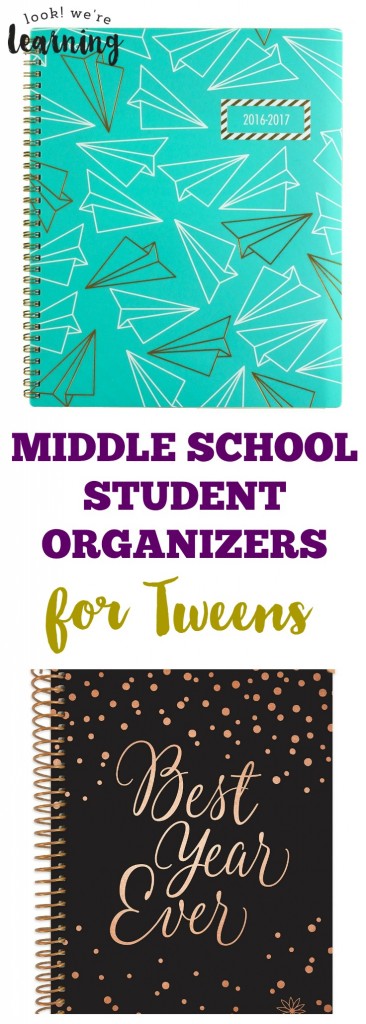
In keeping with my decision not to use a homeschool planner this year, I’m putting the organizing squarely on my sixth-grader’s shoulders. So that means it’s time to shop for gorgeous middle school student organizers that are lovely enough for tweens to use!

Check out this list of fun and functional middle school planners your child will be psyched to use this school year!

Tween Middle School Student Organizers

Need more tips for planning your homeschool year? See how to simplify lesson planning and streamline your daily homeschool schedule!

Middle School Student Organizers

Middle School Student Organizers for Tweens

  1. 2016-17 Coloring Academic Agenda – Weekly & Monthly Organizer
  2. Bloom Daily Planners 2016-17 Hard Cover Academic Year + Passion/Goal Organizer
  3. Undated Student Organizer for Middle School
  4. Mead Paper Airplane Academic Year with Weekly/Monthly Planner
  5. 2016-17 Year Spiral Organizer Student Weekly at a Glance Dayminder
  6. 2016-17 Middle School Student Planner
  7. Spiral-Bound 2016-17 Academic Coloring Planner
  8. Student Planner, Grades 4-8: Second Edition
  9. 2016-17 Academic Planner for Time Management
  10. Bloom Daily Planners Acadmic Soft Cover Vision Planner

Middle School Student Organizers for Tweens

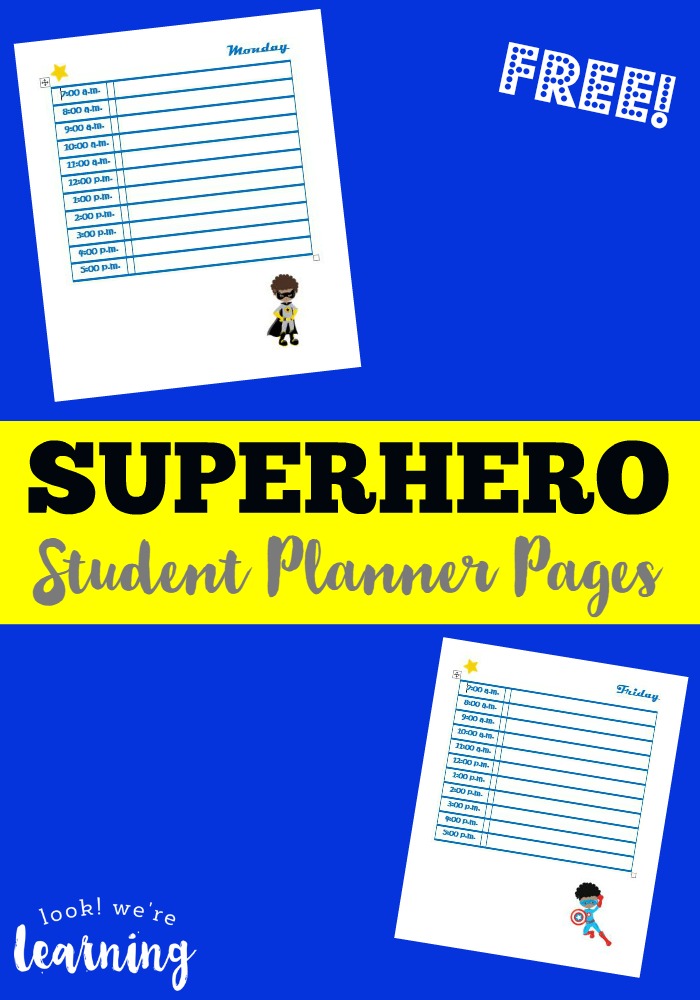
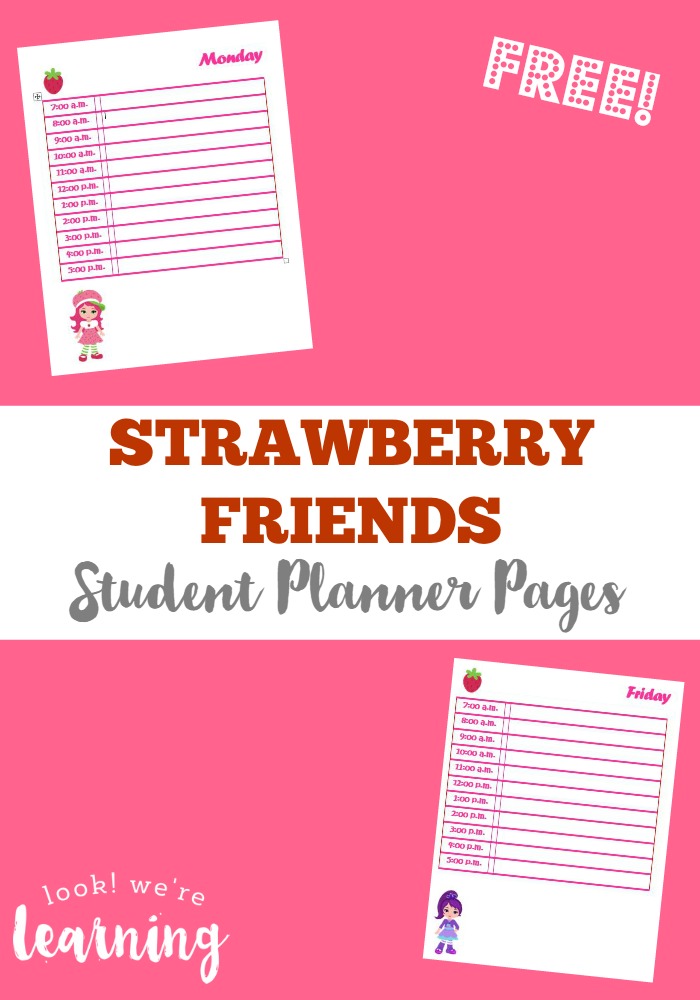
Want to ease your child into planning his or her own schedule? Try these fun student planner printables!

Superhero Free Student Planner Pages @ Look! We're Learning!

Strawberry Friends Printable Student Planner Free Pages

Grab more tips to make this homeschool year the best one ever on my Homeschool Planning Pinterest board!

Free Unit Studies

This post is part of the Back to School Unit Study Hop! Stop by to read all these great posts from my fellow bloggers!

Back to School Teacher Gift {Free Printable Bag Topper} from Crafty Mama in ME

The Best {Back To School} Books For Kids from Play Dough & Popsicles

Back to School Interview for Kids from CraftCreateCalm

Free Kissing Hand Songs, Poems, & Videos to Ease Separation Anxiety from Living Montessori Now

How to Help Kids Back to School from iGameMom

Middle School Student Organizers for Tweens from Look! We’re Learning!

Back to School Party Ideas from Schooling a Monkey

Not Back to School Picnic from Tales of Education at Home

Back to School in a Forest School from FrogMom

Back to School Hand Washing Water Play from Play & Learn Every Day

52 Preschool Themes (& FREE 2016-2017 Preschool Theme Calendar!) from Preschool Powol Packets

Homeschooling? Have a Not Back to School Day from Adventures in Mommydom

Books for Kids About Starting Middle School from Planet Smarty Pants


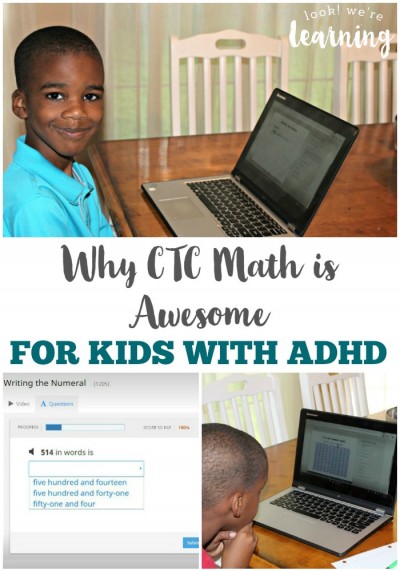
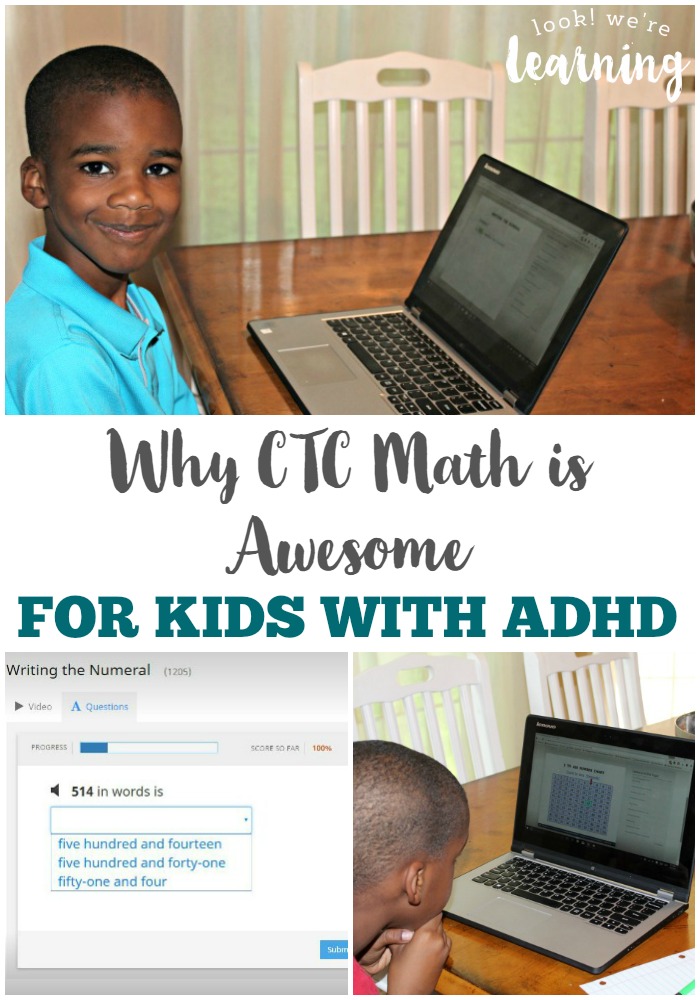
Why CTC Math is Great for Kids with ADHD

Why We Love Using CTC Math for ADHD Kids

August 12, 2016 by Selena Robinson Leave a Comment

My youngest son is a bit of a challenge when it comes to teaching math. He has ADHD, so he’s super active and his attention span is extremely short. He likes math in general, but when it’s time to do some actual work, he tends to whine, tune out, and get frustrated.

So I was excited to try out the CTC Math Membership to see if the program would be a good fit for him. Guess what? HE loves it! And I love any math program that will get him to love math. 😉 See why we love using CTC Math for ADHD kids in our family!

CTC Math for Second Graders with ADHD

Plus, there’s an incredible giveaway available! Five winners will get a one-year membership to CTC Math absolutely FREE! Read on to learn how to enter!

Disclosure: I received access to this program in exchange for this post and I was compensated for my time. All opinions are my own and I was not required to post a positive review.

Why CTC Math is Great for Kids with ADHD

How CTC Math Works

Here’s a look at how the CTC Math membership works:

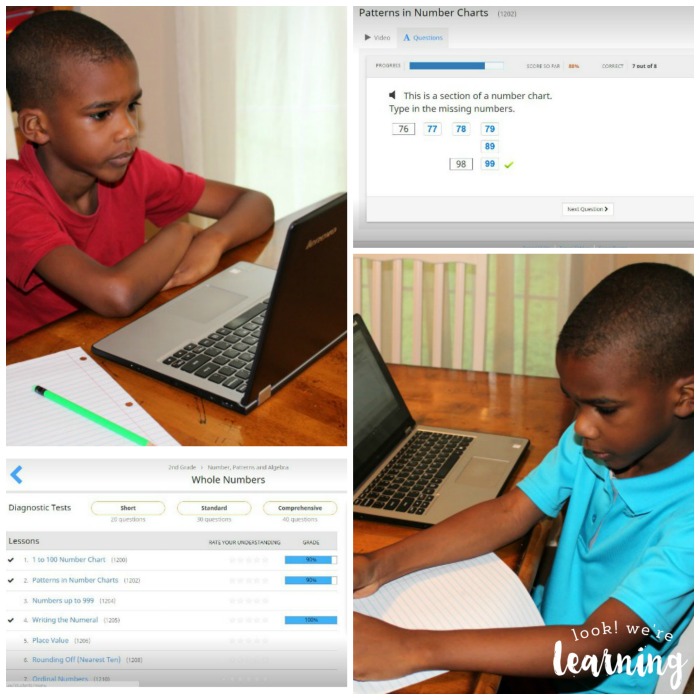
CTC Math Second Grade Lessons

As parents, you can sign in and decide which lessons in each grade you want your child to cover. Roo is entering second grade this year, so we started him off there.

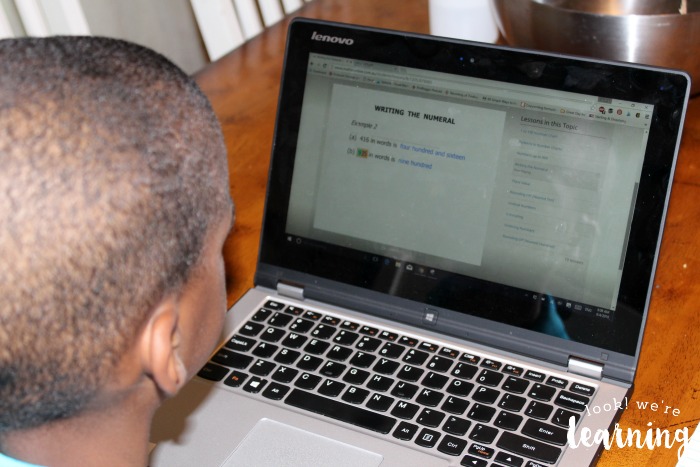
CTC Math Writing the Numeral Video Lesson

Each lesson has a short video that demonstrates the concept in question.

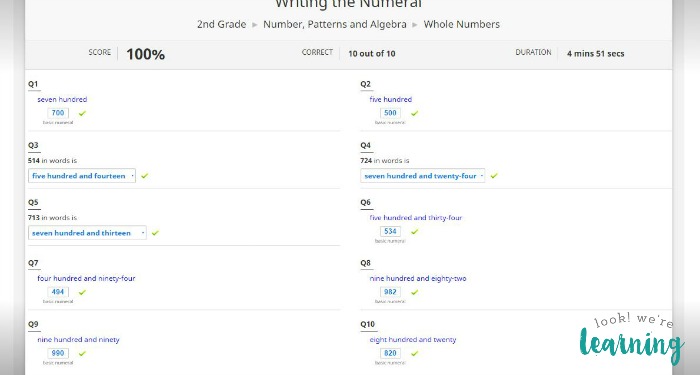
CTC Math Writing the Numeral Exercises

Then there are ten exercises for the child to complete.

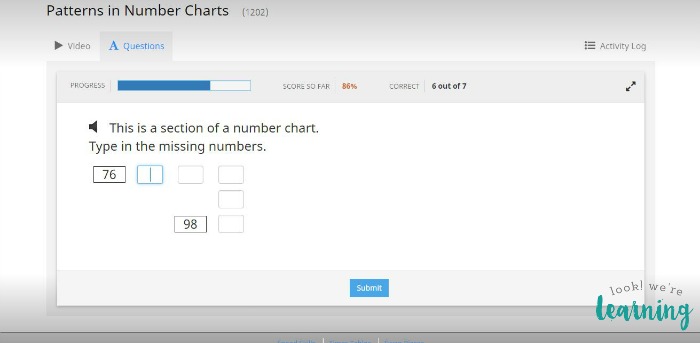
CTC Math Patterns in Number Charts

One of the things I really like about this program is that the exercises follow the exact same structure as the problems shown in the video. So, there are no “tricky” questions.

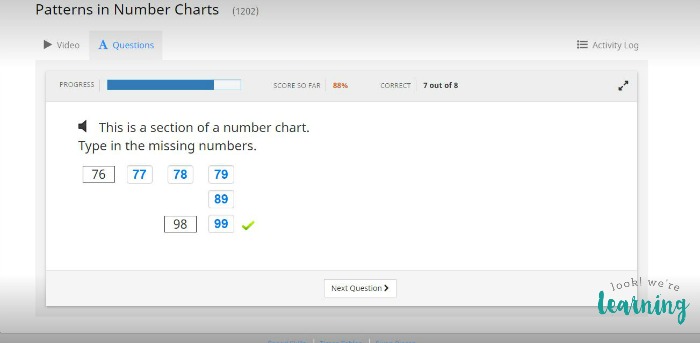
CTC Math Patterns in Number Charts Questions

Every time your child completes a question, he or she gets a check mark or a red X showing if their answer was correct.

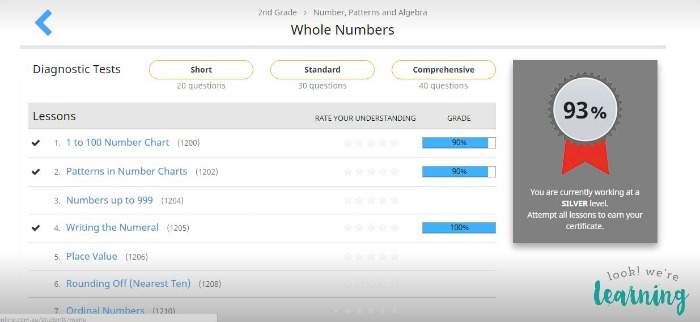
CTC Math Second Grade Lesson Outline

As they work through the lessons, they can see their grade for each concept. This is really helpful, because you can see at a glance which topics they may need more help with before test time.

And, if you look at the top, you’ll see that you can choose the length of your child’s tests. That’s a super option, because some kids don’t need a lot of questions (or don’t have the attention span to complete a lot of questions). That way you can customize the test length for each child and each lesson.

Just in time for the new school year, CTC Math is offering a huge discount – just for homeschoolers! Right now, we can get 60 PERCENT off the regular price, which means you can grab a one-year family CTC Math membership for just $118.80!

Want to test the program out before you buy? Sign up for a totally free trial!

Why I Love Using CTC Math for ADHD Kids

So, what makes CTC Math so awesome for kids who have ADHD?

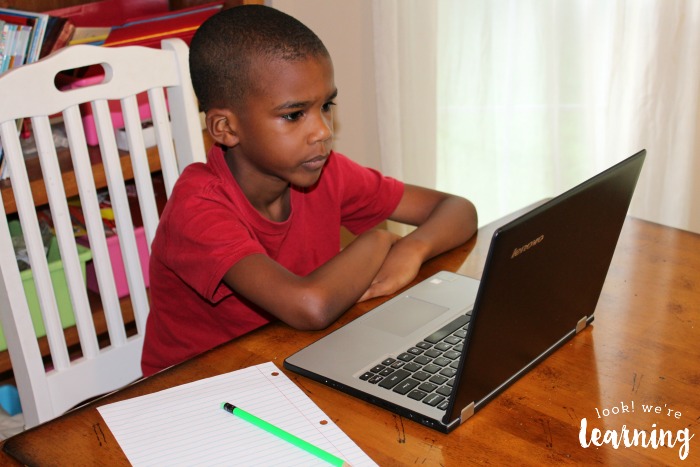
CTC Math Video Lesson

As you can see, my boy is really into that video lesson. Know why?

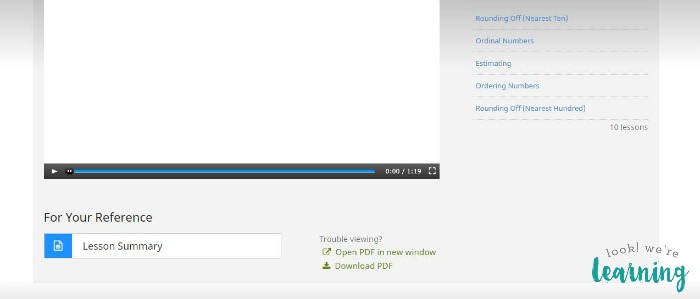
CTC Math Video Lesson Summary

It was only a little over a minute long! While some videos are closer to three minutes, they’re all very short, which is perfect for kids with attention issues.

See the “For Your Reference” heading at the bottom? If you download the “Lesson Summary” PDF, you can see a list of what will be covered in the video, along with the answers.

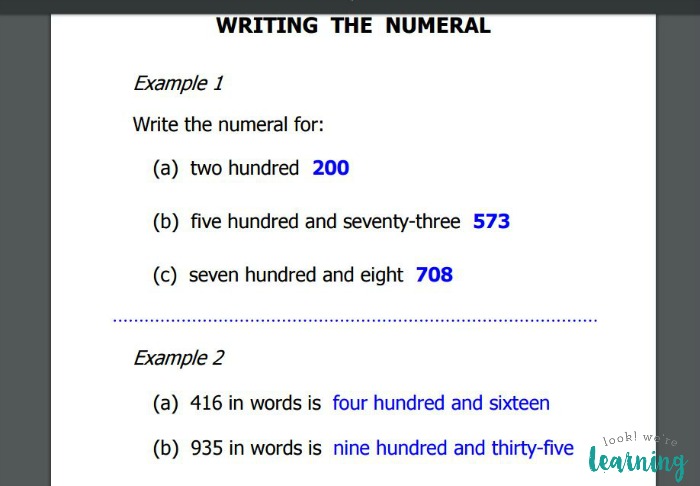
CTC Math PDF Lesson Overview

Just like this! So you can prepare ahead of time and come up with additional problems for your child to practice that use this same concept. I also like that, because there are some concepts that I already know may be a bit confusing. This way, I’m prepared to work them through along with him.

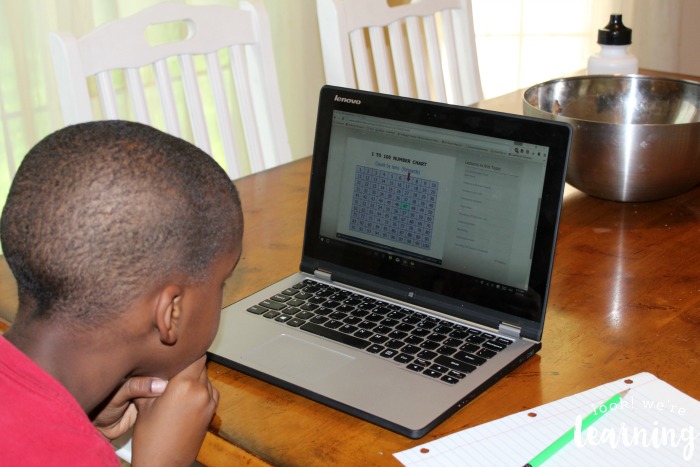
Using CTC Math for Second Grade

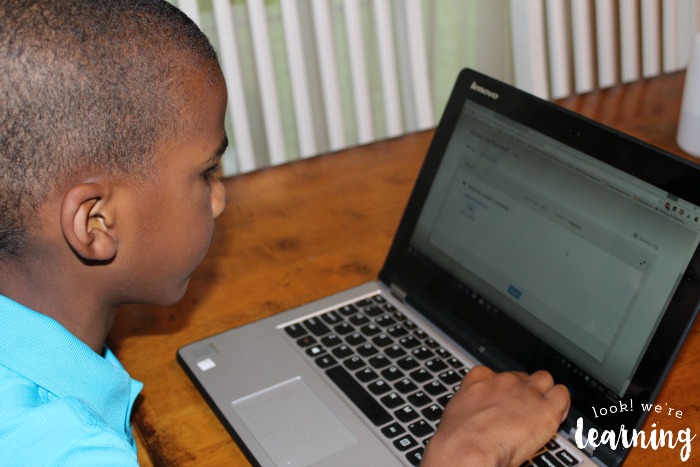
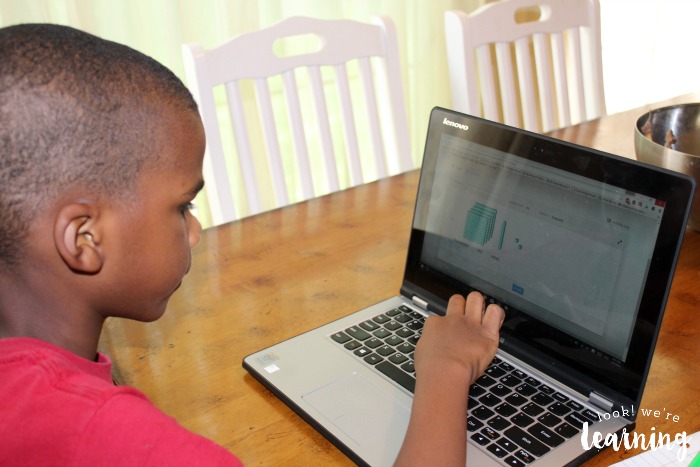
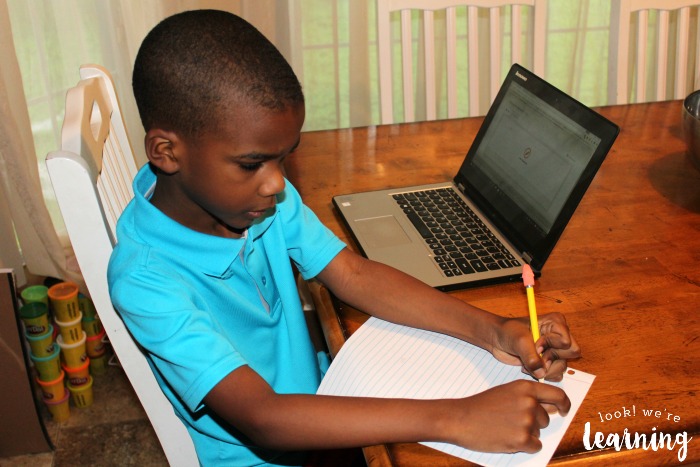
Roo did a great job at using the computer to answer the questions. Since the questions aren’t timed, he didn’t feel any pressure to finish them before he was ready. That’s another reason why CTC Math is great for kids with ADHD. It reduces anxiety.

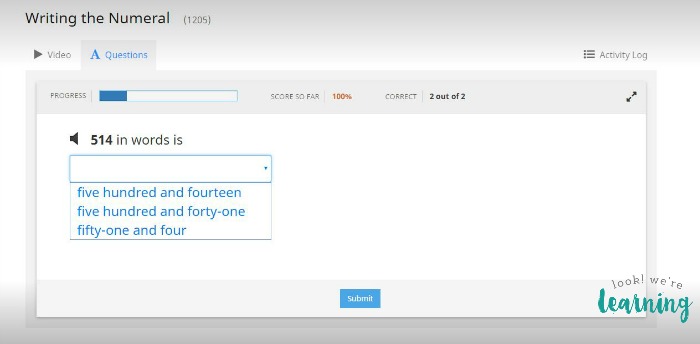
CTC Math Writing the Numeral Questions

At the top, the program keeps track of how your child is doing on the questions he or she has been answering so far. When Roo saw that he was on track to get them all right, he stopped in the middle of one of his problems and said, “I better slow down. I want to get a 100.”

I had to pick my mouth up off the floor. I don’t recall him ever saying he needed to slow down for anything ever in his life before. The scorekeeping is a great motivator.

CTC Math Lesson with a Chalkboard

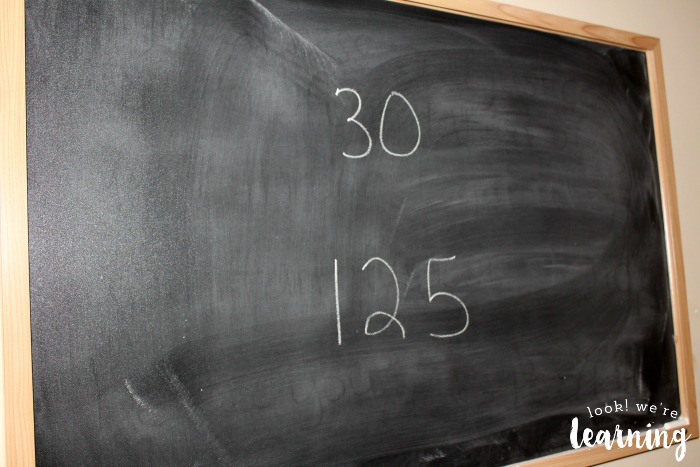
So, since he wanted to slow down, we paused on the questions and worked out a couple of the “Writing the Numeral” problems together.

Using a Blackboard with CTC Math

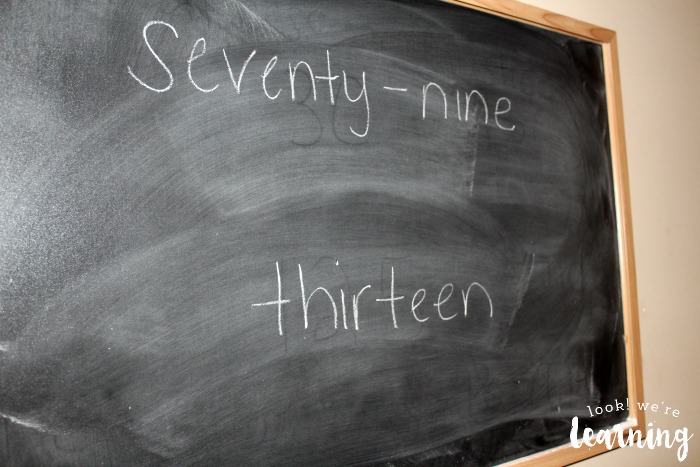
I wrote numerals and number words on the blackboard.

Working Out Math Problems with CTC Math

He wrote them down as either numerals or number words on his paper. When we practiced a couple, he seemed to feel more confident and we returned to the questions.

You can take a break on the questions anytime and resume when you’re ready. (Another win for CTC Math!)

CTC Math Writing the Numeral Exercise Results

That break for more practice worked! He got his 100. 🙂

Why CTC Math Works for Kids with ADHD

And, he’s actually been asking to do this program each day since. It’s definitely a keeper!

To learn more about CTC Math, follow the company on social media!

  • Facebook
  • Twitter
  • Pinterest
  • YouTube
  • Periscope

And….drumroll….here’s your chance to enter the CTC Math giveaway! Five winners will receive a FREE 12-month membership! To enter, use the Giveaway Tools widget below!

Entry-Form


P.S. Don’t forget to stop by and check out the amazing 60% off CTC Math homechool deal – available right now! And while you’re shopping, sign up for a free trial to see if a CTC Math membership will work for your kids! SPOILER: It will. 🙂

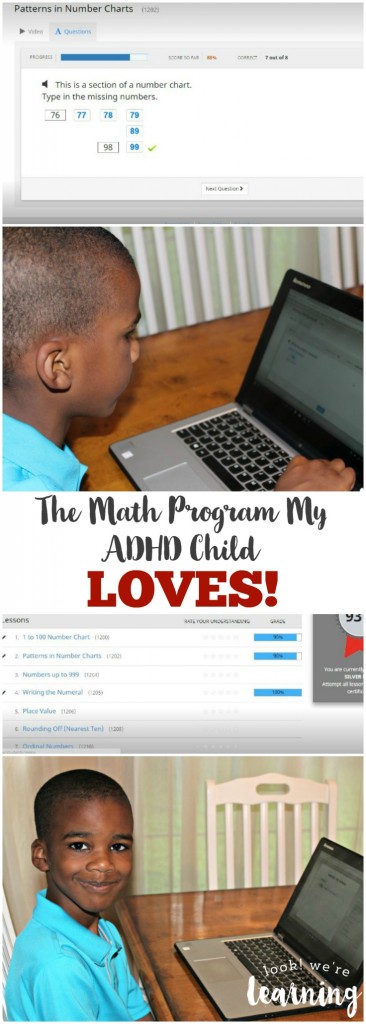
Why My ADHD Child Loves CTC Math

Need more ideas for homeschooling your child with ADHD? Follow my ADHD Homeschooling Tips board for our tried-and-true suggestions!

Nature Art Leaf Painting with Kids

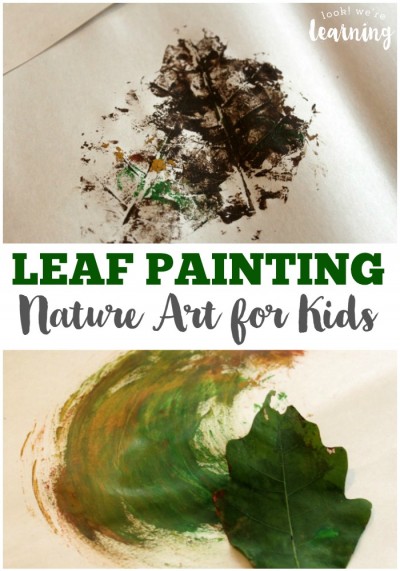
Easy Nature Art: Leaf Painting for Kids

August 8, 2016 by Selena Robinson 8 Comments

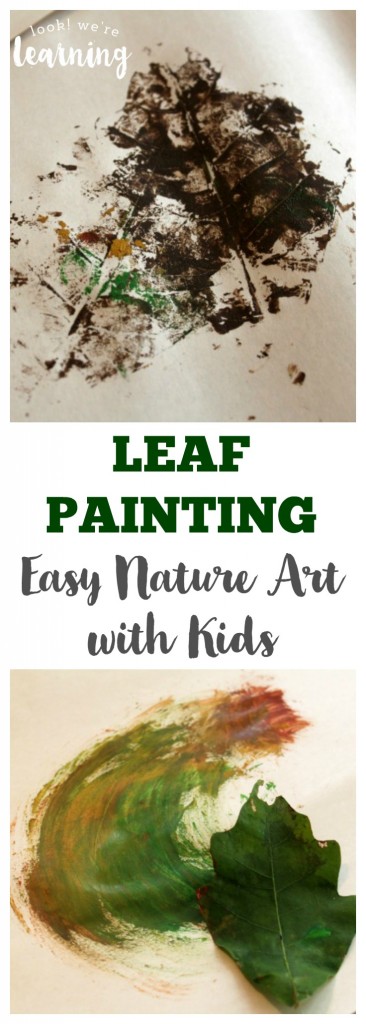
I’m so excited to be participating in this year’s Paint-A-Thon sharing fun painting ideas for kids! In our family, we absolutely adore fall, so I thought “Why not paint with tree leaves?” And that’s what we did!

Unfortunately, it’s late summer in Georgia, which means we’re not going to have autumn-colored leaves for some time. 🙂 But we got out some paint, including fall-themed colors, and started up anyway!

Take a look at our easy nature art project: leaf painting for kids!

Leaf Painting with Kids Art Experience

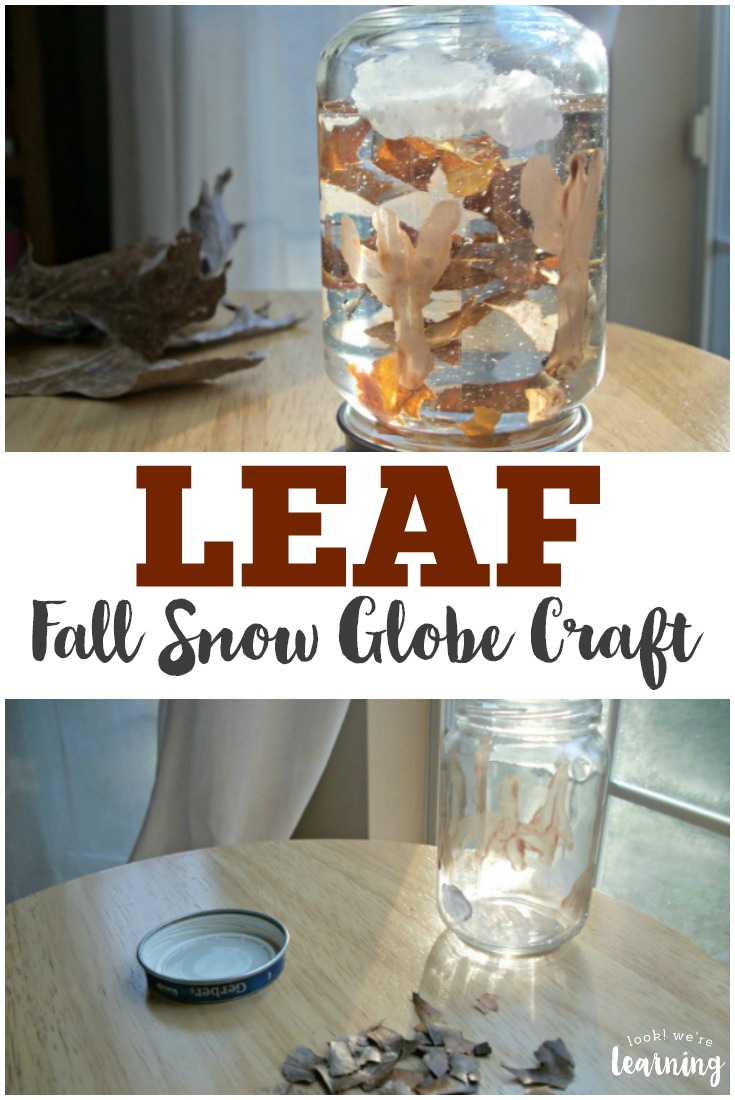
Want some more fall activities for kids? Try our fall snow globe craft or use our leaf identification flashcards to go on a leaf hunt! And don’t miss our All About Leaves printable pack for more leaf learning!

Nature Art Leaf Painting with Kids

Easy Nature Art: Leaf Painting for Kids

To do this activity, you will need the following: (Affiliate links provided here for convenience. For details, see our Disclosure Policy.)

  • drawing paper
  • acrylic paint
  • an assortment of leaves (try to get ones that are large enough for your kids’ hands)

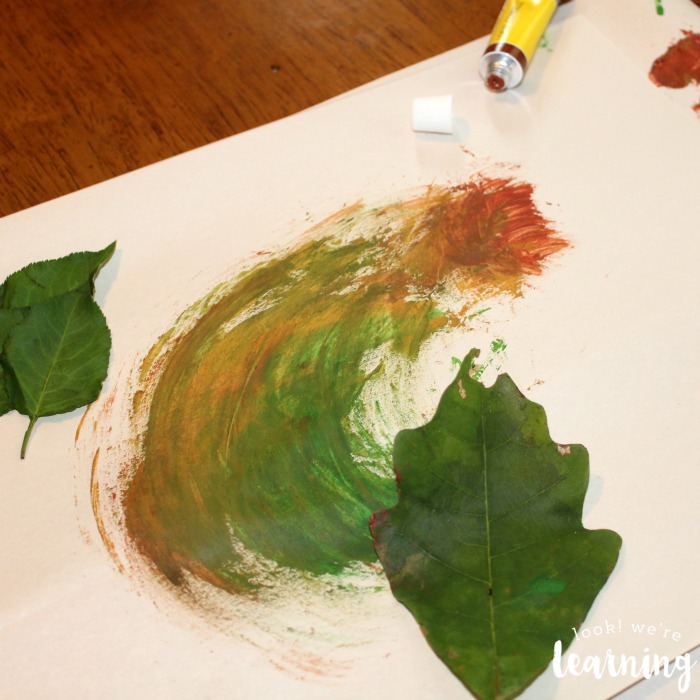
Just a quick note: This was the kids’ first time working with acrylic paint, so they were kind of surprised by how it moves on the paper. If your kids like tons of paint, definitely try tempera paint instead.

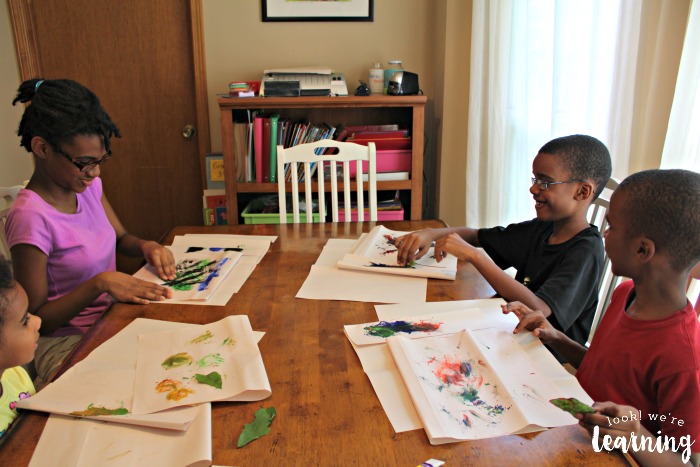
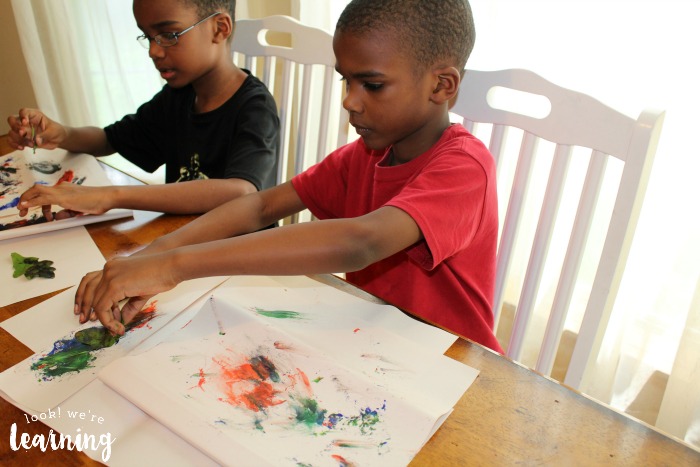
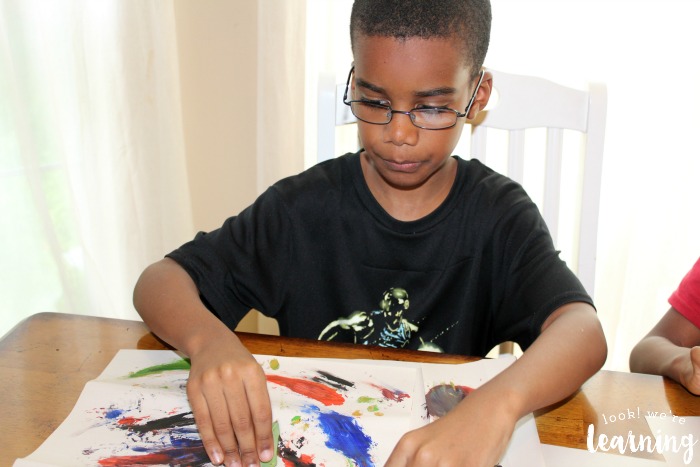
Kids Painting with Leaves Project

I asked everyone what colors they wanted to work with and we got started!

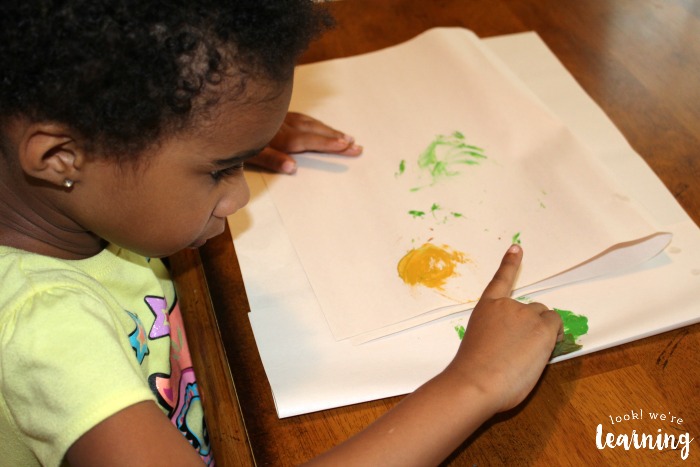
Painting with Leaves for Toddlers

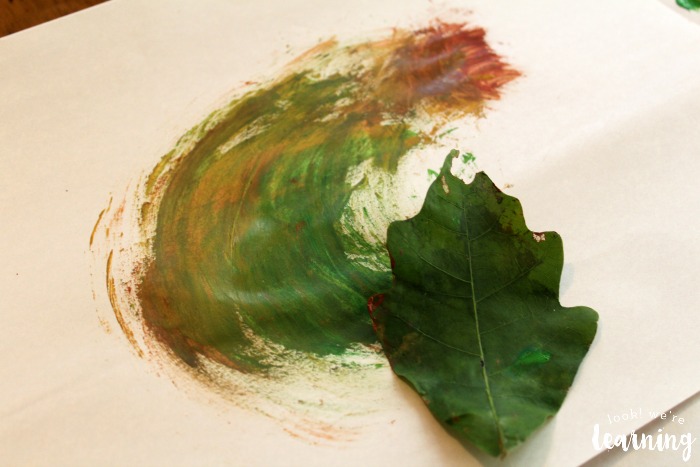
We put down two pieces of drawing paper – one as the “canvas” and another as the splat mat, plus paint palette. I just squeezed a bit of each color on the side.

Nature Painting with Leaves

This whole activity took maybe 15 minutes, but it was such a neat way to try art while using nature!

Leaf Painting with Kids

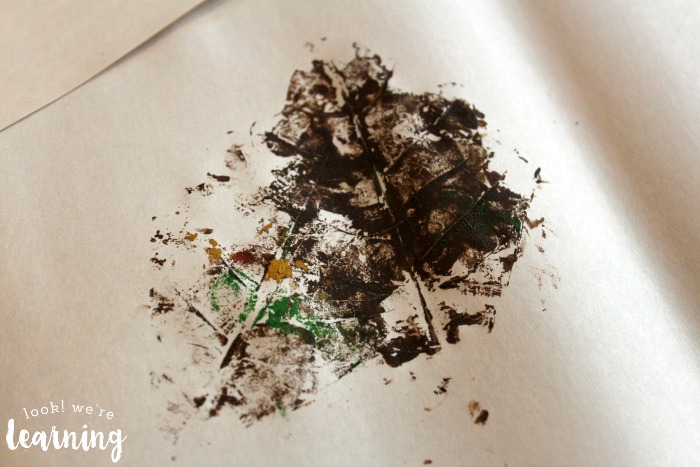
After we painted for a while, we started experimenting with printing.

Painting with Nature Materials

And that was even easier, since all you have to do is spread enough paint on the bottom of your leaves and then press them down.

Making Leaf Prints with Kids

Lift them up slowly and you get a lovely leaf print!

Have even more leaf fun this fall with these posts!

These printable leaf identification flashcards are a fun way to get kids interested in nature!

Make this easy and lovely fall snow globe craft to celebrate autumn with the kids!

This All About Leaves Printable Unit Study is a perfect way to study the science of fall foliage with kids!

Leaf Painting Easy Nature Art with Kids

Follow my Fall Activities for Kids board on Pinterest for even more fall ideas!

And get more fun learning ideas and crafts for kids when you sign up for our email newsletter! Subscribe using the widget below.

This post is part of Paint-A-Thon 2016 – a collection of more than 200 painting ideas for kids! Stop by to get tons of art inspiration for your kids!

2016 Paintathon - a collection of 200 painting ideas for children

How to Homeschool Without a Planner @ Look! We're Learning!

Why I’m Not Using a Homeschool Planner This Year

August 5, 2016 by Selena Robinson 1 Comment

Okay. If you’re shaking your head at the title of this post, stay with me! 🙂

When I first started homeschooling eight years ago, the number one thing I would have said homeschooling moms needed was: a complete homeschool planner. I had the most fun choosing a planner, organizing it, and filling it out each fall.

Here’s my problem: I was great at filling out the planner. I was not so great at following what was in it. I can make lesson plans like no other, but when it comes to following same plans, well…I pretty much stink.

After year after year of tossing out old (and unused) homeschool planners, I decided to do something drastic this year – figure out how to homeschool without a planner. And, surprisingly, it’s not as hard as I thought! Here’s why I’m not using a homeschool planner this year – and what I’m doing instead!

How to Homeschool Without a Planner @ Look! We're Learning!

Image c/o: grekoff via DepositPhotos

How to Homeschool Without a Planner

So…how do I plan to homeschool without a planner?

I’ll be using our state’s list of grade objectives as the framework. As for actual resources, they’ll include lots of different books, websites, and videos. (Similar to the way I do our unit studies.) I’ll be sharing more about our homeschool resources for this year in an upcoming set of posts.

As for the actual lesson planning…I’m outsourcing it to my kids!

I’ll give them a timeframe within which to complete each objective, using the materials I collect, and they’ll have to decide how much to do each week to finish it. They’ll be using their own printable student planners each week to write down what lessons to complete on each day.

For example, one of my third grader’s ELA objectives is to compare and contrast themes, settings, and plots of stories written by the same author about the same or similar characters. We’ll be heading to the library so he can choose a few books in a series to compare. I’ll give him about four weeks to do it and he’ll have to decide how much to read each day in order to complete his assignment on time.

Every few weeks, I’ll sit down with them to check their progress toward their yearly objectives and talk with them about any lesson plan changes they’ll need to make. (Basically, I’ll be serving as their college adviser this year…lol.)

Have you ever considered trying to learn how to homeschool without a planner? Were you successful? Share your tips!

Homeschooling Without a Homeschool Planner @ Look! We're Learning!

If you’d like to help your kids plan their lessons, grab these free printable student planners!

Superhero Free Student Planner Pages @ Look! We're Learning!

Strawberry Friends Printable Student Planner Free Pages

And for more about minimalist homeschooling, check out our series!

How to Homeschool as a Minimalist

Ready to plan your homeschooling year? Check out the tips and suggestions from my Homeschool Planning board on Pinterest!


Why I'm Not Using a Homeschool Planner This Year @ Look! We're Learning!

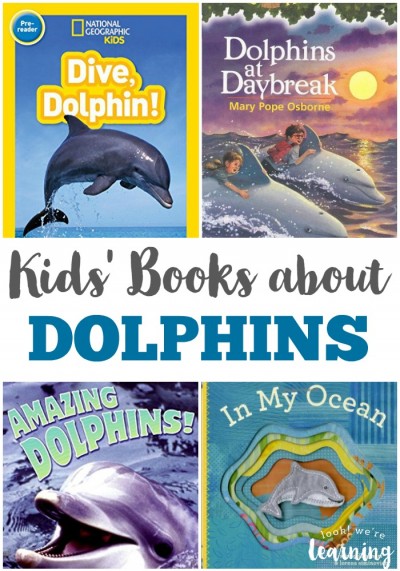
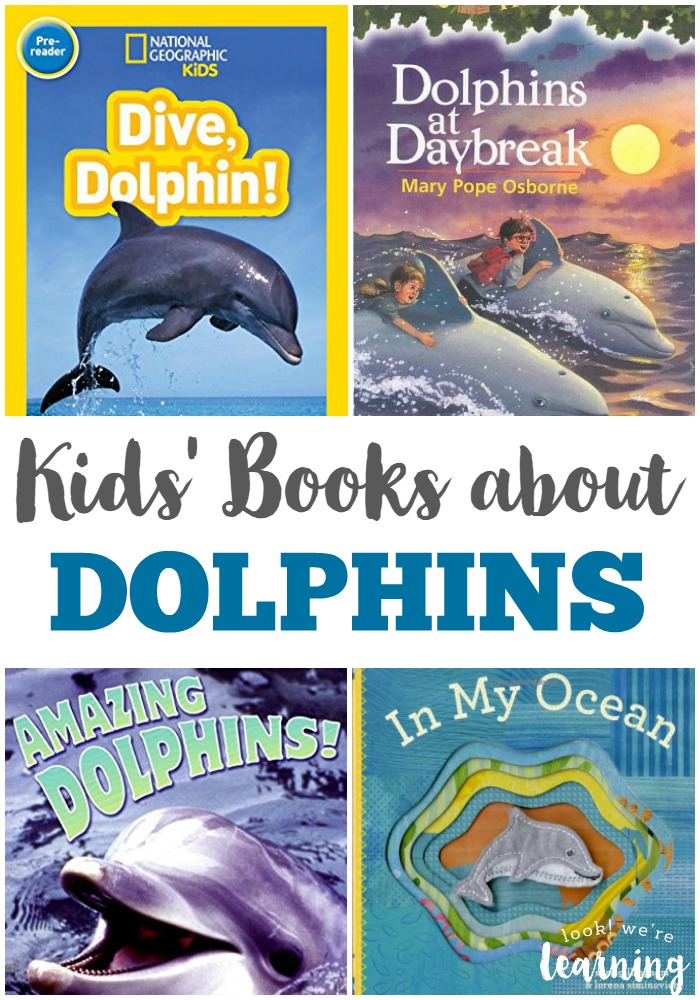
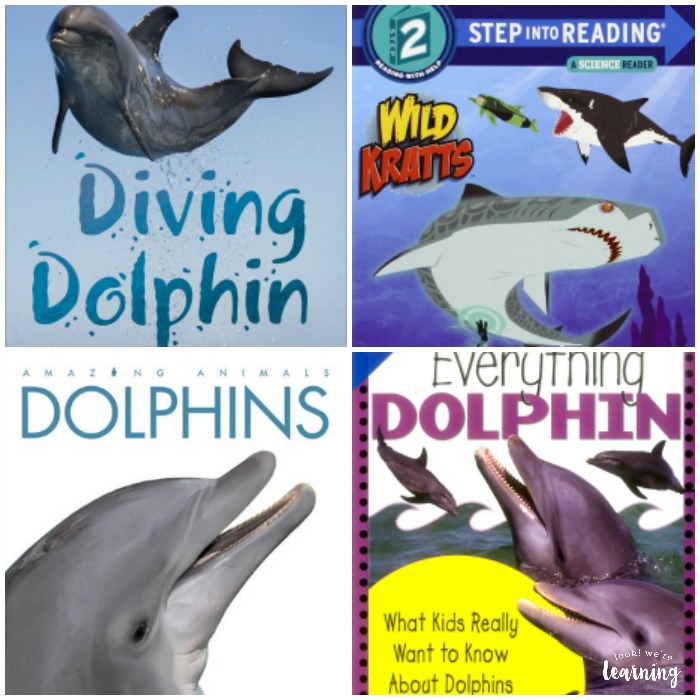
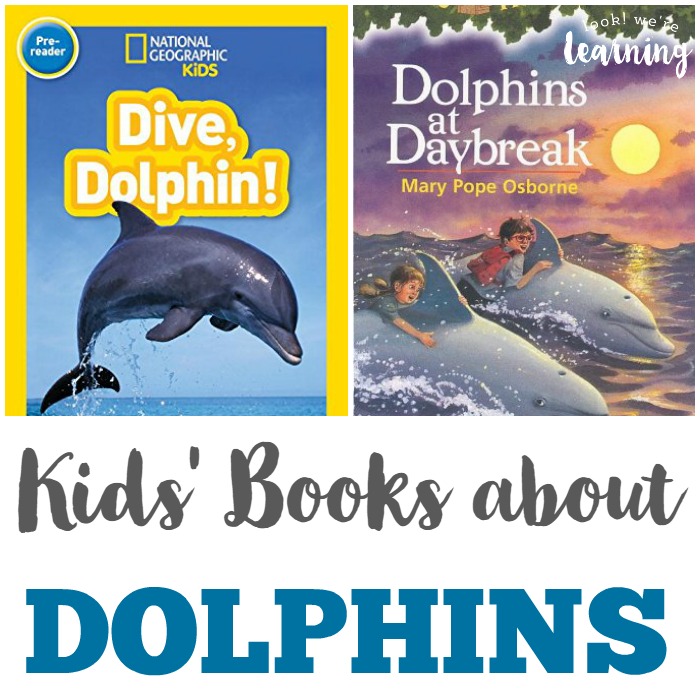
Books about Dolphins for Kids

Books about Dolphins for Kids

July 28, 2016 by Selena Robinson Leave a Comment

We’ve been learning about dolphins lately and I wanted to add a few more great books about dolphins for the kids to enjoy.

So – here are several books about dolphins for kids that are filled with fascinating facts, beautiful pictures, and learning ideas to help your children get to know these marine mammals!

If you want to try more ocean-themed learning resources for your kids, check out our list of 25 beach crafts and our roundup of summer books for kids!

Books about Dolphins for Kids

Books about Dolphins for Kids

This post contains affiliate links. For details, see our Disclosure Policy.

1. Dolphins – Step Into Reading!

2. How to Speak Dolphin in Three Easy Lessons

3. Everything Dolphin: What Kids Really Want to Know about Dolphins

4. In My Ocean

5. Amazing Dolphins (I Can Read Level 2)

6. Dolphins: Amazing Pictures & Fun Facts on Animals in Nature

7. Hope for Winter: The True Story of a Remarkable Dolphin Friendship

8. How to Speak Dolphin

9. Dolphin Baby!

10. Dolphins at Daybreak (Magic Tree House #9)

Dolphin Books for Kids to Read

11. Winter’s Tail: How One Little Dolphin Learned to Swim Again

12. National Geographic Kids: Everything Dolphins

13. I Can Read: Dolphin

14. National Geographic Readers: Dive, Dolphin!
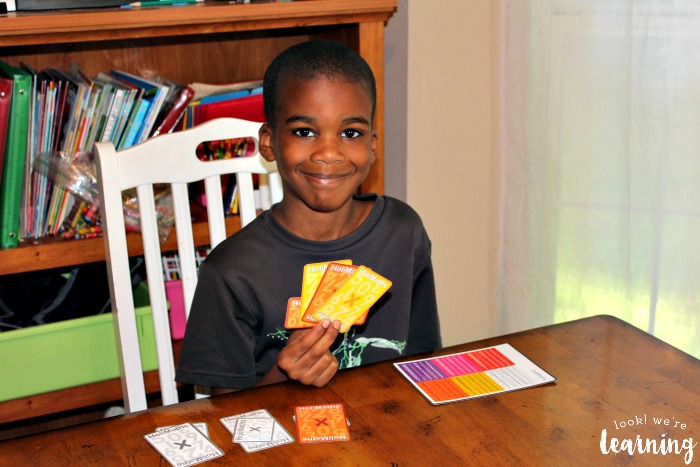
15. Smithsonian: Dolphins

16. Sharks and Dolphins: A Compare and Contrast Book

17. DK Readers Level 1: Diving Dolphin

18. Do Dolphins Really Smile? (Penguin Young Readers, Level 3)

19. Amazing Animals: Dolphins

20. Wild Sea Creatures: Sharks, Whales, and Dolphins! (Wild Kratts)

Kids Books about Dolphins

Learn even more about dolphins with our Dolphins Unit Study!

Dolphin Facts for Kids

Don’t miss these other kids’ book lists!

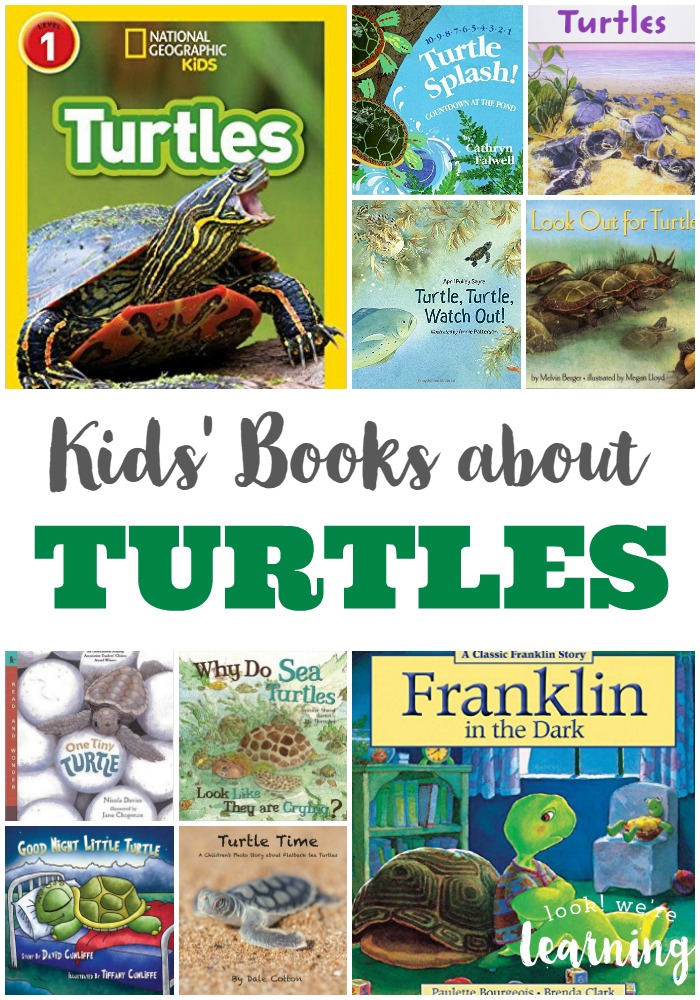
Books about Turtles for Kids

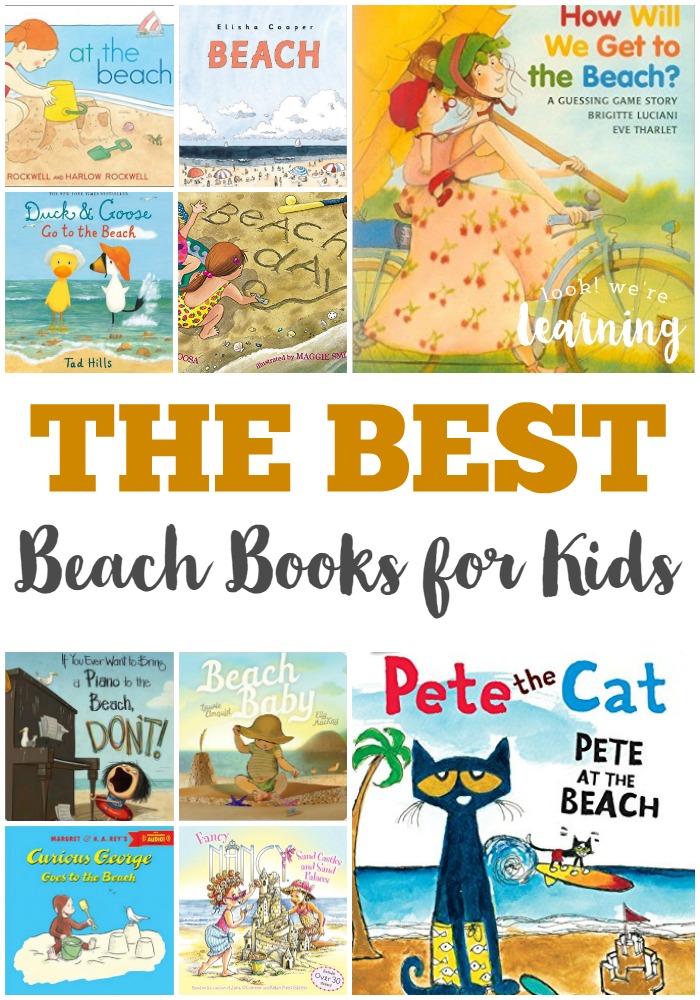
The Best Beach Books for Kids

And be sure to follow our Reading for Kids board on Pinterest for more great book lists!

Fun Science Experiements Every Month

Minimalist Homeschooling - Stop the Stress

Minimalist Homeschooling: Stop the Stress!

July 20, 2016 by Selena Robinson 3 Comments

Having a house full of children to homeschool can be exciting, fun, and…well, a little bit stressful.

After all, we’re accepting the responsibility for educating our kids (even if they’re living with special needs) ourselves. It can be lonely and challenging, and I know this from experience.

But a huge incentive of adopting minimalism is reducing our things to reduce the level of stress in our lives. And that applies to minimalist homeschooling as well.

How can we stop stressing ourselves out over our homeschooling year? Try these tips!

Minimalist Homeschooling - Stop the Stress

Minimalist Homeschooling: Stop the Stress

Mothers excel at many, many things. Unfortunately, one of the things we’re best at is feeling guilty. When we read about homeschooling, we can start to translate tips and suggestions into a lot of “should do’s” and “wish I had’s”. Which leads to stress and unhappiness about our choices.

If you decide to use some of the tips from this series to declutter books, reduce your paper trail, cut down your crafting supplies, plan your lessons the simple way, and streamline your schedule, that’s great! I hope the suggestions help you!

But please, please remember: This is YOUR homeschool. If there is anything you or your kids dislike, you can change it any time you want to. You don’t need to wait for a new school year and you certainly don’t have to “get your money’s worth out of it”. Just drop it and refuse to make yourself feel guilty.

And if there’s anything you or your kids love and don’t want to change, by all means don’t! If it ain’t broke and all. 🙂

Whatever you decide to do, take your time and enjoy the journey, no matter how much or how little you homeschool with.

Need more minimalist homeschooling inspiration?

Simple Homeschool Lesson Planning

Minimalist Homeschooling How to Declutter Books

Get more ideas for planning your homeschool on my Homeschool Planning board on Pinterest!

How to Homeschool as a Minimalist

This post is part of the How to Homeschool as a Minimalist series! Visit the series page to read all of the posts!


If you feel overwhelmed by planning your homeschool year, take a look at these easy tips to streamline your homeschool schedule!

Minimalist Homeschooling: How to Streamline Your Homeschool Schedule

July 19, 2016 by Selena Robinson 1 Comment

One of the major reasons we decided not to stick with public schooling was the super-packed daily schedule our family had to endure.

Between getting  up early for classes, staying in school most of the day, completing hours of homework, and getting to bed early – we were frazzled.

Surprisingly, though, it’s easy to fall into a similar pattern as homeschoolers, especially if we’re active in extra-curricular activities,  lots of field trips, or just a busy schedule.

Personally, I work a job in addition to running my website, in addition to homeschooling, so my weeks are pretty full.

A few months back, my children actually said to me “Can we just stay home today?”, which is when I realized that there wasn’t much “home” about our homeschooling.

So I set to work simplifying our routine and things have vastly improved.

If you also need to learn how to streamline your homeschool schedule, here are a few tips that worked for us.

How to Streamline Your Homeschool Schedule

If you’re a new homeschooler, these suggestions may help you avoid falling into the trap of overscheduling your days. (Unfortunately, it’s so easy to do this.)

If you’ve been homeschooling for years, these tips may help you scale back and simplify your approach.

Need more ways to prepare for your homeschool year? Don’t miss our list of tried and true homeschooling tips from veteran moms!

If you feel overwhelmed by planning your homeschool year, take a look at these easy tips to streamline your homeschool schedule!

How to Streamline Your Homeschool Schedule

Reduce the number of daily/weekly activities.

Try to set a certain number of days per week you will stay home, if you can. If you have the leave the house every single day, work to reduce the number of different activities the kids have to do.

Try to get them on a workable routine they can expect to follow most days. It’s easier for them and for you!

Use a block schedule. 

Block schedules are blocks of time designated for certain subjects. Rather than trying to schedule each school activity down to the minute, use hour or 90-minute blocks.

That way, the kids can continue with an activity they’re enjoying without worrying about time running out.

And you’ll have some downtime before starting another lesson!
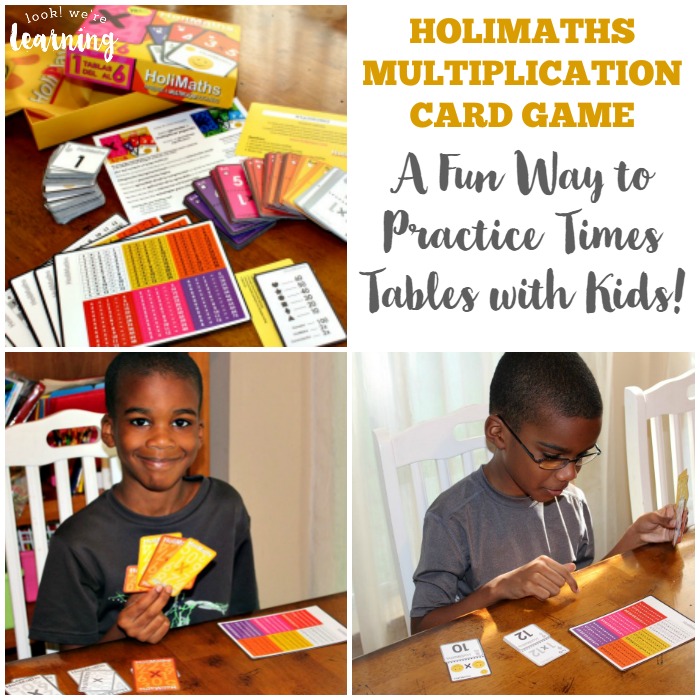
Avoid long-term commitments, if possible.

Some extra-curricular activities require long-term contracts and agreements, which can make you feel “stuck”, even if the schedule isn’t working for your family.

When you’re first embarking on a new hobby or activity for the kids, try to choose one that only lasts for a few weeks. You’ll get a chance to “try it out” to see how it works for you before committing to it for an extended period.

Don’t hesitate to stop something.

Years ago, kids were taught that it’s important to stick with something and never give up. I know. I was one of those kids.

Here’s the thing: If homeschooling is not working for Mom (or Dad if he is the primary educator parent), then it’s not working for anyone else.

When you feel overwhelmed, it’s okay to stop a routine, a homeschooling method, or a class that is adding to the chaos. Don’t feel guilty about “quitting”. Feel good about choosing what is best for your family.

Minimalist Homeschooling - How to Streamline Your Homeschool Schedule

Want more ideas to help you homeschool the simple way? Don’t miss these posts!
Minimalist Homeschooling - Stick to the Basics

Simple Homeschool Lesson Planning


How to Homeschool as a Minimalist


Minimalist Homeschooling - Tips for Teaching Multiple Children

Minimalist Homeschooling: Teaching Several as One

July 18, 2016 by Selena Robinson 2 Comments

We’ve been talking about minimalist homeschooling a lot lately and I’ve shared lots of tips for scaling down your homeschooling supplies, books, paper, and more.

But what can you do if you’re homeschooling several children? I mean, you can’t really minimize them, right? 🙂

You can, however, minimize the way you teach them and that can make your entire homeschooling journey much, much simpler.

Here are some tips for teaching multiple children in your minimalist homeschool!

Minimalist Homeschooling - Tips for Teaching Multiple Children

Tips for Teaching Multiple Children

Combine grades, if possible. I got this idea from a good friend who is homeschooling three sons. Since she has twins and one child that is one year younger, she’s teaching them all at the same level. When she told me that, a lightbulb went off in my head. After all, I have two boys who are one year apart.

When I asked my soon-to-be second grader if he wanted to learn along with his soon-to-be third grade brother, he said “I don’t want to skip second grade.” Which is fine. But we’re going to do a 2/3 year for the two of them. His brother will get a much needed review and he’ll get a chance to move on a little early. And, best of all, Mom will only have to plan one lesson for the two of them. Win!
Use technology to your advantage. When you teach multiple kids, it’s generally easier to teach some subjects with the kids all together. History, science, and geography come to mind. This is especially true when you want to watch a video, do an experiment, or complete a craft project.

This year, I’m going to use a LOT more videos in our homeschool. Then the video can do the teaching and the kids can write reports about what they learn. Since it’s tough for the kids to crowd around a computer screen, we’ll be using the YouTube channel on our Roku. If I find other things on my mobile device, I’m going to use a smartphone projector so that everyone can see. Simple, right?

Those are a few ways I’ll be teaching multiple children in our minimalist homeschool this year. For more on simplifying your homeschool, check out these posts!
Simple Homeschool Lesson Planning

Minimalist Homeschooling - Stick to the Basics

Learn more about planning this homeschool year with my Homeschool Planning board on Pinterest!

How to Homeschool as a Minimalist

This post is part of the How to Homeschool as a Minimalist series! Stop by tomorrow for Day 9: Skip the Overscheduling!


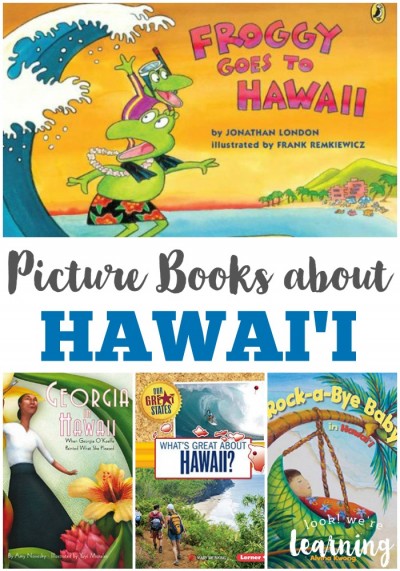
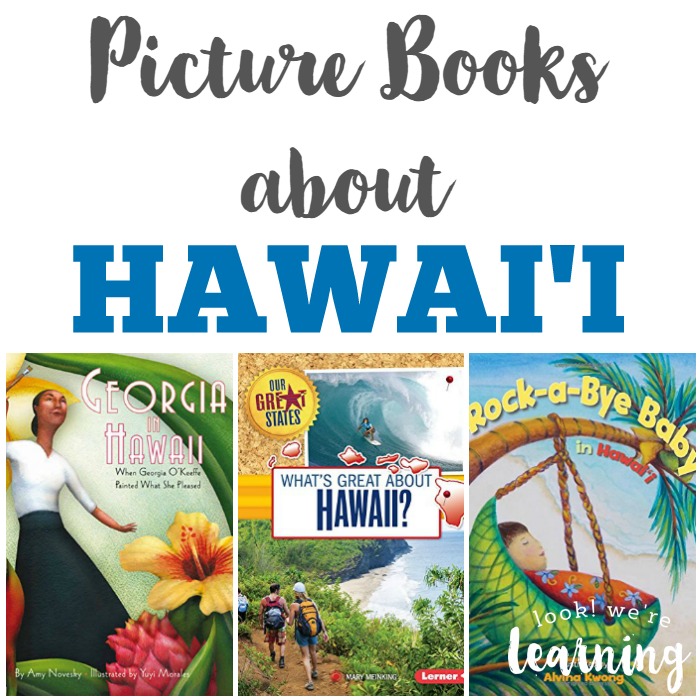
Kids' Picture Books about Hawaii

Picture Books about Hawaii

July 18, 2016 by Selena Robinson Leave a Comment

My three-year-old has really gotten into reading lately. Which is a wonderful thing!

She loves looking at pictures and tracing her fingers under the words. Of course, she’s making up her own story or reciting some from memory, but that’s okay. She’s pre-reading and I’m thrilled!

We’ve been studying about the beach a lot lately, so I thought we’d take a look at a gorgeous book we received from my brother: Pulelehua and Mamaki. Since the story takes place on Hawai’i, I thought I’d round up some other beautiful picture books about Hawaii that are fun for kids to explore!

Kids' Picture Books about Hawaii

Picture Books about Hawaii

Pulelehua and Mamaki is the story of a Mamaki tree that serves as the home to a Kamehameha butterfly named Pulelehua. A butterfly mother laid her egg on one of the tree’s leaves and that caterpillar grew up to become Pulelehua.

Later, when Pulelehua lays an egg, she chooses the same Mamaki tree to watch over her baby. And when her egg hatches, grows into a caterpillar, and transforms into a full-grown Kamehameha butterfly, Mamaki the tree promises to watch over it too.

It’s a truly lovely story filled with native Hawaiian terms and absolutely beautiful illustrations.

As part of the Read Around the World Summer Series, I’m sharing my book summary below!

Pulelehua and Mamaki Book Review

Be sure to check out the wonderful multicultural kids’ books that have been reviewed this summer!

Multicultural Kid Blogs Read Around the World Series

While I’m sharing my appreciation for Pulelehua and Mamaki, I thought I’d mention a few other picture books about Hawaii that are gorgeous for children to read!

  1. Froggy Goes to Hawaii
  2. Good Night Hawaii
  3. Seashore Touch-n-See Hawaii
  4. A is for Aloha
  5. Georgia in Hawaii: When Georgia O’Keeffe Painted What She Pleased
  6. What’s Great about Hawaii? (Our Great States)
  7. Aloha is…
  8. Baby Honu’s Incredible Journey
  9. Rock-a-Bye Baby in Hawaii
  10. Animals Sing Aloha

Picture Books about Hawaii

Want to spend more time learning about the beach with kids? Try these learning ideas!

Beach 0-9 Number Playdough Mats - Look! We're Learning!

The Best Beach Books for Kids

25 Beach Crafts for Kids

Get more ideas for making reading fun with my Reading for Kids board on Pinterest!


Minimalist Homeschooling - Stick to the Basics

Minimalist Homeschooling: Stick to the Basics

July 17, 2016 by Selena Robinson Leave a Comment

Homeschoolers, let’s have a little chat, shall we?

One of the huge draws to homeschooling is that we have the freedom to teach lessons and subjects the way that we see fit. But, to quote Uncle Ben from Spiderman, “with great freedom comes great responsibility”. Okay, I’ve totally just told you my age. 🙂

We have a LOT of options and a LOT of flexibility, but we also have the sole responsibility of educating our kids. And sometimes the endless options and choices can shift our focus from providing a good education to providing the bestest, most complete education ever – which is probably impossible.

It’s easy to start with a few school subjects at first. Then you add more and more. Next thing you know, your lesson plan has 15 or 20 slots to accommodate extra subjects such as Latin, crafting, foreign language, engineering, and technology. That may work for some, but it has become overwhelming for me.

So – this year, I’m sticking with the basics only when it comes to teaching school subjects. Here’s how.

Minimalist Homeschooling - Stick to the Basics

Minimalist Homeschooling: Focus on the Basics

  1. Look at your state requirements. What subjects are you required to teach? Start with those! In our state, we are required to teach math, ELA, science, social studies, and reading. When I started to really look at those subjects, I realized that covering them each day is plenty enough for us.
  2. Add in other subjects and interests, but sparingly. Say you want your child to study Latin. That’s fine. But do they really need to learn it every single day? Do you even have time to teach it every day? If not, do it once a week and let that be enough. Or: If you finish your required subjects for the year by summer, use the summer for those elective subjects.
  3. Leave room for your kids’ interests! Homeschooling isn’t homeschooling if the kids don’t have a little say in the planning, right? Leave a slot or two open for them to explore something they want to learn about. Your day will go much, much better that way.

Want to simplify your lesson planning? Take a look at how we’re doing that this year!

Simple Homeschool Lesson Planning

Get more ideas for organizing your homeschool on my Homeschool Organization Tips Pinterest board!

How to Homeschool as a Minimalist

This post is part of the How to Homeschool as a Minimalist series! Stop by tomorrow for Day 8: Teaching Several Kids at Once!


  • « Previous Page
  • 1
  • …
  • 20
  • 21
  • 22
  • 23
  • 24
  • …
  • 38
  • Next Page »
Hi! I'm Selena, a veteran teacher and homeschool mom to four. I'm so glad you're here!
About Me Contact Terms of Use Privacy Policy Places I Share
Facebook Pinterest Instagram
Homeschool Printables Unit Studies Shop the Store
Copyright ©2026, Look! We're Learning!. All Rights Reserved. Design by Pixel Me Designs